
Our review · BRASÍLIA TOURS
Fatima Neighborhood and Church Unit Bike Tour
Brasília makes the most sense from a bicycle. This three-hour ride links Oscar Niemeyer’s buildings, Lucio Costa’s superquadras, and Burle Marx’s gardens in a route that shows how the capital was meant to work, not just how it looks in photographs. I like the mix of grand civic ideas and ordinary residential life, especially the model Superquadra 308 with its nearby shopping area, school, and cinema.
I also like the cultural stops. The Fatima Church carries Athos Bulcão’s tile work, while the blue-lit Dom Bosco Sanctuary gives the tour a striking final scene. Guide Duda has been praised for explaining both Brasília’s design and how people live in it. The main drawback is simple: cycling depends on good weather, and the route may feel too short if you want long visits inside each place.
Key points before you book
- Brasília’s residential plan takes center stage: The Superquadra 308 shows how Costa, Burle Marx, and Banco do Brasil shaped a model neighborhood.
- The route mixes famous sights with daily life: You see parks, housing blocks, a shopping area, school, cinema, and churches rather than only monumental buildings.
- The Fatima Church has a personal origin: Sarah Kubitschek requested it after her daughter recovered from illness.
- The Dom Bosco Sanctuary provides the visual finale: Its interior is known for an atmosphere created by blue glass, though the visit here is scheduled for only about 10 minutes.
- The group stays small: A maximum of 15 people makes it easier to follow the guide and ask questions.
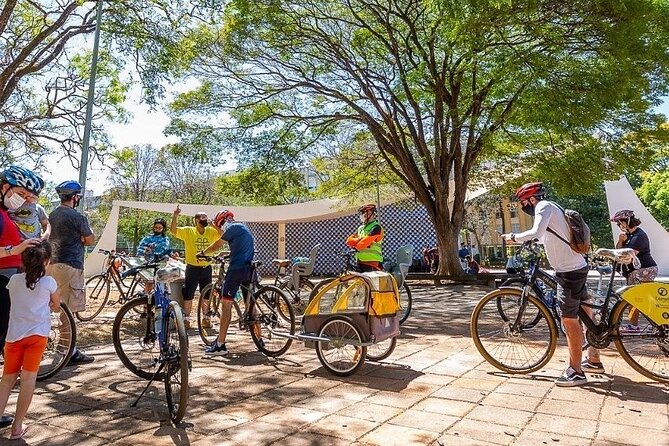
- Families can bring younger children: An articulated tandem passenger trailer or bike is available for children from about age four to ten or twelve, but you need to request it ahead of time.
Why a bike is the right way to read Brasília
Brasília can seem confusing on foot. The city was planned on a vast scale, with broad avenues, separated residential sectors, open green areas, and superquadras that function like self-contained neighborhoods. A car can get you between the major sights, but it tends to turn the city into a string of stops.
A bicycle gives you the useful middle ground. You cover more ground than you would walking, yet you move slowly enough to notice the relationship between apartment blocks, gardens, paths, shops, schools, and public buildings. I like that this route treats Brasília as a living city rather than an outdoor display of modernist architecture.
The tour begins at Camelo Bike Tour’s office in the Brasil 21 business center in Asa Sul. It ends at the same point, which makes the morning easy to plan. The total ride lasts about three hours, and the group can include no more than 15 people. That is large enough to have company, but still modest enough for a guide to keep the group together.
The price is $62.73 per person. That is not the cheapest way to see Brasília, but it is fair value if you want transport between several separated sights, a guide who can explain the city plan, and a bike for the full route. All listed stops have free admission, so the price pays mainly for the equipment, route planning, and interpretation.
more Brazil days to choose between
- São Paulo: Downtown Historical Bike Tour
★ 4.9 · 191 reviews - Rio de Janeiro: Guided Bike Tours in Small Groups
★ 4.5 · 133 reviews - Street Art and Park Bike Tour
★ 5.0 · 56 reviews
TV Tower and the first view of the city
The TV Tower is the first stop after you meet at the agency. You have about 10 minutes here for an explanation and photographs, with no admission charge.
This is a good opening because the tower helps set the scale of Brasília. Before you enter the residential sectors, you get a sense of the city’s broad organization and planned geometry. Keep your expectations realistic, though. The stop is brief and is designed for orientation and photos, not a long visit.
The route also passes a cultural space inspired by the idealism of Reco do Bandolim and shaped by Oscar Niemeyer’s interest in honoring Brazilian cultural roots. The concert hall of Brasília’s Choro Club is built here. That detail gives the ride a useful link to Brazilian music, not just architecture.
If your guide pauses to explain this part of the city, listen for the contrast between Brasília’s futuristic design and its effort to preserve older Brazilian cultural forms. That tension is one of the more interesting ideas running through the tour.
City Park and the Eduardo e Mônica stop
The next major stop is Parque da Cidade Sarah Kubitschek, one of the world’s largest urban parks. The park was created by Burle Marx, the landscape designer whose work appears throughout Brasília. You spend about 25 minutes here, including a visit to Praça Eduardo e Mônica.
The square honors the song of the same name by Legião Urbana. For anyone interested in Brazilian popular music, this is more than a quick photo stop. It connects Brasília’s planned spaces with the city’s later cultural identity, particularly its association with rock and songwriting.
I like this section because it breaks up the modernist architecture. The park gives you open space and greenery after the hard lines of the tower and central city. Cycling also makes sense here, since a park is best understood while moving through it rather than from a car window.
The exact amount of free time may feel limited if you want to explore the park at length. Treat it as part of the larger route, not as a standalone park visit. You will see a selected portion and hear why it matters to Brasília’s design.
Burle Marx Garden and Brasília’s planned greenery
The 10-minute stop at Jardim Burle Marx continues the focus on planned outdoor space. Burle Marx was not simply adding decoration around buildings. His gardens helped shape how Brasília’s open areas connect with its residential and civic spaces.
This is one of the places where a guide adds real value. Without context, a garden can look like a pleasant patch of greenery. With an explanation of the city plan, you can see it as part of a larger decision about how people move, meet, and live among large apartment sectors.
The stop is short, so you probably will not study every planting or design detail. Still, it provides a useful bridge between the broad park and the more intimate residential area that follows.
A different side of Brazil altogether:
- Rio de Janeiro: 6-Stop Highlights of Rio with Lunch
★ 4.4 · 5,157 reviews - Christ the Redeemer Entry Ticket by Corcovado Train
★ 4.4 · 4,476 reviews - Rio de Janeiro: Rocinha Favela Walking Tour with Local Guide
★ 4.8 · 3,052 reviews - Rio de Janeiro: Sugarloaf Cable Car Official Ticket
★ 4.6 · 2,873 reviews
Superquadra 308, Brasília’s model neighborhood
The most useful stop for understanding everyday Brasília is SQS 308, also called Superquadra Sul 308. This residential court was chosen as the city’s model superquadra. Lucio Costa designed it, Burle Marx handled its urban planning and garden design, and Banco do Brasil built it. It opened on February 19, 1962.
You spend about 45 minutes here, the longest scheduled stop on the tour. That is a wise choice. The superquadra is where Brasília’s grand plan becomes practical. Instead of looking at one isolated building, you see how housing, paths, green areas, services, and cultural facilities were intended to fit together.
The route includes the nearby shopping area, school, and cinema. These details matter because they show the idea behind the residential scale. A superquadra was meant to provide more than apartment buildings. It was planned as a neighborhood unit, with everyday needs close to home.
I especially like this part for visitors who want to understand how people live in Brasília. Monumental architecture can be impressive but distant. The model court offers a chance to consider the city as a place of routines: going to school, shopping, watching a film, and crossing shared open areas.
You should also expect a little interpretation rather than a museum-style presentation. The value comes from seeing the spaces in place and asking how the original plan works in real life. The guide may point out what was designed as part of Costa’s residential scale and how the model court relates to other superquadras.
Cine Brasília and the city’s cultural side
Cine Brasília appears as another cultural point along the route. It hosts the Brasília Film Festival and presents Brazilian film releases, foreign films, thematic programs, debates, book launches, and exhibitions of paintings, photographs, and posters.
The cinema also works with embassies, public schools, and universities. That gives it a wider role than a standard movie theater. It helps connect Brasília’s cultural institutions with education and international exchange.
The schedule does not assign a separate visit length here, so you should not expect a full film program or extended indoor tour. Think of Cine Brasília as a stop for context and a look at one of the city’s active cultural venues.
The route also includes Renato Russo Hall. Its presence fits the music theme introduced at Praça Eduardo e Mônica and the Choro Club. These stops help you see that Brasília’s cultural identity is not limited to the buildings designed during the capital’s founding years.
Fatima Church and Athos Bulcão’s tiles
Igrejinha Nossa Senhora de Fátima, usually called the Fatima Church, receives about 20 minutes. The church opened in June 1958 and was the first church built in the residential sector.
Its origin is unusually personal. Sarah Kubitschek requested the church after her daughter recovered from illness. That story gives the small building a human scale, especially after the vast spaces and planning theories earlier in the ride.
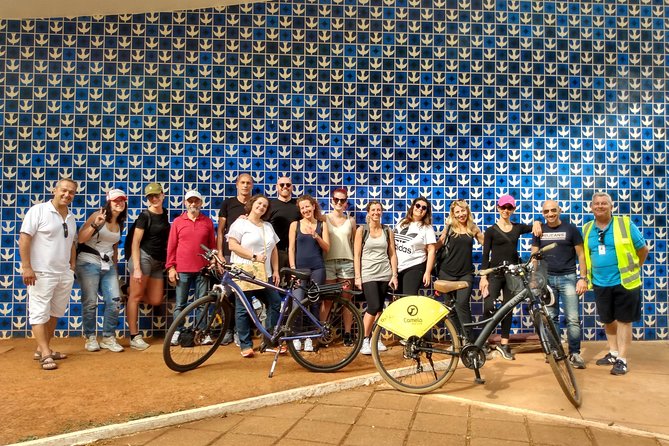
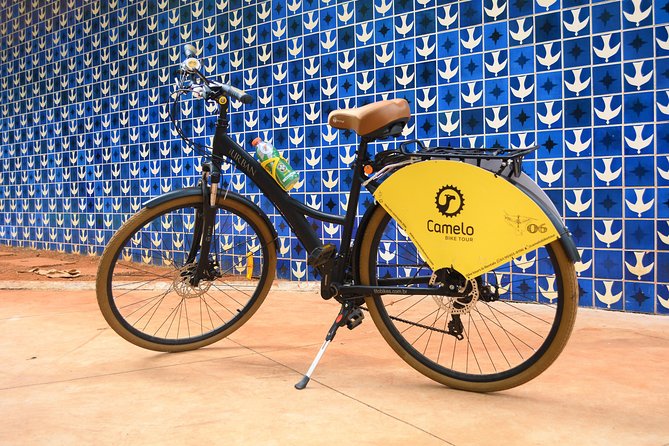
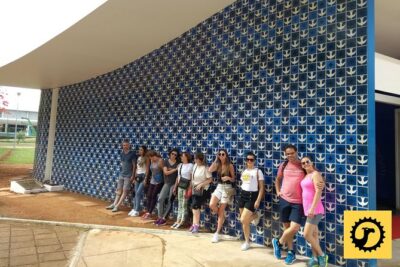
The exterior walls are lined with Athos Bulcão’s tiles. Their stylized figures represent the Dove of the Divine and the Star of the Nativity. This is an important detail to look for, since the tile work is part of the building itself rather than an item added later for display.
The stop is long enough for a proper look, though not a slow art study. If you care about Brasília’s combination of architecture and decorative art, this is one of the route’s essential pauses. It is also a good example of how a small neighborhood church can carry national design importance.
Dom Bosco Sanctuary and the final stop
The final stop is the Santuário São João Bosco, built in honor of Saint John Bosco, Brasília’s patron saint. The scheduled visit lasts about 10 minutes.
The sanctuary is widely known for its dramatic blue interior, created by tall panels of stained glass. The information provided for this tour does not promise a long guided visit, so plan for a short look and photographs rather than a detailed religious or architectural lecture.
Even with limited time, the sanctuary makes a strong ending. The Fatima Church is intimate and decorated with Athos Bulcão’s patterned tiles. Dom Bosco feels more theatrical, with colored light shaping the entire room. Together, the churches show two different ways Brasília used modern design for religious spaces.
After this stop, you cycle back to the Camelo Bike Tour meeting point. The return makes the experience tidy, with no need to arrange a pickup at another part of the city.
What the guide adds to the ride
The guide can make or break a city-planning tour. Here, Duda has been specifically praised for explaining both the superquadras and ordinary life in Brasília. That combination is more useful than a list of architect names.
You want to hear not only who designed a building, but why the space was arranged as it was. The strongest part of the route is the explanation of the Neighborhood Unit and the residential scale, the idea that each superquadra could function as a model neighborhood within the larger plan.
The guide also helps connect separate stops. The TV Tower introduces the city’s scale. Burle Marx’s park and garden show how open areas were planned. Superquadra 308 demonstrates the residential model. The churches then show how design and community life meet at a smaller scale.
The experience has a 4.9 rating from 58 reviews, with 100 percent recommending it. Those numbers suggest a very consistent experience, but the practical point is more important: the tour’s strongest feature is the route’s explanation of Brasília as a working city.
Who will enjoy this tour most
I would choose this ride if you are curious about urban planning, Brazilian modernism, or the difference between seeing a city and understanding it. It is also a good option if you have only a short time in Brasília and want several important areas covered in one morning.
The tour suits reasonably active visitors who can cycle for about three hours with stops. Most people can participate, according to the operator, but you should still consider the weather and your comfort on a bike before booking.
Families can ask in advance for an articulated tandem passenger trailer or bike for children from four to ten or twelve years old. Since this equipment must be requested, do not wait until the meeting time to mention it.
The ride may be less suitable if you want long indoor visits, a museum-heavy schedule, or a detailed architectural lecture at every stop. The route covers a lot of ground, and several pauses last only 10 minutes.
Practical details that affect your decision
The meeting point is Camelo Bike Tour Brasília, at SHS Quadra 06, Conjunto A, Bloco A, Loja 17, Centro Empresarial Brasil 21, in Asa Sul. The activity returns there at the end.
The office is near public transportation, which makes arrival easier. The group limit is 15 people, and confirmation is normally issued at booking. If you book within two days of departure, confirmation can take up to 48 hours and remains subject to availability.
The tour requires good weather. If poor weather causes cancellation, you can choose another date or receive a full refund. You can also cancel free of charge up to 24 hours before the start time. Within 24 hours, refunds and changes are not accepted.
For $62.73, I see the best value in the guide’s interpretation and the carefully connected route. You are not paying entrance fees, since every listed stop is free. You are paying to cover Brasília’s spread-out design by bike while someone explains how the pieces fit.
Should you book the Fatima Neighborhood and Church Unit Bike Tour?
Book it if you want Brasília explained through its residential neighborhoods, parks, music, churches, and daily services. The 45-minute visit to Superquadra 308 is the heart of the experience, and Duda’s focus on how people live in these planned blocks adds useful depth.
Choose another activity if you prefer a slow architectural visit or if your schedule cannot handle a three-hour bicycle outing. For most active visitors, though, this is a smart way to see the less obvious side of Brasília. You leave with more than photographs of famous buildings. You understand why the city’s streets, gardens, apartment courts, cinemas, and churches were arranged as they were.
FAQ
Where does the Fatima Neighborhood and Church Unit Bike Tour start?
It starts at Camelo Bike Tour Brasília, located at SHS Quadra 06, Conjunto A, Bloco A, Loja 17, Centro Empresarial Brasil 21, Asa Sul, Brasília.
Where does the tour end?
The activity ends back at the meeting point in Asa Sul.
How long does the bike tour last?
The tour lasts approximately three hours.
How much does the tour cost?
The listed price is $62.73 per person.
How many people can join the tour?
The maximum group size is 15 people.
Are admission tickets included?
All listed stops have free admission, so there are no admission charges for the itinerary stops.
Can children join the bike tour?
Most people can participate, and an articulated tandem passenger trailer or bike is available for children from about four to ten or twelve years old. You need to ask for it in advance.
Is the tour available near public transportation?
Yes. The meeting point is near public transportation.
What happens if the weather is poor?
The experience requires good weather. If it is canceled because of poor weather, you will be offered another date or a full refund.
New in Brazil this month
- Itacare: 4 Beaches Trail and Tijuipe Waterfall★ 5.0 · 3 reviews
- Idyllic Islands Private Speedboat Tour in Paraty★ 5.0 · 3 reviews
- São Paulo: Downtown Walking Tour with Farol Santander Entry★ 4.6 · 3 reviews
- Ilha Grande: Lopes Mendes Private Hiking Tour★ 5.0 · 3 reviews
- Foz do Iguacu: Skydiving Experience with Photos and Videos★ 5.0 · 3 reviews
- São Paulo: Full-Day Guided City Tour from the Port of Santos★ 5.0 · 3 reviews
- Discover Rocinha: Guided Tour of the Famous Favela★ 4.5 · 3 reviews
- Florianópolis: Caminho da Costa da Lagoa Trail★ 4.7 · 3 reviews
Brasília Tours, compared.
Pirenópolis, the charming baroque city inaugurated in 1723 in the gold cycle
Read our review →
Brasilia : Private Custom Tour with a Local Guide
Read our review →Browse the lists this tour appears in