

Our review · BRASÍLIA TOURS
Civic, Legal and Architectural Citytour
Brasília is easiest to understand from a moving car, and this tour tackles the city’s boldest idea: a capital planned from scratch around monumental avenues, government buildings, and modernist curves. In four hours, you’ll connect Oscar Niemeyer’s architecture with the political story of Brazil and the vision of President Juscelino Kubitschek.
I like the private format, which lets your group ask questions and adjust the pace. I also like the sheer range: you see sacred spaces, federal buildings, a presidential residence, a soccer stadium, a TV tower, and Lake Paranoá in one morning. The main drawback is speed. With 12 stops in about four hours, this is an overview, not a slow architectural study.
Key points at a glance
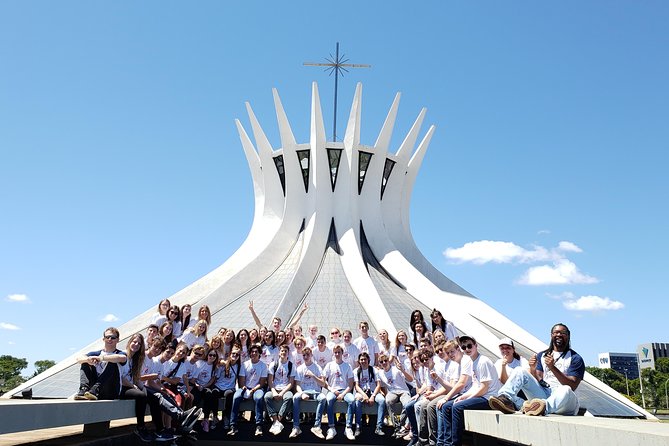
- Brasília by car: The city was designed around broad roads and large distances, so private transport saves time and effort.
- Niemeyer’s greatest hits: The Cathedral, National Congress, Alvorada Palace, Army Headquarters, and Igrejinha Nossa Senhora de Fátima all appear on the route.
- A strong local guide matters: Guides including Alberto, Michael, Anselmo, José, Ambrosio, and Flávio have been praised for clear English, local insight, and friendly service.
- Best for first-time visitors: The tour explains Brasília’s layout, political purpose, and modernist design in one compact outing.
- Some sites may be exterior visits: The Alvorada Palace offers guided tours on Wednesdays, and access to the TV Tower lookout depends on the elevator.
- Good value for a group: At $170 per group of up to four, the per-person cost is $42.50 when full, but the price is less attractive for a solo visitor.
Why Brasília makes sense from a car
Brasília does not unfold like Rio de Janeiro, Salvador, or a European capital. Its major buildings are spread along the Monumental Axis and around enormous open spaces. You can walk between a few nearby sights, but walking the full route would waste much of your day, especially in Brasília’s strong sun.
That is why I see the vehicle as the practical heart of this experience. You can cover the city’s main civic, religious, and cultural landmarks without spending your time arranging taxis or trying to understand a road system designed for cars. One guide even suggested starting earlier to avoid the hottest part of the day, a useful tip for a city with little shade around its grandest buildings.
The experience begins at 9:00 a.m. and lasts about four hours. The schedule allows roughly 15 to 40 minutes at each stop, plus driving time. You get a broad introduction rather than a single detailed museum visit. That balance works well if Brasília is a short stop in a larger Brazil trip.
Other Brazil days that go well with this one:
- Rio de Janeiro: 6-Stop Highlights of Rio with Lunch
★ 4.4 · 5,157 reviews - Christ the Redeemer Entry Ticket by Corcovado Train
★ 4.4 · 4,476 reviews - Rio de Janeiro: Rocinha Favela Walking Tour with Local Guide
★ 4.8 · 3,052 reviews
The Cathedral begins with a burst of light

The Metropolitan Cathedral is one of the clearest examples of Brasília’s modernist character. Oscar Niemeyer designed its structure as a crown of curving concrete ribs, surrounded by a reflecting pool. The building is not a conventional church with a long rectangular nave. You enter beneath the structure and look upward into a dramatic space shaped by glass, light, and sweeping lines.
The planned stop is about 15 minutes, with no admission charge. That is enough to see the interior, take photographs, and hear the basic story of the building. If you care deeply about architectural detail, you may wish for more time, but the brief visit helps keep the whole route moving.
I would pay close attention to the contrast between the heavy concrete frame and the colorful glass overhead. This is a place where Brasília’s religious architecture feels experimental rather than traditional.
Congress and the machinery of government
The National Congress is another Niemeyer landmark, but it carries a different weight. Here, architecture meets the working political structure of Brazil. The complex houses the legislative branch, and its familiar forms are among the most recognizable symbols of the capital.
The visit is scheduled for about 20 minutes and admission is free. Guided tours are offered in English and Portuguese, though access and timing can vary. You should treat this stop as an introduction to the building and its role rather than assume you will receive a full interior tour on every outing.
The value of having a guide here is clear. Brasília’s buildings can look spectacular in photographs while their purpose remains unclear. A good guide explains how the Senate and Chamber of Deputies fit into Brazil’s federal system, then connects the building to the city’s wider plan.
Several strong guides have been praised for answering questions about politics, culture, and the city’s past. Alberto, in particular, has been described as a lifelong Brasília resident with excellent English. That kind of local perspective can turn a quick exterior stop into something much more useful.
The blue glow of the Dom Bosco Shrine
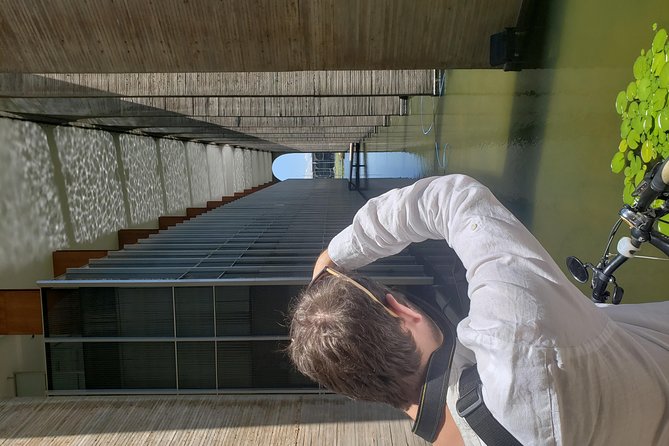
The Sanctuary of Saint John Bosco, or Santuário São João Bosco, offers a welcome change from white concrete and broad civic plazas. Its interior is framed by tall blue stained-glass windows that create a cool, intense wash of color. The effect is memorable even if you are not especially interested in church architecture.
The stop lasts about 20 minutes and admission is free. This is one of the places where a guide’s explanation helps you notice the artistic choices instead of simply stepping inside, taking a photograph, and leaving.
I like this part of the route because it shows that Brasília’s design story is not only about government. The city’s religious buildings also use bold shapes, unusual light, and carefully planned space. The shrine can feel almost startling after the formal scale of the Monumental Axis.
A different side of Brazil altogether:
- Rio de Janeiro: Sugarloaf Cable Car Official Ticket
★ 4.6 · 2,873 reviews - Rio: Christ the Redeemer, Sugarloaf, Selaron & BBQ Lunch
★ 4.5 · 2,428 reviews - Rio De Janeiro: Half-Day Rocinha Favela Walking Tour
★ 4.7 · 2,272 reviews - Rio de Janeiro: Angra dos Reis and Ilha Grande Full-Day Tour
★ 4.6 · 1,673 reviews
The JK Memorial puts the city in context
The Memorial JK is the one scheduled museum visit on the route, with about 40 minutes and admission included. It focuses on Juscelino Kubitschek, the president who promoted the transfer of Brazil’s capital to the interior and helped bring Brasília into being.
Inside, you can expect photographs and videos about the city’s construction, along with works of art and material connected to Kubitschek. There is also coffee and a souvenir area. The memorial matters because it gives you the human and political story behind the concrete.
Without this context, Brasília can seem like an impressive collection of isolated buildings. The memorial explains why the capital was built, who drove the project, and how enormous the undertaking was. I would treat the 40 minutes as an important pause in the driving circuit.
The museum may be the best stop for anyone who wants more than a photo tour. It also helps you understand that Brasília was not created only as an architectural experiment. It was part of a national plan to shift attention inland and create a new federal center.
A pyramid, a bridge, and a wider view
The Temple of Good Will adds another unusual stop. This ecumenical temple is shaped like a pyramid and welcomes all religions. A pure crystal at the top is described as the world’s highest, and the interior includes a spiral path in the nave.
The visit lasts about 30 minutes and is free. The temple’s appeal lies in its unusual spiritual design. It does not fit neatly into the government-and-Niemeyer story, so it broadens your sense of Brasília’s religious and cultural life.
After that, the route reaches the viewpoint near the JK Bridge. The bridge crosses Lake Paranoá and is one of the city’s most striking modern structures. From the lookout, you get a different view of Brasília, away from the formal government core. The stop lasts about 10 minutes and is mainly for photographs.
Restaurants and viewpoints are located around the bridge, but this tour does not appear to include a meal stop. If you want to eat there, ask the guide in advance whether the route can be adjusted. Otherwise, treat it as a quick scenic pause.
Three Powers Square explains the capital’s layout
Praça dos Três Poderes is one of the most important stops for understanding Brasília. The square brings together Brazil’s three federal powers: the legislative, judicial, and executive branches.
This is where the city’s political plan becomes easy to read. The monumental open space gives each institution a powerful setting, while the surrounding buildings show how Brasília uses scale and geometry to express national authority.
You have about 15 minutes here. That is enough to orient yourself and take in the main buildings, but not enough for a detailed study of every sculpture and façade. A strong guide will explain how the square fits into the Monumental Axis and why the placement of the buildings matters.
I would listen for the connection between the square and Kubitschek’s larger vision. The architecture is not random decoration. It was meant to project a modern image of Brazil and give the new capital a clear civic center.
The Alvorada Palace and a useful scheduling warning
Palácio da Alvorada is the official residence of Brazil’s president and was the first building inaugurated in Brasília. Its curved modernist design gives it a more residential character than the formal government buildings.
The planned visit is about 15 minutes and admission is free. Guided tours are offered on Wednesdays, so you should not assume that an interior visit will be available on another day. If you are particularly interested in entering the palace, confirm the schedule before booking or ask the operator to clarify what your date permits.
Even from outside, the palace helps complete the picture of Brasília as a purpose-built capital. You see where the head of state lives, then compare that setting with the legislative and judicial buildings at the Three Powers Square.
Road closures can affect this stop. One outing could not reach the presidential residence because the road was closed, something that was outside the guide’s control. Keep that possibility in mind if this is one of your top priorities.
The TV Tower gives you the city from above
The TV Tower is associated with Lucio Costa, the urban planner behind Brasília’s overall design. Its lookout sits 75 meters high and can be reached by elevator. Stairs are not permitted for this visit, and you must present an identification document.
The stop is listed at about 15 minutes and admission is free. The view is especially useful because Brasília’s plan is much easier to understand from above. You can see the broad avenues and the ordered structure that feels confusing at ground level.
The elevator is an important practical detail. It has broken down before, so access to the lookout cannot be treated as guaranteed. If the elevator is out of service, you may still stop at the tower, but the main reason to visit will be lost.
Bring identification, and do not leave it at your hotel. This is a small requirement with a big effect on the day if you overlook it.
Army Headquarters and the Crystal Square
The Army Headquarters introduces another large Niemeyer complex. The site includes an acoustic shell, a theater, and Praça dos Cristais, designed by Roberto Burle Marx.
The scheduled stop is 20 minutes. You will likely see the site as a composition of open space, sculpture, and monumental structures rather than as a conventional museum visit. Burle Marx’s Crystal Square adds a different design language to the route, with landscape elements planned as part of the architecture.
This stop rewards you if you enjoy the relationship between buildings and public space. The tour does not only show famous façades. It also gives you examples of how Brasília’s planners shaped plazas, gardens, performance areas, and civic settings.
A small church beside a model block
Igrejinha Nossa Senhora de Fátima is a much smaller work by Niemeyer. Sarah Kubitschek requested the church, which was built beside Brasília’s model residential block. The idea was to create a neighborhood church near the prototype for the superblocks that would later define much of the city.
The stop takes about 15 minutes and admission is free. After the massive scale of Congress and the Three Powers Square, this intimate building offers a useful change of pace. It shows how Brasília’s modernist plan reached into daily residential life, not just national politics.
I would pay attention to the setting as much as the church itself. The surrounding model block helps explain how the city was meant to function for ordinary residents, at least in the original plan.
Stadium and the final photo stop
The National Stadium Mané Garrincha is a five-minute photo stop. It is not a stadium tour, but it adds a contemporary sporting landmark to a route otherwise focused on mid-century civic and religious architecture.
You will not spend long here, so think of it as a quick visual break rather than a major attraction. It can be worthwhile if you want a broader picture of Brasília beyond Niemeyer’s most famous works.
What the $170 group price really buys
The price is $170 for a private group of up to four people. If four people share the cost, that works out to $42.50 per person. For a couple, the cost is $85 each, and for one person, the full group price is a much harder sell.
The value comes from combining transport, route planning, guiding, and a private schedule. Brasília’s distances make this more useful than a simple walking tour. You could use individual rides between sights, but you would lose the continuous explanation of how the city fits together and risk spending time arranging each transfer.
The tour is strongest when the guide is active and engaged. Alberto, Michael, Anselmo, José, Ambrosio, and Flávio have each been associated with positive experiences, especially for clear explanations, friendly conversation, and strong English. English ability can vary by guide, but several guides have been described as easy to understand.
There is also a fair warning here. One outing involved a late change from the morning schedule, forcing a couple to rearrange their plans. The guide was praised, but the operator communication was not. Confirm your start time the day before, and keep a little flexibility if your schedule is tight.
Water and vehicle comfort are worth checking too. Some guides have provided bottled water and used a clean, comfortable vehicle, while one outing felt uncomfortable in hot weather because water was not offered and the air conditioning was used late. If you need air conditioning or have a strong preference for a car rather than a bike, state that clearly when arranging the tour.
Who will enjoy this four-hour route
I would recommend this experience to first-time visitors, architecture fans, families, and anyone with only one full day in Brasília. It gives you a clear framework quickly, which is valuable in a city that can feel abstract until someone explains its plan.
It is also a good match for visitors who want political and historical context alongside photographs. You see the Congress, the Three Powers Square, the presidential residence, and the JK Memorial, then add churches, the TV Tower, the bridge, and the stadium.
I would hesitate if your main goal is detailed architectural study. The schedule is full, and some stops are short. You may prefer a custom private route with fewer buildings and longer interior visits. One architectural enthusiast felt the tour moved too quickly through Niemeyer’s interiors, a fair criticism for specialists.
The route can be customized, so it is worth naming your priorities before the morning begins. If you care most about interiors, the Congress, Cathedral, and JK Memorial, say so. If you want more views and public spaces, ask about the TV Tower, JK Bridge, and Crystal Square.
Practical details before you book
This is a private activity, so only your group participates. Most people can take part, service animals are allowed, and the route is near public transportation, though the tour’s car-based format remains the most sensible way to cover the sights.
The experience requires good weather. If poor weather causes cancellation, you are offered another date or a full refund. You can cancel for a full refund up to 24 hours before the start time, but changes or cancellations inside that window are not accepted.
The overall rating is 4.7 from 81 ratings, with 90 percent of customers recommending it. I would read those figures as a sign that the basic route works very well, while recognizing that the quality depends heavily on the assigned guide, vehicle comfort, site access, and communication about the start time.
Should you book the Brasília city tour?
Book it if you want a fast, well-planned introduction to Brasília and you value having someone explain the city while you move between distant sights. The route covers more ground than you could manage comfortably on foot, and the best guides add local knowledge about Kubitschek, Niemeyer, politics, culture, and everyday life in the capital.
For the best value, bring three or four people and request a morning start. Confirm the meeting time, ask who your guide will be, and state which interiors matter most to you. If the TV Tower is important, bring identification and understand that the elevator may be out of service.
Skip it if you want to linger at each building, conduct a specialist architecture study, or travel on the cheapest possible budget. For most first visits, though, this is a practical way to make sense of one of Brazil’s strangest and most rewarding cities.
FAQ
How long is the Civic, Legal and Architectural Citytour?
The tour lasts approximately four hours and begins at 9:00 a.m.
How much does the tour cost?
The price is $170 per private group of up to four people.
Is this a private tour?
Yes. Only your group participates in the activity.
Which language options are available?
Guided tours at the National Congress are offered in English and Portuguese. Guide language ability can vary, so you should confirm your preferred language when booking.
Is admission included?
Admission is free at the Cathedral, National Congress, Sanctuary São João Bosco, Temple of Good Will, JK Bridge viewpoint, Three Powers Square, Alvorada Palace, TV Tower, Army Headquarters, Igrejinha Nossa Senhora de Fátima, and the National Stadium photo stop. Admission to the JK Memorial is included.
Can I visit the Alvorada Palace interior?
Guided tours at the Alvorada Palace are offered on Wednesdays. Interior access is not stated as available on other days.
What do I need for the TV Tower?
You must present an identification document. Access to the 75-meter lookout is by elevator, and climbing stairs is not allowed.
What happens if the weather is poor?
If poor weather causes the experience to be canceled, you will be offered a different date or a full refund.
New in Brazil this month
- Itacare: 4 Beaches Trail and Tijuipe Waterfall★ 5.0 · 3 reviews
- Idyllic Islands Private Speedboat Tour in Paraty★ 5.0 · 3 reviews
- São Paulo: Downtown Walking Tour with Farol Santander Entry★ 4.6 · 3 reviews
- Ilha Grande: Lopes Mendes Private Hiking Tour★ 5.0 · 3 reviews
- Foz do Iguacu: Skydiving Experience with Photos and Videos★ 5.0 · 3 reviews
- São Paulo: Full-Day Guided City Tour from the Port of Santos★ 5.0 · 3 reviews
- Discover Rocinha: Guided Tour of the Famous Favela★ 4.5 · 3 reviews
- Florianópolis: Caminho da Costa da Lagoa Trail★ 4.7 · 3 reviews
Brasília Tours, compared.
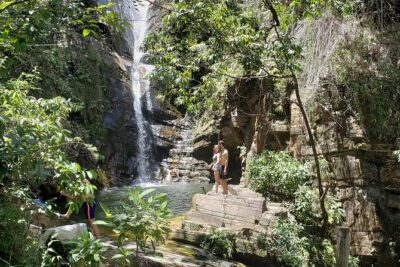
Pirenópolis, the charming baroque city inaugurated in 1723 in the gold cycle
Read our review →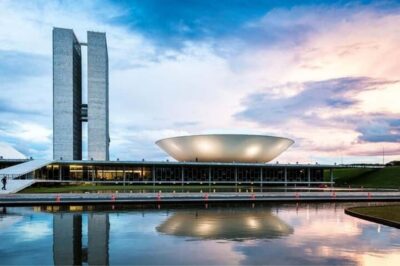
Brasilia : Private Custom Tour with a Local Guide
Read our review →Browse the lists this tour appears in