
Our review · MANAUS TOURS
Manaus City Tour – The Highlighs of the Rubber Boom Time
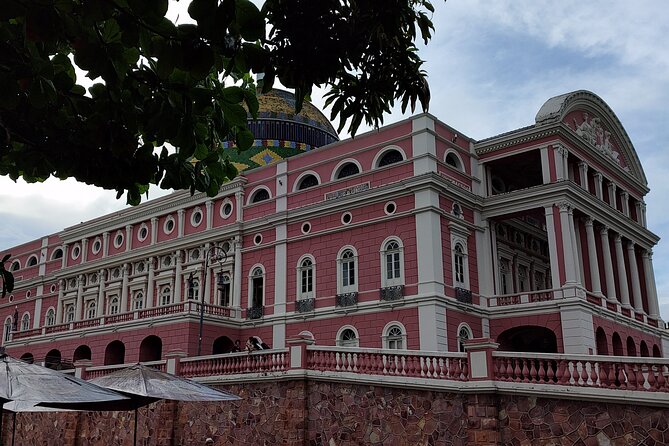
Manaus’s most striking sight is Teatro Amazonas, an ornate opera house built when rubber money briefly turned this rainforest port into one of South America’s grandest cities. A private indoor visit lets you see the tiled dome, chandeliers, woodwork, and theater rooms without rushing through on your own.
I like the door-to-door private transport, especially in Manaus’s heat, and the chance to shape the outing around your interests. Guides including Rodolpho, Kemal, Diogo, and Sardes have been praised for clear English, strong local knowledge, and easy conversation. The main catch is that four hours goes quickly, and some stops receive only a short visit.
Key points to know before booking
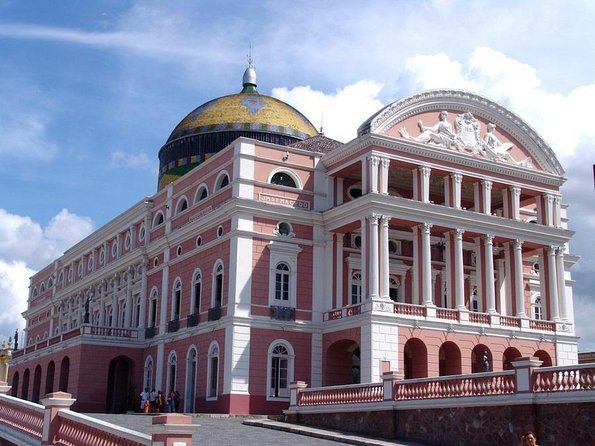
- Teatro Amazonas is the centerpiece: Your admission and private indoor visit cover Manaus’s finest Belle Époque building.
- The tour connects several eras: You move from the rubber boom to modern urban renewal at the market, palace, museums, parks, and riverfront.
- Private transport saves time: Hotel pickup and drop-off come in an air-conditioned car or van.
- The guide makes the difference: Rodolpho, Kemal, Diogo, and Sardes have led tours praised for clear English and flexible pacing.
- The price is $100 per person: A minimum of two people applies, so solo visitors pay for two places.
- Allow roughly four hours: This is a city introduction, not a full Manaus museum day or rainforest excursion.
Why the rubber boom still shapes Manaus
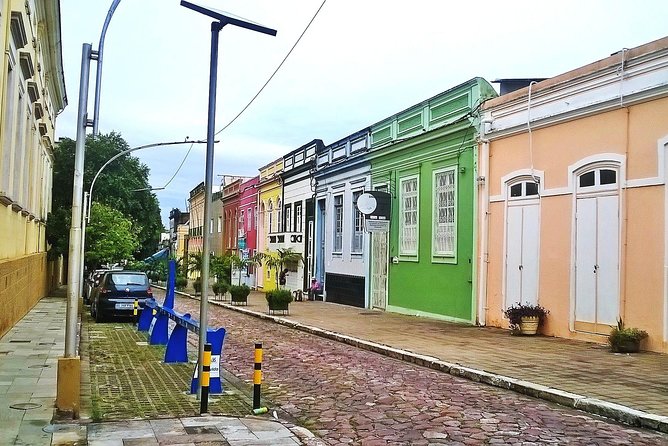
Manaus can feel surprising at first. It is a major Amazonian city, but its historic center contains grand European-style buildings that seem far removed from the surrounding rainforest.
The explanation is rubber. In the late nineteenth and early twentieth centuries, Manaus grew wealthy from the Amazon rubber trade. Foreign commerce brought money, materials, and ambitions that reshaped the city. European ironwork, Italian design, imported furnishings, and grand public buildings all appeared during this period.
This tour works because it gives that story a physical route. You do not simply hear about the rubber boom in a museum room. You see its money in the opera house, its trade connections at the market, its private fortunes at Rio Negro Palace, and its civic pride at the port monument.
I would treat the excursion as a historical introduction rather than a detailed academic tour. Four hours is enough to understand how Manaus developed and to see the central sights, but not enough for long visits at every stop.
more city tours in Manaus
- Manaus: Half-Day City Tour
★ 4.0 · 94 reviews - Private Historic City-tour through the centre OF Manaus
★ 5.0 · 51 reviews - Historic City Tour Manaus by car with 3 stops.
★ 4.9 · 18 reviews
Teatro Amazonas: the hour that earns its place
The Teatro Amazonas is the clear highlight. Opened in 1896, it was built during the height of the rubber boom and remains the city’s best-known symbol of that period.
Look up before you look ahead. The dome is covered with 36,000 ceramic tiles painted in the colors of Brazil’s flag. Inside, Murano chandeliers, jacaranda wood floors, and European-style decoration show how far Manaus’s wealthy leaders wanted to project their city onto the world stage.
The private indoor visit lasts about an hour, with admission included. That timing matters. You have enough time to appreciate the theater rooms and architectural details rather than simply taking a photograph outside.
The opera house suits several kinds of visitors. If you like architecture, you will find plenty to study. If you care more about social history, the building shows how rubber wealth was spent and who Manaus hoped to impress. Even if opera is not your interest, the contrast between this formal European interior and the Amazonian setting makes the visit memorable.
The theater is also the place where a good guide can add real value. Ask about the rubber economy, the imported materials, and why a city in the rainforest invested in such an elaborate performance hall. Guides such as Rodolpho and Diogo have been praised for answering detailed questions and translating explanations clearly for English-speaking groups.
Largo de São Sebastião and the port monument
Near the theater is the Monumento à Abertura dos Portos, located in Largo de São Sebastião. The monument commemorates the 1866 opening of Amazonian ports to international trade, an event that helped connect Manaus more directly with overseas commerce.
It was inaugurated in 1900 and designed by Italian artist Domenico de Angelis. Its sculptures represent Asia, Africa, Europe, and America. Each continent is shown through a ship and a seated child, while Mercury, the Roman god of commerce, appears at the top beside a female figure representing the Amazon.
You receive about 20 minutes here, which is enough for photographs and a short explanation. I like this stop because it gives the opera house a wider setting. The theater was not an isolated extravagance. It belonged to a city opening itself to international business.
Do not expect a long guided art lecture. This is a compact stop, best used to connect the monument’s symbols with the wider story of trade, rubber, and Manaus’s ambitions.
Adolpho Lisboa Market: trade you can still see
The Adolpho Lisboa Municipal Market sits along the Rio Negro in the historic center. Built in 1883, it is one of the city’s notable Art Nouveau structures and another product of the rubber boom.
Its iron framework was imported from Europe, with some elements attributed to Gustave Eiffel. The market remains more than a pretty old building. Inside, you can find fresh fish, Amazonian fruits, medicinal herbs, local foods, and Indigenous crafts.
The planned visit lasts around 30 minutes and costs nothing to enter. That may sound brief, but a focused half-hour can work well here. Your guide can point out unfamiliar produce, explain local herbs, and help you understand the difference between goods sold for daily use and items aimed at visitors.
This is also one of the more authentic parts of the route. The market is not only a historic attraction. It is tied to local commerce and daily life. You might find the mix of practical shopping, food, and handmade goods more revealing than a display arranged solely for tourists.
Keep your expectations sensible. Half an hour will not give you time to inspect every stall or shop at length. If the market is your main interest, tell your guide early. The private format may allow some adjustment, as long as traffic, opening times, and the rest of the schedule permit it.
A different side of Manaus altogether:
- From Manaus: One-Day Amazon Jungle Experience
★ 4.8 · 408 reviews - Manaus: Full-Day Tour on the Amazon River
★ 4.2 · 362 reviews - From Manaus: Presidente Figueiredo Waterfalls Daytrip
★ 4.3 · 149 reviews - 3 Days Amazon Jungle Adventure Tour
★ 4.0 · 145 reviews
Rio Negro Palace and the world of rubber wealth
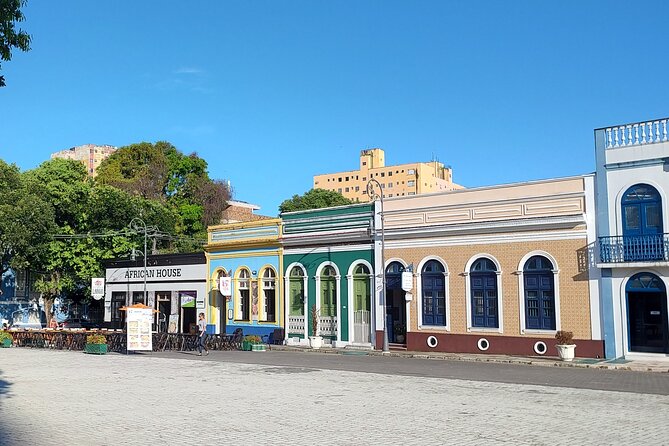
Rio Negro Palace was built in 1903 by Waldemar Scholz, a German rubber baron. It began as a private mansion and became the official seat of the Amazonas government in 1918.
Today it functions as a cultural center and museum. The rooms contain period furniture, art displays, and objects connected to Manaus’s past. The grand staircase, imported iron sculptures, and gardens are the main features to watch for.
The visit is scheduled for about 30 minutes, with free entry. That makes it a useful companion to Teatro Amazonas. The theater shows civic spectacle, while the palace gives you a sense of how an individual rubber fortune was expressed through domestic architecture.
I would not expect the same depth here as at the opera house. Thirty minutes is enough to see the principal rooms and hear the main story, but not enough to examine every object. Still, the palace earns its place because it helps put the rubber boom into human scale. Money built public monuments, but it also created private mansions and political power.
The gardens connect toward Jefferson Peres Park, giving the stop a pleasant outdoor element. In hot weather, the short indoor and outdoor rhythm can be more comfortable than spending four straight hours inside museums.
Jefferson Peres Park and Manaus’s changing center
Jefferson Peres Park is a newer public area built where slums once existed. The tour makes a short visit of about 10 minutes.
This is not a major sightseeing stop in the same way as the opera house or palace. Think of it as a quick look at urban change. It shows that Manaus is not frozen in its rubber-boom past. The city has also been working to reshape central areas into places for recreation and public life.
Because the visit is short, I would use it as a pause between historic buildings rather than a destination in itself. It may be most useful if you want to see how local redevelopment fits into the city’s present-day identity.
Museu da Cidade de Manaus: a broad look at the city
The Museu da Cidade de Manaus is scheduled for about an hour. It is described as a place where you can trace how the city began and how it passed through different periods.
This stop provides the widest historical frame on the tour. The opera house and palace tell specific stories about wealth. The city museum helps connect those stories to Manaus as a whole.
An hour is a useful amount of time for a museum visit, especially when your guide can explain what you are seeing. If you are interested in how the city developed before, during, and after the rubber boom, this may be nearly as valuable as the famous theater.
The supplied schedule also identifies a visit to Mirante Lúcia Almeida under the city museum entry. I would confirm the exact order with the operator, since the descriptions refer to two separate places. That small point matters if you are planning around a cruise departure or another fixed appointment.
Mirante Lúcia Almeida and the Rio Negro view
Mirante Lúcia Almeida opened in April 2024 in Manaus’s historic center. It is a cultural and leisure complex with views toward the Rio Negro and the Meeting of the Waters.
The planned visit takes about 30 minutes, with admission included. The viewpoint adds a change of scale after the close detail of markets, museums, and historic rooms. From here, you can look across the river setting that shaped Manaus’s economy and identity.
The Meeting of the Waters is an important part of the Amazon experience, but do not confuse this stop with a full river excursion. You are visiting a viewpoint in the city, not taking a boat to the meeting point. That distinction helps set the right expectation.
Because the site is new, it also shows Manaus in its current phase of cultural renewal. Along with Jefferson Peres Park, it keeps this from being a tour only about old buildings.
Private transport, guides, and timing
Hotel pickup and drop-off are included, with transport by private car or van. Air conditioning is a major practical benefit in Manaus, particularly when you are moving between outdoor stops and historic buildings.
The private setup means only your group participates. That gives you a better chance to ask questions, request a little more time at a favorite stop, or move on when you have seen enough. It does not mean every part of the schedule can change. The tour still needs to fit opening hours and the overall four-hour window.
Guides who have led this experience include Rodolpho, Kemal, Diogo, and Sardes. English ability has been a strong point, and the guiding style appears suited to visitors who want both history and practical help. Rodolpho has also handled airport transfers, according to the supplied information, which may be useful if you want one local contact for several parts of your Manaus stay.
The tour requires a minimum of two people per booking. If you are traveling alone, the price still covers two places, which weakens the value considerably. For couples, friends, or a small family, the cost is easier to justify because you receive a private vehicle, hotel transfers, and an individual guide rather than joining a large group.
Cruise passengers need to provide the ship name, docking time, disembarkation time, and re-boarding time when booking. Build in a safety margin. The operator says missed tours caused by a late or non-arriving ship are not refunded.
Is $100 per person good value?
At $100 per person, this is not the cheapest way to see Manaus. The value comes from the combination of private transport, hotel pickup, an included Teatro Amazonas ticket, and a guide who can explain the city in English.
For two people, the price buys a convenient half-day introduction. You avoid arranging taxis between several central sights, and you can see a lot without spending time figuring out the city’s layout. The air-conditioned vehicle is especially useful if you are arriving from a cruise or fitting the tour between other plans.
The value is weaker if you want long museum visits, extensive shopping, or a relaxed market morning. Several stops are short, and food and drinks are not included. Solo visitors also need to remember the two-person minimum.
I see this as a convenience and orientation tour, not a bargain sightseeing walk. If your time in Manaus is limited, the price is easier to defend. If you have several free days and enjoy exploring independently, you may prefer to visit the historic center at your own pace.
What to know about weather and clothing
Manaus can be hot, and the itinerary moves between outdoor areas and indoor buildings. Wear smart casual clothing, as requested, and choose comfortable shoes. A moderate level of physical fitness is expected.
Weather can affect the schedule. If poor conditions force a cancellation, you can choose another date or receive a full refund. One important practical issue is that heavy rain can affect access and opening times, especially on days when some attractions close around midday.
The cancellation policy allows a full refund when you cancel at least 24 hours before the start time. Changes or cancellations made inside that window are not accepted for a refund. Children must be accompanied by an adult.
Who should book this Manaus city tour?
I would recommend it to first-time visitors who want a clear introduction to Manaus without handling local transport themselves. It is also a strong choice for cruise passengers with one day in port, provided the timing is confirmed carefully.
History fans will get the most from the route, especially if they enjoy architecture, trade, and the social effects of a short-lived economic boom. The market and viewpoint also give the outing more local texture than a tour limited to monuments.
Families and older visitors may appreciate the private vehicle and flexible conversation. The moderate fitness requirement is manageable for many people, but you should still expect some walking and time outside.
I would be more cautious if your priority is the rainforest, wildlife, or the Meeting of the Waters by boat. This is a city tour. It introduces Manaus and its past, but it does not replace a forest excursion or river trip.
Should you book it?
Book this tour if you want to understand why Manaus has an opera house, grand palaces, European ironwork, and new riverfront spaces in the middle of the Amazon. The private format, air-conditioned transport, included theater entry, and strong English-language guiding make it a practical choice for a short stay.
Before paying, confirm the pickup time, assigned guide, and the exact museum and Mirante schedule. If you are alone, weigh the two-person minimum carefully. For couples, friends, or cruise passengers with limited time, this is a well-focused way to see the city’s main historic sights and leave with a much clearer sense of Manaus.
FAQ
How long does the Manaus City Tour last?
The tour lasts approximately four hours.
What is the price of the tour?
The price is $100 per person, and a minimum of two people per booking is required.
Is Teatro Amazonas admission included?
Yes. The tour includes the entrance fee and a private indoor visit to Teatro Amazonas.
Does the tour include hotel transportation?
Yes. Round-trip pickup and drop-off from Manaus hotels are included, with transport by private car or van.
Is this a private tour?
Yes. Only your group participates in the activity.
Which attractions are included?
The route includes Teatro Amazonas, Adolpho Lisboa Municipal Market, Rio Negro Palace, Jefferson Peres Park, Museu da Cidade de Manaus, Mirante Lúcia Almeida, and the Monumento à Abertura dos Portos.
Are food and drinks included?
No. Food and drinks are not included unless specifically stated.
What happens if bad weather cancels the tour?
If poor weather causes a cancellation, you can choose an alternative date or receive a full refund.
New in Manaus this month
- Manaus: Folklore Amazonian Dinner Show★ 3.3 · 3 reviews
- Manaus : Visit to MUSA (Amazon Museum)★ 3.0 · 4 reviews
- Manaus : A day of fishing on the Rio Negro★ 4.5 · 4 reviews
- Manaus: City Tour★ 3.5 · 4 reviews
- Manaus: Amazon Rainforest Panoramic Airplane Flight★ 4.4 · 5 reviews
- Amazon Jungle 3-Hour Tree Climbing Activity★ 4.6 · 6 reviews
- Amazon Safari® Manaus: Day trip on the Amazon River★ 3.8 · 9 reviews
- Amazon Experience: Indigenous culture and nature phenomenon★ 4.4 · 10 reviews
Manaus Tours, compared.
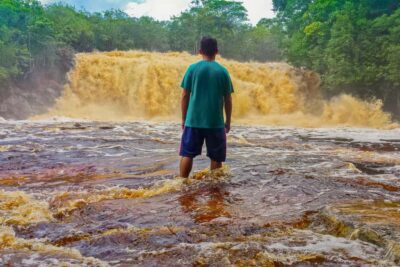
From Manaus: Presidente Figueiredo Waterfalls Daytrip
Read our review →
Browse the lists this tour appears in