
Our review · GRAMADO AND CANELA TOURS
Parque Cultural Epopeia Italiana
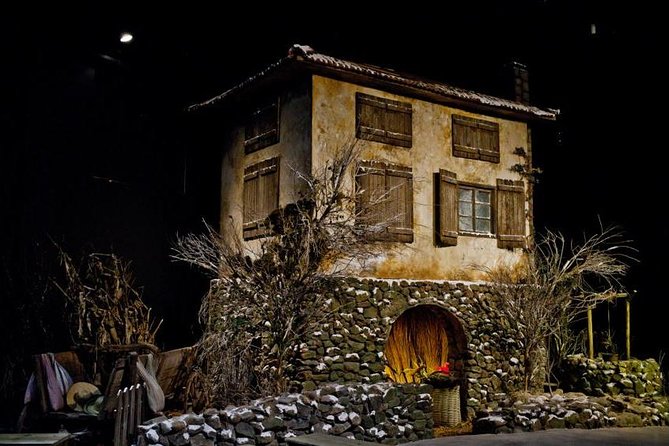
At Parque Cultural Epopeia Italiana, you do not simply read about Italian immigration to Brazil. You walk from scene to scene as the story of Lázaro and Rosa unfolds around you. Their journey from Italy to Rio Grande do Sul is presented through replicas, film, sound, actors, and theatrical movement.
I like two things right away: the presentation is short enough to fit easily into a busy Gramado day, and the nine real-life settings give the story a physical shape. The tasting of grape juice, wine, and homemade cookies adds a pleasant local touch at the end.
The main caution is that this is a staged attraction, not a quiet museum or a scholarly exhibition. The style is emotional and heavily theatrical, with multimedia cuts that some people may find disjointed. If you prefer a simple display of documents and objects, this may not be your ideal stop.
Key points at a glance
- Lázaro and Rosa’s personal story: Follow a real immigrant couple through hardship, sacrifice, and eventual prosperity in southern Brazil.
- Nine walk-through scenes: Move through replicas of Italian villages, the immigrant ship, Brazilian forest, and the growing Italian community.
- Live theater with multimedia: Actors perform alongside film, sound, technology, and carefully built sets.
- A quick 45-minute visit: The compact format works well between other Gramado activities.
- Tasting at the end: Sample grape juice, wine, and homemade cookies after the presentation.
- Low admission price: At about $9.27 per person, the experience offers a fairly easy addition to a Gramado itinerary.
Entering the story of Lázaro and Rosa
The heart of the show is the story of Lázaro and Rosa Giordani, an Italian couple who came to Brazil in the early 20th century. The presentation follows the difficulties they faced on arrival and the effort required to build a new life in Rio Grande do Sul.
The attraction treats them as important early Italian immigrants to the region. You see their departure, the voyage, the unfamiliar Brazilian setting, and the gradual creation of a new home. The story also connects their experience with Italian customs, farming, community life, and wine production.
That personal focus matters. A general talk about immigration can feel distant. A couple with names, setbacks, and a shared future gives you something to follow. You are not asked to absorb a long list of dates. Instead, the history moves through a family story that is easier to remember.
The presentation also gives a sense of how much Italian culture shaped the Serra Gaúcha. Food, wine, language, family ties, work, and religious traditions all appear as parts of a larger process of settlement. It is a useful introduction if you are visiting Gramado, Bento Gonçalves, or other parts of Rio Grande do Sul and want context for the region’s Italian identity.
Other Brazil days that go well with this one:
- Rio de Janeiro: 6-Stop Highlights of Rio with Lunch
★ 4.4 · 5,157 reviews - Christ the Redeemer Entry Ticket by Corcovado Train
★ 4.4 · 4,476 reviews - Rio de Janeiro: Rocinha Favela Walking Tour with Local Guide
★ 4.8 · 3,052 reviews
Nine scenes that turn a history lesson into theater
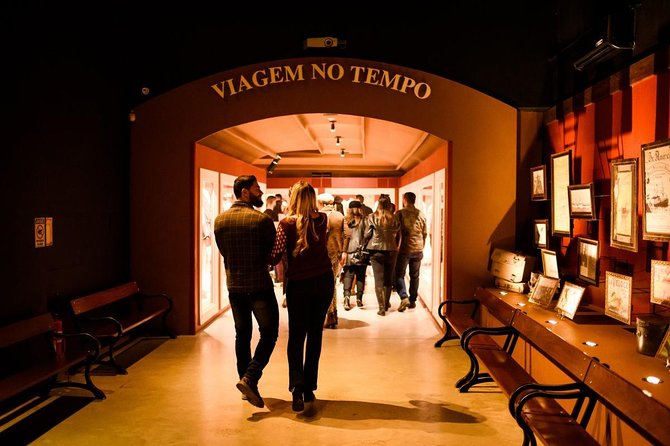
The visit is built around nine settings. You walk between them as the story progresses, so the experience feels closer to a small theatrical production than to a conventional museum.
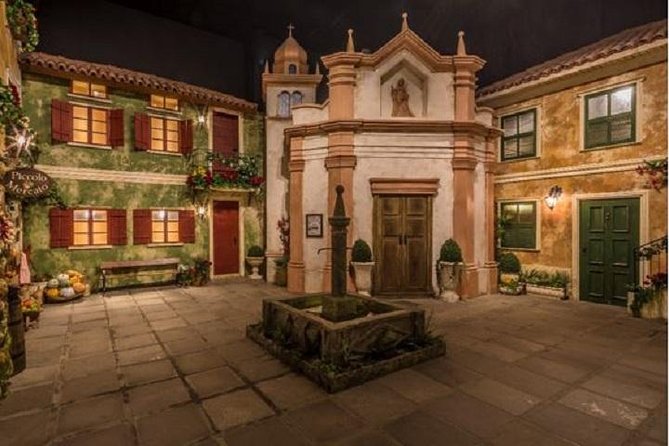
The scenes include references to villages in Italy, the ship that carried immigrants across the Atlantic, Brazilian forest, and the Italian community that developed after arrival. The sets are replicas, but they are designed to create a sense of place rather than simply display information on a wall.
One of the show’s strengths is this change of setting. You move from the old country to the voyage, then into the uncertainty of Brazil. That physical movement helps explain the break between the life Lázaro and Rosa left behind and the one they had to create.
An actor guides the story, and the performance is supported by video and other stage effects. The theatrical approach can be especially effective for families and for anyone who prefers seeing history acted out. It keeps the pace moving and avoids turning the visit into a long lecture.
Still, the style is not perfectly even for every audience. The show has changed over time. A visitor who saw it years ago described an earlier version as more heavily focused on actors, while the newer presentation uses more film and multimedia. Some transitions can feel abrupt, with cuts between video and live theater that do not always connect smoothly.
I would treat this as a scenic history show with educational value, rather than a polished drama with a complex plot. Its goal is to make immigration understandable and emotional. On that level, the format works well, even if the editing occasionally feels busy.
From Italy to Brazil, hardship is the main theme
The story does not present immigration as an easy path to success. Lázaro and Rosa face the hard conditions of starting over in a strange country. The show emphasizes sacrifice, uncertainty, work, and resilience before reaching the couple’s eventual prosperity.
That balance is important. Italian culture in southern Brazil is often presented through cheerful images of wine, food, family, and festivals. Those traditions are real parts of the region, but they came after difficult years. The presentation reminds you that settlement required more than goodwill and hard work. It meant leaving familiar people and places, crossing an ocean, and adapting to a new environment.
The emotional tone can be strong. If you have Italian ancestry, the family story may feel especially personal. The performance has brought some visitors to tears, particularly those who see their own family background reflected in the journey. You do not need Italian roots to appreciate it, but descendants of Italian immigrants may find the subject carries extra weight.
I also appreciate that the show connects personal hardship with a broader regional story. Lázaro and Rosa are not presented in isolation. Their experience helps explain the origins of Italian culture and winemaking in Rio Grande do Sul, two features that remain central to the area’s identity.
The acting and technology: effective, but not subtle
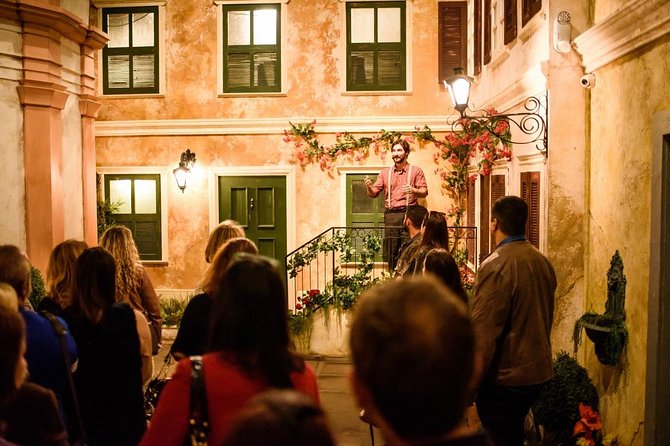
The actor’s role is central. The performance needs to explain the story while keeping the group moving through the settings. The acting has been praised for its energy and emotional pull, especially during the couple’s most difficult moments.
The technology adds motion and scale. Film sequences, sound, lighting, and changing scenes help create the ship crossing and the shift from Italy to Brazil. You can also take photographs and film during the show, which is useful if you want a record of the sets.
The production does not aim for quiet subtlety. It uses broad emotion and clear visual cues. That makes it accessible, but it can also feel somewhat artificial if you expect a restrained museum presentation. The experience is closer to a family-oriented stage show than to a historical archive.
I would pay attention to how the attraction fits your own interests. If you enjoy theatrical storytelling, the moving scenes and live performance are a strong reason to go. If you want original artifacts, detailed genealogy, or a long explanation of immigration policy, you may find the show limited.
The short running time helps here. At roughly 45 minutes, the production does not have much time to wander. It gives you the main story, creates an emotional arc, and brings you to the tasting before the experience loses momentum.
A different side of Brazil altogether:
- Rio de Janeiro: Sugarloaf Cable Car Official Ticket
★ 4.6 · 2,873 reviews - Rio: Christ the Redeemer, Sugarloaf, Selaron & BBQ Lunch
★ 4.5 · 2,428 reviews - Rio De Janeiro: Half-Day Rocinha Favela Walking Tour
★ 4.7 · 2,272 reviews - Rio de Janeiro: Angra dos Reis and Ilha Grande Full-Day Tour
★ 4.6 · 1,673 reviews
The final tasting: grape juice, wine, and cookies
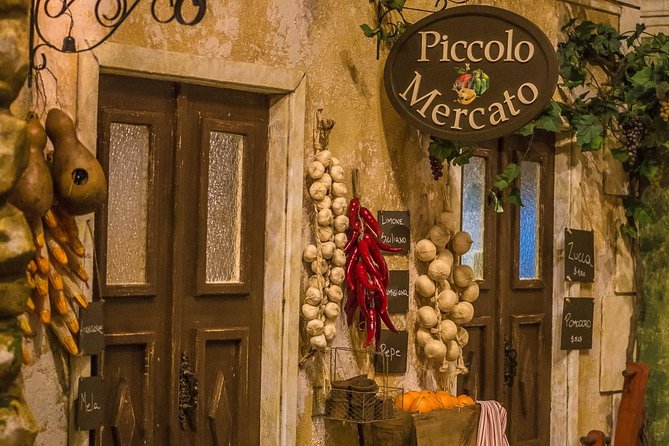
At the end, you receive a small taste of the culture the show has been describing. The offering includes grape juice, wine, and homemade cookies. For many people, this will be a simple but welcome finish.
The grape juice is particularly fitting because grape growing and winemaking are important parts of Italian settlement in Rio Grande do Sul. The tasting does not replace a winery visit, and you should not expect a full meal or a serious wine education. Think of it as a closing sample that connects the historical story with regional food traditions.
The cookies also make the ending feel informal and family-friendly. After the emotional scenes, a snack gives the visit a softer landing. It is a small detail, but it helps the attraction feel more like a complete outing than a film shown in a room.
Because wine is included, keep the nature of the tasting in mind if you are visiting with children or avoiding alcohol. Grape juice is also offered, so the experience is not dependent on drinking wine.
Is $9.27 a good value?
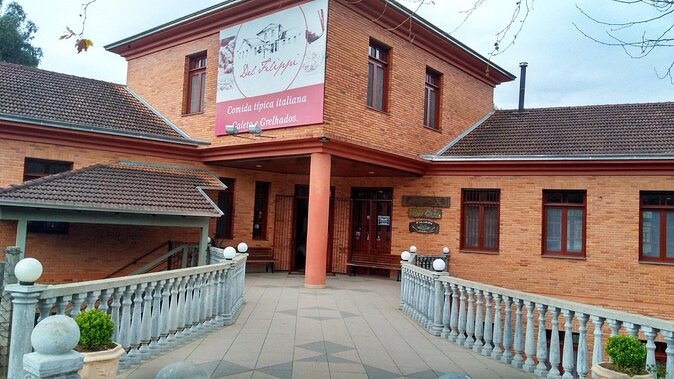
At about $9.27 per person, this is one of the easier Gramado attractions to add without making a major dent in your day’s budget. The ticket covers admission to the cultural park and the presentation. Transportation, hotel pickup, and drop-off are not included.
The value depends on what you want from the visit. You are paying for a short production, purpose-built scenery, live performance, multimedia effects, and a tasting. You are not paying for an all-day museum, a large collection, or a guided tour through several locations.
I consider the price reasonable for a compact activity, especially if you are already near the park or can combine it with another nearby attraction. It is also included in some Maria Fumaça package arrangements, so check your package details before buying a separate ticket. Several people discovered the presentation through that combination and found it to be an unexpected extra.
The 45-minute length is another value point. You can fit it between meals, shopping, and other scheduled activities. It is long enough to tell a complete story but short enough that you are unlikely to lose an entire afternoon.
The practical downside is that the low ticket price does not cover getting there. If you need a taxi or another paid ride, your total cost will be higher. On-site parking is available, and the park is near public transportation, which makes the logistics simpler for many visitors.
Who will enjoy this most?
I would recommend Parque Cultural Epopeia Italiana to families, first-time visitors to the Serra Gaúcha, and anyone curious about how Italian traditions took root in southern Brazil. The moving sets make the subject easier for children to follow than a wall of text, although the emotional parts may be more meaningful to adults.
It is also a good choice for people with Italian ancestry. The story of Lázaro and Rosa gives a human face to the decisions and losses behind immigration. If your family came from Italy to Brazil, you may want extra time afterward to talk about your own family’s route and settlement.
The experience suits a mixed group because it combines history, theater, food, and technology. One person can enjoy the sets, another can focus on the family story, and someone else can simply appreciate the production.
I would be more cautious about recommending it to visitors who dislike staged attractions. The show does not offer much quiet time for independent reading or reflection. It guides you firmly from one scene to the next, and the multimedia sections may feel disconnected if you prefer a straightforward narrative.
It is also not a substitute for visiting the wine country around Bento Gonçalves or learning about Italian settlement in greater detail. Instead, it works as a brief introduction that can make those later visits more meaningful.
Timing, access, and booking details
The experience lasts about 45 minutes, and the maximum group size is listed as 15 people. That is a small enough number to keep the presentation manageable, though the exact feel of the visit can depend on the scheduled group.
Confirmation is issued within 48 hours of booking, subject to availability. A current passport or identification document is required on the day of the visit. Service animals are allowed, and most people can participate.
You need to arrange your own transportation. There is parking at the park, and the location is near public transportation. Hotel transfers are not included, so build that into your timing if you are staying elsewhere in Gramado.
If your plans change, free cancellation is available up to 24 hours before the scheduled start time. Cancellations made less than 24 hours in advance are not refunded, and changes inside that window are not accepted. The cut-off follows local time.
Should you book Parque Cultural Epopeia Italiana?
Book it if you want a short, affordable, and emotional introduction to Italian immigration in Rio Grande do Sul. The combination of nine scenes, live acting, film, and a small tasting gives you more variety than a standard museum visit, and the story of Lázaro and Rosa is easy to follow.
I would especially choose it if you are already planning a Maria Fumaça package, traveling with children, or interested in the Italian roots of southern Brazil. The show may also add useful context before a winery visit.
Skip it if you want a quiet historical museum, original artifacts, or a long and detailed account of immigration. The production is theatrical, sometimes sentimental, and occasionally uneven in its transitions.
For the price and time required, I think it is a sensible Gramado stop. Go expecting a compact stage show with history at its center, not an academic museum. With that expectation, the park offers a memorable look at how one couple’s difficult journey helped shape a lasting regional culture.
FAQ
Where is Parque Cultural Epopeia Italiana located?
The park is located in Gramado, Brazil.
How long does the experience last?
The presentation lasts approximately 45 minutes.
What is included in the ticket?
Admission to Parque Cultural Epopeia Italiana is included.
Is transportation included?
No. Hotel pickup, hotel drop-off, and transportation to and from the attraction are not included.
Is parking available?
Yes. Parking is available on site.
What does the presentation tell you about?
It tells the story of Lázaro and Rosa, Italian immigrants who faced hardship after arriving in Brazil and later prospered in Rio Grande do Sul. It also explains the beginnings of Italian culture and winemaking in the region.
How many scenes are part of the show?
The presentation includes nine real-life scenarios built for the production.
Is food or drink included?
Yes. The experience includes a tasting of grape juice, wine, and homemade cookies.
How far in advance is the experience usually booked?
It is booked an average of 25 days in advance.
What identification is required?
You must bring a current valid passport or identification document on the day of the activity.
New in Brazil this month
- Itacare: 4 Beaches Trail and Tijuipe Waterfall★ 5.0 · 3 reviews
- Idyllic Islands Private Speedboat Tour in Paraty★ 5.0 · 3 reviews
- Ilha Grande: Lopes Mendes Private Hiking Tour★ 5.0 · 3 reviews
- São Paulo: Downtown Walking Tour with Farol Santander Entry★ 4.6 · 3 reviews
- Foz do Iguacu: Skydiving Experience with Photos and Videos★ 5.0 · 3 reviews
- São Paulo: Full-Day Guided City Tour from the Port of Santos★ 5.0 · 3 reviews
- Discover Rocinha: Guided Tour of the Famous Favela★ 4.5 · 3 reviews
- Florianópolis: Caminho da Costa da Lagoa Trail★ 4.7 · 3 reviews
Gramado and Canela Tours, compared.

Jolimont Winery Tour – Visitation and Tasting – Canela RS
Read our review →
Quadricycle Tour to the Hills with Off Road 15km – 2 people
Read our review →

Tour Hortencias cinnamon Private lawn – 1-4 Pax by Fatur Turismo
Read our review →
Personalized City Tour in the Top Attractions of Gramado/Canela
Read our review →

Quadricycle Tour to the Hills with Off Road 15km – 01 person
Read our review →Browse the lists this tour appears in