

Our review · RIO DE JANEIRO TOURS
Rio de Janeiro: Local Experience in Forró dance
Rio’s Forró night starts with a dance lesson, but the real payoff comes later, when you follow your teacher into a local club where people dance for themselves, not for a show. Forró is social, easy to pick up, and far less polished for tourists than samba. I like the clear beginner class and the live band in a real neighborhood setting. The catch is that you must arrange your own ride home, and the guide leaves after part of the evening.
I also like that you do not need a partner. Your instructor can dance with you during the lesson and help you get started at the club. Bruno, one of the instructors, speaks English well and explains the frame, rhythm, and footwork clearly. This is a good choice if you want culture with participation, not just a seat in an audience.
Key points about this Rio Forró night
- You start with a one-hour beginner class: Learn the basic frame, rhythm, and footwork before heading out.
- You meet near General Osorio metro station: Look for Casa do Caminho, a blue house that also operates as a Portuguese language school.
- You visit a local Forró club: This is a traditional dance spot where locals really go, not a staged tourist venue.
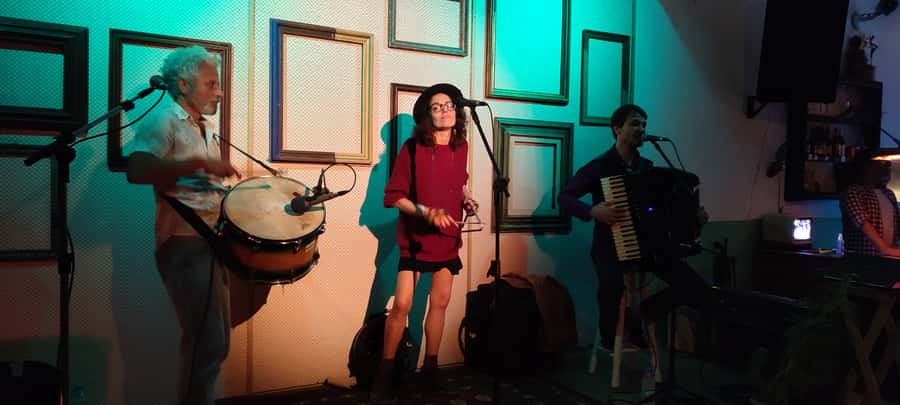
- You get live Brazilian music: A Forró band plays during the club portion of the night.
- Your teacher is also your guide: You have someone familiar to dance with and ask for help.
- You need a plan for the way home: Transport to the club is included, but your return ride is not.
Why Forró makes a fine change from samba
Rio is famous for samba, but Forró gives you a different view of Brazilian music and nightlife. The dance comes from northeastern Brazil and has a strong social character. People go to dance with one another, practice, listen to the band, and spend time in a familiar local setting.
That difference matters. A samba show can be polished and exciting, but it often puts you on the outside looking in. Here, you learn enough to take part. You may still spend much of the night watching, but you have the option to step onto the floor.
Forró is also friendly to beginners. You do not need a partner, prior lessons, or a background in Latin dance. The class gives you a simple starting point, and your teacher can adjust the pace to help you keep up.
The dance does require attention to rhythm and foot placement, so do not expect to master it in an hour. The goal is more modest and more useful: learn the basic frame, understand the beat, and gain enough confidence to try a few dances later.
Other Rio de Janeiro days that go well with this one:
- Rio de Janeiro: 6-Stop Highlights of Rio with Lunch
★ 4.4 · 5,157 reviews - Christ the Redeemer Entry Ticket by Corcovado Train
★ 4.4 · 4,476 reviews - Rio de Janeiro: Rocinha Favela Walking Tour with Local Guide
★ 4.8 · 3,052 reviews
Meeting at the blue house in Ipanema
The evening begins next to General Osorio metro station in Ipanema. The meeting place is Casa do Caminho, a Portuguese language school in a blue house. That detail is useful because the address may not look like a dance studio or a tour office.
I would give yourself a little extra time to find it, especially if you do not know Ipanema well. Look for the blue house and use the metro station as your main landmark. The meeting point is convenient for anyone already staying in Ipanema or using the metro.
This start also sets the tone. You are not being collected at a large hotel and taken straight to a performance. You first meet a local instructor in a neighborhood setting, then learn something connected to Brazilian culture before going out.
The full activity lasts 210 minutes, or three and a half hours. The exact start time depends on availability, and the experience runs on Wednesdays. That fixed night is important when planning your Rio stay.
The one-hour class: rhythm before nightlife
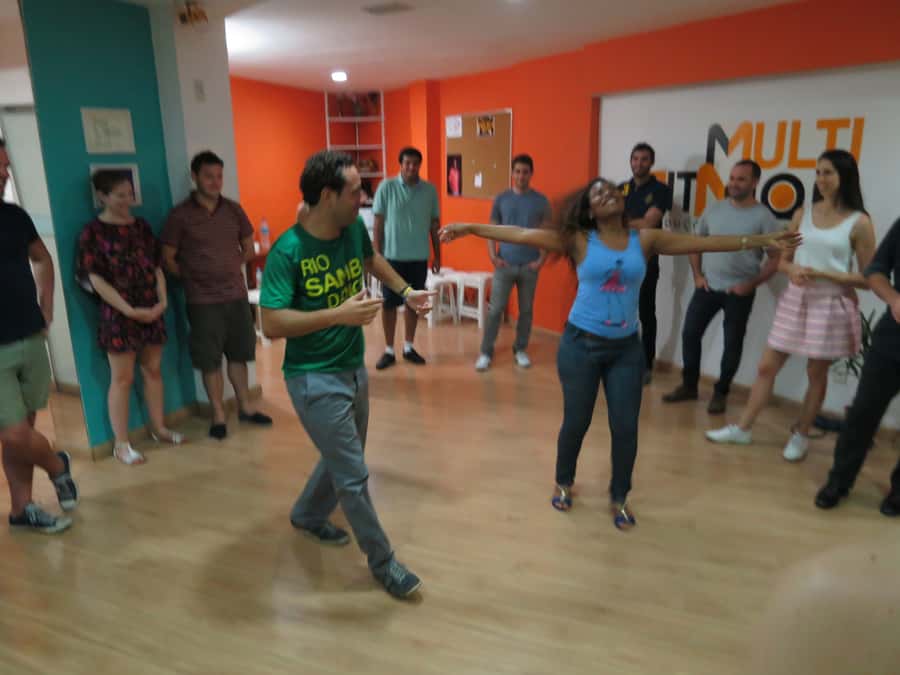
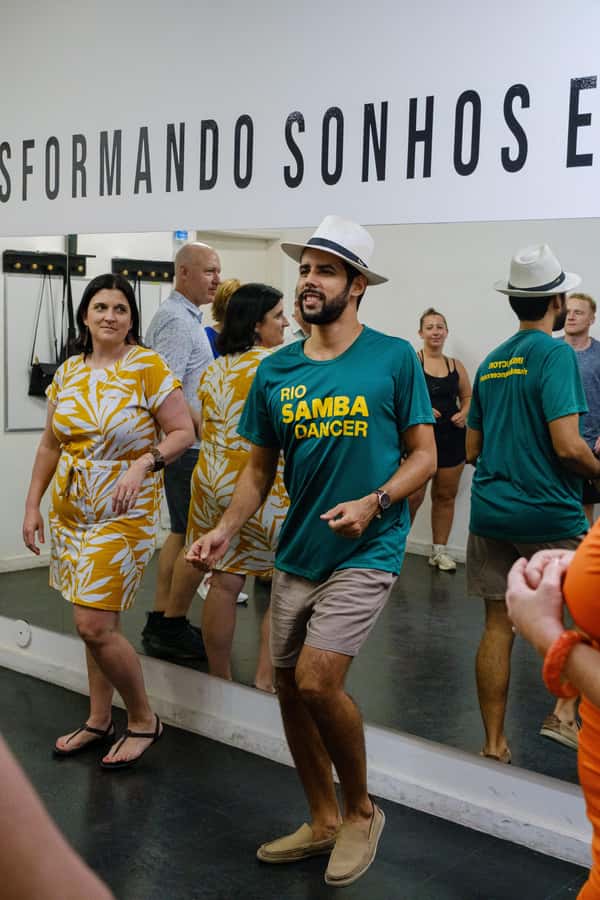
The first part is a one-hour Forró lesson with your professional dance instructor and guide. The instruction is aimed at beginners, so you should not feel pressured to arrive with polished steps.
The class focuses on the basics that make social dancing possible:
- The close dance frame
- The rhythm of Forró
- Simple footwork
- How to move with a partner
- How to follow and respond without overthinking
The frame is especially important. Forró is not just a matter of copying foot movements while standing apart. You learn how partners communicate through their position and movement. Once that connection makes sense, the steps become easier to follow.
Bruno received especially strong praise for his teaching. His English is clear, and his explanations cover the frame, rhythm, and footwork in a way that works for a complete beginner. Someone with previous Salsa 2 experience found that background helpful, but the class is still designed for someone starting from zero.
You also do not have to arrive with a dance partner. Your instructor can work with you, and the group format gives you a chance to practice the basic movements before the club portion begins. If you are shy about dancing with strangers, that first hour gives you a gentler introduction.
Do not treat the lesson as a full dance course. One hour will not turn you into an expert, and the club will move at a more natural pace than the classroom. Still, learning the basic rhythm first can make the later part much less intimidating.
Riding together to a real local club
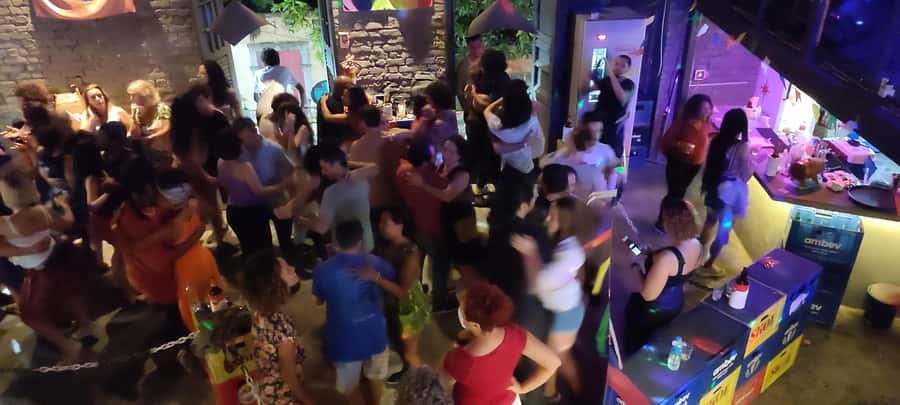
After the class, the group travels together to a local Forró club. Transportation from the class to the club is included, which keeps the transition simple. You do not have to work out a new route while remembering your first steps.
The club is not presented as a tourist venue. That is one of the strongest reasons to book this activity, but it also means you should expect a less controlled setting. The music, crowd, and pace are shaped by the local Forró scene rather than by a sightseeing company.
You may notice that the atmosphere feels more natural than a staged cultural show. People are there to dance and listen to the band, not to perform an arranged number for an audience. If you want to understand how a Brazilian dance works in ordinary social life, this is the useful part of the evening.
There is a tradeoff. A local club may feel unfamiliar if you have never danced Forró before. You might spend the first part watching and getting your bearings. That is perfectly fine. Watching local dancers can teach you how the rhythm works and how partners move together.
Your teacher remains with the group for part of the night, so you have help when you arrive. You can also use the instructor as your first dance partner if you want to practice the steps in the new setting.
A different side of Rio de Janeiro altogether:
- Rio: Christ the Redeemer, Sugarloaf, Selaron & BBQ Lunch
★ 4.5 · 2,428 reviews - Rio De Janeiro: Half-Day Rocinha Favela Walking Tour
★ 4.7 · 2,272 reviews - Rio de Janeiro: Angra dos Reis and Ilha Grande Full-Day Tour
★ 4.6 · 1,673 reviews - Rio de Janeiro: Beginner Samba Lesson in Ipanema
★ 4.9 · 1,071 reviews
Live music and the chance to dance
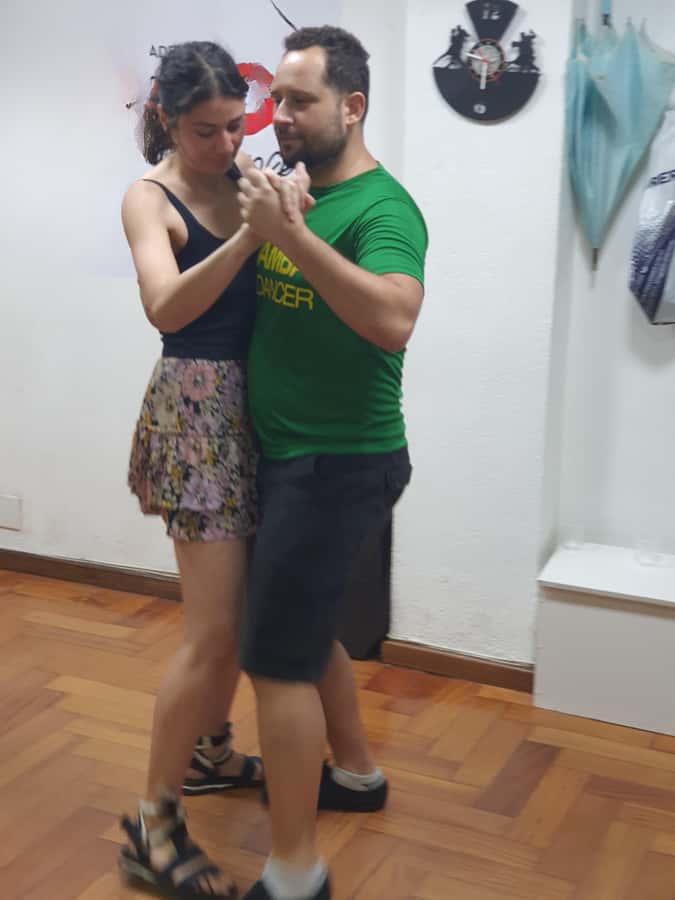
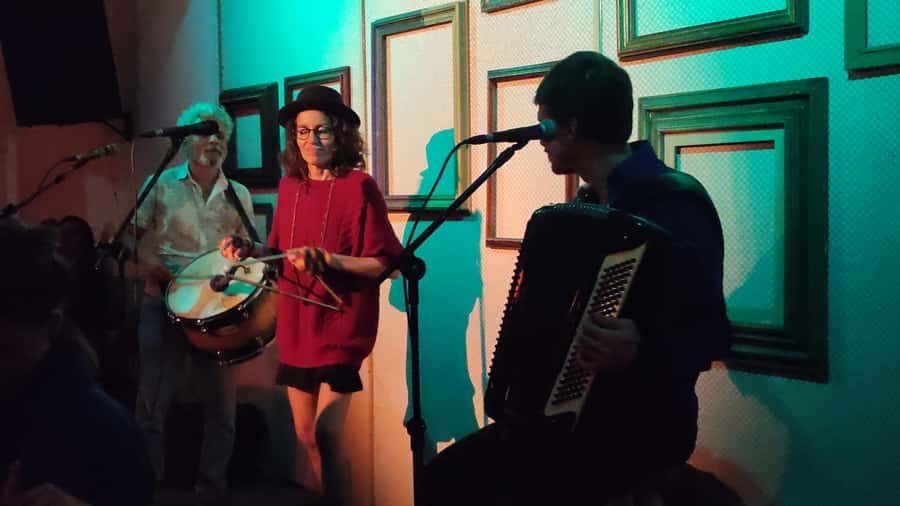
Inside the club, a live Forró band supplies the music. This changes the feel of the activity. The class gives you counts and careful instruction, while the band gives you the real rhythm, with the natural changes that happen in a social dance setting.
You can dance, watch, or move between both. Nobody needs to pretend to be an experienced dancer. If your feet lose the pattern, step aside, watch for a while, and try again when you feel ready.
I would see the live music as part of the cultural value, not just background entertainment. Forró is closely tied to the northeast of Brazil, and listening to it in a local dance club helps connect the class to a wider Brazilian tradition. You are not simply learning a party trick. You are learning how a particular kind of music brings people together.
The guide will not remain for the entire night. After staying with the group for part of the evening, the guide leaves, but will help you arrange transportation afterward. This is worth considering if you want a fully guided night from start to finish. It is not that. It is a guided introduction followed by time in a local club.
What to wear and bring for three and a half hours
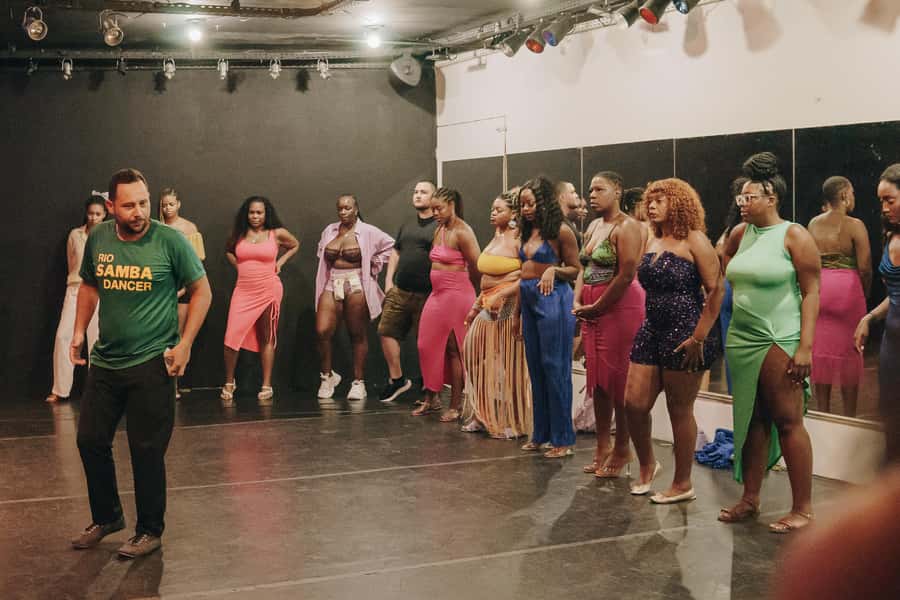
Wear casual clothes that let you move freely. Forró involves close partner movement and repeated footwork, so comfort matters more than dressing up.
Rio is hot and tropical, and the activity includes dancing, travel, and time in a club. Dress light and stay hydrated. Food and drinks are not included, so bring money for anything you want to buy inside.
Practical choices include:
- Light clothing that allows easy movement
- Comfortable shoes suited to dancing
- Water for the evening
- Money for food or drinks at the club
- A phone with enough battery for arranging the return ride
The supplied information does not specify a dress code, age limit, group size, or the exact club. I would not assume the venue has the same comforts or layout as a purpose-built tourist attraction. The point is the local setting, and that comes with a little uncertainty.
Is the $57 price fair?
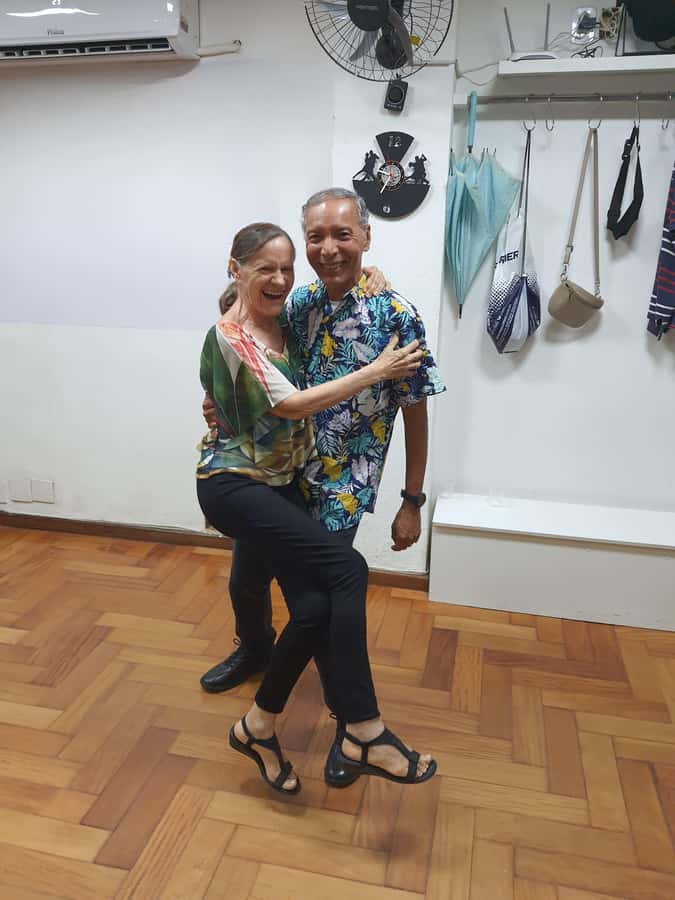
At $57 per person, this costs more than simply entering a club on your own. The value comes from the structure around the night: a beginner lesson, a professional instructor, transport to the club, entry, and live music.
If you already know Forró and can find the club yourself, you may not need the class. But if you are new to the dance, the instruction solves the hardest problem: how to begin without feeling lost. You also avoid arranging transport between the lesson and the club.
The guide’s role adds value. You are not handed a dance lesson and then sent off alone. The same person teaches you, travels with the group, and can serve as your first partner at the club. Clear English instruction is available, and the activity also operates in Portuguese and Spanish.
Food, drinks, and transportation back to your meeting point are extra. Factor those costs into your budget. The return detail is the main financial and practical limitation, especially if you are staying far from Ipanema or do not want to arrange a late-night ride.
For someone seeking a guided cultural night with an active element, the price is reasonable. For someone who only wants to watch live music, it may be more than necessary.
Who will enjoy this most
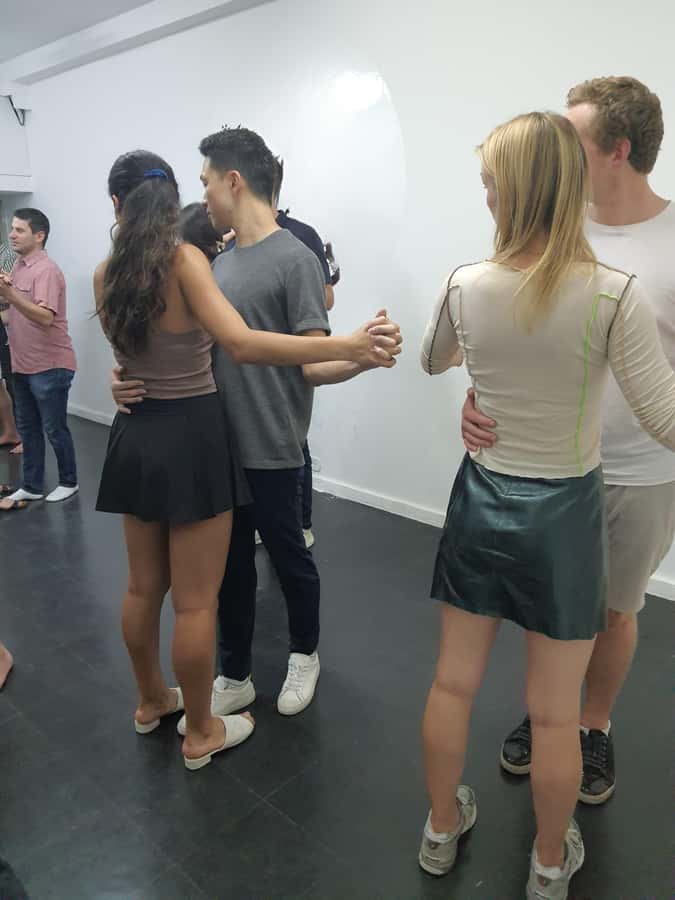
I would recommend this to you if you want to do something distinctly Brazilian but do not want a formal performance. It suits solo visitors particularly well because you do not need to bring a partner, and the instructor can help you enter the social side of the evening.
It also works for couples and friends. You can learn together, then decide how much you want to dance once you reach the club. People with some Salsa experience may pick up the rhythm faster, but you should not book it only if you already dance.
This is a good fit for:
- Beginners who want a friendly introduction to Forró
- Solo visitors who would otherwise arrive at a dance club alone
- Couples looking for a shared cultural activity
- Music lovers who prefer a live band to a staged show
- Anyone curious about local nightlife beyond samba
I would think twice if you dislike partner dancing, crowded social settings, or unplanned nightlife. You can watch at the club, but the class is still built around participation. I would also reconsider it if your schedule does not allow a Wednesday evening or if you need a guide beside you for the entire night.
Languages, timing, and booking flexibility
The live guide languages are English, Portuguese, and Spanish. Bruno’s clear English instruction is a useful detail for English-speaking participants, though the instructor assigned to a particular date may vary.
The activity takes place every Wednesday and lasts 210 minutes. Check the available start time before booking, since the exact schedule is not fixed in the information provided.
You can cancel up to 24 hours before the activity for a full refund. The reserve-now, pay-later option also gives you some room if your Rio plans are still shifting.
The club entry is included, and the ticket line is skipped. The included transport only covers the trip from the class to the club, not the journey afterward.
Should you book this Forró experience?
Book it if you want a practical introduction to Brazilian culture, a beginner-friendly dance lesson, and a real local night with live music. The strongest feature is the connection between the class and the club: you learn the basics, then get a chance to use them in the setting where Forró actually belongs.
Bruno’s clear teaching is another reason to choose it, especially if you worry that language or rhythm will be a problem. You will not leave as an expert, but you should understand the frame, beat, and basic footwork well enough to try.
Skip it if you want a polished show, a private lesson, or door-to-door transport at the end. This is a social night, not a tightly managed performance. Bring comfortable clothes, keep your expectations relaxed, and make a plan for getting home. For the right visitor, it is an engaging way to spend a Wednesday in Rio.
FAQ
Where does the Forró experience begin?
It begins next to General Osorio metro station in Ipanema, at Casa do Caminho. Casa do Caminho is also a Portuguese language school and is located in a blue house.
Do I need previous dance experience?
No. The activity includes a one-hour beginner Forró class, and no previous experience or partner is required.
Is a dance partner required?
No. The instructor guides you through the steps and can dance with you if you want a partner.
What is included in the price?
The price includes the one-hour beginner class, a professional dance instructor and guide, transport from the class to the club, entry to a local Forró club, and the live Forró band experience.
Is transportation home included?
No. Transport back to your accommodation or meeting point is not included. The guide will help you arrange transportation afterward.
When does the activity take place?
The experience takes place every Wednesday and lasts 210 minutes. Check availability for the exact starting time.
New in Rio de Janeiro this month
- Discover Rocinha: Guided Tour of the Famous Favela★ 4.5 · 3 reviews
- Rio de Janeiro: Hang gliding adventure★ 3.7 · 3 reviews
- Rio de Janeiro: Pedra Bonita & Tijuca Forest Hike Tour★ 5.0 · 3 reviews
- Rio de Janeiro: Hang Gliding or Paragliding Flight★ 5.0 · 3 reviews
- Rio de Janeiro: Doors-off 30-min helicopter tour★ 5.0 · 3 reviews
- Rio de Janeiro: Pedra do Telégrafo; Grumari/ Prainha Beaches★ 5.0 · 3 reviews
- Rio de Janeiro: Sugar Loaf with Lunch and Helicopter Flight★ 4.7 · 3 reviews
- Rio: Best Dive Experience All Inclusive Scuba Diving Package★ 5.0 · 3 reviews
Rio de Janeiro Tours, compared.

Rio de Janeiro: 6-Stop Highlights of Rio with Lunch
Read our review →
Christ the Redeemer Entry Ticket by Corcovado Train
Read our review →
Rio de Janeiro: Rocinha Favela Walking Tour with Local Guide
Read our review →
Rio: Christ the Redeemer, Sugarloaf, Selaron & BBQ Lunch
Read our review →
Rio De Janeiro: Half-Day Rocinha Favela Walking Tour
Read our review →
Rio de Janeiro: Angra dos Reis and Ilha Grande Full-Day Tour
Read our review →
Rio de Janeiro: Beginner Samba Lesson in Ipanema
Read our review →