
Our review · SÃO PAULO TOURS
Sao Paulo: Downtown-Center History Walking Tour – in English
São Paulo’s center makes the most sense on foot, where a curved Niemeyer tower, a grand theatre, a Jesuit courtyard, a neo-Gothic cathedral, and a Japanese street market fit into one compact route. This 3-kilometer walk connects the city’s major chapters without turning the morning into a long lecture.
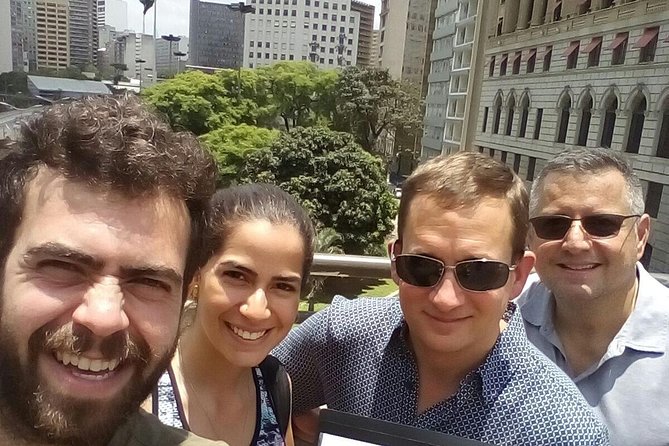
I like the small limit of 10 people, which makes it easier to ask questions and keep up with guide Giuliano. I also like the mix of architecture and everyday city life, especially the final stretch through Liberdade, where food, produce, immigration, and local commerce give the history a human face.
The main drawback is the strict 10:00 a.m. start. One late arrival missed the group after reaching the meeting point only a few minutes behind schedule, so arrive early and allow extra time for São Paulo traffic. The route also requires steady walking and a little street awareness in the city center.
Key points to know before booking
- A compact route with big contrasts: Walk from the modern curves of Copan to the 1554 foundations of Pátio do Colégio.
- Giuliano leads in English: He explains architecture, politics, social change, and local details in a conversational way.
- Liberdade is part of the story: Finish among Japanese-influenced streets, markets, lanterns, produce, and authentic foods.
- A genuine small-group experience: No more than 10 people join, allowing room for questions and conversation.
- Good value at $31.24: For about two hours, you get a clear introduction to central São Paulo without separate admission costs listed for the stops.
- Plan around the firm start time: The tour cannot wait for late arrivals, and poor weather can lead to a new date or full refund.
Why this walk is useful on a first morning
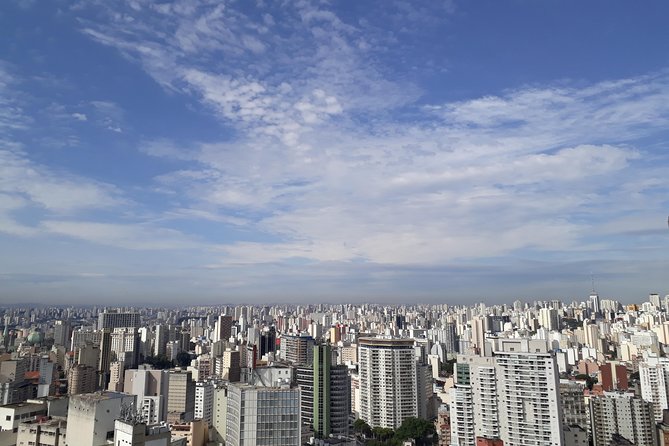
São Paulo can feel enormous and hard to read. Its center brings together colonial beginnings, the coffee economy, immigration, modern architecture, religion, protest, shopping, and popular culture. Seeing those pieces in sequence helps you understand the city far better than visiting isolated buildings by taxi.
The tour begins in Centro Novo and moves toward Sé and Liberdade. That direction matters. You start with the city’s 20th-century ambition, then work backward to its colonial foundation before ending in a neighborhood shaped by later immigration. It is a simple route, but the ideas behind it are not simple.
Giuliano’s approach, based on the experience details and the many positive comments about his work, is broad rather than narrowly architectural. You can expect explanations of why buildings look the way they do, how São Paulo changed socially and economically, and how politics and culture still shape the streets.
Several people also found the walk useful for practical orientation. Giuliano has suggested places for food, coffee, and evening entertainment, and one participant later followed his recommendations for a restaurant and a Teatro Oficina performance. You should treat those suggestions as a useful bonus, not the main product.
More Historical Tours in São Paulo
- São Paulo: Downtown Historical Bike Tour
★ 4.9 · 191 reviews - Gastronomic Tour São Paulo – Culture & History Through The Art Of Food – Private
★ 5.0 · 50 reviews - Full Day Private Beach Tour Santos – Culture, History & Beach (Pickup São Paulo)
★ 5.0 · 47 reviews
Edifício Itália gives you the opening view
Meet at Edifício Itália, at Avenida Ipiranga, 344, at 10:00 a.m. The building was once São Paulo’s tallest and remains one of its best-known landmarks. Beginning here places you in the heart of Centro Novo, an area shaped by the city’s push upward during the 20th century.
This is a good first stop because the building introduces a central theme of the walk: São Paulo repeatedly rebuilds itself. The city’s identity is not locked in one period. Colonial foundations, coffee wealth, immigration, modernism, and popular culture all sit close together.
Admission is listed as free for the stop. The route appears designed mainly around the streets, exteriors, plazas, and public areas, so you should not book it expecting extended indoor visits to every building. The value comes from seeing the structures in context and hearing how they fit together.
Copan shows São Paulo reaching for the sky
The Copan Building is the route’s clearest architectural jolt. Designed by Oscar Niemeyer, it is famous for its broad, waving curves and huge scale. Against the more formal lines of older central buildings, Copan looks almost playful, even though its size reflects serious urban pressure.
Here Giuliano connects architecture with São Paulo’s mid-century growth and vertical construction. The building expresses confidence in modern Brazil, but also the confusion of a city trying to absorb rapid change. You are not just taking a picture of a famous façade. You are looking at a building shaped by the ambition and disorder of expansion.
The stop lasts about 15 minutes, enough for an explanation and photographs. If you care about architecture, this is likely one of the strongest sections of the walk. If you prefer long interior visits, it may feel brief.
The Gallery of Rock changes the tone
The Gallery of Rock and nearby underground shopping passages bring the tour down from monumental architecture to collecting, music, fashion, manga, antiques, and pop culture. This is one of the route’s more unusual stops because it shows a different side of central São Paulo.
You may find vinyl records, old objects, comic and manga culture, and shops connected to local subcultures. The point is not simply to browse. Giuliano uses this area to explain how the center’s identity is shaped by diversity, consumer habits, and resistance to cultural conformity.
This stop should appeal to anyone who likes cities as living places rather than open-air museums. It also gives the group a change of pace after Copan. The visit is scheduled for about 15 minutes, so think of it as a guided introduction rather than a serious shopping session.
More Walking Tours in São Paulo
- Sao Paulo: Downtown-Center Walking Tour | 2 Hours – English
★ 4.9 · 84 reviews - Ecological walk in sao paulo
★ 5.0 · 61 reviews - Night Walking Tour through the Bars of São Paulo
★ 5.0 · 51 reviews - Walk to the Moor of São Paulo – Pearl of Bahia
★ 4.5 · 39 reviews
The Municipal Theatre links Europe and Brazilian modernism
Theatro Municipal de São Paulo brings you to one of the city’s grandest cultural buildings. Its European-inspired design reflects an era when São Paulo’s elite wanted the city to look cosmopolitan and prosperous.
The more important story is what happened there in 1922 during the Week of Modern Art. Brazilian artists challenged old artistic rules and searched for forms that expressed Brazil on its own terms. The theatre therefore represents both polished European influence and a rebellion against simply copying Europe.
I especially like this pairing of building and event. A grand façade can tell you about wealth, but the 1922 movement adds conflict and creativity. You see how national identity can grow out of a disagreement over who gets to define culture.
Banco do Brasil explains coffee money and social contrast
At Centro Cultural Banco do Brasil, the subject shifts to art déco design and the coffee economy. São Paulo’s coffee boom financed infrastructure, culture, and imposing public and private buildings. It helped turn the city into a major economic center.
Yet coffee wealth did not benefit everyone equally. Giuliano uses these façades to discuss the social contrasts built into São Paulo’s growth. That makes this stop more useful than a simple architecture lesson. You begin to see buildings as records of who had money, who gained power, and who was left outside that success.
The stop is scheduled for about 15 minutes, and admission is listed as free. The route gives you the broad picture, not a full museum visit. If you want to explore the cultural center inside, ask Giuliano about timing, since the walk continues on a fixed schedule.
Pátio do Colégio takes you to 1554
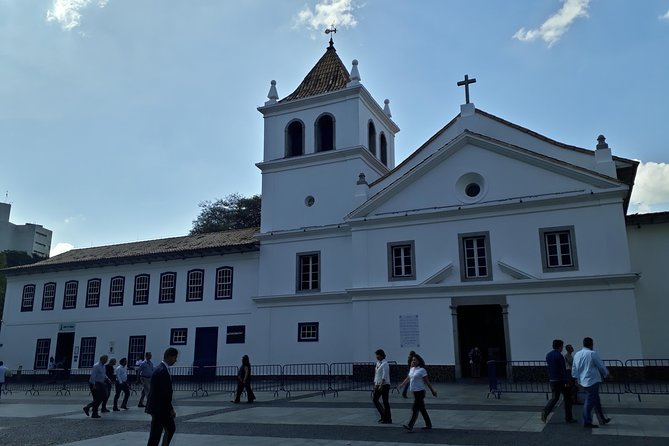
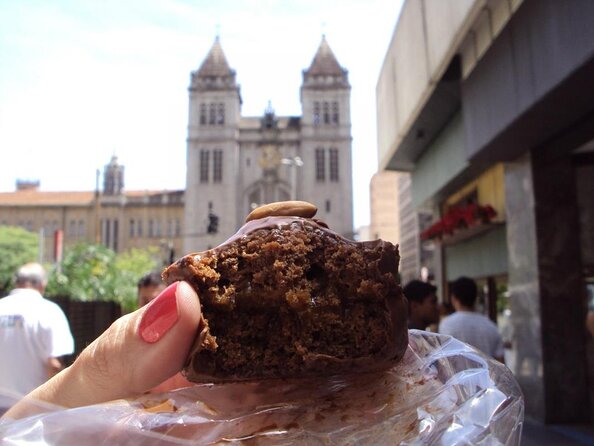
Pátio do Colégio marks the official founding of São Paulo in 1554. This is the point where the city’s colonial story becomes most direct, with Jesuit missionaries and Tupi-Guarani peoples central to the discussion.
The stop also carries a harder message. São Paulo’s founding was not a neutral meeting of cultures. It involved colonization, religious authority, and resistance. A good explanation here should help you understand both the official version of the city’s origin and the power relations behind it.
After the modern towers and coffee-era façades, this courtyard can feel like a sudden step into another century. That contrast is precisely why the route works. São Paulo’s past is not located in one preserved district. It is layered into the middle of the working city.
Sé Cathedral is more than a church
The Catedral da Sé is one of the world’s largest neo-Gothic churches and occupies São Paulo’s symbolic ground zero. Its size and pointed Gothic design make it an obvious landmark, but the tour treats the cathedral as a civic place as well as a religious one.
You learn how the square has served as a setting for gatherings, protest, and public identity. That context changes the way you look at the building. It is not only a place to admire stained glass, stonework, or scale. It is also a marker of who gathers in the city and how public space is used.
The cathedral stop is free and lasts about 15 minutes. Bring a camera, but give yourself time to listen. The explanation of the square’s urban symbolism is more valuable than rushing inside for a quick look.
Liberdade finishes the walk with food and immigration
The route ends at Praça da Liberdade, beside the police base at Praça da Liberdade, 125. Liberdade is widely known as the largest Japanese neighborhood outside Japan, with lanterns, markets, and streets shaped by Japanese immigration.
The neighborhood is not presented as a frozen ethnic display. It reflects São Paulo’s continuing changes and its mix of communities. The street market offers a chance to hear about produce and authentic foods, which gives the final part of the walk a practical, sensory edge.
This ending is smart. After spending the morning with official monuments and grand buildings, you finish in a place where history appears through food, shopping, street signs, and daily life. You can continue exploring Liberdade after the tour, although the experience itself ends at the stated meeting point.
The pace, group size, and practical effort
The advertised duration is about two hours, with roughly 15 minutes allocated to each of eight stops. That schedule gives you a clear framework, but it also means the walk keeps moving. You will have time for photographs and questions, yet this is not a leisurely half-day exploration.
The distance is about 3 kilometers. Most people can take part, but you should be comfortable walking between stops and remaining on your feet for much of the morning. Service animals are allowed, and the route is near public transportation.
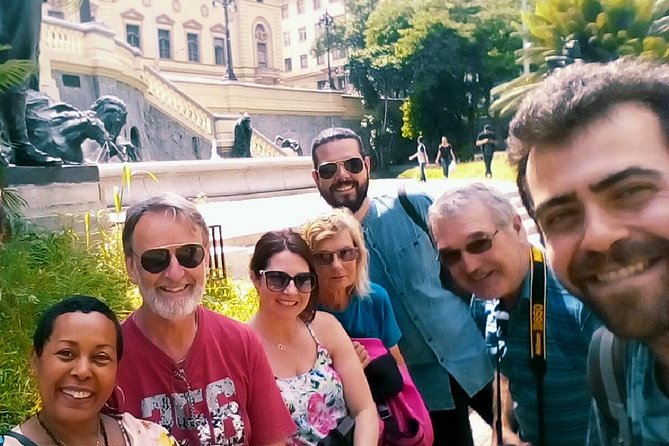
A group cap of 10 is a real advantage in a dense city center. You can hear the guide more easily, ask about details that catch your eye, and get practical suggestions tailored to your interests. Past groups have included as many as eight other people, so you should expect company rather than a private tour.
The 10:00 a.m. start is firm. The guide has explained that the phone is switched off once the walk begins so attention stays with the group. I recommend reaching Edifício Itália early instead of aiming to arrive exactly at 10:00. São Paulo traffic can be unpredictable, and a prepaid place does not guarantee that a late arrival can join halfway through.
What $31.24 buys you
At $31.24 per person, this is not the cheapest way to walk through downtown, but it is a fair price for a small English-language group with a clear route and a guide who adds social and political context. You are paying for interpretation, not entry tickets. The listed stops have no admission charge.
The strongest value comes if you are new to São Paulo or want a better framework for exploring on your own. In two hours, you see major landmarks, learn how the center changed, and finish in a district where you can eat or browse afterward.
The price is less compelling if you want interior access, long museum visits, or a slow architectural photography walk. The tour covers a lot of ground in a short time. Think of it as an intelligent orientation to central São Paulo, not a complete study of every site.
The experience is often booked about 19 days ahead, so advance planning is sensible. Confirmation is sent within 48 hours, subject to availability.
Safety, weather, and who should book
The city center has a reputation that can make first-time visitors nervous. One participant found the area comfortable while still stressing the need for normal big-city vigilance. That is the right approach. Stay aware of your belongings, keep your attention on the group, and listen to local guidance without letting fear stop you from seeing the area.
The tour requires good weather. If poor conditions cause cancellation, you receive the choice of another date or a full refund. You can cancel for a full refund up to 24 hours before the local start time. Cancellations or changes made less than 24 hours ahead are not refunded or accepted.
I would choose this walk if you want history explained in plain language, enjoy architecture but also care about politics and society, or have only one morning for the center. It also suits solo visitors who like meeting a small group, as past participants have enjoyed making new acquaintances along the route.
I would skip it if you dislike fixed schedules, cannot manage 3 kilometers, or need a tour that waits for late arrivals. The English format and firm timing make preparation important.
Should you book the Downtown-Center History Walking Tour?
Yes, if your goal is to understand São Paulo quickly and honestly. The route moves from Edifício Itália and Copan through modern culture, coffee wealth, colonial foundations, the Cathedral, and Japanese Liberdade. That range gives you a useful mental map and plenty of ideas for the rest of your stay.
Book it for your first day if possible, arrive early, and wear comfortable shoes. Expect a brisk two hours, strong historical commentary from Giuliano, free-access exterior stops, and practical suggestions for food, coffee, and further sightseeing. For $31.24, it offers a solid introduction to a city that rewards anyone willing to look past the obvious towers and read the streets carefully.
FAQ
How long is the São Paulo downtown walking tour?
The tour lasts approximately two hours.
How far do you walk?
The route is about 3 kilometers.
What time does the tour start?
The tour starts at 10:00 a.m.
Where does the tour begin?
It begins at Edifício Itália, Av. Ipiranga, 344, Centro Histórico de São Paulo.
Where does the tour end?
It ends at the Base da PM at Praça da Liberdade, 125, in Liberdade.
Is the tour conducted in English?
Yes. This experience is offered in English.
How many people can join?
The group is limited to a maximum of 10 participants.
What major places are included?
The route includes Edifício Itália, Copan, the Gallery of Rock, Theatro Municipal, Centro Cultural Banco do Brasil, Pátio do Colégio, Sé Cathedral, and Praça da Liberdade.
Is the tour suitable for most people?
Yes. Most people can participate, and the activity is near public transportation. It requires walking about 3 kilometers.
What happens if the weather is poor?
If the experience is canceled because of poor weather, you are offered another date or a full refund.
Can I cancel for a refund?
You can cancel at least 24 hours before the start time for a full refund. Cancellations or changes made less than 24 hours before the start time are not accepted.
More History Walks in São Paulo
- Full Day Private Beach Tour Santos & Guarujá – Combine Culture, History & Beach
★ 5.0 · 37 reviews - São Paulo Highlights: Culture, History, and Vibrance by Bike
★ 4.9 · 6 reviews - São Paulo: Food, Culture & History Private Tour
★ 5.0 · 6 reviews - Best São Paulo City Tour History 5Hours Private Experience.
★ 4.0 · 3 reviews
New in São Paulo this month
- São Paulo: Downtown Walking Tour with Farol Santander Entry★ 4.6 · 3 reviews
- São Paulo: Full-Day Guided City Tour from the Port of Santos★ 5.0 · 3 reviews
- São Paulo Food Tour: The Flavors of Brazil★ 4.9 · 3 reviews
- Sao Paulo: City Highlights and LGBTQIA+ Scene Private Tour★ 5.0 · 3 reviews
- São Paulo Carnival Seating with Food, Drinks, & Transfer★ 5.0 · 3 reviews
- Best São Paulo City Tour History 5Hours Private Experience.★ 4.0 · 3 reviews
- Special tour 8 hour (walking tour + nightlife )★ 5.0 · 3 reviews
- Walk to the Big Rock in Cantareira State Park★ 5.0 · 3 reviews
São Paulo Tours, compared.
São Paulo: Main City Sights in 7 Hours – Shared Group Tour
Read our review →
From São Paulo: Santos, São Vicente & Guarujá Day Trip
Read our review →
São Paulo: Bar and Street Art Crawl with Local Guide
Read our review →
São Paulo 5 Hour Private Tour With Fruit Tasting
Read our review →Browse the lists this tour appears in