
Our review · SÃO PAULO TOURS
São Paulo: Paulista Avenue Walking Tour
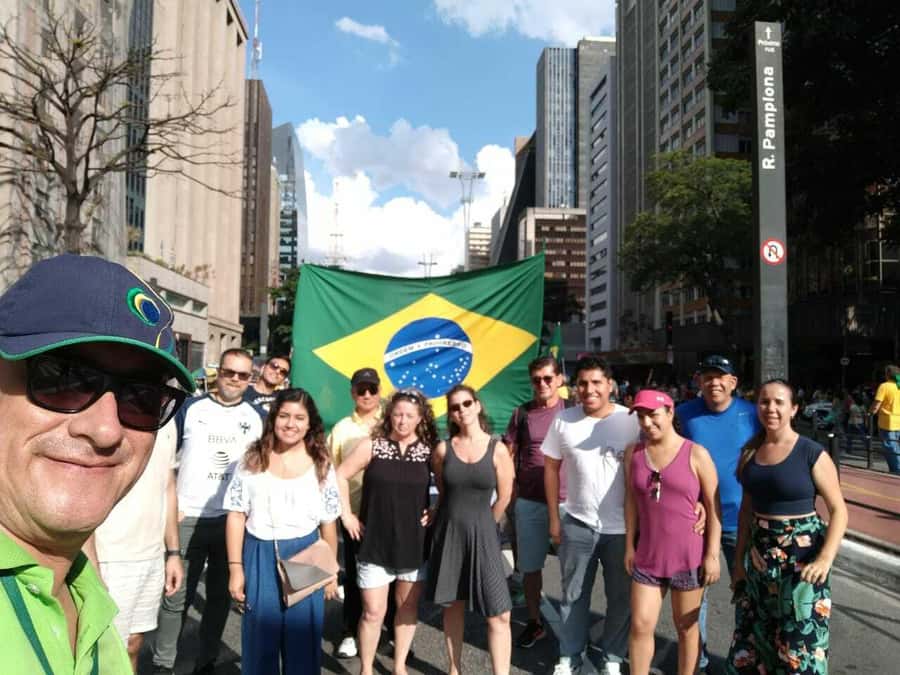
Paulista Avenue is more than São Paulo’s famous business street. In three hours, this private walking tour links museums, old mansions, bold murals, cultural centers, parks, and city viewpoints, giving you a useful first look at the avenue’s many sides. The route begins at Japan House and covers 18 notable sights at an easy pace.
I like the strong historical thread and the chance to see major landmarks without rushing from one isolated attraction to the next. I also like the private format, which gives you room for questions, photos, snacks, and small shopping stops. The main drawback is the $100 price per person, especially since museum admissions, food, and drinks are extra.
Key points at a glance
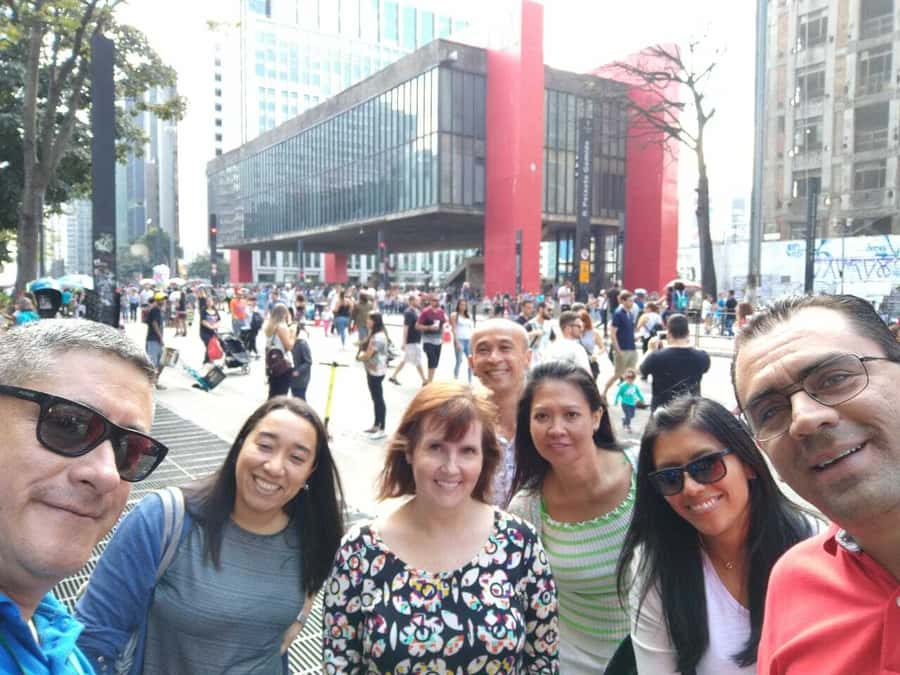
- 18 sights along one famous avenue: See MASP, Casa das Rosas, FIESP, Trianon Park, IMS, and many other landmarks.
- A guide-led history lesson: Guides such as Renato, Doris, Ilan, Laura, and Priscila explain how Paulista Avenue changed over time.
- A private three-hour walk: You set out with your own group rather than joining a large shared crowd.
- Street art and architecture together: Eduardo Kobra murals sit alongside museums, schools, hospitals, mansions, and modern cultural buildings.
- Several useful pauses: The route allows time for photos, quiet observation, snacks, exploration, and souvenir shopping.
- Good first-day orientation: One past participant used the tour after a long flight and found it a helpful way to get familiar with the avenue.
Starting at Japan House on Paulista Avenue
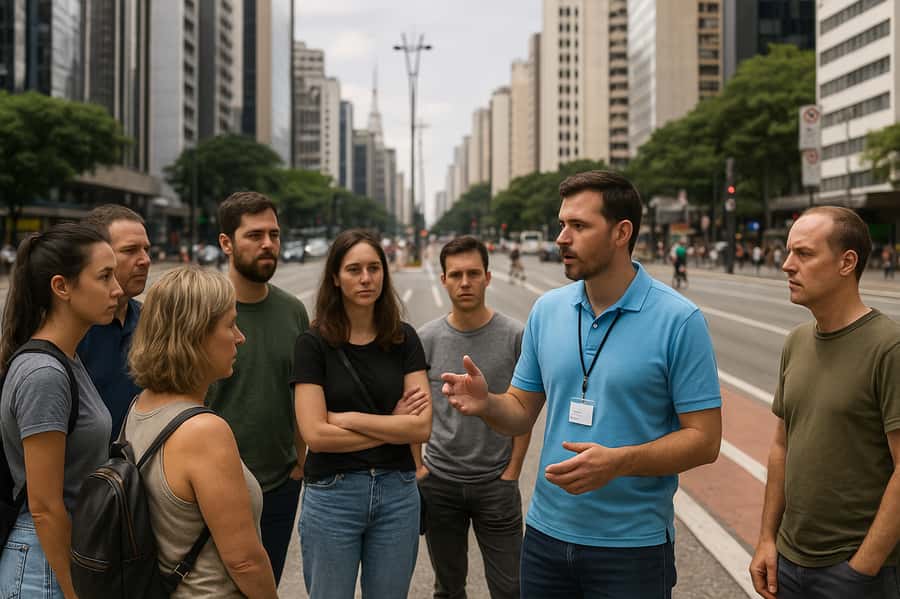
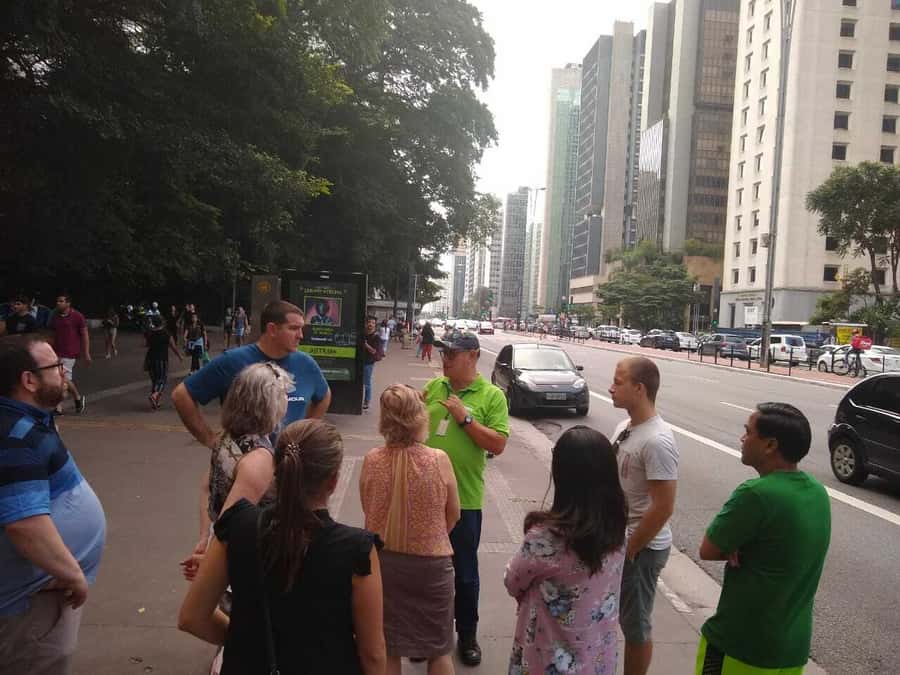
Your walk begins at Japan House, a cultural center on Paulista Avenue. The guide starts with background on the area, so you do not simply pass a line of buildings without knowing why they matter.
That opening context is useful because Paulista Avenue has changed greatly over time. The tour focuses on the people, institutions, buildings, and public spaces that shaped it, rather than treating the avenue as a collection of photo stops.
Your guide may be Priscila, Doris, Renato, Ilan, or Laura, depending on the booking. The available languages are English, Spanish, and Portuguese. Past visitors specifically praised Renato for detailed explanations, Ilan for explaining changes across time, and Laura for her energy and attention during the walk.
The route is private, which is a real advantage here. You can ask why a building matters, pause for a better photograph, or spend a little longer at a stop that catches your eye. The pace is described as smooth, with several breaks rather than a hard march from point to point.
More Walking Tours in São Paulo
- Sao Paulo: Downtown-Center History Walking Tour – in English
★ 5.0 · 91 reviews - Sao Paulo: Downtown-Center Walking Tour | 2 Hours – English
★ 4.9 · 84 reviews - Ecological walk in sao paulo
★ 5.0 · 61 reviews
Hospitals, mansions, and early Paulista Avenue
The first part of the route introduces a mix of practical institutions and older architecture. You see Santa Catarina Hospital, Casa das Rosas, Sesc Avenida Paulista, Eduardo Kobra murals, Itau Cultural Institute, State School Rodrigues Alves, and the Pasteur Institute.
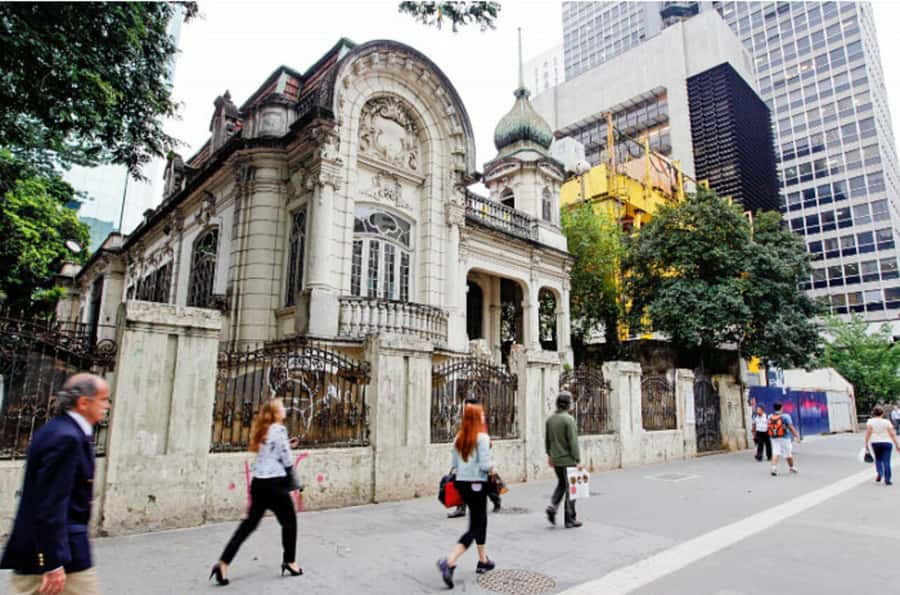
Casa das Rosas is one of the more appealing contrasts on this route. Its historic character helps you picture a different Paulista Avenue, before the avenue became lined with large office blocks and cultural buildings. It gives the guide a natural place to explain how the area developed.
The presence of Santa Catarina Hospital, the Pasteur Institute, and State School Rodrigues Alves also shows that Paulista Avenue is not only a museum corridor. It has long served daily civic needs, from health and education to research and public life.
Sesc Avenida Paulista and Itau Cultural Institute add a modern cultural layer. These places help explain why the avenue continues to draw people for exhibitions, performances, public programs, and other events. You should not expect to enter every building, though. The tour is built around seeing the sights from the outside and hearing their stories, not completing a museum visit.
The Eduardo Kobra murals bring a different kind of interest. Street art gives you a quick visual break from formal architecture, and the guide can place the work within the wider character of the avenue. If you enjoy taking photographs, this section offers several natural pauses.
FIESP, MASP, and the grand center of the walk
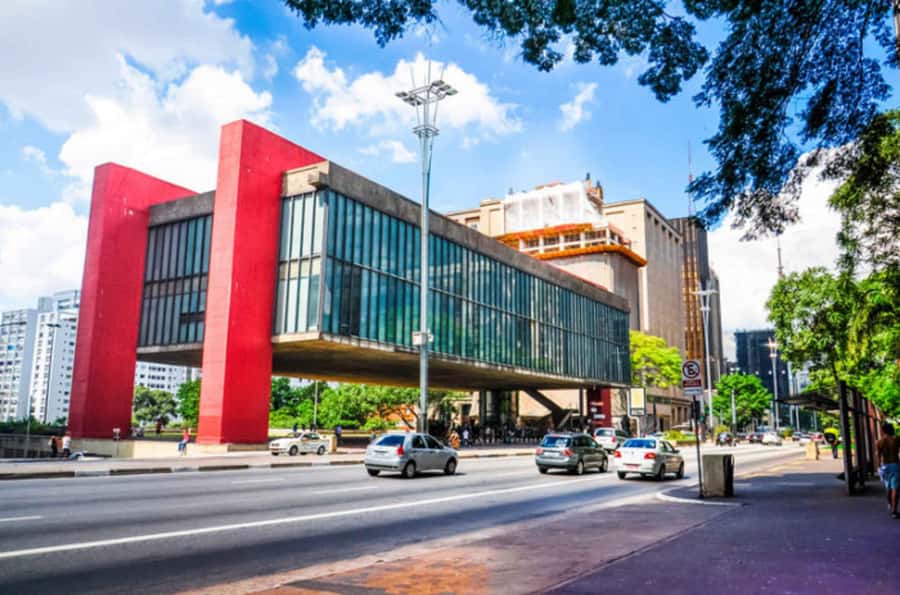
The route continues to the FIESP Building and the São Paulo Museum of Art, better known as MASP. These are two of the most recognizable stops on Paulista Avenue, and they give the middle of the walk its strongest architectural focus.
The FIESP Building is easy to recognize and closely tied to São Paulo’s business and cultural life. Its bold form looks especially different from the older buildings earlier in the route. Your guide uses stops like this to show how the avenue mixes corporate power, public culture, and changing architectural styles.
MASP is likely the visual high point for many people. The museum’s unusual structure and open space below it make it one of the avenue’s defining sights. The tour lets you understand its place in the city without requiring you to spend part of the three-hour walk inside the galleries.
That distinction matters. If you want to visit MASP properly, plan a separate museum session and budget for admission. This walking tour gives you a guided introduction, not an art collection visit. Since entrance fees are not included, you should treat the exterior stops as part of the walk and make separate plans for paid attractions.
The tour includes time for contemplation and photographs, so you should have a chance to look rather than simply collect another quick snapshot. Still, the exact time at each sight can change based on your questions, walking speed, and the guide’s approach.
Trianon Park and the July 9 viewpoint
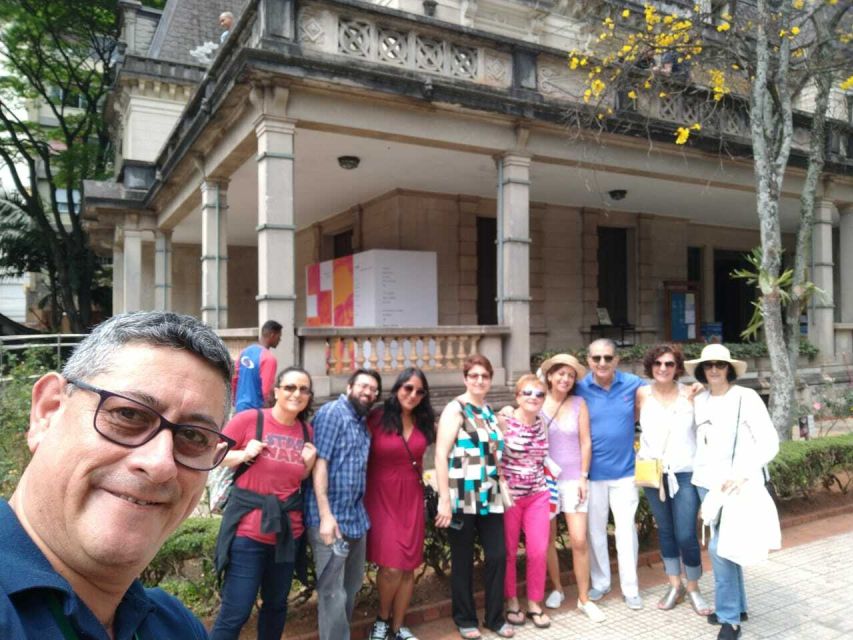
After the avenue’s large cultural buildings, the walk reaches Trianon Park and the July 9 belvedere viewpoint. These stops offer a change from façades and traffic, with space to pause and take in the surrounding city.
Trianon Park is important because it brings a green public space into the middle of the route. It gives your feet a break and lets you see how Paulista Avenue is used for more than offices, museums, shops, and traffic. The park is also a good place to slow the conversation and consider the contrast between the avenue’s built-up character and its planted areas.
The July 9 viewpoint adds a visual pause. You are not simply learning names and dates. You are also getting places to stop, look around, and understand the avenue in relation to the wider city.
This is one reason the three-hour length works well. A shorter walk might cover the famous buildings but leave little room for stops. Here, the guide can keep the pace comfortable while allowing time for photos and a snack. On the other hand, anyone hoping to explore every building in detail will find the schedule too brief. The route is broad rather than deeply focused on one attraction.
A different side of São Paulo altogether:
- São Paulo: Main City Sights in 7 Hours – Shared Group Tour
★ 4.9 · 587 reviews - São Paulo: City Highlights Guided Tour
★ 4.5 · 307 reviews - Private São Paulo City Tour
★ 4.8 · 264 reviews - São Paulo: Downtown Historical Bike Tour
★ 4.9 · 191 reviews
Gazeta Building, Rocha Azevedo, and a private mansion
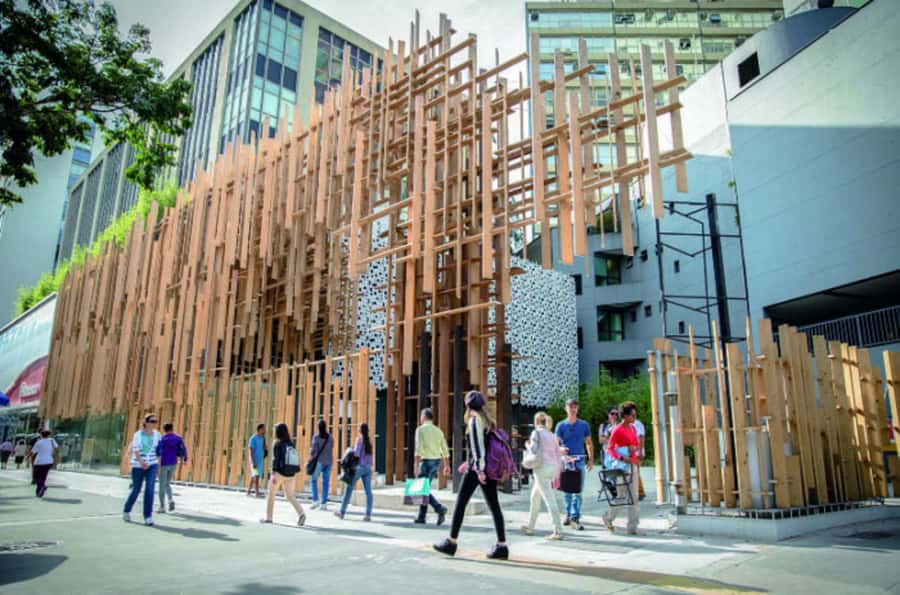
The next section includes the Gazeta Building, Alameda Ministro Rocha Azevedo, and Residência Joaquim Franco de Melo. These stops widen the story beyond the best-known museums.
The Gazeta Building connects the avenue with communications and public life. Alameda Ministro Rocha Azevedo gives you another look at the surrounding streets, while Residência Joaquim Franco de Melo brings attention back to residential architecture and the older social character of the area.
This variety is one of the tour’s best features. You are not seeing 18 versions of the same office tower. Instead, the route moves between institutions, public spaces, cultural buildings, street art, commercial sites, and residences.
For me, these less-famous stops can be more useful than a long list of headline attractions. They help you notice details you might otherwise walk past. A private guide can also adjust the explanation to your interests, which is harder to do on a large group tour.
The drawback is that the tour depends heavily on the guide. The five guides named in the feedback received strong praise for clear explanations, detail, energy, and helpful suggestions. Still, each guide will tell the story in a slightly different way. If a particular language or guide matters to you, confirm availability when booking rather than assuming you will receive a specific person.
Augusta Street and Conjunto Nacional
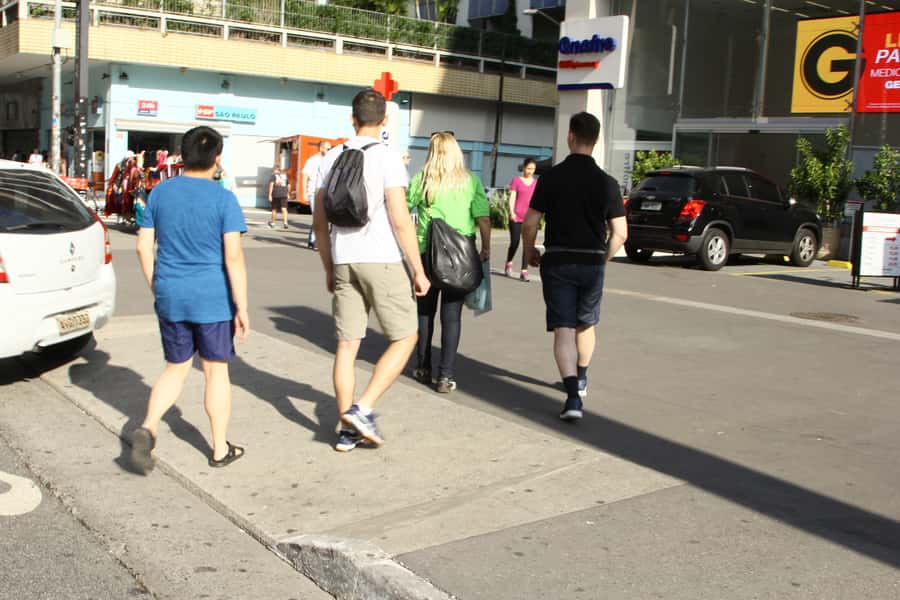
Augusta Street marks another shift in mood. It is one of the best-known streets connected with Paulista Avenue, and its inclusion helps you see the area as a network of streets rather than one straight strip.
The route then continues to Conjunto Nacional and Livraria Cultura. Conjunto Nacional is a major cultural and commercial reference point on the avenue, while the bookstore offers a natural place for browsing and perhaps a souvenir stop.
The tour does not promise a long shopping session, and you should not expect one. It does, however, allow small pauses for souvenir shopping and exploration. That flexibility gives the route a more human rhythm than a strict point-to-point sightseeing walk.
If you like books, design, architecture, or city life, this section may appeal to you more than a standard monument tour. It shows how Paulista Avenue works as a place where people meet, shop, read, eat, work, and attend cultural events.
Food and drinks are not included. You can stop for a snack, but plan to pay separately. Since the price is $100 per person, those extra costs are worth keeping in mind when comparing the tour with a cheaper shared walk.
Ending at the Instituto Moreira Salles
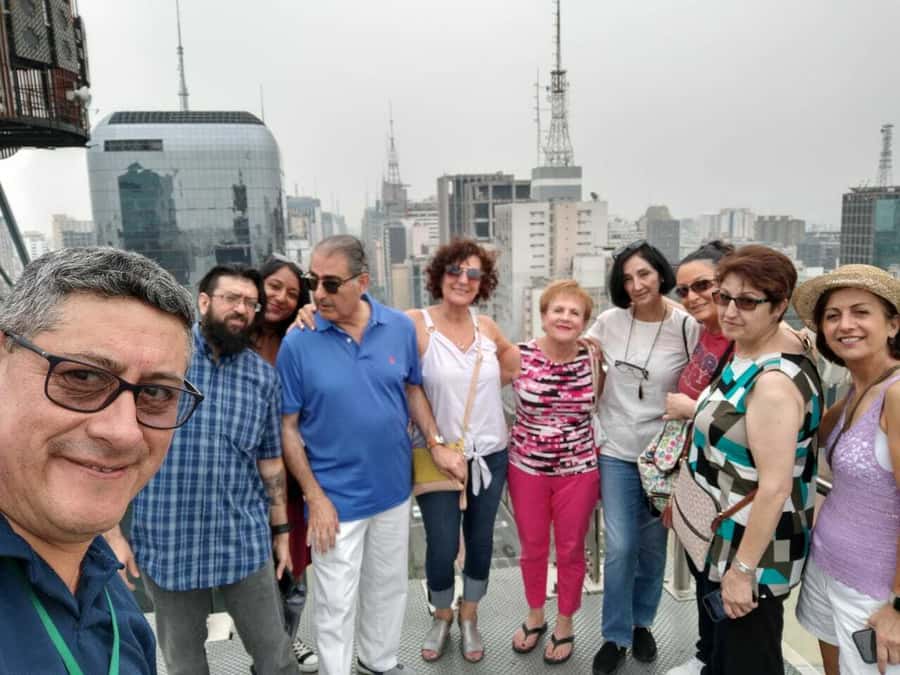
The final stop is the Instituto Moreira Salles, another major cultural address on Paulista Avenue. Ending here gives the walk a natural close, with one last look at the avenue’s role as a place for art, public programs, and city life.
By this point, you will have seen how many different identities fit along Paulista Avenue. There are formal institutions, educational and medical buildings, historic residences, modern cultural centers, street murals, parks, viewpoints, shops, and landmarks known around the world.
The tour’s value lies in connecting these pieces. You can return to MASP or another cultural center later with a better sense of its place in the city. One participant who took the walk early in a visit said the orientation helped them feel prepared when they returned to Paulista Avenue on later days. That is a good use of the tour: take it near the beginning of your stay, then revisit the places that interest you.
One practical note is important. The tour is not designed to take you inside museums or other attractions that charge admission. If you want time at MASP, Japan House, Instituto Moreira Salles, or another paid site, plan that as a separate visit.
Is $100 per person fair value?
At $100 per person, this is not the budget choice for seeing Paulista Avenue. The price makes more sense if you value a private group, a licensed professional guide, a choice of three languages, and a route that connects 18 sights in one organized walk.
You are paying for interpretation and flexibility, not admission tickets. All taxes and handling charges are included, but food, drinks, entrance fees, and gratuities are not. Tips are optional.
For a solo visitor or couple focused only on seeing the outside of MASP and a few nearby buildings, the cost may feel high. A private tour becomes easier to justify for a family or small group that wants its own pace and the chance to ask questions throughout the walk.
The historical explanation is also part of the value. The strongest feedback focused on the guides’ clear, detailed accounts of the avenue, its buildings, and its changes over time. Renato was especially praised for detailed history and useful suggestions for later visits, while Doris was described as a strong and informed guide. Those details matter because a walk like this can otherwise become little more than a checklist of façades.
Pace, weather, and what to bring
The walk lasts three hours and is described as smooth, with regular stops. Comfortable shoes are essential. You should also bring sunglasses and sunscreen.
The tour operates in all weather, so check the forecast and dress accordingly. Rain or strong sun can change how much you enjoy a long urban walk, even with pauses. A light layer and weather protection are sensible choices, though the exact clothing you need depends on the day.
The tour is wheelchair accessible, which is useful information when considering the route. Because this is a walking experience with many stops, you should still raise any specific mobility needs during booking so the guide can provide the most practical support.
The meeting point is Japan House. Exact starting times vary, so check availability before choosing a date. Free cancellation is available up to 24 hours in advance for a full refund, and you can reserve now and pay later.
Who will enjoy this Paulista Avenue walk?
I would suggest this tour to first-time visitors who want a clear introduction to one of São Paulo’s best-known avenues. It is also a good fit if you like architecture, urban history, public art, cultural centers, and city neighborhoods more than a single long museum visit.
It suits people who prefer an easy pace and regular pauses. The route includes time for photographs, reflection, snacks, and a little shopping, so you do not need to treat every minute as a race.
A private group makes it appealing for families, friends, or couples who want direct contact with the guide. The language choice also helps if English, Spanish, or Portuguese is important to your comfort.
I would hesitate to recommend it to someone mainly interested in entering museums. Admission is not included, and the tour is not intended to provide full visits inside paid sights. It may also be poor value if you only have a short time in São Paulo and want a fast transfer between a few specific attractions.
Should you book the Paulista Avenue Walking Tour?
Book it if you want Paulista Avenue explained rather than simply photographed. The route covers a wide range of places, and the guide-led context turns a busy city street into a readable story about architecture, culture, public life, and change.
The best reason to choose it is the combination of 18 sights and a private guide. The biggest caution is the price, especially with admissions, food, and drinks added separately.
Take it early in your stay, wear comfortable shoes, and keep some time afterward for the museum or cultural center you most want to enter. If that sounds like your kind of day, this is a practical and well-focused introduction to Paulista Avenue.
FAQ
Where does the Paulista Avenue walking tour begin?
The tour begins at Japan House on Paulista Avenue.
How long does the tour last?
The walking tour lasts three hours.
How many sights are included?
The route includes 18 famous sights along Paulista Avenue.
Which languages are available?
The live guide is available in English, Spanish, and Portuguese.
Is this a private tour?
Yes. The activity is operated as a private group.
Does the tour enter museums and paid attractions?
No. The tour is not aimed at entering museums and sights that charge admission fees. Any entrance fees are additional.
Is the tour wheelchair accessible?
Yes. The activity is listed as wheelchair accessible.
What should I bring?
Bring comfortable shoes, sunglasses, and sunscreen. The tour operates in all weather, so dress accordingly.
New in São Paulo this month
- São Paulo: Downtown Walking Tour with Farol Santander Entry★ 4.6 · 3 reviews
- São Paulo: Full-Day Guided City Tour from the Port of Santos★ 5.0 · 3 reviews
- São Paulo Food Tour: The Flavors of Brazil★ 4.9 · 3 reviews
- Sao Paulo: City Highlights and LGBTQIA+ Scene Private Tour★ 5.0 · 3 reviews
- São Paulo Carnival Seating with Food, Drinks, & Transfer★ 5.0 · 3 reviews
- Best São Paulo City Tour History 5Hours Private Experience.★ 4.0 · 3 reviews
- Special tour 8 hour (walking tour + nightlife )★ 5.0 · 3 reviews
- Walk to the Big Rock in Cantareira State Park★ 5.0 · 3 reviews
São Paulo Tours, compared.
São Paulo: Main City Sights in 7 Hours – Shared Group Tour
Read our review →
From São Paulo: Santos, São Vicente & Guarujá Day Trip
Read our review →

São Paulo: Bar and Street Art Crawl with Local Guide
Read our review →
São Paulo 5 Hour Private Tour With Fruit Tasting
Read our review →Browse the lists this tour appears in