
Our review · RIO DE JANEIRO TOURS
Samba Class in Copacabana
Samba is not just a dance lesson here. It is a lively introduction to one of Rio’s defining traditions, taught in a Copacabana studio where you can learn the basic rhythm without bringing a partner or any previous skill. Instructors such as Marcos, Carla, Carmen, and Bem Vind have each been praised for clear steps and high energy.
I like the easy entry: the class welcomes complete beginners, and the instructor adjusts the pace when someone needs another explanation. I also like the social setup, which works well for solo visitors, couples, and mixed groups. The main caution is space and language. A December class was crowded, and one instructor relied heavily on translation, so the experience can vary by date and guide.
Key points
- No partner or dance background required: You can attend alone and follow the instructor.
- A real Copacabana location: The studio is at Av. Nossa Sra. de Copacabana, 807, room 603, on the sixth floor of a mixed office building.
- About one hour of active instruction: Expect basic steps, repeated practice, turns, and movement across the room, though one class lasted closer to 45 minutes.
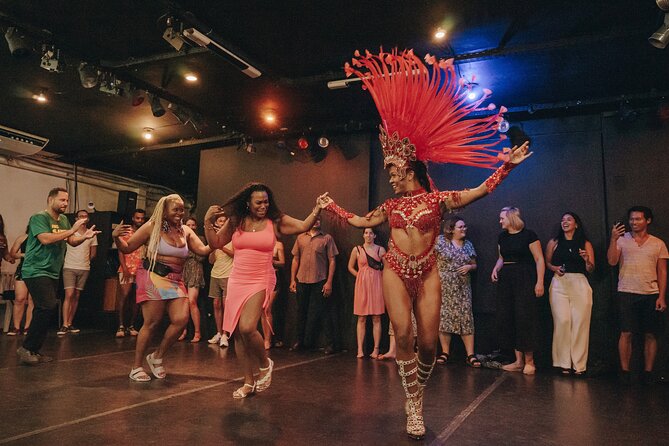
- Daytime Carnival touch: You may try a samba costume and pose with flags for photos and videos.
- A social activity: The instructor encourages interaction, making it easier to meet people.
- Useful for a short Rio itinerary: The studio is near public transportation and taxis, and the class ends where it begins.
What this Copacabana samba class is really like
The experience starts at a professional dance studio in Copacabana, not at a parade venue or nightclub. That matters because you get direct instruction rather than a stage show. For about an hour, the teacher demonstrates samba movements, breaks them into manageable pieces, and gives you time to repeat them.
You do not need to arrive with a partner. The class can include solo participants, couples, friends, and people of different ages and abilities. The social mood is part of the point. One instructor made students interact with one another, which can help a solo visitor feel less like an outsider.
I would describe the class as a beginner crash course, not a full samba-school training program. You will learn enough to recognize the basic rhythm and move with more confidence, but one hour is a short time for a dance as intricate as samba. A trained dancer found the steps challenging despite receiving very clear instruction from Bem Vind. That is a useful warning: beginner-friendly does not mean effortless.
more copacabana and ipanema mornings
- Rio de Janeiro: Beginner Samba Lesson in Ipanema
★ 4.9 · 1,071 reviews - Rio de Janeiro: Samba Class in Copacabana
★ 4.6 · 262 reviews - Rio de Janeiro: Stand-Up Paddle – Copacabana Beach Sunrise
★ 3.7 · 39 reviews
Meeting the instructor on Copacabana’s sixth floor
The address is Av. Nossa Sra. de Copacabana, 807, room 603, Copacabana, Rio de Janeiro. The studio sits on the sixth floor of a mixed office building on a main road. Look for the doorway from the street, then continue to room 603.
This is not the sort of venue you might recognize instantly as a dance studio. Give yourself a few extra minutes to find the entrance and reach the sixth floor. The detailed address is helpful, but the office-building setting can feel less obvious than a street-level studio.
The central Copacabana location is practical. You can reach it by public transportation or taxi, and the class fits neatly between other sightseeing plans. Transportation to or from the studio is not included, so you arrange that yourself. The activity ends back at the same meeting point, which keeps the logistics simple.
Learning the first samba steps
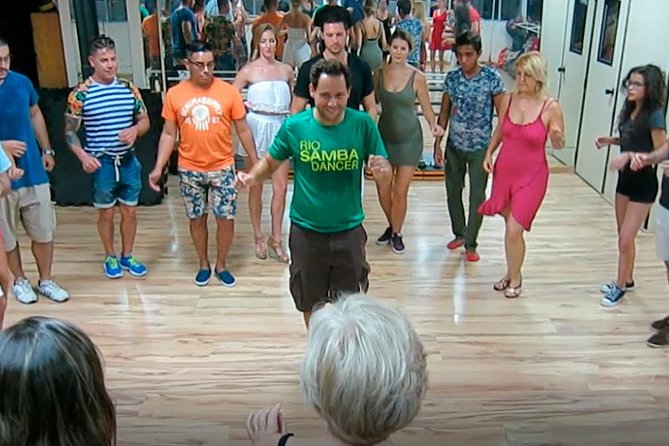
The teaching begins with basic movements rather than assuming you already know how Brazilian samba works. The instructor demonstrates, you copy, and the sequence is repeated until it feels more natural. The strongest instruction is clear and physical: one student described learning counts, accents, forward and backward movement, turns, and steps across the floor.
That kind of repetition is valuable. Samba can look loose and spontaneous when performed well, but the footwork and rhythm take control. Breaking the dance into small pieces lets you concentrate on one task at a time instead of trying to copy an entire routine.
The class is also designed to keep the mood light. Instructors have been described as welcoming, funny, energetic, and patient. Marcos received especially strong praise for making the class easy and enjoyable, while Carla was singled out for teaching what felt like real samba rather than a generic social-dance version.
The teaching language may vary. The activity can be operated by a multilingual guide, but you might not always receive a fully English-speaking instructor. One class was fun and energetic, yet the teacher spent about a third of the time typing instructions into a translation tool. If clear spoken English is important to you, confirm the language arrangement before booking.
An active hour, not a passive cultural talk
You will be moving for most of the session. One participant described the class as a workout, and another said the group worked through steps across the floor and turns. Wear something comfortable and expect to take part rather than sit and watch.
The advertised duration is approximately one hour. In practice, a class may run somewhat shorter. One group reported about 45 minutes of instruction, while another felt that an hour passed too quickly because there was so much to learn and practice.
This difference is worth considering when you judge the price. At $35 per person, the class is not the cheapest way to fill an hour in Rio, but you are paying for a professional guide, a hosted lesson, bottled water, and a structured cultural activity in a central neighborhood. The value is best if you want personal participation, not simply entertainment.
A longer class would allow more time for technique and repetition. Still, the short format makes this easy to fit into a day that already includes Copacabana Beach, Sugarloaf Mountain, or other Rio sights. Think of it as a lively introduction rather than a serious course.
more samba nights in Rio de Janeiro
- Rio: Pub Crawl in Lapa with Cachaça Tasting and Live Samba
★ 4.7 · 881 reviews - Rio: Carnival Backstage Tour at Samba City with Cocktail
★ 4.6 · 520 reviews - Hop-ON Hop-OFF Sightseeing Bus in Rio de Janeiro – Rio Samba Bus
★ 3.5 · 457 reviews - Santa Teresa, Lapa, and Cinelândia with Tram Ride and Selarón Steps
★ 4.5 · 274 reviews
The Carnival costume and photo moment
During daytime classes, you may try a Carnival costume. Photos and videos may also be made during the dancing and afterward with flags and the costume. These touches give the class a visual link to Rio’s Carnival tradition.
The costume element is not the main lesson, and it should not be the reason you book the activity by itself. Its value is that it turns a short dance class into a more memorable cultural encounter. You get to connect the movement with the pageantry that many people associate with Rio.
If you are shy about dressing up, you can focus on the dance. The class does not require a performance, and you do not need to arrive as an experienced dancer. The activity is built around participation at your own level.
Why solo visitors and couples fit in well
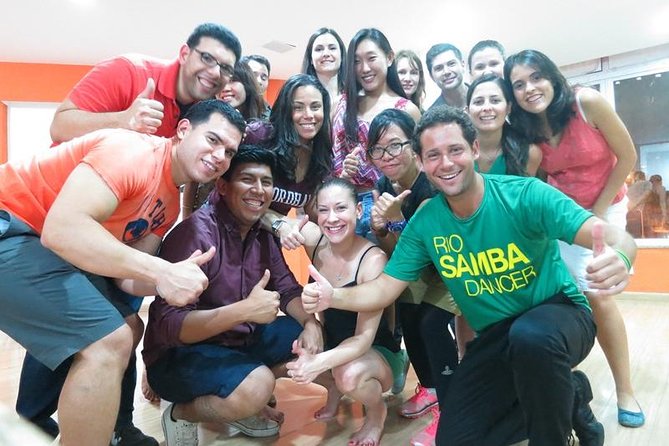
This is a particularly practical choice for solo visitors. You can show up without arranging a partner, and the instructor encourages interaction among people in the room. That gives you a natural way to meet others without the forced feeling of a formal group mixer.
Couples also have a good reason to choose it. You can learn together, laugh at the same awkward steps, and share the costume or photo moment. The class does not appear to be limited to a particular age group or dance style, so a confident dancer and a complete beginner can attend together.
The mixed format has one small downside. If you are hoping for a private lesson, you may instead find yourself in a group. The maximum capacity is 50 people, although actual attendance can be much smaller. One class had only a few participants, while an end-of-December session became crowded even after moving to a larger space.
That range changes the feel of the experience. A small group can give you more direct correction and room to move. A larger group brings more social energy but can make it hard to see the instructor. If group size matters to you, ask how many people are booked for your date.
Authentic samba, with realistic expectations
The class aims to teach Brazilian samba, not a polished ballroom substitute. That distinction matters. You are learning a local dance form in Rio, with some cultural context from the guide, rather than simply following a tourist choreography.
Still, authenticity has limits in a one-hour class. You will not master the style, and you should not expect a full lesson in Carnival performance, music, or samba-school tradition. What you can gain is a feel for the rhythm, a handful of basic movements, and a better sense of how much skill sits behind a seemingly simple samba performance.
The cultural explanations add useful depth. One participant appreciated learning some history of samba along with the steps. That combination makes the activity more worthwhile than a standard fitness class. You are not only counting footwork. You are getting a small piece of context for a major part of Brazilian culture.
Crowding, footwear, and comfort
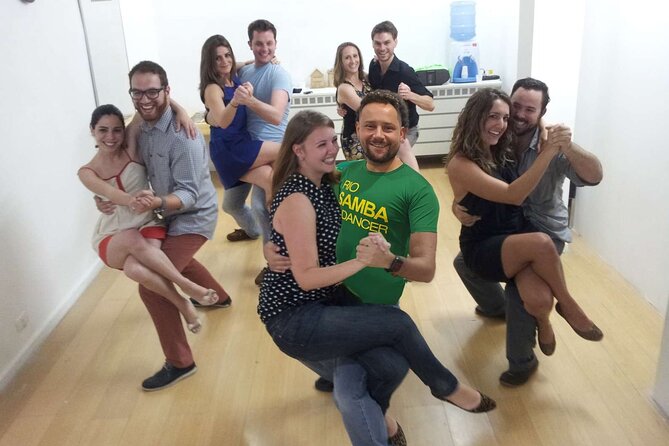
The studio can be comfortable, but conditions depend on timing and attendance. A late-December class was too crowded for some participants to see the instructor properly. The provider planned to use a larger studio during the end-of-year and Carnival period, but you should still expect demand to affect the room.
The class may be done barefoot. One group specifically advised not worrying too much about shoes after taking the lesson barefoot. Since the exact footwear arrangement is not guaranteed in the details provided, wear something easy to remove and choose comfortable clothing that allows movement.
Bottled water is included, which is a small but useful touch after an active lesson. Most people can participate, and children must be accompanied by an adult. If you have concerns about movement or need special assistance, the available information does not promise specific adaptations, so ask before booking.
How the class fits into a day in Rio
The one-hour schedule is the biggest practical advantage. You can plan it between morning sightseeing and an evening meal without sacrificing half a day. Because the studio is near public transportation and taxis, you have several ways to reach it.
Plan your own route carefully. Transportation is not included, and the class begins and ends at the studio. The office-building entrance also means you should not leave the arrival until the last minute.
The Copacabana setting gives the activity a useful sense of place. You are not being taken far outside the city to learn a dance associated with Rio. You meet the guide in one of the city’s best-known neighborhoods, take the lesson, and continue with your day.
The experience is booked, on average, about 13 days ahead. That suggests you should not assume a last-minute spot will be available, especially around Carnival or the end of December. Free cancellation is available until 24 hours before the start time. If you cancel later, the payment is not refunded, and changes made inside that window are not accepted.
Who will get the most from the $35 price
I think the price works best for three kinds of people:
- First-time visitors to Rio: You get a short cultural activity that requires little planning.
- Solo visitors and couples: You can participate without a partner and share a social, active experience.
- People who want to try something outside ordinary sightseeing: The class gives you a physical connection to samba culture.
The value is weaker if you want a long, technical dance course. It is also weaker if you are looking for a large party atmosphere every time. Attendance can be small, and one participant left before the lesson after expecting a bigger crowd.
That small-group possibility is not automatically a flaw. If you want close instruction, it may be a bonus. If your goal is to meet a large crowd and enjoy a party, ask about enrollment before arriving.
The overall score is 4.7 out of 5, with 94 percent recommending the experience. The most consistent strengths are the friendly energy, simple instruction, welcoming attitude, and ability to include people with no dance background. The recurring concerns are crowding on certain dates, a class shorter than the advertised hour, and possible language gaps.
Should you book the Copacabana samba class?
Book it if you want a compact, good-humored introduction to samba and are willing to move, make mistakes, and learn in a group. It is especially well suited to solo visitors, couples, and anyone who wants a cultural activity that fits around a busy Rio schedule.
Before paying, check the expected group size and guide language if those details matter to you. Allow time to find the sixth-floor studio, wear comfortable clothing, and treat the costume photos as a bonus rather than the main event.
At $35, this is a fair buy for an active cultural lesson in central Copacabana. It is not a full samba course, and the class may feel crowded or brief on a difficult date. With those limits in mind, it offers a friendly way to stop watching Rio’s samba culture from the sidelines and try a few steps yourself.
FAQ
Do I need previous dance experience?
No. The class is designed for people without dance experience, and the steps are taught at beginner level.
Do I need to bring a dance partner?
No. You can attend alone. The activity is also suitable for couples and friends.
How long does the samba class last?
The stated duration is approximately one hour. One class was reported as lasting about 45 minutes, so the exact teaching time may vary.
Where does the class meet?
It meets at Av. Nossa Sra. de Copacabana, 807, room 603, Copacabana, Rio de Janeiro, Brazil. The studio is on the sixth floor of a mixed office building.
Does the activity include transportation?
No. Transportation to and from the studio or other attractions is not included. The studio is near public transportation and taxis.
Is bottled water included?
Yes. Bottled water is included with the activity.
Can children participate?
Yes, most people can participate, but children must be accompanied by an adult.
Can I cancel for a full refund?
Yes, if you cancel at least 24 hours before the experience start time. Cancellations made less than 24 hours before the start time are not refunded.
More Workshops in Rio de Janeiro
- Rio de Janeiro: Samba Class and Samba Night Tour
★ 4.6 · 115 reviews - Rio: Caipirinha Workshop and Samba Class
★ 4.8 · 113 reviews - Surf lessons: in Arpoador in Ipanema.
★ 4.7 · 35 reviews - Surf lessons with local instructors in Copacabana/ipanema!
★ 3.6 · 31 reviews
New in Rio de Janeiro this month
- Discover Rocinha: Guided Tour of the Famous Favela★ 4.5 · 3 reviews
- Rio de Janeiro: Hang Gliding or Paragliding Flight★ 5.0 · 3 reviews
- Rio de Janeiro: Hang gliding adventure★ 3.7 · 3 reviews
- Rio de Janeiro: Pedra Bonita & Tijuca Forest Hike Tour★ 5.0 · 3 reviews
- Rio de Janeiro: Local Experience in Forró dance★ 5.0 · 3 reviews
- Rio de Janeiro: Doors-off 30-min helicopter tour★ 5.0 · 3 reviews
- Rio de Janeiro: Pedra do Telégrafo; Grumari/ Prainha Beaches★ 5.0 · 3 reviews
- Rio de Janeiro: Sugar Loaf with Lunch and Helicopter Flight★ 4.7 · 3 reviews
Rio de Janeiro Tours, compared.
Rio de Janeiro: 6-Stop Highlights of Rio with Lunch
Read our review →
Christ the Redeemer Entry Ticket by Corcovado Train
Read our review →
Rio de Janeiro: Rocinha Favela Walking Tour with Local Guide
Read our review →
Rio: Christ the Redeemer, Sugarloaf, Selaron & BBQ Lunch
Read our review →
Rio De Janeiro: Half-Day Rocinha Favela Walking Tour
Read our review →
Rio de Janeiro: Angra dos Reis and Ilha Grande Full-Day Tour
Read our review →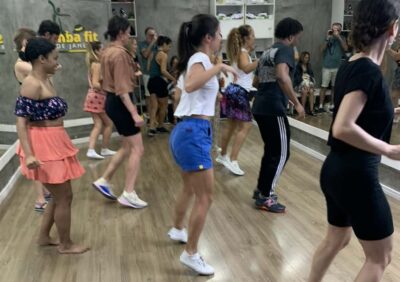
Rio de Janeiro: Beginner Samba Lesson in Ipanema
Read our review →
Browse the lists this tour appears in