
Our review · MUSEUMS
Official Ticket: Oceanographic Museum Univali – Piçarras – SC
The most striking part of the Univali Oceanographic Museum is its scale: a blue whale shown at full length, 33 meters from nose to tail, waits outside among life-size ocean giants. Inside, more than 1,400 pieces trace Brazilian marine life from fossils and shells to shark jaws, sea turtles, penguins, whales, and live aquarium animals.
I like the museum for two clear reasons. First, the seven color-coded wings give the visit a sensible flow, moving from the origin of life and ocean science to invertebrates, fish, reptiles, birds, and mammals. Second, the sensory experience with marine animals gives children and adults something more direct than a glass case. The main caution is that some displays have limited labels, and the dark rooms can make certain specimens harder to study.
Key points to know before you go
- The blue whale panel measures 33 meters, giving you a physical sense of the largest animal known to have lived on Earth.
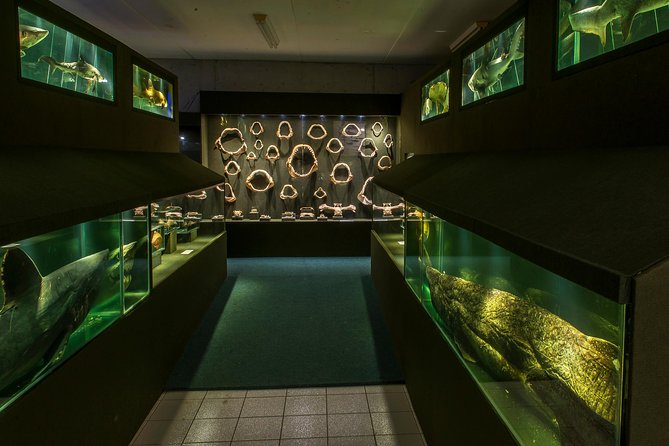
- The Green Wing includes the only white shark jaw on display in Brazil, along with shark and ray teeth, reproduction displays, and habitat aquariums.
- All five sea turtle species found in Brazil are represented in the Gray Wing.
- The collection covers more than 1,400 pieces, with live animals adding movement to an otherwise specimen-based museum.
- The touch laboratory is included, while the separate educational package is available for groups.
- Plan for about 1 to 1.5 hours, and check the afternoon schedule: Tuesday through Sunday, 2:00 PM to 5:30 PM.
Why this museum matters in Piçarras
Piçarras sits in southern Brazil, in Santa Catarina, where the sea is part of daily life. This museum gives that setting a wider frame. Instead of showing only local beach wildlife, it presents marine life from Brazil and other ocean regions, explaining how animals fit into different habitats and how people have studied, used, and sometimes harmed the sea.
I find that useful because an ocean museum can easily become a room full of shells and stuffed animals. Univali tries to connect the pieces. Fossils show how life changed over geological time. Historic objects show why ancient peoples were fascinated by the sea. Modern exploration equipment points to how scientists now study places humans cannot easily reach.
The visit is not a guided tour with a named guide, at least no guide names are provided for this experience. You move through the exhibition at your own pace. That makes it easy to stop for a child, return to a favorite aquarium, or read selected panels without being hurried along.
The ticket costs $15.68 per person. That is a reasonable price if you have an interest in marine life and expect to spend a full hour looking closely. It is less convincing if you want a large aquarium with constant animal activity. Much of the visit centers on preserved specimens, skeletons, shells, and educational displays, so your expectations matter.
more Brazil days to choose between
- Petrópolis Day Trip from Rio de Janeiro including Imperial Museum and Crystal Palace
★ 4.0 · 101 reviews - 7-Hour Shared Group Santos Tour : Mont Serrat, Coffee Museum and Sightseeing
★ 5.0 · 68 reviews - Olympic Boulevard, Museum of Tomorrow & Historical Rio
★ 4.5 · 66 reviews
Start with fossils, voyages, and ocean science in the Blue Wing
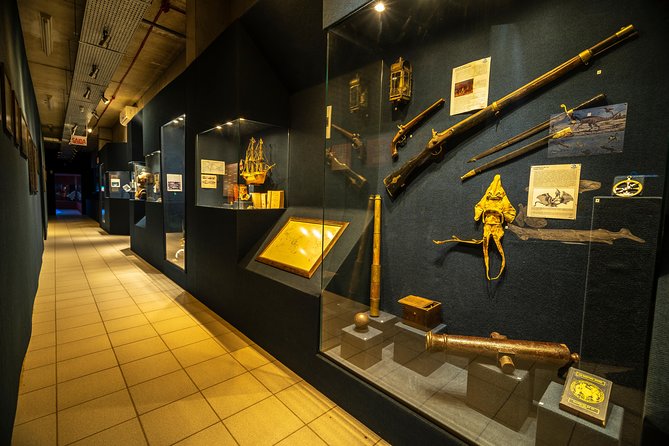
The Blue Wing works as the museum’s opening chapter. Fossils from different geological ages place marine life in a long timeline, reminding you that today’s oceans are one stage in a much older story.
You also see historical pieces tied to the sea and the great voyages of discovery. This section helps explain how oceanography grew from curiosity, navigation, and practical need into a modern science. Displays about current exploration technology bring the subject forward, showing that large parts of the ocean remain difficult to study.
I like beginning here because it gives the later wings some context. When you reach a shark jaw or an unusual deep-sea fish, you have already been introduced to the larger questions: how life changes, how animals adapt, and how humans learn about the ocean.
Do not expect every object to have a long explanation. One recurring weakness is uneven labeling. Some pieces are easy to understand, while others would benefit from more text, species information, or photographs of the living animal. If you are visiting with a child, you may need to supply some of the connections yourself.
Meet shells, squid, and crustaceans in the Red Wing
The Red Wing focuses on marine invertebrates, a broad category that includes animals without backbones. It begins with calcareous skeletons from groups such as sponges and corals, placed near aquariums containing living examples of related animals.
That pairing is one of the better teaching choices in the museum. You can compare a hard structure with the animal that made it, then see how the same group looks and behaves when alive. The shell displays add color and shape, while preserved examples include a whole giant squid, a memorable piece for anyone interested in ocean size and mystery.
Echinoderms receive their own treatment, with sea stars, sea urchins, and sea cucumbers. The wing finishes with crustaceans such as shrimp, crabs, lobsters, and related species.
This is a good section for visitors who enjoy detail. Shells can look decorative at first glance, but their forms tell you about protection, movement, feeding, and habitat. The weakness is the same one found elsewhere: not every specimen has enough explanation. You may appreciate the objects more if you take time to study their shapes rather than rush from case to case.
Examine sharks and rays in the Green Wing
The Green Wing is likely to be a major stop for families and anyone drawn to large predators. It includes coastal, deep-sea, and endangered sharks and rays, with teeth and jaws from important species.
The museum’s white shark jaw is especially notable. It is identified as the only white shark jaw on display in Brazil, giving this section a specific point of interest beyond the usual shark facts.
The displays also cover reproduction. That matters because sharks and rays do not all reproduce in the same way, and those differences help explain how they occupy very different marine habitats. Four aquariums represent the settings where these animals live in the wild, bringing some motion and life to a section that could otherwise feel static.
I appreciate the balance here. Sharks are not treated only as frightening movie animals. Their anatomy, reproduction, and habitat needs receive attention. You get a better sense of their variety, including animals that live near shore and those adapted to deep water.
The aquarium portion may not satisfy someone looking for a large number of fish moving through expansive tanks. Some displays have been criticized for limited animal variety and low lighting. Still, the combination of jaws, teeth, specimens, biology, and live aquariums gives this wing strong educational value.
A different side of Brazil altogether:
- Rio de Janeiro: 6-Stop Highlights of Rio with Lunch
★ 4.4 · 5,157 reviews - Christ the Redeemer Entry Ticket by Corcovado Train
★ 4.4 · 4,476 reviews - Rio de Janeiro: Rocinha Favela Walking Tour with Local Guide
★ 4.8 · 3,052 reviews - Rio de Janeiro: Sugarloaf Cable Car Official Ticket
★ 4.6 · 2,873 reviews
See the range of bony fish in the Brown Wing
The Brown Wing presents the major families of bony fish, the largest group of fish in the sea. Here, the point is variety: body shapes, feeding styles, and adaptations differ widely even among animals that share the same basic skeletal structure.
Large fish receive special attention, including the primitive coastal tarpon and the oceanic swordfish. Their size and form help show how fish adapt to very different conditions, from coastal water to the open ocean.
The aquarium displays include fish from the Indian and Pacific oceans. This expands the museum’s reach beyond Brazil, though the focus remains on marine biodiversity and adaptation rather than on a single regional coastline.
One particularly unusual section displays deep-sea fish from the abyssal zone, more than 2,000 meters below the surface. These animals are difficult to encounter in ordinary aquariums, so even preserved specimens can give you a sense of how different life becomes under intense pressure, darkness, and cold.
This wing rewards patience. Some fish may look familiar at a quick glance, but their shape often reflects where and how they live. If labels are sparse, use the cases as prompts to compare forms rather than expecting a detailed explanation beside every specimen.
Follow Brazil’s five sea turtle species in the Gray Wing
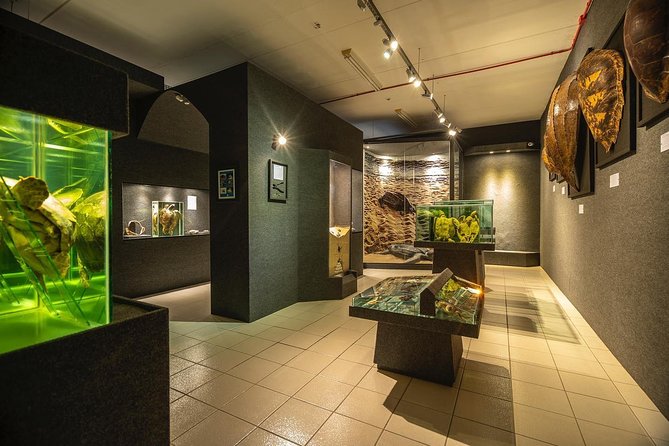
The Gray Wing is devoted to marine reptiles, with most of its collection focused on sea turtles. Brazil has five sea turtle species, and all five are represented here.
The exhibition follows several stages of turtle life, from small young animals to giant adults. It also presents aspects of their biology and ecology, helping you understand the long journey from hatchling to mature sea turtle.
This is one of the museum’s strongest sections because the size range makes the subject concrete. A small turtle and a giant turtle are not just two versions of the same animal. They show the years, risks, and changes involved in survival at sea.
The display also helps connect marine biology with conservation. Sea turtles are familiar to many people, but familiarity can hide how specialized and vulnerable they are. A well-arranged specimen collection can make that point more clearly than a short sign on a beach.
If you visit with children, this wing should hold their attention, especially when paired with the touch laboratory. Just remember that some images and specimens throughout the museum have less information than you may want. The experience is strongest when you allow time for looking, not only reading.
Watch for penguins and the wandering albatross in the Beige Wing
The Beige Wing turns to seabirds. It covers interesting parts of bird biology and ecology, with all penguin species represented and their distribution across the Southern Hemisphere.
The highlight is a diorama of an oceanic island featuring endangered wandering albatrosses. The display gives you a sense of how seabirds depend on isolated breeding places and wide stretches of open water.
Penguins and albatrosses make a useful comparison. Penguins are built for life in the water but cannot fly through the air, while albatrosses are famous for their relationship with ocean winds and long-distance movement. Even without a live bird display, the contrast can make this wing memorable.
Lighting is worth noting here and throughout the museum. Some people find the interior too dark, and low light can make detailed labels or photographs difficult to see. The dim setting may protect some objects and create an atmospheric room, but it is not ideal for close reading.
Learn about whales, dolphins, seals, and whaling in the Black Wing
The Black Wing covers marine mammals and begins with the history of whaling and commercial exploitation. That opening is especially relevant in Santa Catarina, where whaling was once widely practiced.
From there, the exhibition introduces dolphin and whale species found in southern Brazil. The displays explain aspects of their biology, giving you more than a collection of large bones or mounted forms.
South American fur seals and sea lions are included, along with manatees from northeastern Brazil. This wider geographic range shows how varied Brazil’s marine mammals are, from animals in southern waters to a slow-moving herbivore found far to the north.
I value the historical section because it avoids presenting the ocean as untouched or separate from human activity. Commercial use changed animal populations and coastal communities. Seeing that history before the biology gives the wing more weight.
Large mammals are also natural crowd-pleasers. If your children are eager to see whales, dolphins, and seals, this is likely to be one of their favorite areas. As with the other wings, though, the museum relies more on specimens and displays than on a large, continuously active aquarium.
Finish outside with the Ocean Giants panel
Outside the museum, the Ocean Giants panel shows the largest marine animals from each group at full scale. The blue whale is the main event, measuring 33 meters and weighing 170 tons.
A full-scale comparison changes how you think about size. Numbers can feel abstract, but a 33-meter animal occupies real space. The panel gives you a visual reference before or after the indoor visit, and it makes a good final pause for photographs and discussion.
The display also helps tie together the seven wings. Inside, you see individual animals, body parts, fossils, and specimens. Outside, the size panel provides a broad visual comparison. It is simple, but useful.
The sensory marine-animal experience
The included sensory experience with marine animals is an important reason to consider this ticket, particularly if you are visiting with children. The touch laboratory gives children and adults a chance to make physical contact with the marine world rather than only viewing it behind glass.
The experience is described as a distinctive opportunity to connect with marine animals. Exact handling rules, timing, and the species involved are not specified, so you should follow the museum’s instructions on arrival.
This activity also gives the museum a more hands-on quality. A child who loses interest in labels may become focused when asked to notice texture, shape, or weight. Adults can benefit in the same way. Touch turns a general idea about marine life into a physical memory.
The separate educational package is not included. It is available for groups, so schools or organized parties should treat it as an additional option rather than part of the standard admission.
How much time should you allow?
The stated visit length is about one hour to one hour and thirty minutes. That is enough for a steady walk through the seven wings, a look at the live aquariums, the touch experience, and the outdoor Ocean Giants panel.
You can move faster if you mainly want the biggest highlights: the white shark jaw, giant squid, sea turtles, marine mammals, and blue whale. You will need closer to the full ninety minutes if you want to compare specimens, read the available information, and give children time in the sensory area.
The museum opens Tuesday through Sunday from 2:00 PM to 5:30 PM for the stated operating period, December 1, 2025, through February 28, 2027. The afternoon-only schedule is the main planning issue. It will not work well as a morning activity, and you should avoid arriving close to closing if you want the complete circuit.
Most people can participate, and service animals are allowed. Free cancellation is available if you cancel at least 24 hours before the start time. Changes or cancellations within 24 hours are not accepted for a refund.
Who will get the most from the $15.68 ticket?
I would choose this museum for families, marine-life enthusiasts, school-age children, and anyone wanting an educational break from beach time. The mix of fossils, shells, jaws, skeletons, live aquariums, and the touch laboratory gives different age groups several ways to connect with the subject.
It also suits visitors who enjoy natural history museums. You do not need to be an expert. The color-coded wings make the route easy to follow, and the collection covers a wide range of animals.
I would be more cautious if your main goal is a large modern aquarium with many active fish tanks. Some areas are dark, some specimens have limited explanations, and the aquarium selection may feel modest. The museum’s strength is the breadth of its collection and the way it brings many types of marine life together, not nonstop underwater action.
At $15.68, the value is best when you use the whole visit. Give yourself enough time for all seven wings, the touch laboratory, and the outdoor blue whale panel. If you only have a few minutes, the ticket may feel expensive for a quick look.
Should you book the Univali Oceanographic Museum?
Book it if you want a thoughtful, family-friendly look at marine biodiversity, especially if sharks, sea turtles, whales, fossils, or unusual specimens interest you. The white shark jaw, abyssal fish, complete sea turtle display, giant squid, and full-scale blue whale provide plenty of specific reasons to go.
Skip it if you expect a brightly lit aquarium filled with large tanks and constant animal movement. The museum can feel dark, and the information beside some pieces may be too brief.
For most visitors with a free afternoon in Piçarras, I think the $15.68 admission is fair. Go with realistic expectations, use the full ninety minutes, and treat the touch laboratory as a central part of the experience rather than a quick extra. That approach gives you the best value from this unusual look at Brazil’s ocean life.
FAQ
Where is the Univali Oceanographic Museum located?
The museum is located in Piçarras, in Santa Catarina, southern Brazil.
How long does a visit take?
The visit takes approximately one hour to one hour and thirty minutes.
What are the museum’s opening hours?
For the stated operating period from December 1, 2025, through February 28, 2027, it is open Tuesday through Sunday from 2:00 PM to 5:30 PM.
What does the admission ticket include?
Admission includes access to the exhibition and the sensory experience with marine animals.
Is the educational package included?
No. The educational package is available for groups but is not included with standard admission.
Can I cancel for a full refund?
Yes. You can cancel at least 24 hours before the experience start time for a full refund. Cancellations or changes made less than 24 hours before the start time are not refunded or accepted.
New in Brazil this month
- Itacare: 4 Beaches Trail and Tijuipe Waterfall★ 5.0 · 3 reviews
- Idyllic Islands Private Speedboat Tour in Paraty★ 5.0 · 3 reviews
- Ilha Grande: Lopes Mendes Private Hiking Tour★ 5.0 · 3 reviews
- São Paulo: Downtown Walking Tour with Farol Santander Entry★ 4.6 · 3 reviews
- Foz do Iguacu: Skydiving Experience with Photos and Videos★ 5.0 · 3 reviews
- São Paulo: Full-Day Guided City Tour from the Port of Santos★ 5.0 · 3 reviews
- Discover Rocinha: Guided Tour of the Famous Favela★ 4.5 · 3 reviews
- Florianópolis: Caminho da Costa da Lagoa Trail★ 4.7 · 3 reviews
Museums, compared.
Petrópolis Day Trip from Rio de Janeiro including Imperial Museum and Crystal Palace
Read our review →
7-Hour Shared Group Santos Tour : Mont Serrat, Coffee Museum and Sightseeing
Read our review →
Olympic Boulevard, Museum of Tomorrow & Historical Rio
Read our review →
Rio: Olympic Boulevard, AquaRio and Museum of Tomorrow Tour
Read our review →
Rio: Olympic Boulevard, Museum of Tomorrow & History Tour
Read our review →
Rio: Petrópolis Trip with Palace, Imperial Museum & Brewery
Read our review →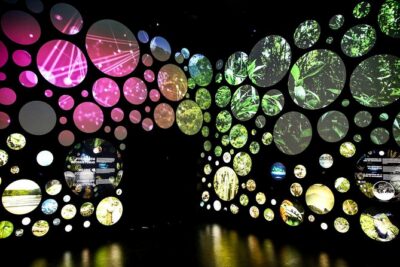
Museum of Tomorrow Guided Tour, Admission & Transfer
Read our review →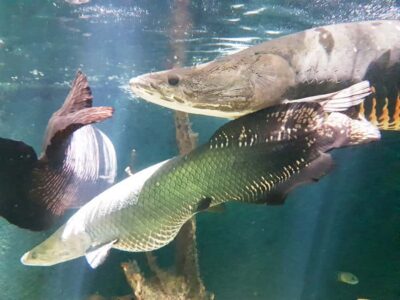
Manaus: MUSA and INPA Museums with Observation Tower Tour
Read our review →Browse the lists this tour appears in