
Our review · RIO DE JANEIRO TOURS
Rio: Olympic Boulevard, Museum of Tomorrow & History Tour
Rio’s port district packs an unusual amount into four hours. One moment you are looking at Eduardo Kobra’s huge portrait of humanity, and the next you are inside a Baroque church glittering with gold. The route links Rio’s Olympic makeover with the city’s African heritage, imperial past, and favorite old café.
I like the Museum of Tomorrow ticket being included, since admission alone can complicate a short city visit. I also like the range of stops: Valongo Wharf and the Kobra mural offer more than standard postcard views, while Confeitaria Colombo gives you a chance to sit down with a Brazilian snack.
The main caution is the schedule. You cover a fair amount of ground, and the tour operates with up to 19 people. Past reports also point to uneven guide and transport coordination, so confirm your pickup time and stay close to the group when moving between stops.
Key points at a glance
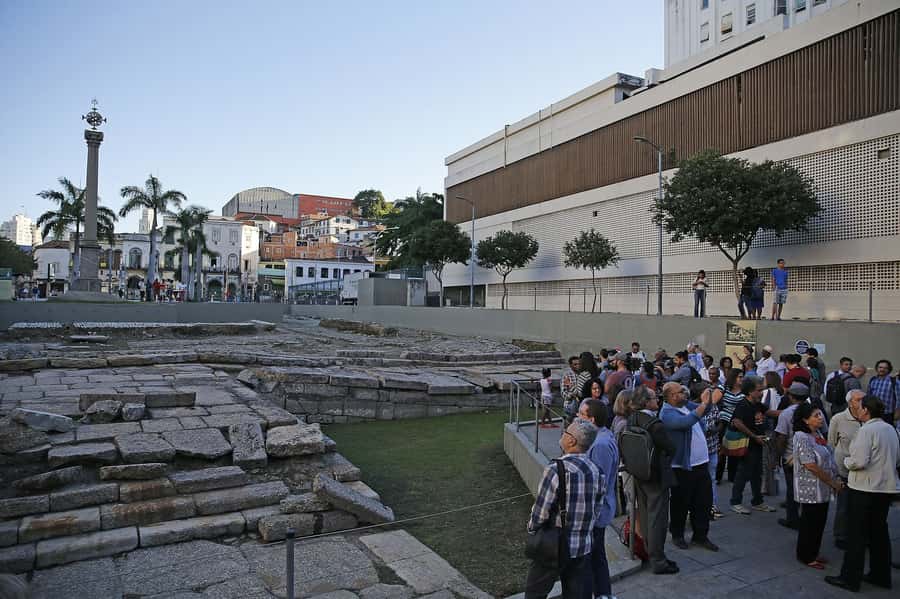
- Valongo Wharf: Learn about the forced arrival of Africans in Brazil at the city’s newest UNESCO World Heritage site.
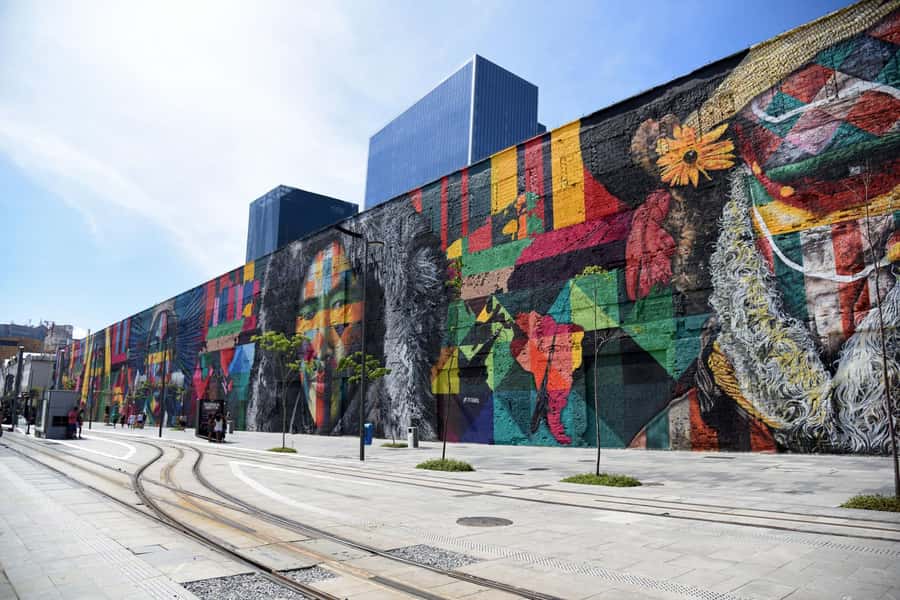
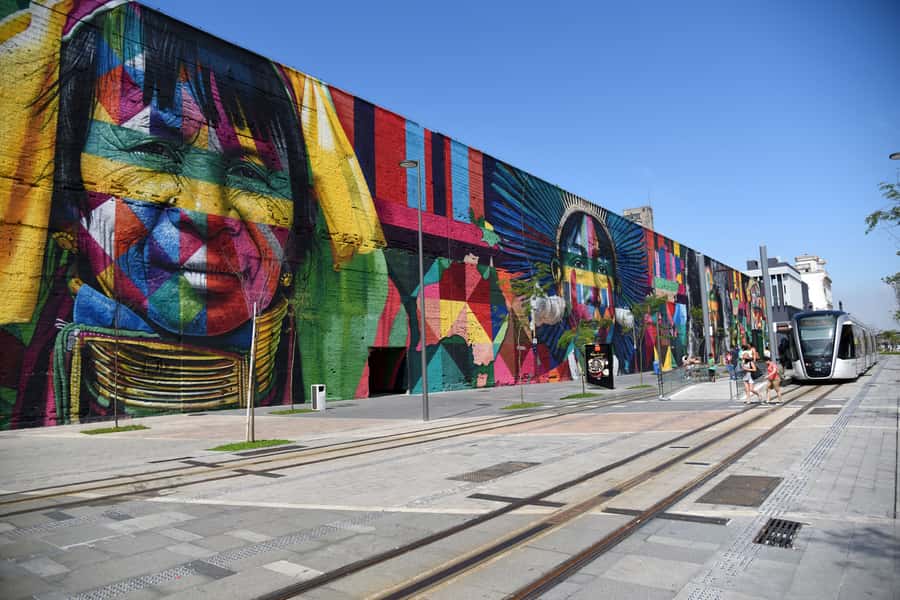
- Eduardo Kobra’s mural: See one of the world’s largest graffiti walls, filled with five colorful faces representing different ethnic groups.
- Museum of Tomorrow: Explore Rio’s striking futuristic building and visit Brazil’s most visited museum.
- Golden Baroque interior: Compare the plain exterior of the Monastery of Saint Benedict with its richly decorated interior.
- Four-hour city route: Hotel pickup, an air-conditioned van, a guide, and museum admission are included.
- Confeitaria Colombo finish: Order a coxinha or brigadeiro in one of Rio’s grandest historic cafés, except on Sundays.
Why this route shows a different side of Rio

Many first visits to Rio focus on beaches, Sugarloaf Mountain, and Christ the Redeemer. Those sights deserve their place, but this tour takes you into the city center, where Rio’s story is harder-edged and more layered.
You will see the port area shaped for the 2016 Olympic Games, but you will also confront Brazil’s connection to the Atlantic slave trade. You will pass imperial buildings, religious art, public sculpture, and contemporary street art in one compact outing. That mix gives the tour its real value.
The experience costs $67 per person. That is not the cheapest way to walk around Downtown, but the price includes hotel pickup and drop-off from the South Zone, transport in a van, a professional guide, and admission to the Museum of Tomorrow. If you are staying in Copacabana, Ipanema, Leblon, or Leme, the included transfers save you the trouble of arranging your own way to the center.
The tradeoff is that you do not control the pace. A private visit lets you linger at every mural or church, while this half-day format keeps you moving. I would choose it if you want orientation and context more than a slow, independent museum day.
More Historical Tours in Rio de Janeiro
- Rio de Janeiro: Historic Rio and Santa Teresa Half-Day Tour
★ 4.4 · 228 reviews - Rio de Janeiro: Little Africa Heritage Walking Tour
★ 4.9 · 177 reviews - Explore Little Africa : Unveiling Afro Heritage in Rio de Janeiro
★ 5.0 · 97 reviews
Starting at Valongo Wharf
The tour begins at Valongo Wharf, an important stop that can be easy to miss if you explore Rio’s center without a guide. This was a major landing point for enslaved Africans brought to Brazil, and the site helps place the country’s cultural development in a painful historical frame.
The value here is not simply seeing old stones. Your guide explains the African influence on Brazil and connects the port to the people, traditions, and culture that shaped the country. This is one of the moments when having live commentary matters most, since the physical remains alone cannot tell the full story.
Expect a serious opening to the tour. The subject is difficult, but it gives the rest of the route greater meaning. Rio’s music, food, religion, language, and social history cannot be understood without acknowledging this past.
Wear shoes that can handle a moderate amount of walking. The route is not described as strenuous, but you will be on foot between several stops, often in the open air.
Eduardo Kobra’s wall of faces
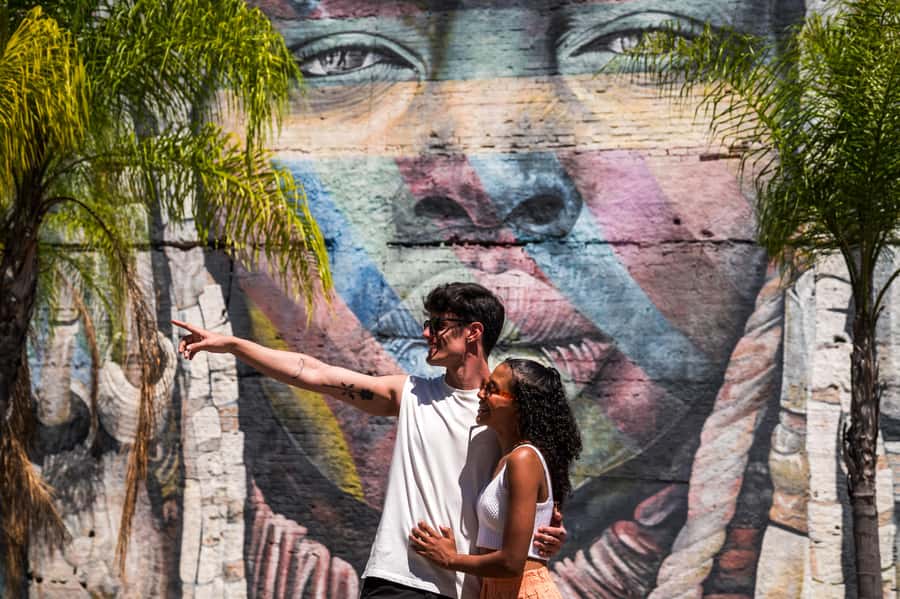
From Valongo Wharf, you continue to Eduardo Kobra’s mural. The artwork presents five ethnic groups in bright geometric colors, making it one of the most memorable photo stops on the route.
The mural is more than a giant backdrop. Its size and subject connect the modern Olympic Boulevard to ideas of global unity and cultural difference. Kobra’s style is easy to appreciate quickly, but your guide can add context about the artist and the meaning of the figures.
This stop is also a useful breather after the heavier subject at Valongo Wharf. You will have time for photographs, though the tour format means this is not the place to spend an hour studying every section of the wall.
I like the contrast between the mural and the older buildings around it. Rio’s center is not presented as a single polished historic quarter. Instead, the route shows how old port spaces, public art, new museums, and major events have been placed side by side.
Walking Olympic Boulevard to the Museum of Tomorrow
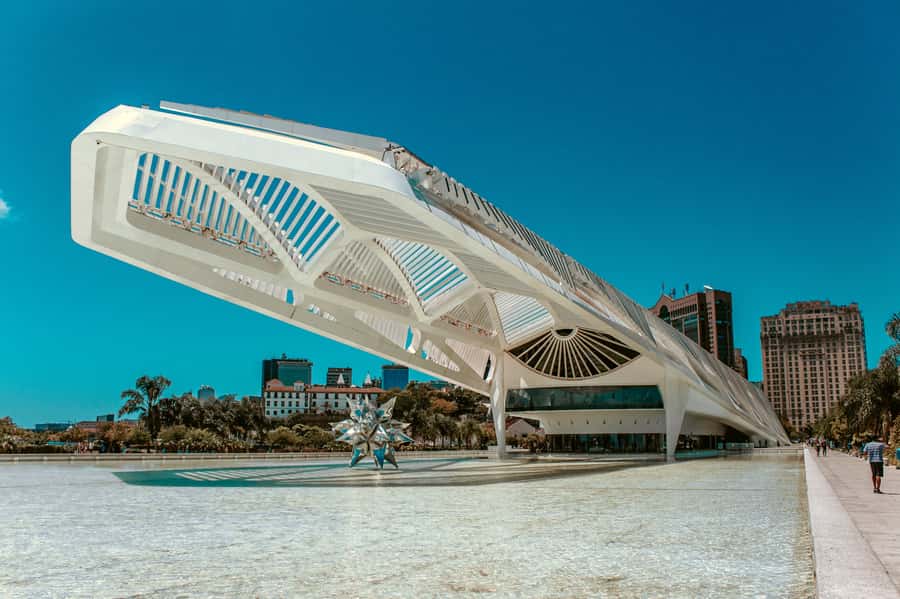
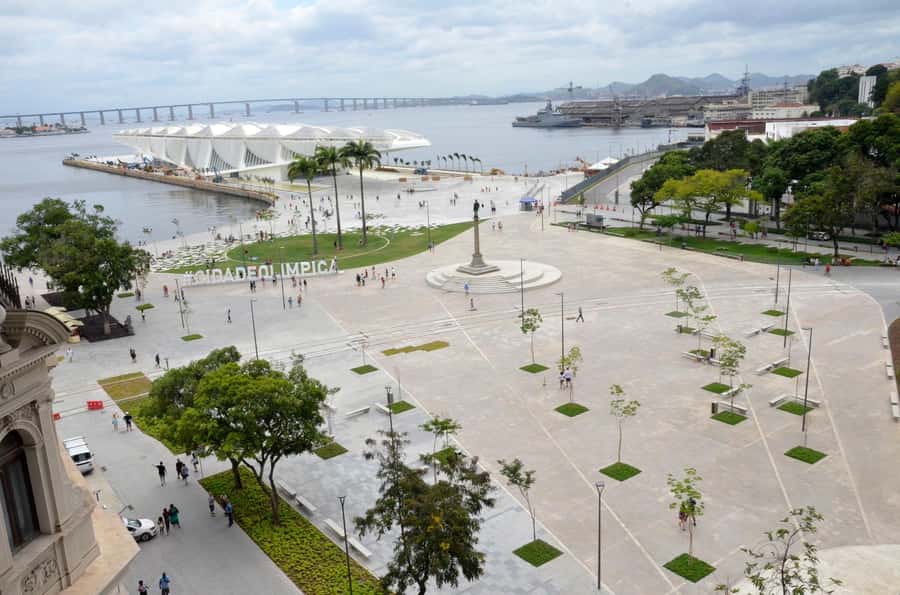
The route then follows Olympic Boulevard toward the Museum of Tomorrow. The boulevard is part of the port area’s transformation for the 2016 Olympics, and the walk lets you see the public spaces that replaced older port infrastructure.
You will also see the Rio 2016 Olympic Cauldron, designed by American artist Anthony Howe. Its reflective, kinetic sphere structure acts as a reminder of the Games and gives the walk a distinctive public-art stop.
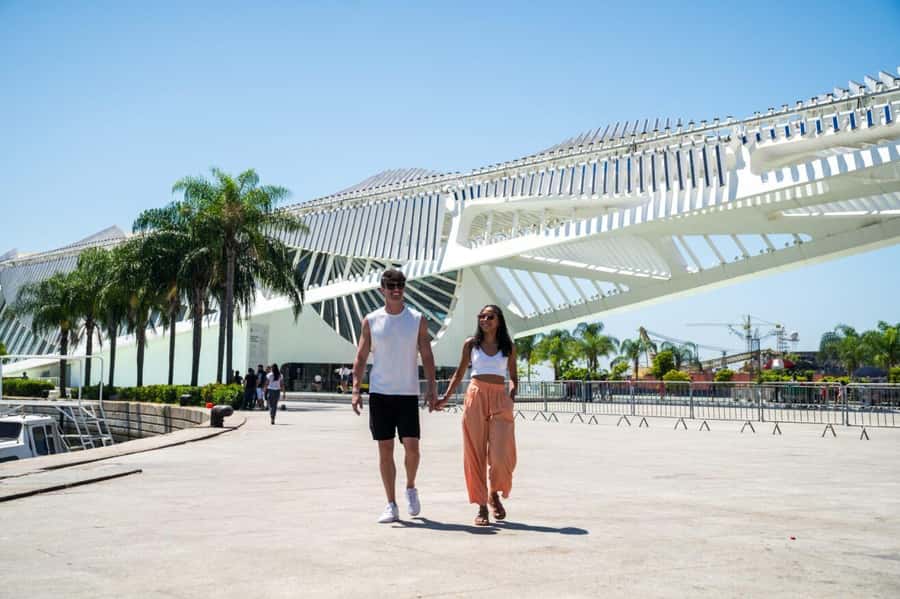
The Museum of Tomorrow is the visual centerpiece of this part of the tour. Its futuristic structure was designed to suggest movement and possibility, and even a quick look at the exterior is worthwhile. The building feels deliberately different from the colonial and Baroque sites visited later.
Admission is included, which is important because the museum is not just a photo stop. You can go inside and explore a science-focused institution concerned with the possible future of the planet and humanity. The tour allows you to experience the museum at your own pace, a useful feature praised by Elliot, who enjoyed having room to explore independently.
That freedom also creates a practical question. Four hours covers several major sites, so your museum visit may be shorter than it would be on a standalone museum day. If the Museum of Tomorrow is your main reason for booking, ask how much time is planned inside. If you want a broad introduction to the port district, the included visit works well.
more Rio de Janeiro days to choose between
- Petrópolis Day Trip from Rio de Janeiro including Imperial Museum and Crystal Palace
★ 4.0 · 101 reviews - Olympic Boulevard, Museum of Tomorrow & Historical Rio
★ 4.5 · 66 reviews - Rio: Olympic Boulevard, AquaRio and Museum of Tomorrow Tour
★ 4.5 · 54 reviews - Museum of Tomorrow Guided Tour, Admission & Transfer
★ 4.5 · 38 reviews
Saint Benedict Monastery and Rio’s Baroque surprise

After the modern museum, the tour moves sharply into the past at the Monastery of Saint Benedict. This change is one of the route’s best features.
From the outside, the monastery has a relatively simple façade. Inside, the mood changes completely, with golden ornaments covering the interior in the elaborate style associated with Brazil’s Baroque period.
This contrast rewards close attention. You may walk past the plain exterior without expecting much, then enter a space filled with carved decoration and gold. The stop also helps you see how religious institutions shaped Rio’s early urban life and artistic traditions.
The monastery is not presented as a long, private viewing. It is one stop among many, so listen closely while your guide points out what matters. Pedro was especially praised for explaining Brazilian history, and Emanuella was noted for discussing the country’s past and important buildings. A guide who gives clear context makes this visit far more useful than a quick look inside.
Praça XV and the former imperial center
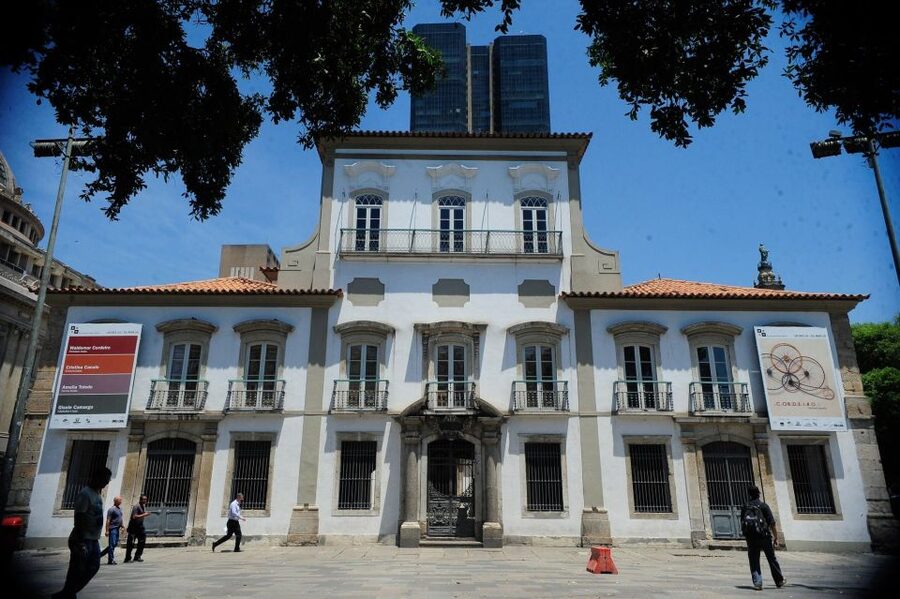
The itinerary continues through Rio’s older streets toward Praça XV. This square is tied to the period when Rio served as a center of imperial power, and you will see one of the former headquarters of the Brazilian empire.
Your guide uses the area to explain important events in Brazilian history. That is the main reason to visit with a guide rather than simply pass through on your own. The square is not only a place for photographs. It is a setting where political power, colonial buildings, religious institutions, and public life came together.
The sequence works well: Valongo Wharf introduces the port’s painful past, the monastery shows religious and artistic influence, and Praça XV turns toward government and empire. You get a basic framework for understanding how Rio developed beyond its beaches.
Do not expect a detailed study of every building in Downtown. This is a broad city tour, not a specialist architectural walk. You will come away with the main points and a better sense of where to return if you want a longer independent visit.
Ending at Confeitaria Colombo
The final stop is Confeitaria Colombo, one of Rio’s most famous cafés and a particularly attractive finish to a walking tour. The interior features Art Nouveau decoration, large stained-glass panels, tiles, and mirrors imported from France, Portugal, and Belgium.
The café gives the tour a more relaxed ending. After several historical stops, you can sit among early twentieth-century decoration and order something to eat or drink. Food and drinks are not included, so budget separately.
For a traditional snack, try a coxinha de frango, a fried chicken snack whose name means little chicken thigh. For something sweet, you might choose a brigadeiro, a chocolate confection found throughout Brazil.
Confeitaria Colombo is closed on Sundays. This is not a small detail, since the final stop is part of the character of the tour. On Sunday, confirm what replaces the café visit or expect the experience to end without entering it. The supplied details only confirm the closure, not a substitute arrangement.
Guides, group size, and the practical side
The tour offers live commentary in English, Spanish, and Portuguese. Guides named in the feedback include Emma, Pedro, Emanuella, Marilia, and Gabriela, but your assigned guide can vary.
The strongest guide experiences centered on clear explanations of Brazilian history, friendly contact, and helpful commentary about the buildings. Emma was described as friendly and flexible around the museum, while Pedro received praise for his focus on Brazil’s history. Those qualities matter here because many stops need explanation to make sense.
There have also been serious coordination complaints. One account described a guide losing the route and rushing the group afterward. Another described a missed hotel drop-off, when the driver left with people from another tour and the group needed an Uber later. These incidents do not prove that your departure will go badly, but they are worth taking seriously.
Confirm your pickup time directly with the provider. Pickup from South Zone hotels is scheduled between 8:10 and 8:55 AM, with the exact time depending on your hotel. If you are in a hostel or B&B, you will be assigned a nearby hotel for pickup and drop-off.
The van holds a maximum of 19 people. That is a reasonable group size for a city tour, but it is not intimate. Stay aware when the group boards the vehicle, especially at the end of the tour, and make sure the guide knows where you are before departure.
Who gets good value from the $67 price
I see the price as fair for the right kind of visitor. You are paying for a half-day introduction to a part of Rio that many beach-focused itineraries leave out. Hotel transfers can save both time and taxi costs, and museum admission is already covered.
The strongest value comes from the variety. In four hours, you see a UNESCO World Heritage site, a major public mural, an Olympic landmark, a modern science museum, a Baroque monastery, an imperial square, and a grand café. You will not study each place in depth, but you will get a useful first look at all of them.
The price is less attractive if you prefer complete freedom. You still pay for food at Confeitaria Colombo, and the schedule may not allow the long museum visit you would choose independently. A private tour would likely offer more control, though no private option is described here.
I would also consider the timing of your trip. Book on a day other than Sunday if Confeitaria Colombo is important to you. Bring comfortable shoes, water, and a little cash or a card for the café, since food and drinks are extra.
The tour runs rain or shine. Rio’s weather can change quickly, so bring suitable protection rather than assuming the walking portions will be canceled. The minimum participant rule also means the provider may cancel if too few people book, with a different date or full refund offered.
Should you book this Downtown Rio tour?
Book it if you want Rio’s port district and historic center explained in one organized morning. It suits first-time visitors who have already planned the major mountain and beach sights, families with an adult accompanying the children, and anyone who prefers a guide to connect difficult history with modern public art.
I especially recommend it for people who want a clear contrast between old and new Rio. The Kobra mural and Museum of Tomorrow provide contemporary energy, while Valongo Wharf, Saint Benedict Monastery, and Praça XV supply the older story.
I would hesitate if you dislike group schedules, want a long museum visit, or are visiting on Sunday mainly for Confeitaria Colombo. I would also confirm transport details carefully because guide and drop-off coordination has not always been consistent.
At $67, this is a useful orientation tour with a strong range of sights, not a slow specialist tour. Keep close to the group, confirm your hotel pickup, and treat the café stop as a pleasant extra rather than a meal included in the price.
FAQ
How long does the Rio Downtown tour last?
The experience lasts four hours, including the guided route through Downtown Rio and the port area.
What sights are included?
The route includes Valongo Wharf, Eduardo Kobra’s mural, Olympic Boulevard, the Museum of Tomorrow, the Rio 2016 Olympic Cauldron, the Monastery of Saint Benedict, Praça XV, and Confeitaria Colombo.
Is admission to the Museum of Tomorrow included?
Yes. The Museum of Tomorrow ticket is included in the tour price.
Is hotel pickup available?
Yes. Pickup and drop-off are available from hotels in Copacabana, Ipanema, Leblon, and Leme. Pickup takes place between 8:10 and 8:55 AM, but you should contact the provider to confirm your exact time.
What if I stay in a hostel or B&B?
You will be informed of the nearest hotel used for pickup and drop-off.
Which languages are available?
The live guide commentary is available in English, Spanish, and Portuguese.
Is Confeitaria Colombo open every day?
No. Confeitaria Colombo is closed on Sundays. Food and drinks at the café are also not included.
Can children join the tour?
Yes, but children must be accompanied by an adult. Children under five years old travel free if they do not occupy a seat. Unaccompanied minors are not allowed.
More History Walks in Rio de Janeiro
- Learn the History of Rio with an Unforgettable City Center Walking Tour
★ 5.0 · 82 reviews - Rio’s city walking tour: a glimpse of history and olympic legacy
★ 4.5 · 78 reviews - Petropolis Bohemia: Historic tour and visit to the Bohemian Brewery
★ 4.5 · 45 reviews - Imperial Petrópolis – Historic Tour + Teresa Street and Lunch
★ 4.5 · 44 reviews
New in Rio de Janeiro this month
- Discover Rocinha: Guided Tour of the Famous Favela★ 4.5 · 3 reviews
- Rio de Janeiro: Hang gliding adventure★ 3.7 · 3 reviews
- Rio de Janeiro: Pedra Bonita & Tijuca Forest Hike Tour★ 5.0 · 3 reviews
- Rio de Janeiro: Hang Gliding or Paragliding Flight★ 5.0 · 3 reviews
- Rio de Janeiro: Doors-off 30-min helicopter tour★ 5.0 · 3 reviews
- Rio de Janeiro: Local Experience in Forró dance★ 5.0 · 3 reviews
- Rio de Janeiro: Pedra do Telégrafo; Grumari/ Prainha Beaches★ 5.0 · 3 reviews
- Rio de Janeiro: Sugar Loaf with Lunch and Helicopter Flight★ 4.7 · 3 reviews
Rio de Janeiro Tours, compared.

Rio de Janeiro: 6-Stop Highlights of Rio with Lunch
Read our review →
Christ the Redeemer Entry Ticket by Corcovado Train
Read our review →
Rio de Janeiro: Rocinha Favela Walking Tour with Local Guide
Read our review →
Rio: Christ the Redeemer, Sugarloaf, Selaron & BBQ Lunch
Read our review →
Rio De Janeiro: Half-Day Rocinha Favela Walking Tour
Read our review →
Rio de Janeiro: Angra dos Reis and Ilha Grande Full-Day Tour
Read our review →
Rio de Janeiro: Beginner Samba Lesson in Ipanema
Read our review →
Browse the lists this tour appears in