
Our review · RIO DE JANEIRO TOURS
Explore Little Africa : Unveiling Afro Heritage in Rio de Janeiro
Rio’s Little Africa is not a sightseeing backdrop. It is a place where the city’s Afro-Brazilian story comes into sharp focus, from the forced arrival of enslaved Africans to the cultural traditions that survived and shaped Rio. This tour connects churches, archaeological sites, museums, old port spaces, and gathering places into one serious, moving walk.
I like the decolonial approach, which puts Black lives and achievements at the center rather than treating them as a footnote. I also like the mix of indoor and outdoor stops, especially the chance to pair the Pretos Novos Institute with Cais do Valongo, Pedra do Sal, and Largo da Prainha.
The tradeoff is physical. You cover a lot of ground in about three and a half hours, and the tour is not recommended for people with disabilities. Bring comfortable shoes, expect city walking, and remember that lunch and tips are not included.
Key Points to Know Before You Book
- Six connected stops: The route links Santa Rita, the Pretos Novos Institute, MUHCAB, Cais do Valongo, Pedra do Sal, and Largo da Prainha.
- A serious look at slavery and survival: The tour addresses forced migration, Black resistance, cultural memory, and continuing inequality without softening the subject.
- Strong guide presence: Guides including Carolina, Rafael, Malu, Val, and others are noted for clear explanations, warmth, and enthusiasm.
- About three and a half hours on foot: The route includes a short VLT ride, already covered in the price.
- Best for curious visitors: This suits anyone who wants context beyond Christ the Redeemer and Sugarloaf Mountain.
- Plan around closures: The Pretos Novos Institute is closed on Sundays, and all museums close from December 16 through January 5 and during Carnival season.
Why Little Africa Belongs on Your Rio Schedule
Many first visits to Rio focus on beaches, mountain views, samba, and famous monuments. Those places matter, but they do not explain how the city was built or why Afro-Brazilian culture is so central to its identity.
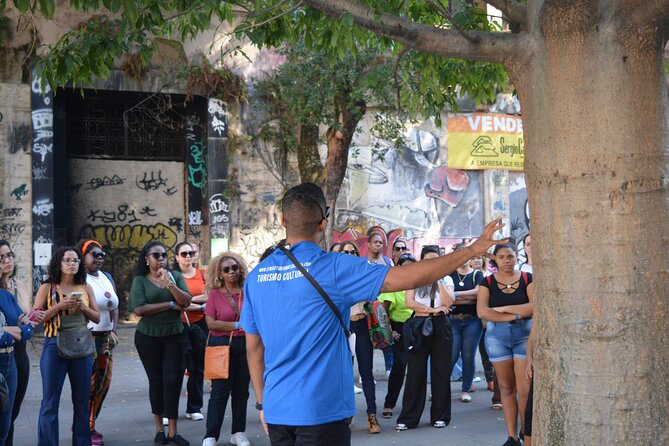
This tour gives you a different way to read Rio. Streets, squares, religious sites, and port buildings become evidence of a much larger story. You move through the Gamboa and Saúde areas while a guide explains what happened there and why these places still matter.
The subject is painful. The history of slavery is discussed directly, including the human cost and the long shadow of institutional inequality. Yet the tour is not only about suffering. It also examines faith, music, community, survival, and the cultural force of Black Brazilians.
That balance matters. You are not simply looking at old buildings. You are learning how a community preserved identity under brutal conditions and continued to shape Brazilian life.
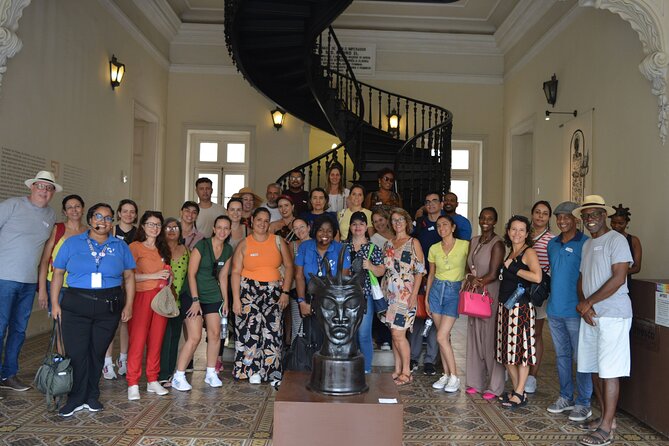
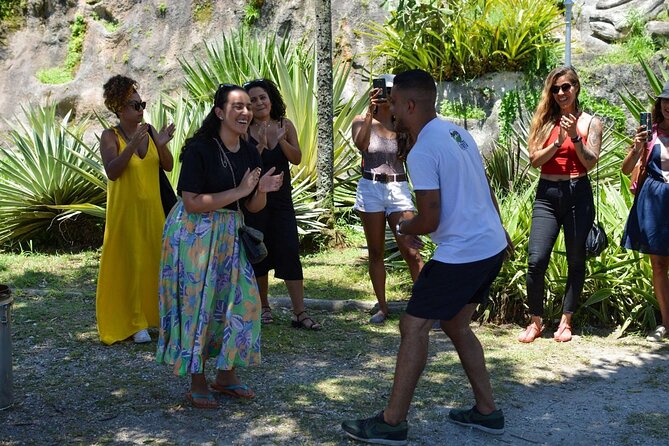
The group limit is 20 people, large enough to create some energy but small enough for a guide to address questions. Guide quality is an important part of the experience. Carolina is praised for her warmth and careful pacing, while Rafael is noted for making the subject both clear and enjoyable. Malu and Val are also described as personable and well prepared.
Guide assignments can change, so you should not book solely to meet one named guide. Still, the repeated praise for Carolina, Rafael, Malu, Val, and other members of the team suggests that the human side of the tour is one of its major strengths.
More Historical Tours in Rio de Janeiro
- Rio de Janeiro: Historic Rio and Santa Teresa Half-Day Tour
★ 4.4 · 228 reviews - Rio de Janeiro: Little Africa Heritage Walking Tour
★ 4.9 · 177 reviews - Learn the History of Rio with an Unforgettable City Center Walking Tour
★ 5.0 · 82 reviews
Santa Rita: Starting With a Different Historical Lens
The tour begins at the Santuário de Santa Rita, at Largo de Santa Rita in central Rio. The visit here is external and lasts about 20 minutes, with no admission charge.
The church is used as the opening point for a cultural and heritage discussion. Rather than rushing inside for a quick look, the guide frames the area through a decolonial narrative. That means you hear the story from the perspective of people and communities who were often pushed aside in traditional accounts.
This is a useful beginning because it establishes the tone for the rest of the walk. You are being asked to question the usual version of Rio’s past and pay attention to Black presence in places that may look ordinary at first glance.
Do not expect a long interior church tour at this stop. Its value is in the explanation and the setting. If you prefer grand architecture with little historical discussion, this portion may feel modest. If you like learning how a place fits into a wider story, it sets up the rest of the route well.
Pretos Novos Institute: Facing the Archaeological Record
The next stop is the Instituto de Pesquisa e Memória Pretos Novos, generally known as IPN. You spend about 40 minutes here, and an admission ticket is included.
This is one of the most important stops on the route. The institute is devoted to research and memory connected to the Pretos Novos, the name used for Africans who died after being brought to Brazil and before being sold. The site has archaeological importance, and the guide explains why it carries such emotional weight.
The visit brings the broad subject of slavery down to a specific place in Rio. Instead of discussing the Atlantic slave trade only as a distant event, you confront its physical traces within the city.
This stop can be difficult. The material is not light, and the subject calls for attention and respect. You may want a moment to process what you are hearing before moving on. That is part of its value.
The supplied tour details describe this as an external visit to an archaeological site, while also noting that the ticket is included. Access arrangements may depend on the day, so treat the guide’s explanation and the site presentation as central to the stop rather than assuming a lengthy museum visit.
MUHCAB: Afro-Brazilian Culture in the Gamboa Area
The route continues to MUHCAB, the Museu da História e da Cultura Afro-Brasileira. You have about 40 minutes here, with admission listed as free.
MUHCAB is described as a territory museum focused on Afro-Brazilian history and culture in the Gamboa area. That phrase matters. The museum is not presented as an isolated building packed with objects. The surrounding area is part of the lesson.
Inside and around MUHCAB, you can expect the tour to connect cultural practices with the streets and neighborhoods where Black life developed. The guide helps you move from facts to meaning: how memory is preserved, how culture changes, and how a community can remain present even after its past has been ignored or distorted.
The time is short. Forty minutes is enough for a guided introduction, but not enough for a slow, independent study of every display. If you enjoy museums, you may wish you had longer. Still, the tour’s purpose is to connect several locations, not keep you in one building all afternoon.
This is also a point where the guide’s teaching skill becomes especially important. The strongest guides, including Carolina and Rafael according to the information provided, explain both the difficult material and the cultural achievements with energy and care.
more history walks in Rio de Janeiro
- Rio’s city walking tour: a glimpse of history and olympic legacy
★ 4.5 · 78 reviews - Olympic Boulevard, Museum of Tomorrow & Historical Rio
★ 4.5 · 66 reviews - Rio: Olympic Boulevard, Museum of Tomorrow & History Tour
★ 4.1 · 47 reviews - Petropolis Bohemia: Historic tour and visit to the Bohemian Brewery
★ 4.5 · 45 reviews
Cais do Valongo: Reading the Old Port
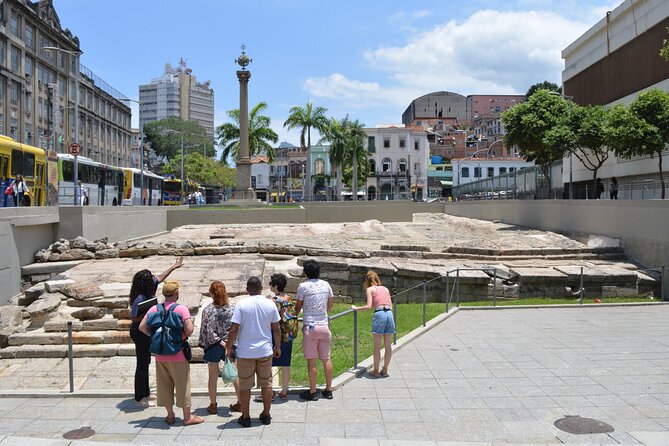
Cais do Valongo is given about 30 minutes, with no admission charge. The former wharf lies in Rio’s port district between present day Coelho e Castro and Sacadura Cabral streets.
This stop gives the tour a clear physical connection to the Atlantic slave trade. You are standing at a former port site, not simply hearing about a route on a map. The location helps you understand how Rio’s waterfront functioned and why this part of the city is essential to the story of Afro-Brazilian life.
Your guide supplies the context that the site alone cannot provide. Without explanation, an old port area can look like another urban space. With the story attached, the ground becomes a place of memory.
Thirty minutes is a sensible amount of time for a guided stop, though it is not a long pause. You will likely spend part of it listening and part of it orienting yourself in the port district. Bring questions. This is one of the places where comparisons with the history of Black communities in the United States or elsewhere in the African Diaspora can be especially useful.
The tour does not turn the site into a spectacle. That is a strength. The tone is educational and direct, with attention to the people whose lives were affected by what happened here.
Pedra do Sal: Faith, Music, and Black Community
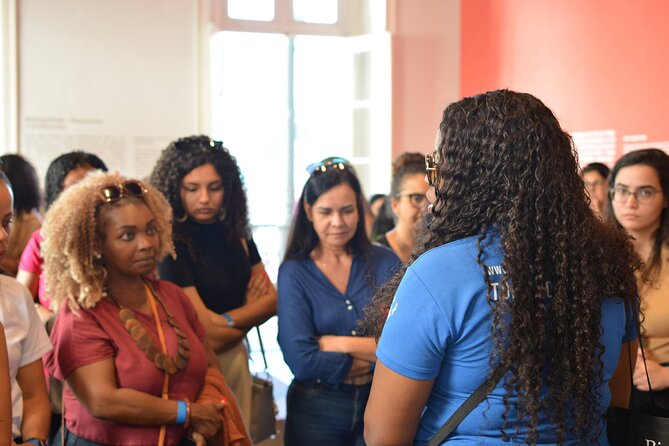
At Pedra do Sal, the group spends about 25 minutes on an external visit. The site is a historical and religious landmark in the Saúde neighborhood, near Largo da Prainha.
This is where the route broadens beyond the history of enslavement. Pedra do Sal is tied to religious life and to the cultural traditions that grew in Rio’s Black communities. The guide explains why the site matters, rather than treating it as a quick photo stop.
The setting also gives you a chance to see how history and present day life overlap. You are not visiting a sealed historical exhibit. You are in a living part of the city, where memory, faith, music, and neighborhood identity continue to shape the meaning of the place.
The stop lasts only 25 minutes, so you will not have unlimited time to explore on your own. That is typical of a route covering six locations. I would pay close attention to the guide here, since the interpretation is what turns the visit into something more than a view of stone steps and surrounding streets.
Largo São Francisco da Prainha: Ending Among Old Gathering Places
The final stop is Largo São Francisco da Prainha, where the tour ends after about 20 minutes. The address is R. São Francisco da Prainha, 7, in Saúde.
The square was once a symbolic part of Little Africa, marked by Black presence and the zungus, communal spaces connected with Black social life. Today it is also known as one of Rio’s fashionable areas, which creates an interesting contrast between past and present.
That contrast is useful. It reminds you that neighborhoods do not have only one identity. A place can become popular with a new crowd while still carrying older memories and unresolved questions about whose stories receive attention.
Ending here gives the tour a more open feeling than finishing at a museum. You have moved from a church and archaeological site through museums and port history, then into a public square where the city’s past and current social life meet.
The tour ends at Largo da Prainha, not back at Santa Rita. Keep that in mind when planning your next activity. The area offers a practical place to continue your afternoon, but lunch is not included, so plan to eat afterward or carry what you need.
Walking, Timing, and the Included VLT Ride
The tour lasts approximately three hours and 30 minutes. It includes a short ride on Rio’s VLT public transport, and that ride is already included in the final price.
Most of the route is walking. One family found that a guide could adjust the pace for an older relative, and that is encouraging, but the official information still says the tour is not recommended for people with disabilities. I would treat it as a walking tour first and ask the operator about your needs before booking.
Comfortable shoes are essential. You are moving between six stops, listening outdoors, entering cultural sites, and using public transport. The route is not described as overwhelming, but it is active.
Timing deserves thought. One departure mentioned in the supplied information begins at 2 pm. An afternoon start can help you avoid Rio’s strongest heat, which the operator says can rise above 40 degrees Celsius. You may also be less distracted by hunger after lunch.
The downside is fading daylight. If the tour ends late, photographs may not have the same light, particularly near the final stops. If photography is a top priority, ask about the exact departure time before you reserve.
Is $82.53 a Fair Price?
At $82.53 per person, this is not the cheapest way to spend a half day in Rio. But the price includes all fees and taxes, the ticket for the Pretos Novos Institute, and the VLT ride.
The value comes from the route and the interpretation. You could walk through parts of the port district on your own, but it would be harder to understand how Santa Rita, IPN, MUHCAB, Cais do Valongo, Pedra do Sal, and Largo da Prainha fit together.
You are paying for a guide who can explain difficult history, answer questions, manage a group, and connect locations that might otherwise feel unrelated. That is especially useful if this is your first introduction to Afro-Brazilian history.
Lunch and tips are extra. The tour’s length also means you are not getting a full day of sightseeing. I see the price as reasonable for a focused cultural tour, especially for someone who values context more than a long list of famous attractions.
The 99 percent recommendation rate and five star average point to a consistently strong experience, but you should still choose it for the subject matter. This is not a casual city stroll. The material asks for attention and emotional maturity.
Who Will Get the Most From This Tour?
I would recommend it to you if you want to understand Rio beyond its postcard sights. It is particularly useful for visitors interested in Black history, the African Diaspora, religion, archaeology, urban culture, and the way communities preserve memory.
Families can take it, and one guide adjusted the pace so an older family member could participate more fully. Couples, solo visitors, and friends can all fit comfortably into the format. The maximum group size is 20 people.
You should be ready for a serious discussion of slavery and inequality. If you want only light sightseeing, this may not be your best choice. If you want a direct and respectful account of how Black people shaped Rio, it deserves a place beside the city’s major attractions.
English language support appears to be available, but arrangements can vary. A previous booking had to be rescheduled because an English interpreter was not available at the original time. Confirm your language needs in advance, especially if clear interpretation is essential to your experience.
Closures, Weather, and Cancellation Details
The Pretos Novos Institute is closed on Sundays, so check the operating day before you book. From December 16 through January 5, and during Carnival season, all the museums are closed.
The tour requires good weather. If poor weather cancels it, you will be offered another date or a full refund. You can cancel for a full refund up to 24 hours before the local start time. Changes or cancellations inside that 24 hour window are not accepted for a refund.
Service animals are allowed, and the route is near public transportation. Most people can participate, but the walking and the official accessibility warning deserve serious consideration.
Should You Book Little Africa in Rio?
Book this tour if you want the story behind Rio’s Afro-Brazilian identity, not just another lookout point or photo stop. The combination of IPN, MUHCAB, Cais do Valongo, Pedra do Sal, and Largo da Prainha gives you a strong sense of how memory, community, faith, and culture connect across the port district.
I would schedule it early in your Rio visit if possible. It can help you see later sights with more context, and one family wished they had booked it before other tours so they could return to places that caught their attention.
Skip it if you cannot manage sustained walking, need a completely lighthearted outing, or will visit during the listed museum closures. For everyone else, especially those who want an honest look at the city’s Black heritage, $82.53 buys a thoughtful and well organized introduction to a part of Rio that many standard guidebooks barely explain.
FAQ
How long does the Little Africa tour last?
The tour lasts approximately three hours and 30 minutes.
Where does the tour begin and end?
It begins at Santuário de Santa Rita, at Largo de Santa Rita in central Rio de Janeiro. It ends at Largo São Francisco da Prainha in Saúde.
What is included in the price?
The price includes all fees and taxes, a ticket for the Pretos Novos Institute, and the short VLT public transport ride included in the route.
Is lunch included?
No. Lunch and tips are not included.
Is the Pretos Novos Institute open every day?
No. The institute is closed on Sundays. All the museums are also closed from December 16 through January 5 and during Carnival season.
What happens if the tour is canceled because of bad weather?
You will be offered a different date or a full refund. For your own cancellation, you must cancel at least 24 hours before the local start time to receive a full refund.
New in Rio de Janeiro this month
- Discover Rocinha: Guided Tour of the Famous Favela★ 4.5 · 3 reviews
- Rio de Janeiro: Hang gliding adventure★ 3.7 · 3 reviews
- Rio de Janeiro: Pedra Bonita & Tijuca Forest Hike Tour★ 5.0 · 3 reviews
- Rio de Janeiro: Hang Gliding or Paragliding Flight★ 5.0 · 3 reviews
- Rio de Janeiro: Doors-off 30-min helicopter tour★ 5.0 · 3 reviews
- Rio de Janeiro: Local Experience in Forró dance★ 5.0 · 3 reviews
- Rio de Janeiro: Pedra do Telégrafo; Grumari/ Prainha Beaches★ 5.0 · 3 reviews
- Rio de Janeiro: Sugar Loaf with Lunch and Helicopter Flight★ 4.7 · 3 reviews
Rio de Janeiro Tours, compared.
Rio de Janeiro: 6-Stop Highlights of Rio with Lunch
Read our review →
Christ the Redeemer Entry Ticket by Corcovado Train
Read our review →
Rio de Janeiro: Rocinha Favela Walking Tour with Local Guide
Read our review →
Rio: Christ the Redeemer, Sugarloaf, Selaron & BBQ Lunch
Read our review →
Rio De Janeiro: Half-Day Rocinha Favela Walking Tour
Read our review →
Rio de Janeiro: Angra dos Reis and Ilha Grande Full-Day Tour
Read our review →
Rio de Janeiro: Beginner Samba Lesson in Ipanema
Read our review →
Browse the lists this tour appears in