
Our review · RIO DE JANEIRO TOURS
Rio de Janeiro: Bossa Nova Walking Tour with Guide
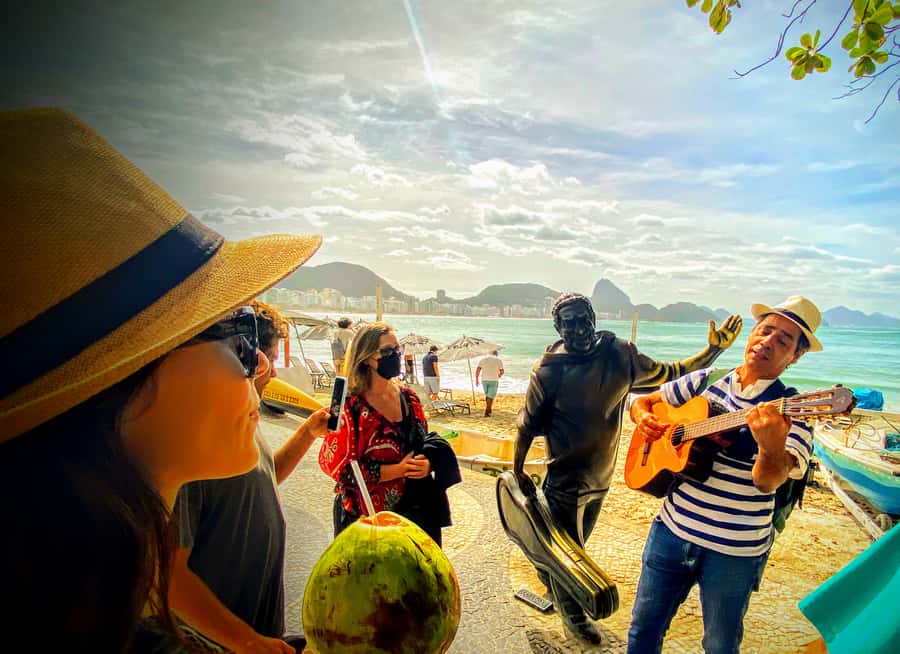
Rio’s Bossa Nova story is best heard where it happened. This three-hour walk links Ipanema and Copacabana through ten or more music-related stops, with a guide who also sings and plays guitar along the way. Guilherme, known as Gui, leads the experience in English, Portuguese, or Spanish, combining street history with short live performances.
I like the direct connection to places tied to Tom Jobim, Vinícius de Moraes, João Gilberto, and Dorival Caymmi. I also like the route’s mix of beaches, squares, statues, bars, and residential streets, rather than a classroom-style talk. The main consideration is that the music is woven into the walk in short bursts, so you may want a fuller concert if live performance matters more to you than history.
Key points to know before booking
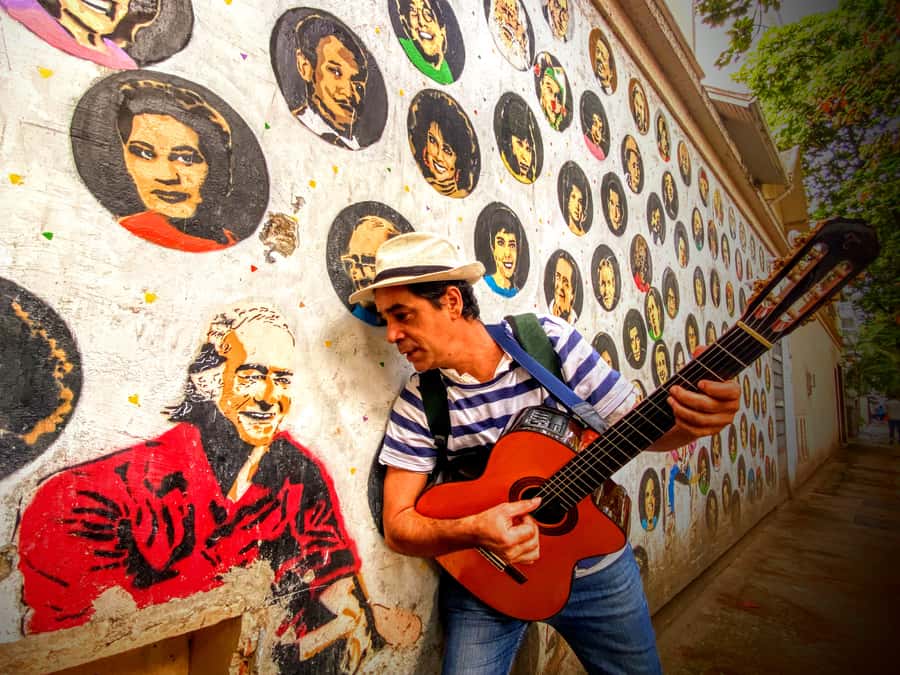
- A musician leads the walk: Guilherme, also called Gui, guides, sings, and plays guitar and other instruments.
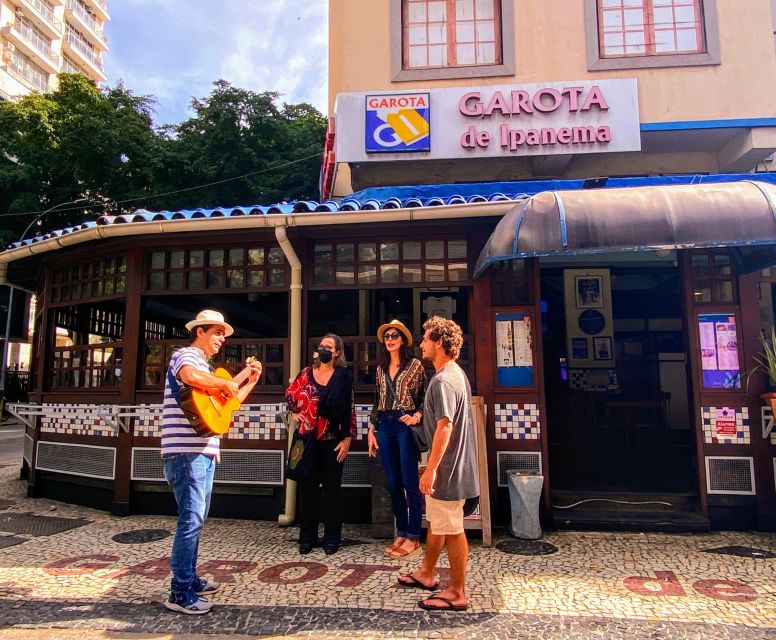
- The route covers two famous Rio neighborhoods: You walk from Praça Nossa Senhora da Paz through Ipanema and Copacabana, ending near the Garota de Ipanema restaurant and bar.
- The music comes with a sense of place: Stops relate to the streets, bars, beaches, and meeting spots linked with Bossa Nova.
- Expect a small-group feel: Private and small-group formats are available, with the language choice of English, Portuguese, or Spanish.
- The route is scenic but not suited to everyone: Comfortable shoes are essential, and the experience is not suitable for children under eight, wheelchair users, or people with mobility impairments.
- The price is $49 per person: That is fair if you value a specialist guide, live music, and a focused cultural walk in two of Rio’s best-known districts.
Why Bossa Nova makes a better walking tour than a museum talk
Bossa Nova is closely tied to Rio’s streets and shorefront. The style grew during the 1950s and 1960s, and this walk uses actual places in Ipanema and Copacabana to explain the people, songs, and social world behind it.
You are not simply hearing names in a lecture. You move through the neighborhoods where composers and performers lived, worked, met, and played. That gives the music a physical setting. A song associated with the beach feels different when you are standing near the shore, with Rio’s familiar sidewalks and city views around you.
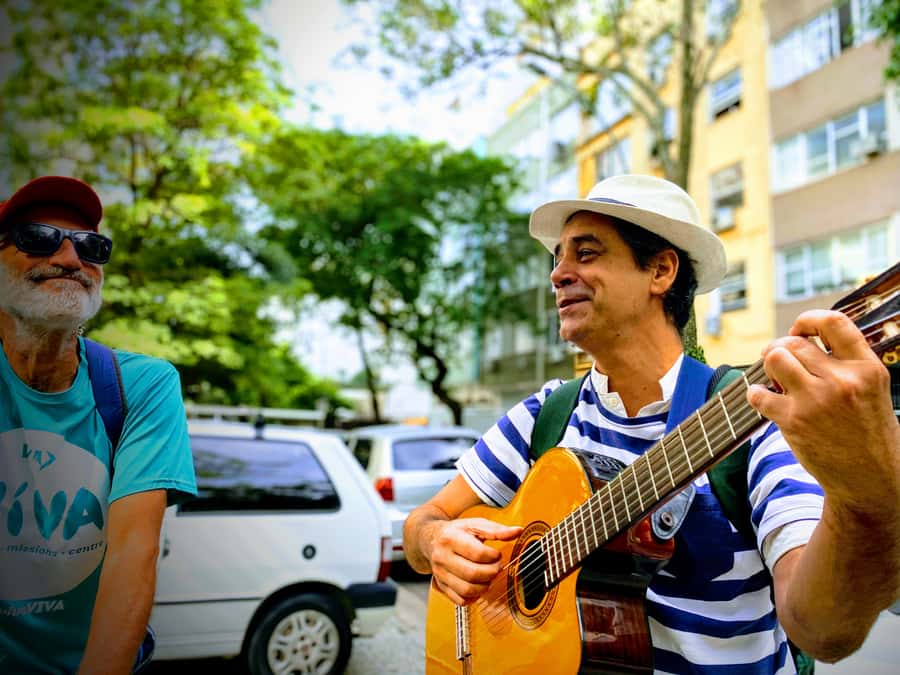
The guide is a key part of the experience. Guilherme, known as Gui, is both musician and singer, so he can demonstrate the sound instead of only describing it. Expect guitar playing and other short musical moments during the route. The format suits you if you want a lively explanation with music folded into the story.
Still, keep your expectations clear. This is a walking tour with live music, not a long seated concert. One available assessment praised the guide and the story but wished for more songs. If you already know Bossa Nova well and want extended performances, this may feel light on music.
More Walking Tours in Rio de Janeiro
- Rio de Janeiro: Rocinha Favela Walking Tour with Local Guide
★ 4.8 · 3,052 reviews - Rio De Janeiro: Half-Day Rocinha Favela Walking Tour
★ 4.7 · 2,272 reviews - Sunrise and Sunrise Walk Two Brothers with Local Guide
★ 5.0 · 193 reviews
Starting at Praça Nossa Senhora da Paz
The meeting point is Praça Nossa Senhora da Paz in Ipanema, close to Exit A of the nearby metro station. That makes the start practical if you are staying in Rio and using public transport.
The square opens the tour with a 20-minute class. This is where you get the basic framework: how Bossa Nova began, why the 1950s and 1960s mattered, and which figures shaped the sound. Tom Jobim, Vinícius de Moraes, and João Gilberto receive special attention, along with other composers and performers.
The opening lesson matters because later stops may otherwise seem like a string of names and addresses. Listen for the links between the people, songs, and places. If you know little about Brazilian music, this early context should help the rest of the walk make sense.
You will receive the precise meeting instructions and directions to find the guide by email at 8:00 p.m. the night before. Keep an eye out for that message, since a large public square can have several possible meeting points.
From Ipanema streets to Cantagalo
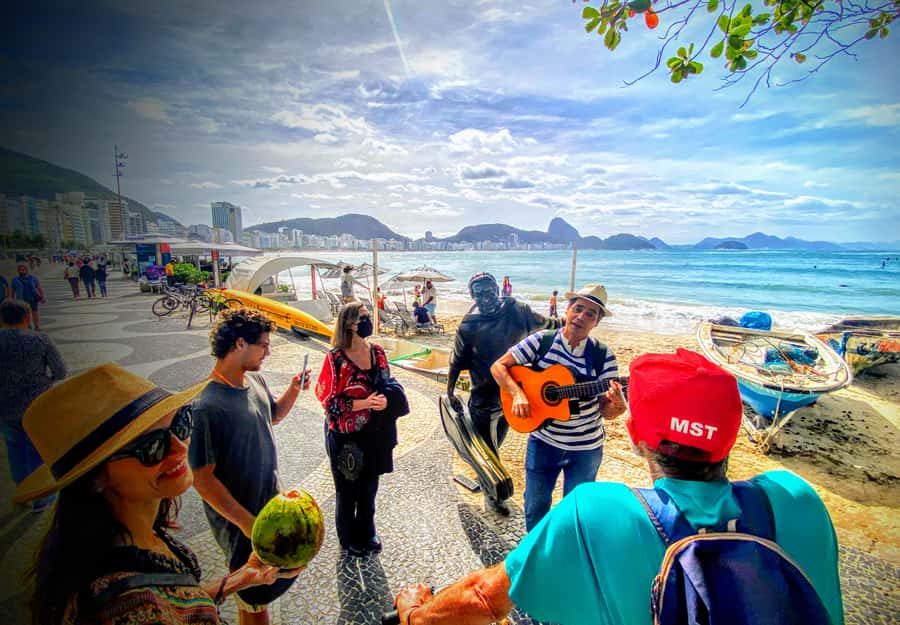
After the introduction, the group moves through a series of stops described as bars, streets, squares, and lesser-known corners connected with Bossa Nova. Each one lasts roughly 10 to 15 minutes, usually combining explanation, photos, and a short performance.
A first special stop takes you away from a simple main-street route. The purpose is to show how the music is tied to ordinary corners of Ipanema, not only famous monuments. You may hear a song, take photos, and get a story about the people who helped shape the style.
Rua Nascimento Silva follows. This street is important because it connects the music to the neighborhood where musicians lived and created. The guide uses the setting to explain the artistic circle around Bossa Nova. It is the sort of stop that helps you picture the period as a living local scene rather than a distant chapter in music history.
A further secret stop continues that approach. The exact detail is not specified in advance, which preserves some surprise. You should expect another short talk, sightseeing, and music rather than a major attraction with an entrance ticket.
The route then reaches Cantagalo. This section helps shift the walk from private streets and music addresses toward the wider Ipanema and Copacabana area. Along the way, the guide can connect the neighborhood’s changing streets with Rio’s cultural atmosphere during Bossa Nova’s most famous years.
Praça General Osório and the public side of Ipanema
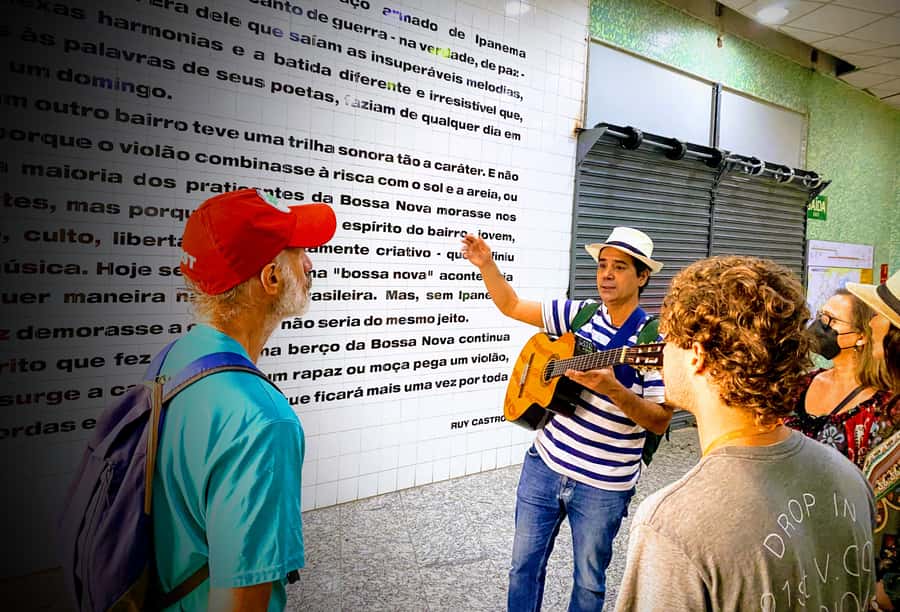
Praça General Osório gives the walk a more open public setting. It is a useful place to pause, take photos, and hear how music moved from private circles into the wider life of Rio.
The square is also a natural point for understanding Ipanema as more than a beach. The neighborhood’s cafes, bars, streets, and social spaces helped form the setting in which Bossa Nova became known. The guide’s role here is to connect the everyday surroundings with the musicians and performers discussed earlier.
The stops are fairly short. That keeps the three-hour route moving, but it also means the depth of each story depends on your questions and on the pace of the group. A private or small-group booking may suit you if you want more time to ask about specific artists or songs.
A different side of Rio de Janeiro altogether:
- Rio de Janeiro: 6-Stop Highlights of Rio with Lunch
★ 4.4 · 5,157 reviews - Christ the Redeemer Entry Ticket by Corcovado Train
★ 4.4 · 4,476 reviews - Rio: Christ the Redeemer, Sugarloaf, Selaron & BBQ Lunch
★ 4.5 · 2,428 reviews - Rio de Janeiro: Angra dos Reis and Ilha Grande Full-Day Tour
★ 4.6 · 1,673 reviews
Copacabana’s shorefront and Dorival Caymmi
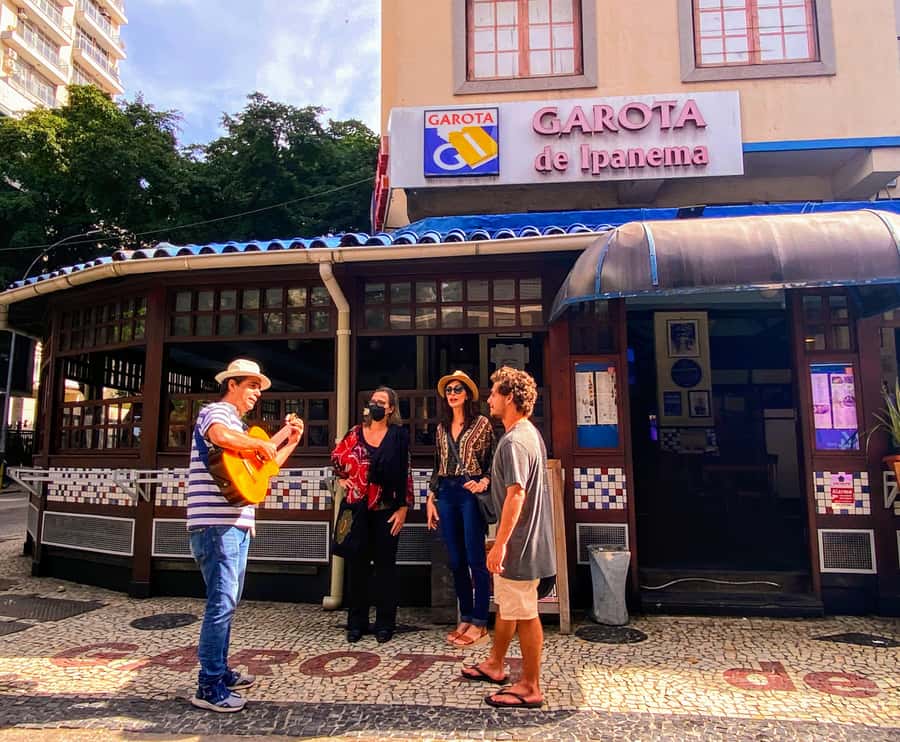
The walk continues toward Avenida Atlântica, with a stop at number 3968. This is one of the route’s stronger scenic sections because you get views along the shore as you walk and listen.
Here, the tour balances music history with the physical appeal of Rio. You can take photos, hear more about Bossa Nova, and enjoy the open coastal setting. The location also gives you a break from the inland streets and makes clear why Rio’s beaches are so closely tied to the city’s cultural identity.
Next comes the statue of Dorival Caymmi. This stop broadens the story beyond the best-known Bossa Nova names. Caymmi is part of Brazil’s wider popular music tradition, and his presence lets the guide place Bossa Nova within a larger national story.
I like this kind of stop because it keeps the tour from becoming a narrow list of only three or four stars. You get a sense of the musical world around Bossa Nova and the many voices associated with Brazilian song.
Garota de Ipanema, Arpoador, and Tom Jobim
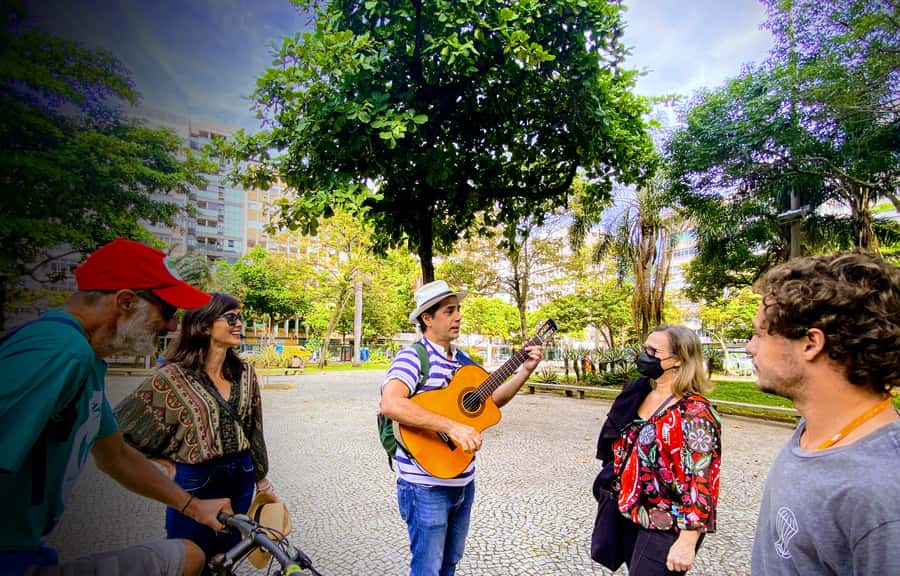
The route then returns to famous Ipanema landmarks. The Garota de Ipanema stop connects the walk with one of the best-known songs linked to Rio. You hear the story behind the girl, the neighborhood, and the song’s place in popular culture, with another short live performance included at this stage.
Arpoador is one of the most scenic points on the route. The stop includes views along the way, sightseeing, and music. It is a good place to let the cultural story meet Rio’s setting, especially if you enjoy tours that alternate between explanation and simple time outdoors.
The statue of Tom Jobim is another central stop. Jobim was one of Bossa Nova’s major composers, and the statue gives the discussion a clear focal point. The guide can explain his role alongside Vinícius de Moraes and João Gilberto, helping you separate the composer, lyricist, and performer roles that shaped the music.
These stops are brief, around 10 minutes each. That is enough for a focused story and photos, but not enough for a long pause. Bring your camera, but also stay close to the guide so you do not miss the musical details while moving through public spaces.
Laura Alvim and the final bar performance
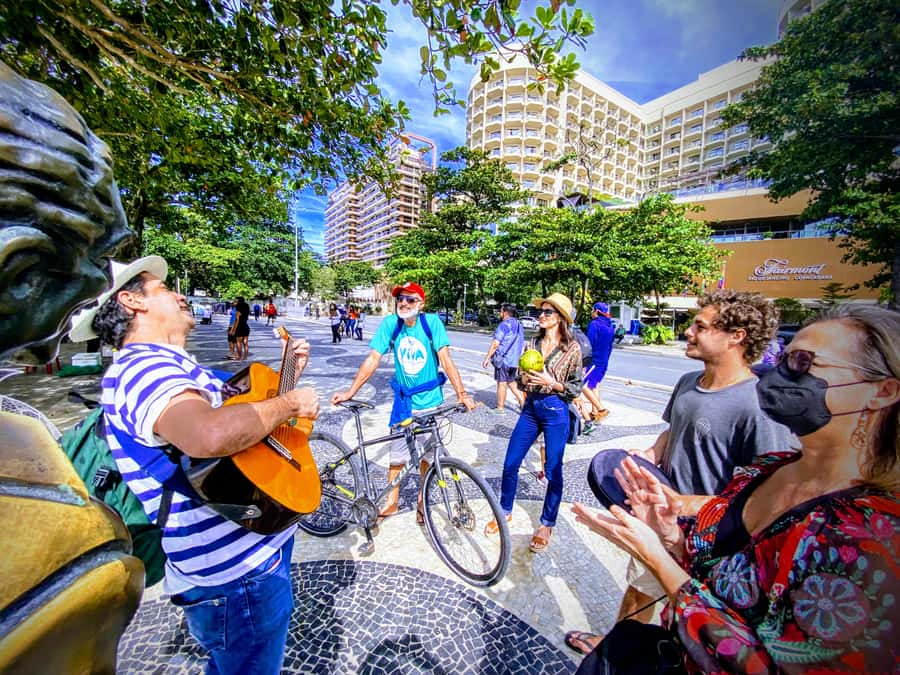
Casa de Cultura Laura Alvim is a short stop, listed at about five minutes. It works as a cultural marker on the route and adds another Ipanema location to the story.
The final local bar gives the experience a more relaxed finish. You hear more music, receive the last pieces of the Bossa Nova story, and have a chance to enjoy the setting before the walk ends at Restaurante e Bar Garota de Ipanema.
Food and drinks are not included, so budget separately if you want to order something at the end. The finish is convenient for anyone who wants to continue the evening in Ipanema, but the tour price does not cover a meal, drink, or transport afterward.
What $49 buys you in Rio
At $49 per person, this is not the cheapest way to walk around Ipanema. You are paying for a specialist guide, live musical performance, a planned route through two major neighborhoods, and the convenience of having the history tied together for you.
The value is strongest if you would otherwise spend time trying to identify the relevant streets and music sites on your own. A standard neighborhood walk may show you the same beaches and squares but will not normally connect them to Tom Jobim, Vinícius de Moraes, João Gilberto, and Dorival Caymmi while also providing live guitar and singing.
The price is less compelling if you mainly want beach views or a concert. You can see plenty of Rio without booking a guided walk, and the performances here are short parts of a larger three-hour program.
Private and small-group options improve the value for people who want a more personal pace. They may also be useful if you want to ask detailed questions about particular songs or artists. The experience is offered in English, Portuguese, and Spanish, so choose the language in which you can best follow musical history and lyrics.
Timing, walking conditions, and who should book
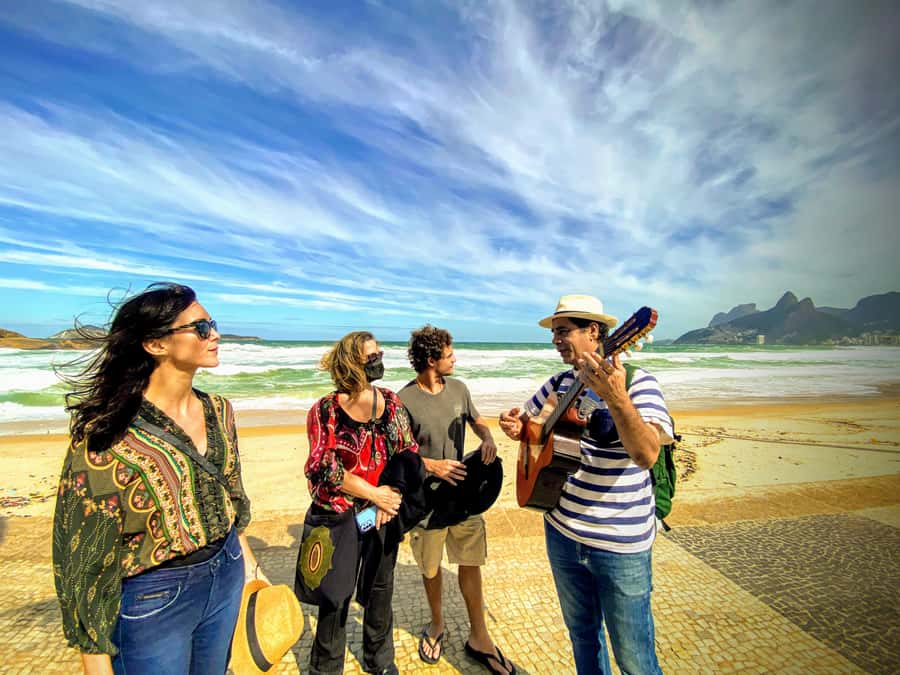
Plan on three hours of steady walking between squares, streets, statues, the shorefront, and a bar. Wear comfortable shoes and light, comfortable clothes. The route includes scenic outdoor stops, so you should be ready for changing street conditions and time on your feet.
This is not suitable for children under eight. It is also not suitable for wheelchair users or people with mobility impairments, according to the activity information. If walking for three hours is difficult, choose a seated music program instead.
I would recommend this experience to:
- First-time Rio visitors who want culture tied to real neighborhoods
- People who enjoy Brazilian music and want more than a playlist
- Fans of Tom Jobim, Vinícius de Moraes, João Gilberto, or Dorival Caymmi
- Couples and small groups looking for a relaxed cultural outing
- Visitors comfortable walking between several stops in Ipanema and Copacabana
I would think twice if you want a full-length concert, dislike walking, or have no interest in music history. The guide’s personality also matters here. Guilherme and Gui are names associated with the experience, and the strongest feedback focuses on his warmth, musical ability, and command of the subject.
Free cancellation up to 24 hours before the start gives you some useful flexibility. You can also reserve now and pay later, which helps if your Rio plans are still changing.
Should you book the Bossa Nova walking tour?
Book it if you want to understand why Ipanema and Copacabana matter to Brazilian music, not just photograph the beaches. The combination of live singing, guitar, local places, and stories about major artists gives the walk a clear purpose.
I especially like it for visitors who know a few Bossa Nova songs but want the human story behind them. You will walk the streets linked with the music, hear about the Girl from Ipanema, visit Tom Jobim’s statue, and finish near the Garota de Ipanema bar.
Skip it if you want a substantial concert or a low-effort sightseeing route. At $49, the tour earns its price through the guide’s music and storytelling, not through included food, transport, or admission tickets.
FAQ
Where does the Bossa Nova walking tour start?
The tour starts at Praça Nossa Senhora da Paz in Ipanema, near Exit A of the nearby metro station.
Where does the tour finish?
It finishes at Restaurante e Bar Garota de Ipanema.
How long does the tour last?
The walking tour lasts three hours.
Which languages are available?
The live guide can conduct the tour in Portuguese, Spanish, or English.
Is live music included?
Yes. The guided walk includes live performances by the musician and guide.
Is food or drink included?
No. Food and drinks are not included in the $49 price.
Is transport included?
No. Transport is not included. You make your own way to the meeting point and from the ending location.
Can I book a private group?
Yes. Private and small-group options are available.
Is the tour suitable for children or wheelchair users?
The tour is not suitable for children under eight, wheelchair users, or people with mobility impairments.
New in Rio de Janeiro this month
- Discover Rocinha: Guided Tour of the Famous Favela★ 4.5 · 3 reviews
- Rio de Janeiro: Hang Gliding or Paragliding Flight★ 5.0 · 3 reviews
- Rio de Janeiro: Hang gliding adventure★ 3.7 · 3 reviews
- Rio de Janeiro: Pedra Bonita & Tijuca Forest Hike Tour★ 5.0 · 3 reviews
- Rio de Janeiro: Local Experience in Forró dance★ 5.0 · 3 reviews
- Rio de Janeiro: Doors-off 30-min helicopter tour★ 5.0 · 3 reviews
- Rio de Janeiro: Pedra do Telégrafo; Grumari/ Prainha Beaches★ 5.0 · 3 reviews
- Rio de Janeiro: Sugar Loaf with Lunch and Helicopter Flight★ 4.7 · 3 reviews
Rio de Janeiro Tours, compared.

Rio de Janeiro: 6-Stop Highlights of Rio with Lunch
Read our review →
Christ the Redeemer Entry Ticket by Corcovado Train
Read our review →
Rio de Janeiro: Rocinha Favela Walking Tour with Local Guide
Read our review →
Rio: Christ the Redeemer, Sugarloaf, Selaron & BBQ Lunch
Read our review →
Rio De Janeiro: Half-Day Rocinha Favela Walking Tour
Read our review →
Rio de Janeiro: Angra dos Reis and Ilha Grande Full-Day Tour
Read our review →
Rio de Janeiro: Beginner Samba Lesson in Ipanema
Read our review →
Browse the lists this tour appears in