
Our review · RIO DE JANEIRO TOURS
Rio de Janeiro: Downtown Walking Tour
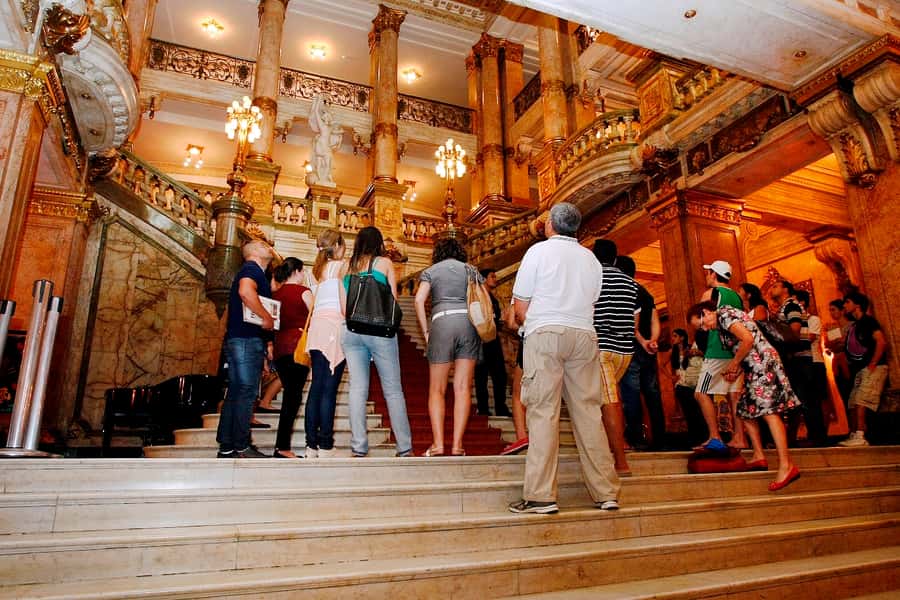
Rio’s downtown tells Brazil’s story in stone. In four hours, you move from imperial buildings and narrow colonial lanes to grand republican institutions, Art Deco streets, and the bright cultural center around Cinelandia. This is a useful way to see a side of Rio that beaches and mountain views cannot explain.
I like the clear historical route, which links Brazil’s monarchy, republic, religion, politics, and arts in one walk. I also like the multilingual guiding, with Portuguese, Spanish, English, Italian, and French available. The main consideration is the pace and terrain: this is a long urban walk, and it is not suitable for wheelchair users or people with mobility impairments.
Key points to know before you go
- Five centuries in four hours: Follow Rio’s story through XV de Novembro Square, Candelária, CCBB, and Cinelandia.
- Architecture keeps changing: Imperial courtyards, winding alleys, ornate churches, and monumental civic buildings share the route with modern downtown streets.
- Colombo Bakery ends the walk: You have the chance to stop for a snack at one of Rio’s best-known landmarks.
- Guides shape the experience: Angelica, Antonio, Lavinha, and Renato have led tours in several languages, with strong praise for warmth and clear explanations.
- The subway is not included: Allow up to BRL 15 per person for a roundtrip ticket if you need it.
- Pack light: Comfortable shoes, identification, water, and a small bag are sensible. Large bags and luggage are not allowed.
Why Rio’s downtown deserves four hours
Many first-time visits to Rio focus on Copacabana, Ipanema, Sugarloaf Mountain, and Christ the Redeemer. Those places give you the postcard view. Downtown gives you the footnotes, the political story, and the older city beneath the modern one.
This tour helps you read Rio rather than simply pass through it. You see buildings connected to the monarchy, religious life, public government, banking, literature, art, and theater. The route also shows how the city changed after Brazil became a republic, when grand civic projects reshaped the center.
I find that especially useful because downtown Rio can feel confusing at first. The streets do not always explain themselves. A guide gives you dates, names, and local context, then points out details you might otherwise walk past.
The tour lasts about four hours, so it is long enough to create a connected story rather than a quick checklist. It is also short enough to fit into a morning or afternoon of sightseeing. In high season, traffic and large crowds can make the walk last longer, so do not schedule an important timed attraction immediately afterward.
More Walking Tours in Rio de Janeiro
- Rio de Janeiro: Rocinha Favela Walking Tour with Local Guide
★ 4.8 · 3,052 reviews - Rio De Janeiro: Half-Day Rocinha Favela Walking Tour
★ 4.7 · 2,272 reviews - Sunrise and Sunrise Walk Two Brothers with Local Guide
★ 5.0 · 193 reviews
Starting at XV de Novembro Square
The walk begins in the area around XV de Novembro Square, one of the best places to start a visit to historic Rio. Here, the city’s older civic and imperial identity comes into view through buildings that once served the monarchy and public government.
The route includes the ALERJ building, the seat of Rio de Janeiro’s state legislature, along with the Paço Imperial and the Carmo Convent. These stops give the opening section a useful contrast. One building represents present-day political life, while the palace and convent connect you to earlier periods of Rio’s development.
You should expect the guide to explain how power, religion, and public life occupied the same central district. That context matters. The buildings are not just attractive facades. Together, they show how the city’s center worked when Rio was tied closely to the Portuguese court and later to Brazil’s imperial government.
The Paço Imperial is also a good reminder that Rio’s oldest buildings are part of an active city, not a separated museum district. Office workers, commuters, government business, and visitors all share these streets.
The narrow lanes around the dos Teles Arch
Next comes the dos Teles Arch, a smaller and more intimate part of the route. Its winding alleyways offer a sharp change from the open square and large official buildings.
This is one of the places where a guide can add real value. Without explanation, a narrow passage may look like a pleasant old street and little more. With local context, you can place it within the changing shape of central Rio and see how older road patterns survived beside newer avenues.
I like this section because it slows the walk down. The grand buildings make the city’s official story easy to see, while the arch and alleyways suggest daily life at a closer scale. You get a sense of how the old center was not made only for ceremonies and government. It also had routes, corners, and passages used by ordinary people.
Do not expect a large interior visit at every stop. Much of this experience is an outdoor walking tour, with the guide explaining the buildings and their place in the city. That makes good walking shoes more important than fancy sightseeing clothes.
Candelária Church and Rio’s religious center
The route then reaches Candelária Church, one of downtown Rio’s best-known religious landmarks. The church adds another part of the city’s story, showing how faith and public life shaped the center over generations.
Your guide explains the church’s importance to Rio rather than treating it as a quick photo stop. That is useful because religious buildings often contain several layers of meaning. They can be places of worship, architectural landmarks, and settings for major events in a city’s public life.
The church also helps connect the earlier imperial buildings with the later republican center. As you walk, the focus shifts from court and colonial institutions toward the cultural and civic structures that define modern downtown Rio.
The quality of this section depends heavily on the guide. Several named guides have received especially strong marks for their patience, language skills, and ability to answer questions. Angelica has led the walk in Italian, while Antonio, Lavinha, and Renato have been praised for friendly guiding and clear historical or architectural explanations. Guide assignments can change, so you should treat these names as examples rather than a promise of a specific person.
A different side of Rio de Janeiro altogether:
- Rio de Janeiro: 6-Stop Highlights of Rio with Lunch
★ 4.4 · 5,157 reviews - Christ the Redeemer Entry Ticket by Corcovado Train
★ 4.4 · 4,476 reviews - Rio: Christ the Redeemer, Sugarloaf, Selaron & BBQ Lunch
★ 4.5 · 2,428 reviews - Rio de Janeiro: Angra dos Reis and Ilha Grande Full-Day Tour
★ 4.6 · 1,673 reviews
CCBB, where old architecture meets public culture
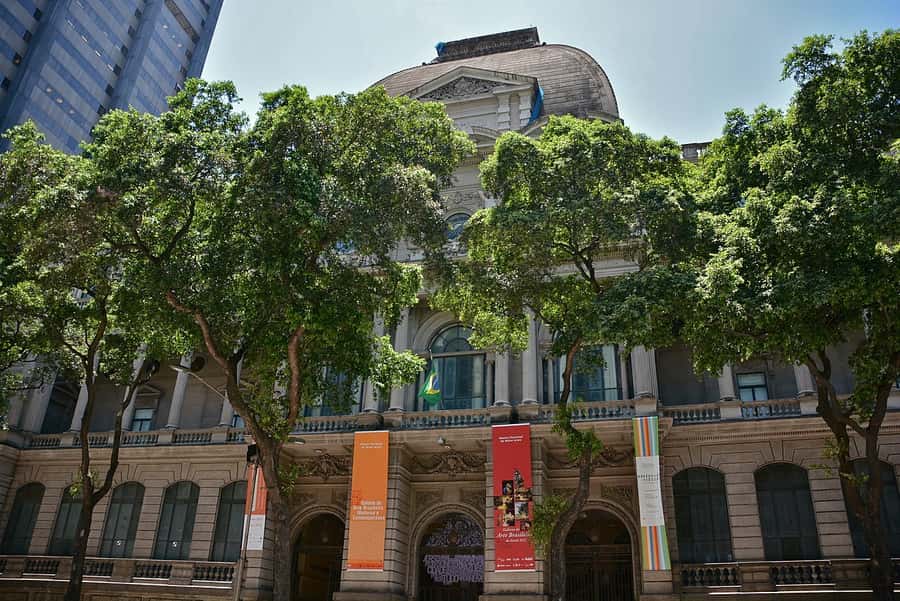
From Candelária, you discover the Brazil Bank Cultural Center, usually called CCBB by locals. The building is valued both for its architecture and for its role as a cultural space.
This is a smart stop in the itinerary because it shows how an older financial institution can take on a new public purpose. The building connects Rio’s banking past with its present cultural life. It also gives you a chance to look closely at an interior and exterior style that differs from the churches, convents, and government buildings earlier in the walk.
The guide may point out details that are easy to miss when you are moving through downtown on your own. Pay attention to scale, decorative work, and the way the building fits into the surrounding streets. The tour’s larger idea comes into focus here: Rio’s center is not divided neatly into old and new. The periods overlap.
If you want to spend a long time inside CCBB or attend an exhibition, this walking tour may not give you enough free time for that. The stop is part of a larger route, so think of it as an introduction rather than a full museum visit.
Cinelandia Square and Rio’s grand civic buildings
The walk continues toward Cinelandia Square, where the architecture becomes larger and more theatrical. This area gathers some of Rio’s most important political and cultural buildings in one compact setting.
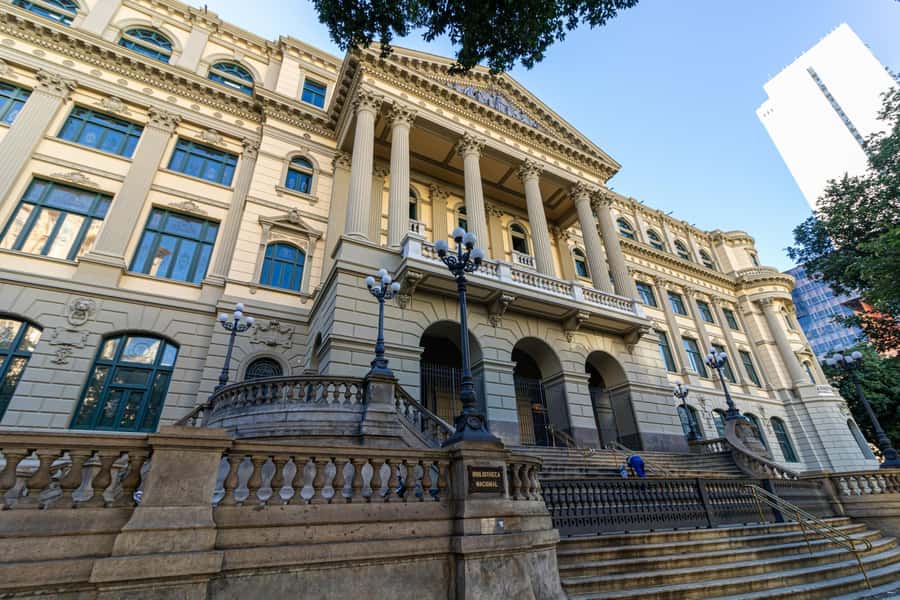
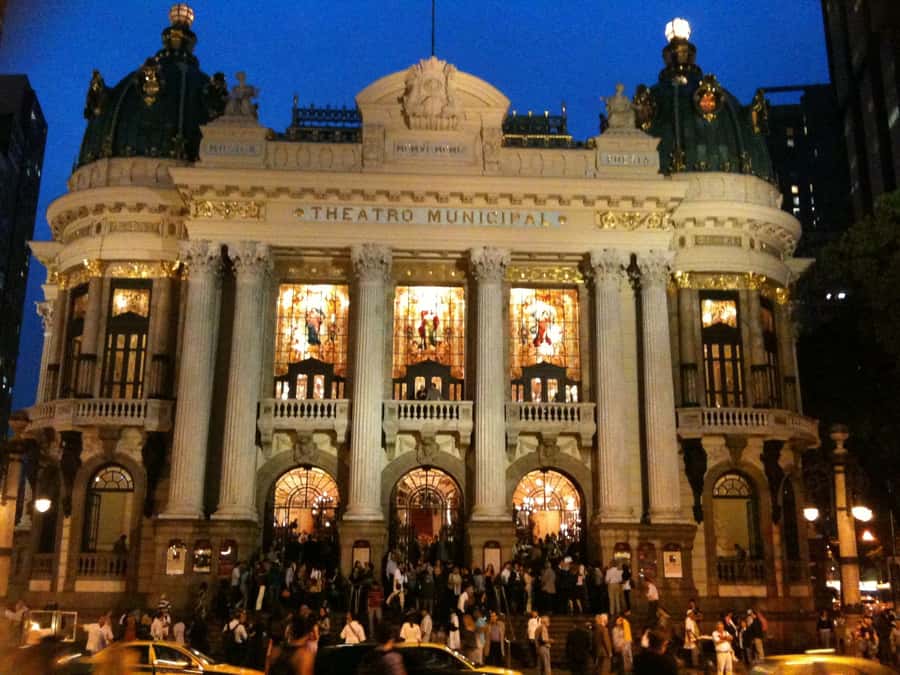
You see the Municipal Theater of Rio de Janeiro, the National Library of Brazil, the National Museum of Fine Arts, and the City Council of Rio de Janeiro. Each building points to a different part of public life: performance, books, visual art, and government.
This is the route’s strongest architectural contrast. Earlier, you saw structures tied to the monarchy, convent life, and old street patterns. Here, the city presents a more formal republican image through broad civic buildings and cultural institutions.
I like this part because it makes Rio’s political and cultural ambitions visible. A city does not build a theater, library, fine arts museum, and council complex by accident. These institutions show how Brazil wanted to present its capital and public culture at different moments.
The square can be busy, and high-season crowds may slow the group. That is not necessarily a flaw, since the activity of the area is part of the downtown experience, but you should expect a city walk rather than a quiet heritage stroll.
The tour focuses on the buildings from the outside and on the guide’s explanations. If you want to tour the Municipal Theater, National Library, or National Museum of Fine Arts in depth, plan a separate visit.
A snack at Colombo Bakery
The final major landmark is Colombo Bakery, one of Rio’s best-known historic establishments. The stop gives the walk a welcome change of rhythm after several hours on foot.
You have the chance to enjoy a snack, but food and drinks are not included in the $47 price. That arrangement keeps the booking simple, and it lets you choose what you want to buy. You should carry enough Brazilian reais or have a payment method ready, although the tour information does not specify which payment options the bakery accepts.
Colombo is more than a convenient food stop. It completes the tour’s look at Rio’s public life. You have seen palaces, churches, banks, theaters, libraries, museums, and government buildings. A historic bakery adds the everyday social side of the city.
Do not count on a full meal here. The experience describes a snack, so eat beforehand if you need something substantial. Also remember that the tour price covers the guide, not your food.
What the $47 price gives you
At $47 per person, this is not a bargain-priced independent walk, but the value depends on how much context you want. You are paying for four hours with a live multilingual guide, a planned route through several important parts of central Rio, and the convenience of connecting the stops in the right order.
For me, the strongest value comes from the range of subjects covered. In one outing, you can ask about the monarchy, the republic, architecture, religion, politics, banking, art, and local culture. That is a lot of ground, and it gives you a useful base for later independent sightseeing.
The price does not include hotel pickup, hotel drop-off, subway tickets, or food and drinks. If you need public transportation, the stated subway cost is BRL 15 roundtrip per person. Add that amount, plus your snack at Colombo, when setting your budget.
The experience becomes better value if you enjoy asking questions and want a guide to connect details. It is less attractive if you prefer to move at your own pace, spend an hour inside each cultural building, or stop often for photographs.
Languages, guides, and the quality of the explanation
Guiding is offered in Portuguese, Spanish, English, Italian, and French. That is a strong practical feature, especially in a district where names, dates, and political terms can become hard to follow.
The guide quality appears to be one of the tour’s strongest points. Angelica has been noted for excellent Italian, patience, warmth, and enthusiasm for Brazilian culture. Antonio has been praised for making the walk approachable while explaining both famous sites and less obvious corners. Lavinha and Renato have also received strong marks for patience, punctuality, language ability, and historical or architectural explanations.
There is one important caution. One lower-rated account found the guide pleasant and easy to talk with but wanted more dates, events, and detail about the buildings. That tells you what to ask for. If architectural facts and exact historical milestones matter to you, say so early and ask questions throughout the walk.
The overall score is 4.3 out of 5 from 41 ratings, a solid result with some variation in how much detail people receive. I would book this for a friendly, guided introduction, not as a specialist architecture seminar.
Practical details for a smoother walk
The meeting point is the Atlantico Business Hotel at Rua Senador Dantas, 25, in Centro. Arrive 15 minutes early. The guide will call you by name at the meeting point, but you should still allow extra time to find the hotel and orient yourself in downtown Rio.
No hotel pickup or drop-off is included. The walk finishes at a subway station in downtown Rio, where you can return to your hotel or keep exploring on your own.
Wear comfortable shoes. Four hours on city streets, with stops and periods of standing, will feel much better in supportive footwear. Bring a passport or identity card, and a copy is accepted. Leave luggage and large bags behind, since they are not allowed.
The tour runs rain or shine. Rio’s weather can change, so a light rain layer is sensible, but only bring what you can carry comfortably. Since food and drinks are not included, you may want to bring water and plan to buy a snack at Colombo.
The walk is not suitable for wheelchair users or people with mobility impairments. The route includes old streets, sidewalks, and extended walking, so consider that restriction seriously rather than treating it as a minor note.
Who should book this downtown walk?
I would recommend it to a first-time visitor who wants Rio’s history explained in a logical order. It also suits anyone who has already seen the major viewpoints and beaches and wants to understand how the city developed as a seat of power and culture.
It is a good fit for:
- People who enjoy architecture and city history
- Visitors who want a guide in English, Spanish, Portuguese, Italian, or French
- Travelers who prefer a planned route to figuring out downtown alone
- Anyone interested in churches, civic buildings, museums, theaters, and public squares
- Visitors with a free half day who can manage four hours of walking
I would think twice if you have limited walking ability, large luggage, or only want interior museum visits. I would also avoid placing it before a fixed-time activity during high season, since traffic and crowds can extend the schedule.
Should you book the Rio downtown tour?
Book it if you want the story behind Rio’s center, not just a list of buildings. The route has a strong sequence: imperial sites at XV de Novembro Square, old lanes at the dos Teles Arch, Candelária Church, CCBB, the civic grandeur of Cinelandia, and a snack at Colombo Bakery.
The main reason to choose this tour is the guide. A good explanation turns a palace, arch, church, or theater into part of Brazil’s long political and cultural story. The main reason to skip it is also clear: four hours of walking can be demanding, and the tour does not offer the freedom of a self-guided visit.
For most visitors who want an informed first look at downtown Rio, $47 is a fair price, provided you add transportation and food costs. Bring good shoes, keep your bag small, arrive early, and ask questions. You will leave with a much clearer sense of why Rio’s oldest streets still matter.
FAQ
How long does the Downtown Rio walking tour last?
The tour lasts four hours. In high season, traffic and the large number of people in the city can make it take longer.
Where does the tour meet?
The meeting point is the Atlantico Business Hotel at Rua Senador Dantas, 25, in Centro. Arrive 15 minutes before the activity starts.
Which languages are available?
Live guiding is available in Portuguese, Spanish, English, Italian, and French.
Is transportation included?
Hotel pickup and drop-off are not included. The tour finishes at a downtown subway station, and a subway ticket may cost BRL 15 roundtrip per person if needed.
Is food included?
No. Food and drinks are not included, though the route includes an opportunity to have a snack at Colombo Bakery.
What should I bring, and can I bring luggage?
Bring comfortable shoes and a passport or identity card. A copy of your identification is accepted. Luggage and large bags are not allowed.
New in Rio de Janeiro this month
- Discover Rocinha: Guided Tour of the Famous Favela★ 4.5 · 3 reviews
- Rio de Janeiro: Hang gliding adventure★ 3.7 · 3 reviews
- Rio de Janeiro: Pedra Bonita & Tijuca Forest Hike Tour★ 5.0 · 3 reviews
- Rio de Janeiro: Hang Gliding or Paragliding Flight★ 5.0 · 3 reviews
- Rio de Janeiro: Local Experience in Forró dance★ 5.0 · 3 reviews
- Rio de Janeiro: Doors-off 30-min helicopter tour★ 5.0 · 3 reviews
- Rio de Janeiro: Pedra do Telégrafo; Grumari/ Prainha Beaches★ 5.0 · 3 reviews
- Rio de Janeiro: Sugar Loaf with Lunch and Helicopter Flight★ 4.7 · 3 reviews
Rio de Janeiro Tours, compared.

Rio de Janeiro: 6-Stop Highlights of Rio with Lunch
Read our review →
Christ the Redeemer Entry Ticket by Corcovado Train
Read our review →
Rio de Janeiro: Rocinha Favela Walking Tour with Local Guide
Read our review →
Rio: Christ the Redeemer, Sugarloaf, Selaron & BBQ Lunch
Read our review →
Rio De Janeiro: Half-Day Rocinha Favela Walking Tour
Read our review →
Rio de Janeiro: Angra dos Reis and Ilha Grande Full-Day Tour
Read our review →
Rio de Janeiro: Beginner Samba Lesson in Ipanema
Read our review →
Browse the lists this tour appears in