
Our review · RIO DE JANEIRO TOURS
Rio de Janeiro: Favela Santa Marta Top Tour with Local Guide
Santa Marta becomes far more understandable when you walk it with someone who was born and raised there. The most personal part of this tour is a visit to the guide’s own home, where you can ask direct questions about daily life, family, housing, and the community’s past and present.
I like the local ownership and the way the tour connects you with people who live there. I also like the mix of views, music, football, social projects, and ordinary streets rather than a quick photo stop at a famous viewpoint. The main consideration is that this is a walking tour through steep, narrow passages, so it is not suitable for wheelchair users and calls for comfortable shoes, water, and sun protection.
Key points at a glance
- A guide from Santa Marta leads the way: Guides such as Mario, Luis, Luiz, Marco, Marcos, and Raycca know the alleys, people, and stories firsthand.
- The home visit adds real context: You can see a local home and ask questions in a relaxed setting.
- Michael Jackson Square is a major stop: The statue and music-video location offer both a photo moment and a view across Rio’s South Zone.
- Culture is part of the route: Local samba, possible football with children, and community shops give the visit a human scale.
- Social projects matter here: Santa Horta shows how former rubbish sites have been turned into organic gardens and work opportunities.
- Good value at $28: For roughly two to three hours with a local guide, the price is low, especially when the tram ticket and several visits are included.
Why Santa Marta works best with a local guide
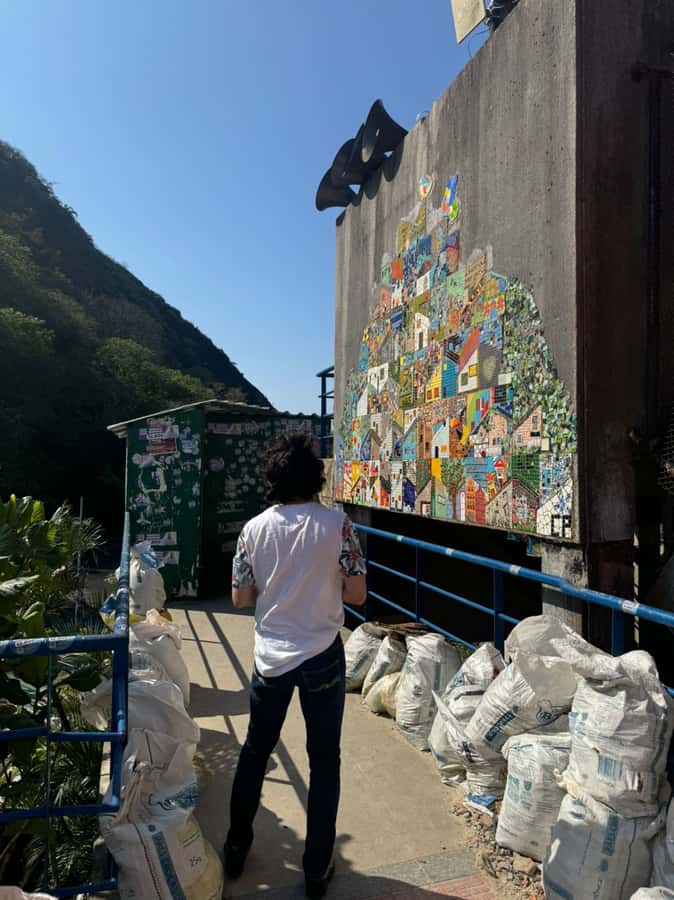
Santa Marta is not laid out for casual sightseeing. The route follows winding alleys and steep passages, and standard map apps do not clearly show where to go. A local guide does more than keep you moving. He or she explains who lives nearby, how the community functions, and why certain places matter.
The guides named in the booking information and customer feedback include Mario, Luis, Luiz, Marco, Marcos, Caro, and Raycca. Names and pairings can vary by date, but the useful point is consistent: you are led by someone with a direct connection to Santa Marta. Mario and Marco are described as having lived there for decades, while Luis and Luiz are praised for clear explanations, warmth, and careful group leadership.
That local link also changes the tone. You are not simply looking down from a viewpoint or passing through with a camera. You are introduced to places through someone who knows the residents. Several guides have taken groups into their own homes, and the welcome from neighbors and children becomes part of the experience.
The company also presents itself as community-based, with money supporting local projects, artists, and small businesses. That makes the $28 price more meaningful than a standard sightseeing ticket. You are paying for a guide, but you are also helping keep the benefit of the tour in the neighborhood.
more favela walks in Rio de Janeiro
- Rio de Janeiro: Rocinha Favela Walking Tour with Local Guide
★ 4.8 · 3,052 reviews - Rio De Janeiro: Half-Day Rocinha Favela Walking Tour
★ 4.7 · 2,272 reviews - Rio de Janeiro: Favela Santa Marta Tour with Resident Guide
★ 4.6 · 220 reviews
Meeting at Praça Corumbá
The tour begins at the tourist information stand in Praça Corumbá. Check the exact meeting instructions when you book, and arrive ready to walk. The activity lasts from about 150 minutes to three hours, depending on the schedule and pace of the group.
The itinerary includes a transfer of about 25 minutes, but transfer costs are listed separately from the included services. Clarify this point before setting out, especially if you are arranging your own way to the starting point. The tram ticket is included, while a general transfer is not.
A guide may contact you before the tour to confirm the meeting. Bring a bottle of water, sunscreen, a hat, and a camera. Smoking is not allowed during the activity.
The tram ride and first view of Rio
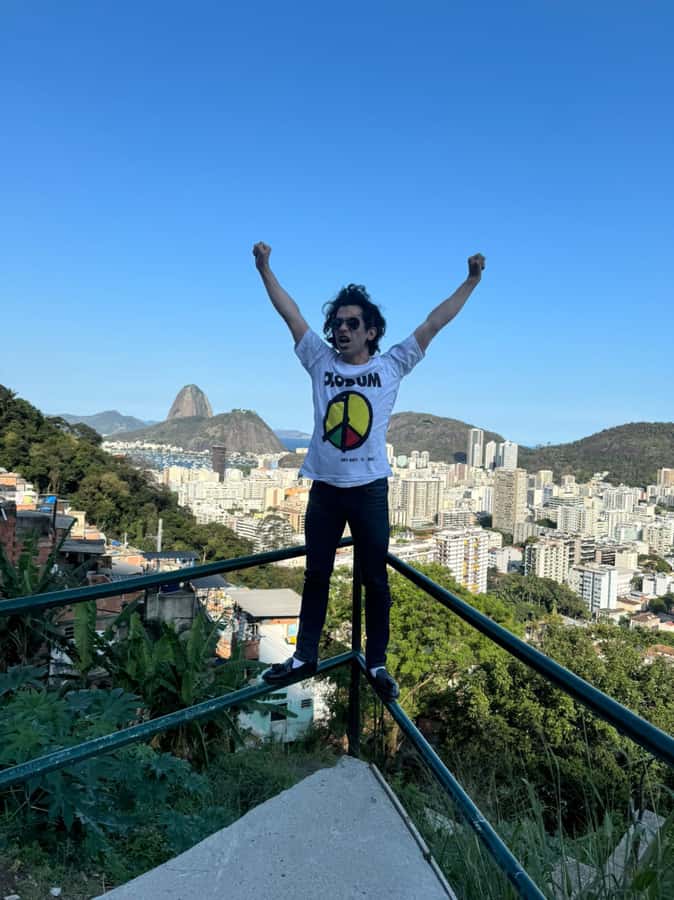
The route includes a tram ride and a stop at Mirante Dona Marta. The viewpoint is one of the clearest ways to place Santa Marta within Rio’s wider setting, with views toward the South Zone. It gives you the classic photo opportunity, but it also helps explain why communities such as Santa Marta occupy such striking hillsides above the city.
The photo stop is scheduled for about 10 minutes, so you should be ready to take pictures quickly and listen for the guide’s explanation. A viewpoint alone can make a favela seem like scenery. Here, the guide helps connect the view with the homes, streets, and lives below.
Expect changing weather. One person completed the route during heavy rain and found that the water channels became an unexpected lesson in how the community handles runoff. Rain can make the walking more demanding, though, so sensible footwear matters.
Michael Jackson Square and the famous mural
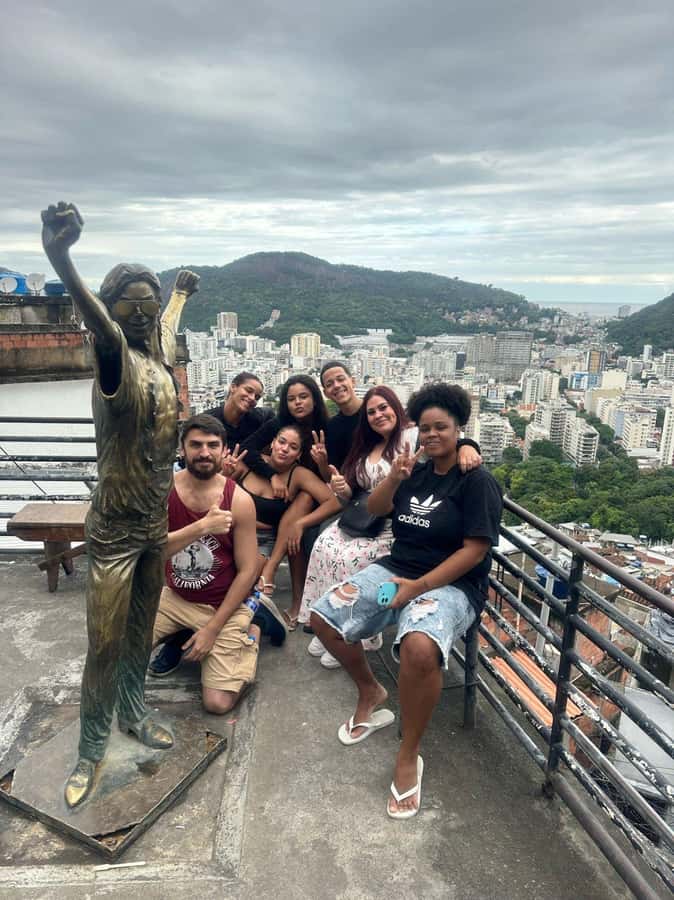
Michael Jackson Square is the tour’s best-known stop. It marks the place where Michael Jackson filmed They Don’t Care About Us, and the statue has become one of Santa Marta’s signature landmarks.
You can expect a guided visit of around 15 minutes, with time to see the statue and take photographs. The appeal is not only celebrity connection. The site shows how an international music production became part of the community’s public identity.
The location also offers another view across Rio. Your guide can explain how the filming affected the area and why this small square attracts attention from around the world. If you know the music video, the setting will feel especially familiar. If you do not, the guide’s local account still gives the stop a point beyond simple celebrity sightseeing.
more Rio de Janeiro days to choose between
- Rio de Janeiro: Guided Jeep Tour through Tijuca Rainforest
★ 4.3 · 740 reviews - Jeep Adventure: Guided Tour through Tijuca Rain Forest
★ 4.0 · 554 reviews - Rio: Favela Rocinha Tour with Local Guide & Secret Spots
★ 4.7 · 218 reviews - Rio de Janeiro: Private Guided City Tour
★ 4.6 · 207 reviews
Walking through Santa Marta’s everyday streets

The central part of the tour is the walk itself. The schedule includes several visits lasting 15 to 30 minutes, but the details can change with the guide, group, and conditions on the day.
You will move through alleys, pass local homes and businesses, and stop at places that are easy to miss alone. The streets are narrow and the route can be hilly. That is part of the point, but it also means you should not treat this as a flat city stroll.
The strongest guides do not present Santa Marta as either a problem to be solved or a colorful backdrop. They explain both the good and hard parts of life there. Visitors have been able to ask critical questions about safety, government support, community rules, rubbish collection, and local development.
This balance matters. A favela tour can become uncomfortable if it turns poverty into a spectacle. The local format helps avoid that by giving residents control over the story. Still, you should behave with care: listen first, ask before taking close-up photographs, and remember that people live and work along the route.
A visit to the guide’s home
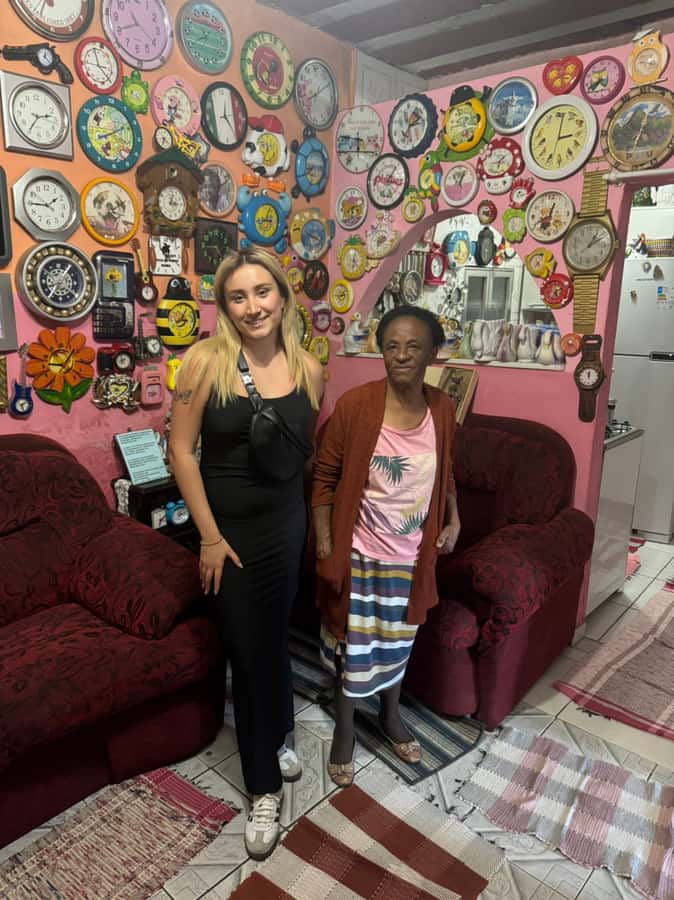
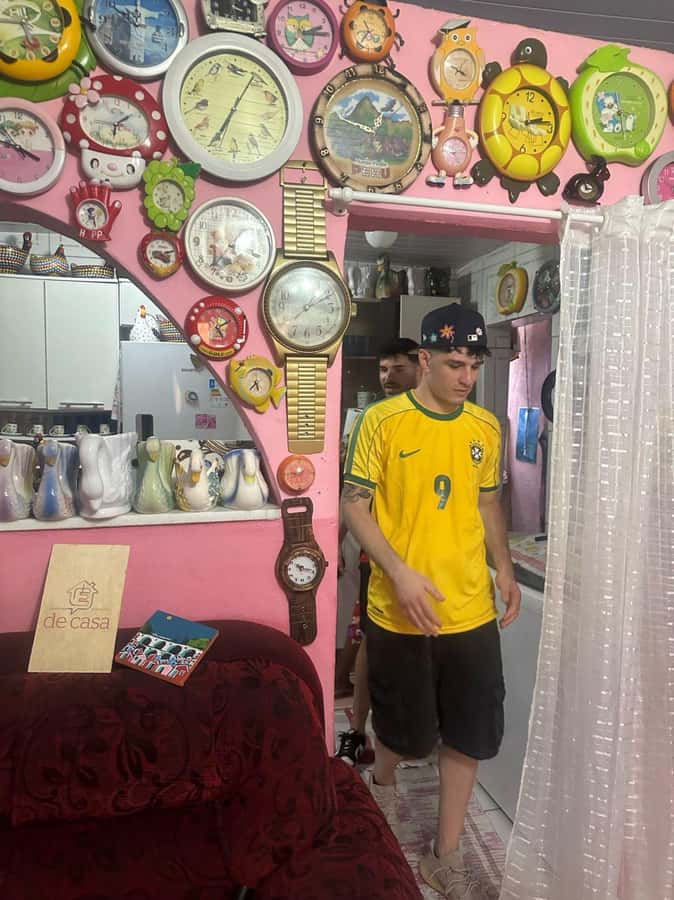
The home visit is the most distinctive feature of Favela Top Tour. Guides including Mario, Marco, and Luis have welcomed groups into their homes, giving you a look at an ordinary domestic space rather than a staged exhibit.
You can ask questions about the home, the neighborhood, and what it means to grow up in Santa Marta. The setting also makes the tour feel less formal. The guide is not only reciting facts at a landmark. He or she is explaining the area from personal experience.
This stop may be especially useful if you are unsure about taking a favela tour. It puts a human face on the experience and creates room for a real conversation. It also requires good manners. Follow the guide’s lead, keep the visit respectful, and do not assume that every room or object is available for photographs.
Samba, football, and local energy
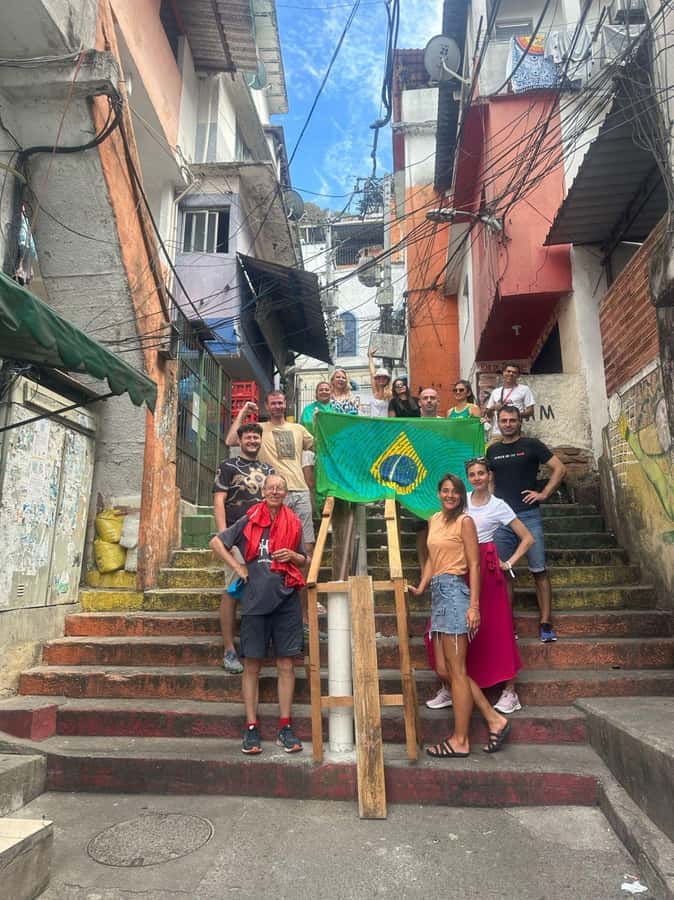
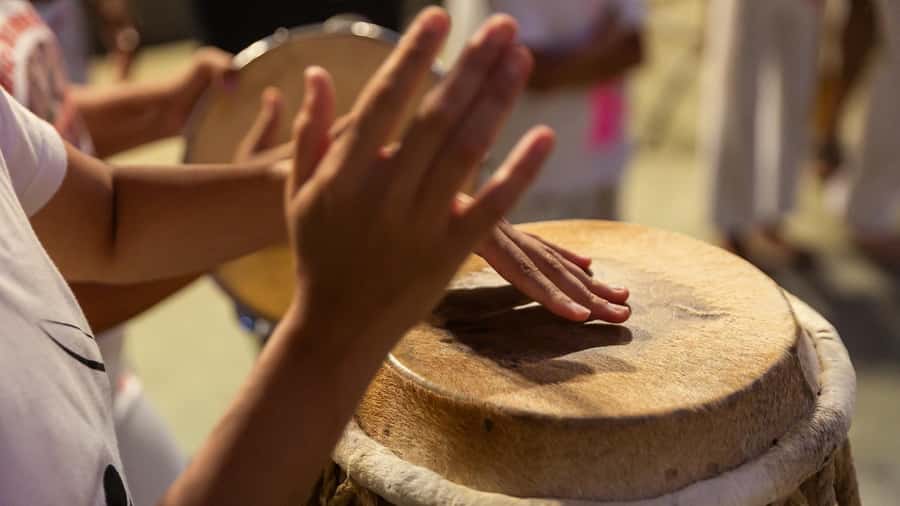
The tour includes a roda de samba performed by local musicians. This is a chance to hear samba in the community rather than treating it as a polished stage show. The music gives the visit a sense of place and shows how culture operates as part of daily life.
Depending on the day, you may also join a casual football match with local children. Several tour accounts describe football as a favorite moment, especially for families. Children have also enjoyed joining the drumming and music.
These activities are informal, not guaranteed performances with a fixed timetable. That is both their charm and their limitation. You should come ready to take part, but not expect a professional show or a scheduled sports session every time.
The football stop can be a warm point of contact, but remember that children are not photo props. Ask permission before taking pictures and let the guide set the tone.
Santa Horta and community-led change
Santa Marta is not presented only through music and famous filming locations. The route also introduces Santa Horta, a project that turns former rubbish sites into organic community gardens.
The project links several practical goals: cleaner shared spaces, fresh food, environmental education, and income for residents. It gives you a better way to understand local development. Progress is not just a government scheme or an outside charity project. It can also begin with residents reshaping a neglected part of their own neighborhood.
One account noted that the area still faces a long road in educating residents about rubbish. That is a useful reminder to keep your expectations realistic. A community project does not erase larger problems, but it can show how local action works in real conditions.
The tour also includes a visit to the Residents’ Association. This adds an institutional side to the walk, showing how the neighborhood organizes and represents itself.
Shopping and small local businesses

There is a short shopping stop inside Santa Marta, listed at about 10 minutes. You might find an opportunity to buy something locally or support a small business, though the exact products and shop depend on the day.
Do not expect a large market or a long browsing session. The value is in seeing commerce as part of the community’s daily rhythm. Spending a little locally can also support the direct economic purpose of the tour.
The company’s stated aim is to keep more tourism income with residents, artists, and small businesses. At $28, the activity is already inexpensive for a guided three-hour experience, and local purchases give you another way to contribute.
Safety, comfort, and the right mindset
Safety is one of the clearest strengths of this experience. The guides are known in the community, and the walking route is accompanied from start to finish. The repeated message from the supplied customer accounts is that groups felt safe and welcomed, with guides answering questions and looking after the group.
That does not mean you should ignore normal city awareness. Keep your belongings secure, follow the guide, and do not wander away from the group. The route is not suitable for wheelchair users, and babies under one year are not recommended.
Comfort is just as important as safety. Wear shoes with a good grip, bring water, and use sunscreen. The hill routes, heat, rain, and narrow passages can make the walk tiring. If you need a relaxed, fully accessible sightseeing route, this is not the right choice.
The best attitude is respectful curiosity. You are entering a residential community, not an open-air museum. Ask questions, listen to difficult answers, and avoid treating hardship as entertainment.
Is $28 a fair price?
At $28 per person, the tour offers strong value for its length and content. You receive a local guide, a tram ticket, the Michael Jackson statue, Mirante Dona Marta, local social projects, the Residents’ Association, and several neighborhood visits.
The price is especially attractive if you want more than a viewpoint and a quick explanation. A guide’s local relationships are the main value here. You could not easily reproduce the home visit, introductions, samba connection, or community project stops by walking around alone.
The low cost should not lead you to expect a private tour. The available information does not promise a private group, and the timing can run from two and a half to three hours. Ask questions during the booking process if group size or exact route timing is important to you.
The general transfer is not included, so budget for that separately. The included tram ticket helps offset the total cost, but you should still confirm how you will reach Praça Corumbá.
Who should book this Santa Marta tour?
I would choose this experience if you want a personal introduction to Rio’s favelas, especially if you are uneasy about the ethics of this type of visit. The local guides, home visit, community projects, and direct economic benefit give the tour a stronger basis than a quick outside-operated bus stop.
It also suits families and curious first-time visitors. The football and samba offer easy ways to connect, while the guide’s explanations give adults plenty to think about. English, Portuguese, and Spanish are available.
You may want to skip it if steep walking is difficult, you need wheelchair access, or you prefer a polished performance with fixed timing. The route can be affected by weather, and some of its best moments depend on local activity rather than a rigid show schedule.
FAQ
Where does the tour begin?
It begins at the Tourist Information Stand in Praça Corumbá.
How long does the Santa Marta tour last?
The tour lasts between 150 minutes and three hours. Starting times vary, so check availability for your chosen date.
Which languages are available?
The live guides speak English, Portuguese, or Spanish.
Is transportation included?
The tram ticket is included. General transfer is not included, so confirm the transfer arrangements and cost before booking.
What places are included?
The route includes Mirante Dona Marta, Michael Jackson Square and its Michael Jackson statue, local social projects, the Residents’ Association, Santa Marta streets, and a visit to a local guide’s home when arranged as part of the tour.
Can I visit the guide’s home?
The experience includes a safe visit to a local guide’s home. Guides such as Mario, Marco, and Luis have hosted groups there, though the exact guide and home can vary.
Is the tour suitable for wheelchair users?
No. The activity is not suitable for wheelchair users.
What should I bring?
Bring comfortable shoes, a hat, a camera, sunscreen, and water. Smoking is not allowed.
Should you book Favela Top Tour?
Book it if you want Santa Marta explained by someone who belongs to the community, not simply viewed from above. The home visit, Michael Jackson Square, samba, football, Santa Horta, and the Residents’ Association create a fuller picture than a landmark-only outing.
At $28, the tour is a sensible buy for an active visitor who wants local contact and is willing to walk carefully through a residential neighborhood. Go with an open mind, ask thoughtful questions, and keep your camera secondary to the people you meet.
New in Rio de Janeiro this month
- Discover Rocinha: Guided Tour of the Famous Favela★ 4.5 · 3 reviews
- Rio de Janeiro: Hang Gliding or Paragliding Flight★ 5.0 · 3 reviews
- Rio de Janeiro: Hang gliding adventure★ 3.7 · 3 reviews
- Rio de Janeiro: Pedra Bonita & Tijuca Forest Hike Tour★ 5.0 · 3 reviews
- Rio de Janeiro: Local Experience in Forró dance★ 5.0 · 3 reviews
- Rio de Janeiro: Doors-off 30-min helicopter tour★ 5.0 · 3 reviews
- Rio de Janeiro: Pedra do Telégrafo; Grumari/ Prainha Beaches★ 5.0 · 3 reviews
- Rio de Janeiro: Sugar Loaf with Lunch and Helicopter Flight★ 4.7 · 3 reviews
Rio de Janeiro Tours, compared.
Rio de Janeiro: 6-Stop Highlights of Rio with Lunch
Read our review →
Christ the Redeemer Entry Ticket by Corcovado Train
Read our review →
Rio de Janeiro: Rocinha Favela Walking Tour with Local Guide
Read our review →
Rio: Christ the Redeemer, Sugarloaf, Selaron & BBQ Lunch
Read our review →
Rio De Janeiro: Half-Day Rocinha Favela Walking Tour
Read our review →
Rio de Janeiro: Angra dos Reis and Ilha Grande Full-Day Tour
Read our review →
Rio de Janeiro: Beginner Samba Lesson in Ipanema
Read our review →
Browse the lists this tour appears in