
Our review · RIO DE JANEIRO TOURS
Rio Street Art Tour
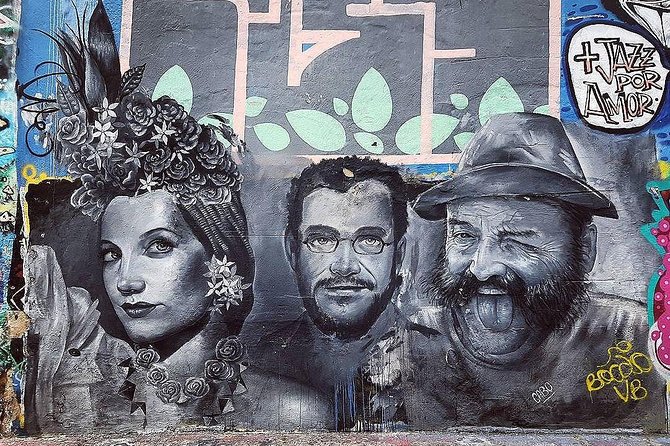
Rio’s street art is not just decoration. It is a public record of politics, race, Carnival, and daily life, painted across old walls and modern redevelopment zones. This three-hour tour connects those images with Rio’s streets, using the subway, VLT tram, and plenty of walking to link Cinelândia, the Selarón Steps, and Porto Maravilha.
I like the way guide Wellington puts the murals into context instead of treating them as a string of photo stops. I also like the local feel of riding public transport and seeing parts of central Rio that are easy to skip on a standard sightseeing tour. The main drawback is simple: this is an active walking tour, and some of the art is older, so anyone seeking only new work may find the selection uneven.
Key points to know before booking
- Rio’s art comes with a story: Wellington explains the social and political ideas behind the murals, not just their colors and size.
- The route uses local transport: You travel by subway and VLT, with the chance to see how central Rio connects beyond the usual tourist circuit.
- Major sights are built in: The route includes the Selarón Steps, Cinelândia, Olympic Boulevard, and the Museum of Tomorrow area.
- The finale is enormous: Porto Maravilha is home to the Etnias mural, described as the largest graffiti mural in the world.
- It is private: Only your group takes part, and solo bookings are possible.
- Bring water and good shoes: The route is manageable for most people, but one section includes a lot of walking.
Why Rio’s street art makes a better city lesson than a sightseeing bus
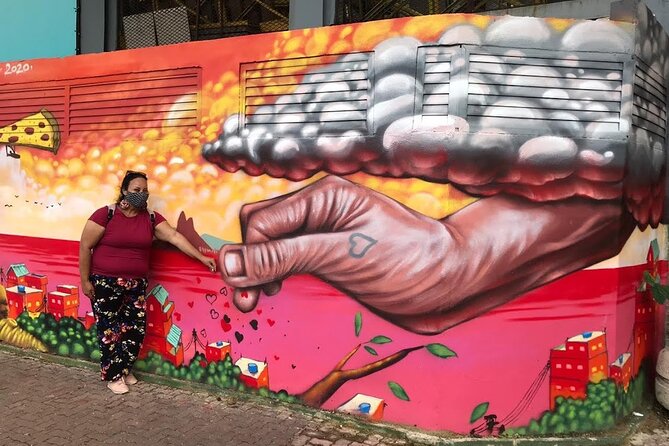
A bus can show you Rio’s landmarks. This tour asks you to look at the walls between them.
That difference matters. The murals become a way to understand how the city thinks about power, identity, ancestry, public space, and change. Wellington also connects the art with architecture, Carnival and samba schools, current events, and the history of central Rio. You are not simply stopping to take a picture, then moving on.
I especially like this approach if you are new to Rio. The tour gives you an early sense of how several central neighborhoods fit together. It also introduces the city through subjects that do not always receive enough attention on a first visit, including Afro-Brazilian culture and the port district’s connection to enslaved Africans.
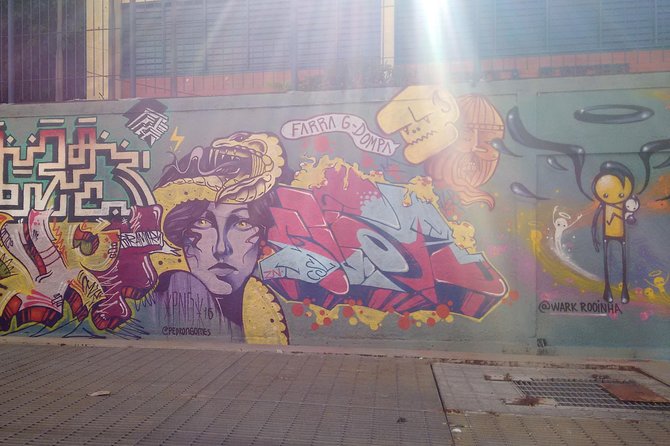
The route is not limited to one artistic style. You see legalized graffiti, large contemporary murals, and work tied to public redevelopment projects. Some pieces may look dated, and one person specifically wished for more younger or newer graffiti. Still, that can be useful in its own way: you get a sense of how Rio’s street art has changed over time.
more Rio de Janeiro days to choose between
- Rio Street Art Tour
★ 5.0 · 76 reviews - São Paulo: Bar and Street Art Crawl with Local Guide
★ 4.9 · 102 reviews - Street Art and Park Bike Tour
★ 5.0 · 56 reviews
Starting at the Municipal Theater and entering central Rio
The meeting point is the Municipal Theater of Rio de Janeiro in Praça Floriano, in the Centro district. This places you in Cinelândia, an important public square surrounded by major cultural and civic buildings.
The opening portion looks at the city’s European architectural influence and the first legalized graffiti in Rio. That pairing gives the tour a useful tension. On one side, you have grand formal buildings shaped by older ideas of urban design. On the other, you have public art that speaks in a more direct, modern voice.
You will hear about the main library and theater in the Cinelândia area before taking public transport toward the Olympic Boulevard. The tour description allows roughly 30 minutes here, though the overall pace can vary because this is a private activity.
This is a good place to pay attention to the guide’s storytelling. Wellington is repeatedly praised for explaining Rio through personal stories as well as art and architecture. His English is described as very good, and he has also helped visitors practice Portuguese during the walk.
The Selarón Steps: famous, colorful, and crowded
The Escadaria Selarón is one of Rio’s best-known public art sights, and it is included as a dedicated stop of about 20 minutes.
The staircase is covered in colorful tiles collected from many places. It is highly photogenic, but it is also a busy tourist stop. The value of seeing it with a guide is not just the chance to take a picture. Wellington can place the staircase within the wider story of central Rio and help you compare its handmade, personal feel with the much larger murals later in the tour.
I would keep your expectations sensible here. Twenty minutes is enough for an introduction and photographs, but not for a long, quiet look. The steps also mean uneven walking and some climbing. If you have limited mobility, contact the provider before booking, even though the experience states that most people can participate.
The staircase may appear early or later in the route depending on how the guide organizes the day. In either case, it works well as a bridge between Rio’s older central streets and the newer public-art zones around the port.
Olympic Boulevard and the Museum of Tomorrow district
After the central Rio stops, the route moves by VLT to Olympic Boulevard. The VLT is Rio’s light rail system, and riding it is part of the point. You see the city the way residents move through the central area, rather than remaining inside a tour vehicle.
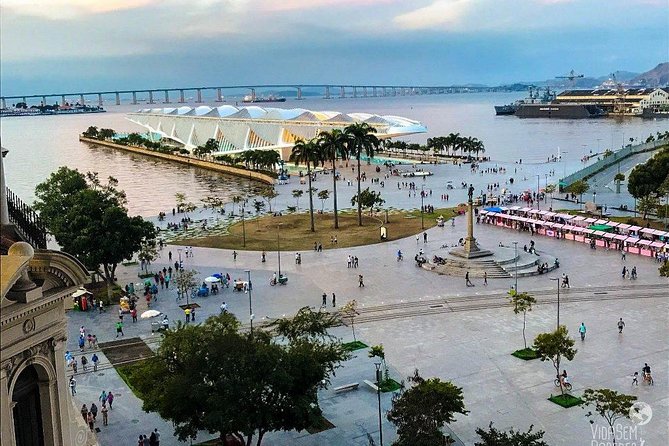
Olympic Boulevard is home to several of Rio’s main museums. The Museum of Tomorrow is the most immediately recognizable landmark in this part of the route, with its futuristic design set against the port district. The Museum of Art of Rio is also nearby.
The tour does not present these museums as separate admission visits. Instead, you see the public spaces, buildings, and art around them. That keeps the experience within its roughly three-hour schedule, but it also means you should not book this expecting museum interiors or long gallery visits.
I like this part because the architecture and murals speak to different ideas of Rio. The museum district presents a carefully planned public face. The street art adds voices from outside that official setting. The guide’s job is to help you see the relationship between those two things.
A different side of Rio de Janeiro altogether:
- Rio de Janeiro: 6-Stop Highlights of Rio with Lunch
★ 4.4 · 5,157 reviews - Christ the Redeemer Entry Ticket by Corcovado Train
★ 4.4 · 4,476 reviews - Rio de Janeiro: Rocinha Favela Walking Tour with Local Guide
★ 4.8 · 3,052 reviews - Rio: Christ the Redeemer, Sugarloaf, Selaron & BBQ Lunch
★ 4.5 · 2,428 reviews
Porto Maravilha and Rio’s biggest mural
The final hour takes place in Porto Maravilha, the revitalized port area. This is where the tour reaches its visual high point: the Etnias mural, described as the largest graffiti mural in the world.
The scale is the draw. You do not take in a work of this size in one glance. The mural stretches along the port and presents large faces connected with Indigenous peoples from different parts of the world. Wellington explains the meaning of the images, along with the history of the port and its connection to enslaved Africans.
That context changes the way you see the mural. Without it, the work is an impressive wall of faces and color. With it, the mural becomes part of a larger conversation about ancestry, forced migration, identity, and the way public spaces remember the past.
Porto Maravilha is also where you are most likely to feel the contrast between old Rio and newer urban redevelopment. The area contains major museums and public projects, yet its history reaches back to one of the darkest chapters in Brazil’s past. A guide who can connect those layers adds real value.
The tour ends in a different location from the Municipal Theater. That is convenient if you plan to continue around the port, visit a museum, or find lunch nearby, but you should not expect to finish where you started.
Little Africa adds weight to the art
A particularly valuable thread in this experience is the attention to Little Africa, the area near the port associated with Afro-Brazilian history and the legacy of slavery.
The exact emphasis can vary with your interests and the route that day. Some groups have asked Wellington to focus more directly on Little Africa, and he has adapted the experience. That flexibility is one of the strongest reasons to choose a private tour.
You can ask questions about the historical meaning of the murals, the people represented, or the relationship between art and Rio’s Black culture. The tour also touches on Carnival and samba schools, subjects that help explain how music, public celebration, and identity shape the city.
This is not a substitute for a dedicated Little Africa history walk if that is your main goal. But it offers an important connection that a standard art tour might miss. The murals are not floating apart from Rio’s past. They are painted in a city shaped by African, Indigenous, European, and modern Brazilian influences.
A private route with public transport
At $68.61 per person, the tour is not the cheapest way to see central Rio’s outdoor sights. The admission tickets listed for the stops are free, so the price mainly pays for the guide’s time, interpretation, route planning, and private format.
That price makes better sense for a small group than for someone who only wants a quick look at the Selarón Steps and the big mural. If you are traveling with family or friends, the private setup lets you ask questions and adjust the focus without waiting for a large group.
The public transport is another part of the value. You use the subway and VLT rather than simply moving between sights in a private vehicle. One visitor noted that Wellington purchased a train ticket to avoid a possible fine. Since transport arrangements can matter in Rio, confirm what is included in your booking and carry a little local currency or another accepted payment method for the day.
The tour is near public transportation, and most people can participate. Still, plan for walking between stops, standing during transport, and outdoor exposure. One practical tip is to bring water. Comfortable shoes matter more than stylish ones here.
What the three hours feel like
Three hours is enough to create a strong introduction, but not enough to inspect every mural or enter every museum along the route.
The schedule gives about 20 minutes around the first central section, 20 minutes at the Selarón Steps, 30 minutes in Cinelândia, 30 minutes around Olympic Boulevard, and an hour in Porto Maravilha. The final stop receives the most time because the mural is large and needs explanation.
Because this is a private activity, your pace may feel less rigid than on a group coach tour. You can spend longer on a work that interests you or ask Wellington to explain a cultural reference. The tradeoff is that the route covers several districts, so time spent on the subway, VLT, and walking reduces the time available at each individual piece.
If you want a relaxed art-school style tour with long pauses, this may feel brisk. If you want to connect several neighborhoods and gain a working picture of Rio’s center in one morning or afternoon, the pace is useful.
Who will get the most from this tour
I would choose this tour if you want Rio explained through public art, not just major viewpoints and beaches.
It suits:
- First-time visitors who want a city orientation with cultural context
- Solo visitors who value a private guide
- Families who prefer stories and outdoor sights to a long museum visit
- Anyone interested in architecture, politics, Carnival, or Afro-Brazilian culture
- People who enjoy seeing neighborhoods by local public transport
- Art fans who want to understand why a mural exists, not only where it is
It is less suited to you if you dislike walking, have only a short tolerance for public transport, or want a tour focused on pristine new murals. The route includes famous sights, but it is not a greatest-hits photo stop. Its purpose is to show how art, history, and city life overlap.
Practical booking advice
The tour is offered as a private activity, with only your group participating. A solo booking is possible, which is a real advantage for independent visitors who do not want to wait for a group to form.
Confirmation arrives at booking. The activity requires good weather, so poor conditions can lead to a new date or a full refund. You can cancel for a full refund up to 24 hours before the local start time. Changes or cancellations inside that window are not accepted.
I would book around 30 days ahead if your Rio dates are fixed. That matches the usual advance planning for this experience and gives you a better chance of securing the day and time you want.
Ask about your preferred emphasis before the tour begins. Wellington has shown flexibility with Little Africa, Carnival-related subjects, architecture, and the social meaning of particular murals. A short message about your interests can help shape the walk.
Should you book the Rio Street Art Tour?
Book it if you want a thoughtful introduction to central Rio and you enjoy learning through streets, walls, and public transport.
The strongest reason to go is Wellington’s approach. He does more than point out graffiti. He links the images to Rio’s politics, architecture, Afro-Brazilian culture, Carnival, and the port’s past. The combination of the Selarón Steps, Cinelândia, Olympic Boulevard, Little Africa, and the Etnias mural gives you a much broader picture than a single mural stop.
At $68.61 per person, the experience earns its price through private guiding rather than entrance tickets. Bring water, wear comfortable shoes, and allow for a finish in Porto Maravilha rather than back at the theater.
If that sounds like your kind of sightseeing, this is a strong choice. If you want only the newest street art or a short, effortless outing, choose something less spread out.
FAQ
How much does the Rio Street Art Tour cost?
The tour costs $68.61 per person.
How long does the tour last?
The experience lasts approximately three hours.
Where does the tour begin?
It begins at the Municipal Theater of Rio de Janeiro, at Praça Floriano in the Centro district.
Where does the tour end?
It ends at a different location from the starting point, in the Porto Maravilha area.
Is this a private tour?
Yes. Only your group participates, and solo bookings are possible.
Does the tour use public transportation?
Yes. The route includes travel by subway and VLT, as well as walking.
What happens if the weather is poor?
The experience requires good weather. If it is canceled because of poor weather, you will be offered another date or a full refund.
New in Rio de Janeiro this month
- Discover Rocinha: Guided Tour of the Famous Favela★ 4.5 · 3 reviews
- Rio de Janeiro: Pedra Bonita & Tijuca Forest Hike Tour★ 5.0 · 3 reviews
- Rio de Janeiro: Hang Gliding or Paragliding Flight★ 5.0 · 3 reviews
- Rio de Janeiro: Hang gliding adventure★ 3.7 · 3 reviews
- Rio de Janeiro: Local Experience in Forró dance★ 5.0 · 3 reviews
- Rio de Janeiro: Doors-off 30-min helicopter tour★ 5.0 · 3 reviews
- Rio de Janeiro: Pedra do Telégrafo; Grumari/ Prainha Beaches★ 5.0 · 3 reviews
- Rio de Janeiro: Sugar Loaf with Lunch and Helicopter Flight★ 4.7 · 3 reviews
Rio de Janeiro Tours, compared.

Rio de Janeiro: 6-Stop Highlights of Rio with Lunch
Read our review →
Christ the Redeemer Entry Ticket by Corcovado Train
Read our review →
Rio de Janeiro: Rocinha Favela Walking Tour with Local Guide
Read our review →
Rio: Christ the Redeemer, Sugarloaf, Selaron & BBQ Lunch
Read our review →
Rio De Janeiro: Half-Day Rocinha Favela Walking Tour
Read our review →
Rio de Janeiro: Angra dos Reis and Ilha Grande Full-Day Tour
Read our review →
Rio de Janeiro: Beginner Samba Lesson in Ipanema
Read our review →
Browse the lists this tour appears in