

Our review · RIO DE JANEIRO TOURS
Santa Teresa – Bohemia and Art
Santa Teresa is Rio’s hilltop neighborhood with a split personality: part old imperial suburb, part artists’ quarter, part excellent excuse to eat pão de queijo while admiring Christ the Redeemer. This three-hour walk brings you past colonial houses and colorful murals, with the famous yellow tram adding plenty of charm when the line is manageable.
I like the combination of Parque das Ruinas and local snacks. You get both a grand view and a taste of everyday Brazil, rather than spending the whole outing looking at façades. I also like the guide-led format, especially with guides such as Rafael and Fernanda, who have been praised for thoughtful explanations and lively local stories.
The main catch is the tram. If the wait exceeds an hour, you will not ride it, and the tour uses taxis to reach Santa Teresa instead. That keeps the schedule moving, but it can take away one of the experience’s most distinctive features.
Key points to know before booking

- The yellow tram is weathered, charming, and not guaranteed: A line longer than one hour means a taxi transfer instead.
- Parque das Ruinas supplies the big payoff: The restored mansion offers wide views across Rio and a window into the city’s belle époque.
- This is a real walking tour: Cobblestones, hills, and three hours on foot make comfortable shoes essential.
- Açaí and pão de queijo are included: The snack stop adds a simple but welcome taste of Brazilian food.
- The focus is Santa Teresa’s art and architecture: Expect murals, mansions, palaces, galleries, and street scenes rather than a formal museum tour.
- The $60 price buys context and company: It is most useful if you want a guide to connect the neighborhood’s sights, not simply point you toward them.
Why Santa Teresa makes such a good walking district

Santa Teresa sits above central Rio and feels removed from the city’s wider rush. Its cobbled streets, old homes, yellow tram tracks, and hillside views give the neighborhood a look unlike the beach districts. The attraction is not one single monument. It is the change of pace between one corner and the next.
The tour begins in front of the Estação de Bondes de Santa Teresa, the tram station. From there, the route takes about 15 minutes by tram when service and queues allow. That short ride is part of the appeal: the yellow cars are a signature of the neighborhood and make a memorable start to the outing.
Once the walk begins, your guide sets the streets in context. You will hear about Santa Teresa’s past while passing old mansions, colonial houses, palaces, and urban art. This is where a guide earns the fee. Without local explanation, the route can look like a pleasant uphill stroll. With the right stories, the architecture and faded details become easier to read.
The tour is offered in English, Portuguese, and Spanish. That matters in a district where much of the pleasure comes from explanation rather than a long list of famous objects. Rafael and Fernanda are two guides who have led this experience, and both have been singled out for strong storytelling, attention, and clear knowledge of the neighborhood.
Other Rio de Janeiro days that go well with this one:
- Rio de Janeiro: 6-Stop Highlights of Rio with Lunch
★ 4.4 · 5,157 reviews - Christ the Redeemer Entry Ticket by Corcovado Train
★ 4.4 · 4,476 reviews - Rio de Janeiro: Rocinha Favela Walking Tour with Local Guide
★ 4.8 · 3,052 reviews
The tram ride and the one-hour queue problem
The tram is one of Santa Teresa’s most recognizable sights, but it is also the least dependable part of the plan. The tour includes tram tickets, yet the group will not wait if the queue stretches beyond one hour. In that case, taxis are used to get to Santa Teresa, so the rest of the tour can continue within its planned time.
That policy is sensible from a time-management point of view. Standing in a long line would eat up much of a three-hour tour. Still, you should book with the understanding that the tram may be absent from your day. If riding the yellow tram is your main reason for booking, this uncertainty is important.
A taxi transfer also changes the feel of the opening. The tram gives you a slow, old-fashioned introduction to the neighborhood. A taxi gets you there efficiently, but it is simply transport. The walking portion remains, though the experience loses a little of its character.
There is another practical point. When the tram cannot be used, the alternative route may not feel as tightly matched to the advertised art theme. One outing included stops near the National Library and Justice Court before the group took taxis toward Santa Teresa. Those buildings may interest architecture fans, but they are not the same as spending extra time with local artists or exploring less obvious corners of the neighborhood.
Cobblestones, mansions, and street art
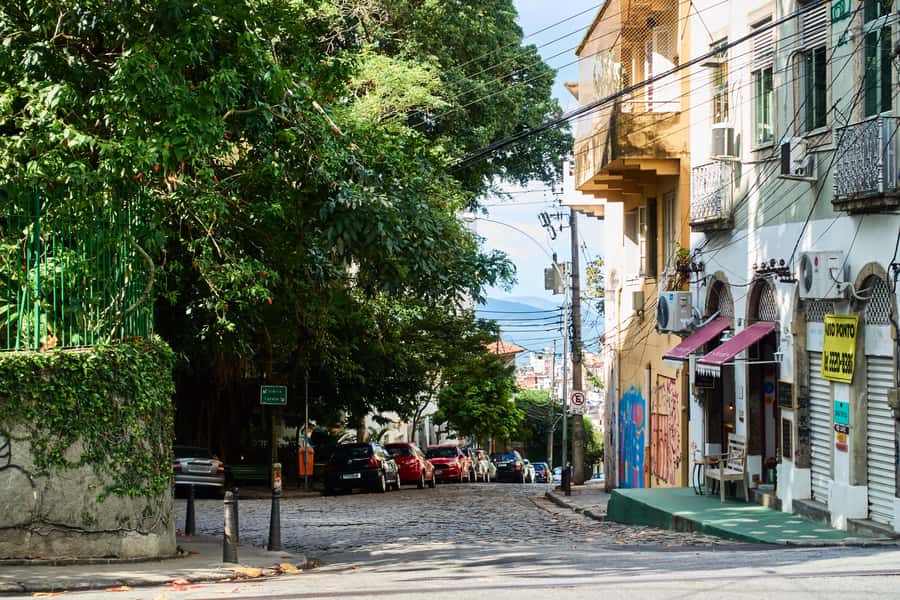
The walking section is the heart of the experience. Santa Teresa’s streets are made for looking around slowly. You will pass buildings that show the district’s older wealth, along with colorful murals and signs of its current art scene.
The tour promises a mix of architecture rather than a formal visit to a long list of interiors. That distinction is worth keeping clear. You will see the outside of colonial homes, mansions, and palaces, and your guide will explain how the neighborhood developed. If you expect repeated entries into private houses or working studios, this is not that kind of tour.
The urban art is another strong feature. Santa Teresa has long attracted artists, and the murals help explain why the neighborhood has a bohemian reputation. The guide can connect the painted walls with the area’s broader creative identity, giving you more to notice than color alone.
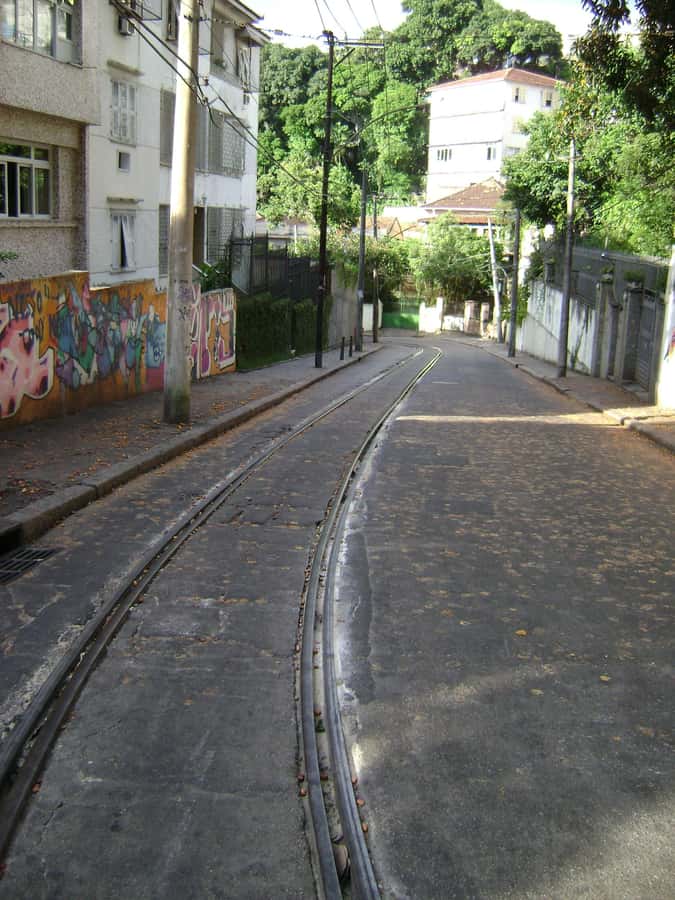
The experience is strongest when you enjoy observation. Look up at balconies and rooflines. Notice the contrast between grand old structures and rougher, more informal street art. Watch for the tram tracks and the way the neighborhood’s steep setting opens occasional views toward Rio below.
The route is not designed for passengers with mobility impairments. You should expect cobblestones and walking, and high heels are specifically unsuitable. Large bags and luggage are not allowed, so arrive with only what you need for three hours.
Laurinda Santos Lobo and Parque das Ruinas

Parque das Ruinas gives the tour its most memorable stop. The park includes the rehabilitated home of Laurinda Santos Lobo, a mansion that was abandoned for more than 50 years. In its earlier life, the house represented the splendor of Brazil’s belle époque.
The building gives you more than an attractive photo. It helps explain the social world behind Santa Teresa’s large homes. The tour presents the property as a place where you can picture life during the Brazilian Empire and see how grand domestic architecture once expressed wealth and status.
The panoramic view is the other reason to value this stop. From the ruins, you can look across Rio and catch privileged views of Christ the Redeemer. The exact conditions will depend on weather, but the setting gives the tour a natural high point after the street-level walk.
I like this pairing of history and scenery. Many city walks offer either old buildings or a viewpoint. Here, the viewpoint comes from an unusual structure with its own story. The restored remains make the view feel tied to Santa Teresa, rather than being just another lookout.
You should also keep expectations measured. The house is a rehabilitated ruin, not a fully furnished imperial palace. The value comes from the structure, the setting, and the guide’s explanation of what the place represented. If you want a large museum with extensive displays, this stop may feel brief.
A different side of Rio de Janeiro altogether:
- Rio: Christ the Redeemer, Sugarloaf, Selaron & BBQ Lunch
★ 4.5 · 2,428 reviews - Rio De Janeiro: Half-Day Rocinha Favela Walking Tour
★ 4.7 · 2,272 reviews - Rio de Janeiro: Angra dos Reis and Ilha Grande Full-Day Tour
★ 4.6 · 1,673 reviews - Rio de Janeiro: Beginner Samba Lesson in Ipanema
★ 4.9 · 1,071 reviews
Açaí, pão de queijo, and the taste of the tour
The snack stop includes açaí and pão de queijo. Açaí is a cold, thick berry-based treat widely associated with Brazil, while pão de queijo is the small, chewy cheese bread found throughout the country. Together, they give the walking tour a useful pause and introduce two familiar Brazilian flavors.
The food is not a full meal, so plan accordingly. It is a snack within a three-hour outing, not a substitute for lunch. That is especially useful to know if you are booking around a larger sightseeing day.
The stop also adds a human rhythm to the route. You can pause, eat, and talk with the guide rather than moving from one photo point to the next. I prefer that kind of break on a walking tour, provided you are comfortable with the fact that the food is fairly simple and widely available elsewhere in Rio.
One concern is that the snack may not feel exclusive. Açaí and pão de queijo are not rare discoveries reserved for Santa Teresa. Their value here is convenience and connection to the day, not uniqueness or culinary depth.
How much value do you get for $60?

At $60 per person, this is not the cheapest way to reach Santa Teresa. You could take a taxi or rideshare to the neighborhood and walk around independently for much less. The question is what you want from the visit.
The fee makes better sense if you value a guide, want the tram ticket included, prefer not to plan the route yourself, and appreciate historical context. It also covers the snack stop and provides a set three-hour structure. For a first visit to Rio, that can save time and help you understand what you are seeing.
The value drops if you already know Santa Teresa, are comfortable researching the neighborhood, or mainly want a quick view from Parque das Ruinas. One reported outing lasted about two and a half hours and felt too focused on the main road, a gallery that functioned more like a souvenir shop, and a café stop. That is a fair warning: the quality of the route depends heavily on the guide and on how closely the day follows the art-focused plan.
The tram contingency also affects the calculation. You are paying for the guided experience, not a guaranteed tram ride. If the tram line is too long, the operator protects the tour’s timing with taxis, but you still receive less of the distinctive transport element.
Guide quality can shape the whole afternoon

A walking tour in Santa Teresa is unusually dependent on the person leading it. The neighborhood does not offer a simple sequence of ticketed monuments with signs in several languages. The guide’s stories, choices, and pacing determine how much you take away.
Rafael has been praised for sharing many interesting anecdotes and explaining the area well. Fernanda has also received strong praise for being attentive, pleasant, and able to explain details throughout the route. Those are meaningful strengths for a district where small observations matter.
The tour can also become almost private if few people book a particular departure. One person described having the guide alone, which made it easy to ask questions and hear every explanation. You should not assume every departure will be private, but a small group can make the experience more flexible.
The weaker possibility is a more surface-level walk along the main road. If the route spends too much time at a generic gallery or café, the art theme may feel thin. I would treat the guide as part of the booking decision and ask at the start how the day will handle the tram, the art stops, and Parque das Ruinas.
Who should book this experience?

I would recommend it most strongly to first-time visitors who want Santa Teresa explained rather than simply photographed. It suits you if you like architecture, street art, city history, views, and a relaxed snack break in one compact outing.
It also works well for visitors who want a multilingual guide. English, Portuguese, and Spanish departures make the tour practical for a wide range of Rio visitors.
You should think twice if you have difficulty walking on uneven surfaces or managing hills. This is explicitly a walking tour, and it is not suitable for people with mobility impairments. Wear comfortable shoes, avoid high heels, and leave luggage or large bags at your accommodation.
Art specialists may want more access to working artists or less obvious locations. The tour shows murals, galleries, and the neighborhood’s creative side, but it does not promise studio visits or hands-on art activities. If that is your top priority, confirm the exact route before paying.
The tour runs in rain, so bring suitable protection and accept that views may be less clear in wet weather. Rain will not cancel the walk, and the cobblestones may be more demanding when slippery.
Booking details that matter

The meeting point is in front of the Estação de Bondes de Santa Teresa. Hotel pickup and drop-off are not included, so you need to make your own way there.
The duration is three hours, with departure times depending on availability. The guide may speak English, Portuguese, or Spanish. Tram tickets and the açaí and pão de queijo stop are included.
You can cancel up to 24 hours before the activity for a full refund. A reserve-now, pay-later option is also available, which helps if your Rio schedule is still shifting.
Should you book Santa Teresa, Bohemia and Art?
Book it if you want a guided introduction to Santa Teresa that combines old houses, murals, the yellow tram, Parque das Ruinas, Rio views, and two easy Brazilian snacks. The best parts are the neighborhood context, the Laurinda Santos Lobo mansion, and the chance to ask questions while walking with a guide such as Rafael or Fernanda.
Skip it if you mainly want guaranteed tram transport, a specialist art itinerary, or the cheapest possible visit. The tram may be replaced by taxis, the route can feel conventional on an off day, and $60 is a premium over visiting Santa Teresa independently.
For most first-time visitors, I see this as a worthwhile orientation with one clear condition: book it for the guide-led neighborhood experience, not for the tram alone.
FAQ
Where does the Santa Teresa tour meet?
The meeting point is in front of the Estação de Bondes de Santa Teresa.
How long does the experience last?
The planned duration is three hours.
Is the tram ride guaranteed?
No. If the tram queue is longer than one hour, the group will use taxis to reach Santa Teresa instead.
Are tram tickets included?
Yes, tram tickets are included when the tram is used.
Is food included?
Yes. The tour includes a snack stop with açaí and pão de queijo.
Is hotel pickup included?
No. Hotel pickup and drop-off are not included.
Which languages are available?
The tour is offered with a live guide in English, Portuguese, or Spanish.
What should I wear?
Wear comfortable shoes suitable for walking on cobblestone streets. High-heeled shoes are not allowed.
Can I bring luggage or a large bag?
No. Luggage and large bags are not allowed on the tour.
Does the tour run in the rain?
Yes. The tour takes place even when it is raining.
Is the tour suitable for people with mobility impairments?
No. It is a walking tour and is not suitable for people with mobility impairments.
New in Rio de Janeiro this month
- Discover Rocinha: Guided Tour of the Famous Favela★ 4.5 · 3 reviews
- Rio de Janeiro: Hang Gliding or Paragliding Flight★ 5.0 · 3 reviews
- Rio de Janeiro: Hang gliding adventure★ 3.7 · 3 reviews
- Rio de Janeiro: Pedra Bonita & Tijuca Forest Hike Tour★ 5.0 · 3 reviews
- Rio de Janeiro: Local Experience in Forró dance★ 5.0 · 3 reviews
- Rio de Janeiro: Doors-off 30-min helicopter tour★ 5.0 · 3 reviews
- Rio de Janeiro: Pedra do Telégrafo; Grumari/ Prainha Beaches★ 5.0 · 3 reviews
- Rio de Janeiro: Sugar Loaf with Lunch and Helicopter Flight★ 4.7 · 3 reviews
Rio de Janeiro Tours, compared.

Rio de Janeiro: 6-Stop Highlights of Rio with Lunch
Read our review →
Christ the Redeemer Entry Ticket by Corcovado Train
Read our review →
Rio de Janeiro: Rocinha Favela Walking Tour with Local Guide
Read our review →
Rio: Christ the Redeemer, Sugarloaf, Selaron & BBQ Lunch
Read our review →
Rio De Janeiro: Half-Day Rocinha Favela Walking Tour
Read our review →
Rio de Janeiro: Angra dos Reis and Ilha Grande Full-Day Tour
Read our review →
Rio de Janeiro: Beginner Samba Lesson in Ipanema
Read our review →