
Our review · RIO DE JANEIRO TOURS
Walking tour of the bohemian neighborhoods of Santa Teresa and Lapa
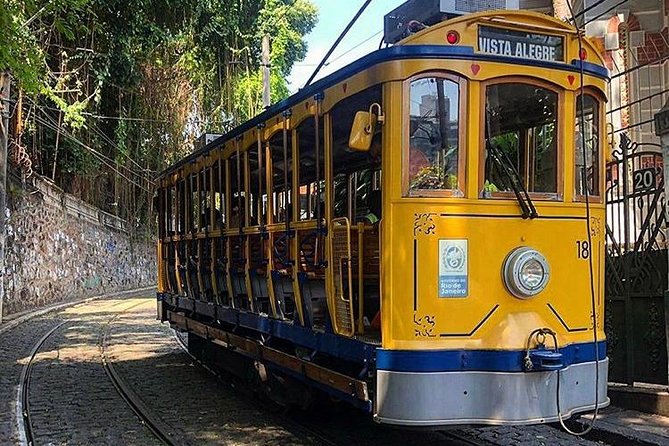
Santa Teresa’s famous yellow tram is the star here. It rattles uphill from central Rio into a hilly district of old houses, artists’ studios, bars, and leafy streets, then the tour continues on foot through Selarón Steps, Lapa, and Cinelândia. I like the mix of transport and walking, and I like that local guides such as Ivan, Edmundo, and Lorena can add neighborhood knowledge that a standard sightseeing bus cannot.
The main consideration is the pace. You cover several places in about three and a half hours, with hills, stairs, and pavement underfoot. Tram service can also be disrupted, as happened during one tour, so you should be comfortable with a guide adjusting the route when Rio throws a small curveball.
Key points to know before booking
- The yellow tram is the opening act: Ride for about 30 minutes through the hills toward Santa Teresa.
- Santa Teresa gets the most attention: You have time around Largo dos Guimarães and Parque das Ruínas.
- Local guides make the difference: Ivan is from Santa Teresa, while Edmundo and Lorena are praised for personal, flexible guiding.
- The tour links two distinct areas: Santa Teresa’s old hillside streets lead down to Lapa’s street art and historic arches.
- A small group keeps it manageable: The maximum is 12 people, though some departures may be much smaller.
- Budget about $72.09 per person: Tram admission is included, and some tour arrangements have also included metro tickets and a caipirinha.
Why this Rio tour works so well
Rio is easy to admire from a beach, a cable car, or a lookout. Santa Teresa and Lapa give you a closer look at the city’s older, more creative side. This outing is useful because it connects the two neighborhoods without leaving you to work out the transport and route yourself.
You start at the Copacabana Palace at 9:00 a.m. The stated meeting point is the hotel at Avenida Atlântica 1702, and the activity ends back there. Guides have also met people at their hotels or B&Bs for the trip, with some departures using the metro before reaching the tram station.
The small-group limit of 12 matters in these neighborhoods. Santa Teresa’s streets are narrow, and the tram is not a place for a large, unwieldy group to spread out. A smaller party also makes it easier to ask about architecture, local life, street art, or the practical details of getting around Rio.
The strongest feature is the human element. Edmundo is an artist and knows many people in Santa Teresa. Ivan is a local of the district and has a particularly close connection with its streets and residents. Lorena is praised for her humor, flexibility, and ability to change the plan when tram service or sightseeing plans shift.
More Walking Tours in Rio de Janeiro
- Rio de Janeiro: Rocinha Favela Walking Tour with Local Guide
★ 4.8 · 3,052 reviews - Rio De Janeiro: Half-Day Rocinha Favela Walking Tour
★ 4.7 · 2,272 reviews - Sunrise and Sunrise Walk Two Brothers with Local Guide
★ 5.0 · 193 reviews
The yellow Bonde ride up Santa Teresa
The first major experience is the ride on Rio’s historic yellow Bonde, or tram. The journey lasts about 30 minutes and climbs from the tram station toward Santa Teresa. The slow pace is part of the appeal. You are not simply being delivered to the next stop. You are watching central Rio give way to a hilltop neighborhood with a different feel.
The tram ride is scenic and old-fashioned in the best sense. It is also practical. Santa Teresa is built on steep hills, so arriving by tram gives you a clear sense of the district’s shape before you start walking through it.
Admission for the tram is included. Some departures have also used the metro, with metro and tram tickets covered in the tour price. Since transport conditions can change, it is sensible to confirm the exact arrangement when booking.
Do not expect a museum-style vehicle tour with a recorded explanation. The value is in the movement, the views, and the guide’s commentary along the way. The ride is listed as about 45 minutes for this part of the tour, including the station and boarding process, while the panoramic tram journey itself takes roughly 30 minutes.
Largo dos Guimarães and Santa Teresa’s old streets

Largo dos Guimarães is the center of the walking portion in Santa Teresa. You have about 45 minutes to explore the area, which is known for old homes dating from the late 19th and early 20th centuries, views across Rio, restaurants, and bars.
This is where the neighborhood begins to make sense. Santa Teresa is not just a scenic viewpoint. Its character comes from the combination of aging buildings, steep streets, small businesses, and an active art scene. The district has long attracted artists, and a guide with local ties can help you read the place as a lived-in neighborhood rather than a photo stop.
I would pay attention to the details between the official sights. Look at the façades, doors, balconies, and changing views between buildings. The tour gives you enough time to walk around, but not enough for a relaxed meal or a long stop in several cafés. Treat Largo dos Guimarães as an introduction to Santa Teresa, not as free time for a full afternoon.
The neighborhood’s slopes are worth noting. You will be walking on uneven streets, and the route later includes stairs at Selarón Steps. Most people can participate, but this is not a flat, easy promenade. Comfortable shoes are a practical choice.
Parque das Ruínas and Rio from above
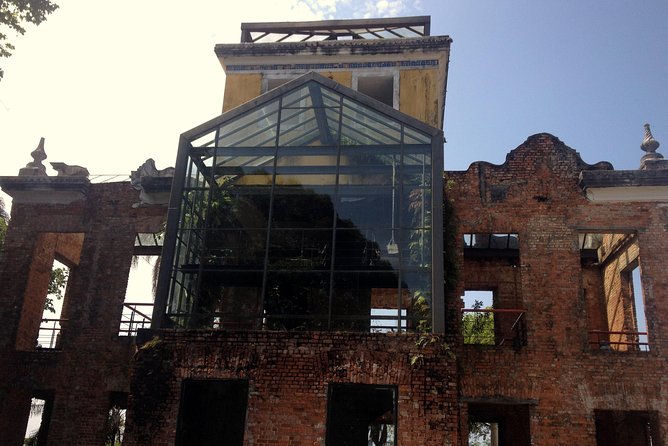
The Centro Cultural Municipal Parque das Ruínas is one of the tour’s best viewpoints. It occupies the former home of Laurinda Santos Lobo, a prominent cultural figure in old Rio, and has been turned into an open structure with broad views.
The setting lets you see several parts of the city at once. From here, the view can include central Rio, the Lapa Arches, Christ the Redeemer, and Botafogo. That range is what makes the stop valuable. Instead of seeing each sight in isolation, you get a sense of how Rio’s hills, neighborhoods, and central district fit together.
The stop lasts about 30 minutes. That is enough for photos and a guide’s explanation, but the time can pass quickly if the weather is clear and you want to linger. If viewpoints are a priority for you, this is one place where the fixed schedule may feel short.
The old structure is also part of the attraction. You are not standing at a generic modern platform. The setting carries traces of an earlier Rio and gives the tour a cultural angle before it shifts toward Lapa’s public art and nightlife district.
more samba nights in Rio de Janeiro
- Rio de Janeiro: Beginner Samba Lesson in Ipanema
★ 4.9 · 1,071 reviews - Rio: Pub Crawl in Lapa with Cachaça Tasting and Live Samba
★ 4.7 · 881 reviews - Rio: Carnival Backstage Tour at Samba City with Cocktail
★ 4.6 · 520 reviews - Hop-ON Hop-OFF Sightseeing Bus in Rio de Janeiro – Rio Samba Bus
★ 3.5 · 457 reviews
Walking down to Selarón Steps
From Santa Teresa, the route heads down toward Lapa and the Escadaria Selarón. The staircase was created by Chilean artist Jorge Selarón over roughly two decades. Its bright tiles make it one of the most recognizable public artworks in Rio.
You get about 30 minutes here. That is enough to walk along the stairs, view the tile work, and take photographs. The staircase is made for looking closely. Tiles from different places and periods form a surface that changes as you move up and down.
The stop can be crowded and visually intense, especially compared with the quieter residential streets of Santa Teresa. Your guide helps keep the visit focused, but you should still stay aware of your belongings and your group. The tour does not promise a private visit or a long, unhurried photography session.
Selarón Steps also provide a useful bridge between the two neighborhoods. Santa Teresa feels residential and hillside-oriented. Lapa is more urban, public, and covered in large-scale street art. The staircase sits between those worlds, both geographically and artistically.
Lapa Arches and the city’s water system
The walk continues through Lapa, with time to look at graffiti and other street art on the way to the Arcos da Lapa. The arches are the remains of an 18th-century aqueduct that carried water into Rio until the end of the 19th century.
The structure is a striking piece of old infrastructure in the middle of a modern neighborhood. It also has a direct link to the opening tram ride: the Santa Teresa tram passes over the aqueduct on its route into the hill district.
Only about 20 minutes are set aside for the arches, so this is a concise stop. You will see the structure and hear its role in Rio’s development, but you will not have time for an extended architectural study. The walk through the surrounding streets is just as important, since the graffiti adds a modern layer to the old stone and whitewashed arches.
This section is especially useful if you want more than postcard landmarks. The aqueduct explains how the city once handled water, while the art on the walls shows how present-day Rio uses public space. The contrast gives the route some substance.
Cinelândia and central Rio’s grand buildings
The final sightseeing area is Cinelândia, a central square surrounded by major civic and cultural buildings. The guide introduces the Municipal Theatre, Rio’s opera house, the Museu Nacional de Belas Artes, the city council, the National Library, and the Teatro Odeon.
The Teatro Odeon is noted as the only cinema in the square still operating. That detail helps explain the square’s changing role. Cinelândia was shaped by grand public buildings and entertainment venues, and it remains one of the clearest places to see Rio’s formal downtown architecture.
The scheduled time here is about 20 minutes. This is a presentation and orientation stop rather than a series of interior visits. Admission to these buildings is not listed as part of the tour, so do not book this expecting museum entry or an opera house tour.
Cinelândia gives the excursion a strong finish. You begin in a tram station, climb into Santa Teresa, walk through an arts district, descend through Lapa, and end among Rio’s major civic buildings. The route shows several faces of the city in one morning.
How much personal guiding you can expect
The guide is the main reason to choose this outing over a self-guided route. Edmundo has an artist’s connection to Santa Teresa and is described as someone who knows people throughout the neighborhood. Ivan is from Santa Teresa, which gives him a natural advantage when explaining local streets and the district’s creative community.
Lorena brings a different strength. She has been praised for her humor, clear explanations, and ability to adjust the tour. When tram service was affected by a local situation, she changed the opening plan. When a participant had already seen one attraction, she offered an alternative instead of repeating it.
That flexibility is valuable in Rio. The tram is a working form of transport, not a sealed attraction operating in a perfectly controlled setting. Streets can be affected by local events, and your group may have different needs. A guide who can adapt without losing the main shape of the tour improves the experience.
The guide style appears personal rather than formal. You can ask questions about Rio and get help with the practical side of the city. Some outings have included a caipirinha, which adds a pleasant local touch, though the core tour description does not list it as a guaranteed inclusion.
Price, timing, and physical demands
At $72.09 per person, this is not Rio’s cheapest sightseeing option. The value rests in the guide, the small group, and the transport link between Santa Teresa and Lapa. If you would otherwise pay separately for transport and spend time planning the route, the price is easier to justify.
The tour lasts about three and a half hours and starts at 9:00 a.m. That morning schedule is useful because it leaves the rest of your day open. It also gives you a cooler, less tiring time for the uphill district and the walk down toward Lapa.
The route includes walking, hills, uneven pavement, and stairs. Most people can participate, according to the tour information, but you should not treat the word walking lightly. If you have trouble with steep streets or steps, ask about the exact route before booking.
The group maximum is 12. Some departures may be as small as two people, which can turn the excursion into a very personal introduction to Santa Teresa. The tradeoff is that the experience may vary with the guide, transport conditions, weather, and the interests of your group.
Booking is often done around three weeks ahead, with an average lead time of 21 days. The booking is non-refundable and cannot be changed for any reason. That is a real drawback, especially in a city where weather and local events can affect outdoor plans. If the operator cancels because the minimum number of participants is not reached, you are offered another date or experience, or a full refund.
Who should book this experience
I would choose this tour if you want to understand how Santa Teresa and Lapa connect, rather than simply collect separate photos of the tram, staircase, and arches. It suits first-time visitors who want a guided introduction to Rio’s older central neighborhoods.
It is also a good choice for people who enjoy art, architecture, and local stories. The route combines old homes, a former mansion, a tile staircase, an aqueduct, graffiti, and major civic buildings. No single stop carries the whole experience.
You may want another option if you prefer long visits inside museums, extended café time, or a very slow walking pace. The itinerary is broad for its length, so each stop receives a limited amount of time.
Should you book the Santa Teresa and Lapa walk?
Book it if you want a compact, guide-led introduction to Rio beyond the beaches, especially if you can request Edmundo, Ivan, or Lorena. Their local connections and easy adjustments are central to the tour’s appeal.
Think twice if the non-refundable terms concern you or if hills and stairs would make a morning uncomfortable. For most able walkers, though, the combination of the yellow tram, Santa Teresa’s old streets, Parque das Ruínas, Selarón Steps, Lapa’s aqueduct, and Cinelândia offers strong value in one well-planned half day.
FAQ
Where does the tour start?
The stated meeting point is the Copacabana Palace, A Belmond Hotel, at Av. Atlântica 1702 in Copacabana. The start time is 9:00 a.m.
Where does the tour end?
The activity ends back at the meeting point.
How long does the experience last?
The tour lasts approximately three hours and 30 minutes.
What is the maximum group size?
The tour has a maximum of 12 participants.
Is the tram ticket included?
Admission for the Santa Teresa tram is included.
Is metro transportation included?
Some tour arrangements use the metro before the tram, and metro and tram tickets have been included in the price on those outings. Confirm the transport plan when booking.
What places does the tour visit?
The route includes the Santa Teresa tram station, Largo dos Guimarães, Parque das Ruínas, Selarón Steps, the Arcos da Lapa, and Cinelândia.
Does the tour enter the museums or theatres in Cinelândia?
The guide presents the Municipal Theatre, Museu Nacional de Belas Artes, city council, National Library, and Teatro Odeon. Interior admission is not listed as included.
Can the booking be cancelled or changed?
No. The experience is non-refundable and cannot be changed for any reason. If the operator cancels because the minimum number of participants is not met, you are offered another date or experience, or a full refund.
New in Rio de Janeiro this month
- Discover Rocinha: Guided Tour of the Famous Favela★ 4.5 · 3 reviews
- Rio de Janeiro: Hang gliding adventure★ 3.7 · 3 reviews
- Rio de Janeiro: Pedra Bonita & Tijuca Forest Hike Tour★ 5.0 · 3 reviews
- Rio de Janeiro: Hang Gliding or Paragliding Flight★ 5.0 · 3 reviews
- Rio de Janeiro: Doors-off 30-min helicopter tour★ 5.0 · 3 reviews
- Rio de Janeiro: Local Experience in Forró dance★ 5.0 · 3 reviews
- Rio de Janeiro: Pedra do Telégrafo; Grumari/ Prainha Beaches★ 5.0 · 3 reviews
- Rio de Janeiro: Sugar Loaf with Lunch and Helicopter Flight★ 4.7 · 3 reviews
Rio de Janeiro Tours, compared.

Rio de Janeiro: 6-Stop Highlights of Rio with Lunch
Read our review →
Christ the Redeemer Entry Ticket by Corcovado Train
Read our review →
Rio de Janeiro: Rocinha Favela Walking Tour with Local Guide
Read our review →
Rio: Christ the Redeemer, Sugarloaf, Selaron & BBQ Lunch
Read our review →
Rio De Janeiro: Half-Day Rocinha Favela Walking Tour
Read our review →
Rio de Janeiro: Angra dos Reis and Ilha Grande Full-Day Tour
Read our review →
Rio de Janeiro: Beginner Samba Lesson in Ipanema
Read our review →
Browse the lists this tour appears in