
Our review · RIO DE JANEIRO TOURS
Rio: Tijuca Forest Small Group Hike to Caves and Waterfalls
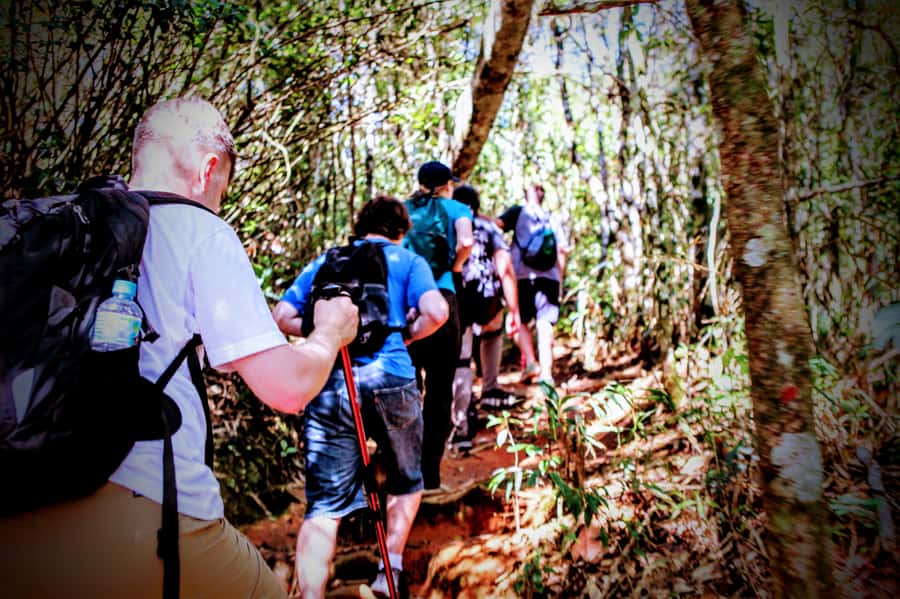
Rio’s best forest outing may be the one that combines a waterfall shower with old coffee-plantation trails. This six-hour trip takes you into Tijuca National Park for a 6.2-kilometer hike through caves, ruins, bridges, and rainforest, all surprisingly close to the city.
I like the small-group format and the guides’ strong command of both nature and Brazilian history. Guides including Vini, Riccardo, Tito, Renata, Luiza, and Gustavo have led groups at a thoughtful pace, stopping to explain plants, geology, slavery, coffee farming, and Rio’s geography. I also like the included hotel pickup from much of Rio’s South Zone.
The main consideration is the terrain. The walk is rated moderate, with 448 meters of elevation gain and some steep sections on rough, sometimes wet trails. The rainforest does not guarantee wildlife sightings, either. You might see capuchin monkeys, coatis, or even a sloth, but you might see no animals at all.
Key points to know before you book
- A 6.2-kilometer rainforest circuit: Expect roughly 2.5 to 3 hours of actual walking within a six-hour outing.
- Baronesa Cascade is the cooling-off stop: Bring a swimsuit or quick-drying clothes if you want to stand under the waterfall.
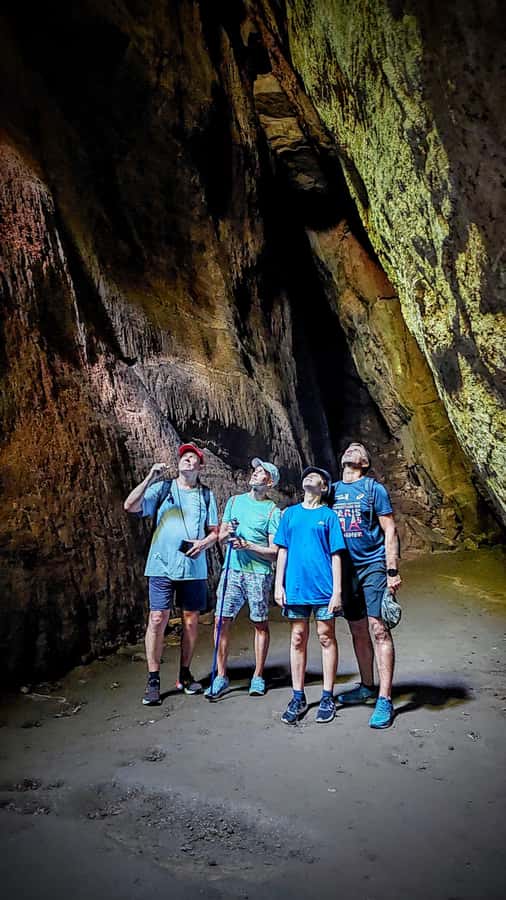
- Morcego’s Grotto is a major highlight: This is described as Brazil’s largest gneiss cave, reached by a short hike.
- The tour connects nature with Rio’s past: Coffee plantations, an old slave cemetery, a chapel, and former estate buildings all appear along the route.
- Small groups make the guide matter: Group sizes can be very small, and guides such as Vini, Riccardo, Tito, and Renata are central to the experience.
- The $69 price includes useful extras: Bilingual guiding, insurance, and transportation from designated South Zone hotels are included, but food and drinks are not.
Why Tijuca Forest makes such a good Rio day trip
Tijuca National Park gives you a sharp change of setting without sending you far from Rio. One minute you are based near Copacabana, Ipanema, Leblon, Botafogo, or Santa Teresa. Soon after pickup, you are walking beneath rainforest trees, beside streams, and along paths first laid out in the 19th century.
The park is famous as the world’s largest replanted urban forest. That detail gives the hike more substance than a simple nature walk. This is not untouched wilderness. It is a forest shaped by farming, clearing, replanting, water management, and the long relationship between Rio and its surrounding hills.
Your guide helps make those connections clear. The strongest guides do not simply point at leaves and waterfalls. They explain how the forest fits into Brazil’s geography, how coffee cultivation affected the area, and how Rio’s growth pushed people, farms, and conservation projects into the same space.
I would choose this trip if you want exercise and context, not just a photo stop. If your ideal Rio day is mostly beaches, restaurants, and viewpoints, this outing gives you a useful counterpoint.
More Hiking Tours in Rio de Janeiro
- Pedra do Telégrafo Hike and Beach Full-Day Tour
★ 4.5 · 417 reviews - Rio de Janeiro: Pedra da Gávea 7-Hour Hike
★ 4.7 · 183 reviews - Rio de Janeiro: Tijuca Forest Challenge Hike Full-Day Trip
★ 4.9 · 163 reviews
What the six-hour schedule really feels like
The total activity lasts about six hours, but the hike itself takes around 2.5 to 3 hours. The rest of the time covers hotel transfers, pauses at attractions, short walks between points, and stops for explanations and photos.
Pickup is offered from designated hotels and hostels in Copacabana, Ipanema, Leblon, Leme, Flamengo, Santa Teresa, Gloria, Catete, Urca, and Praia de Botafogo. The list is long, but you should still confirm your exact hotel. If direct pickup is not possible, the operator provides a nearby meeting point.
The vehicle is a practical bonus, especially in Rio, where reaching the park independently can involve several transport changes. One useful caution: a recent group found the van a little cramped, especially for taller men. The transfer is short, so this is a minor issue, but do not expect a luxury coach.
Groups are kept small, and private departures are also available. A small group matters here because the trail has uneven sections, and a good guide can adjust the pace, answer questions, and keep everyone together. Some departures have had only two people, while others have had around five.
Cascatinha Taunay, the park’s grand opening scene

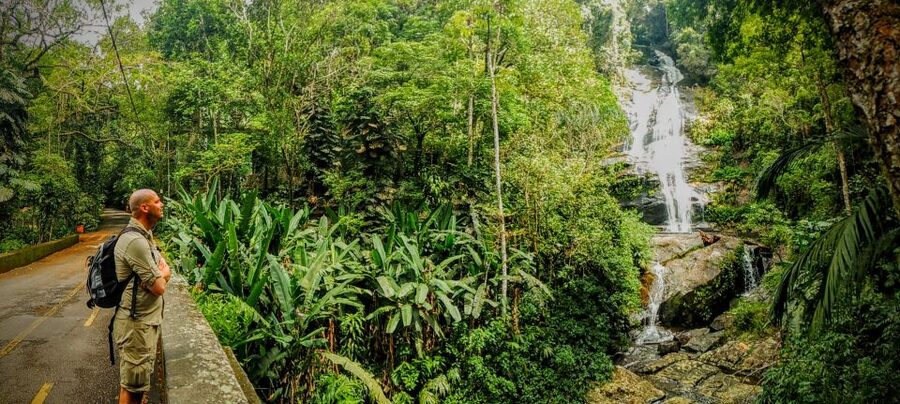
The first major stop is Cascatinha Taunay, the park’s largest waterfall. It is a short sightseeing stop, but it gives you an immediate sense of the forest’s scale and water supply.
Do not confuse this with the later swimming or shower stop. Cascatinha Taunay is mainly for viewing and photographs. The later Baronesa Cascade is where you cool down.
The opening stop also gives your guide a natural place to explain Tijuca National Park. You begin with the broad story of a replanted forest, then move into the smaller details of trees, vines, rock, and wildlife as the hike continues.
Mayrink Chapel and the coffee-farm past
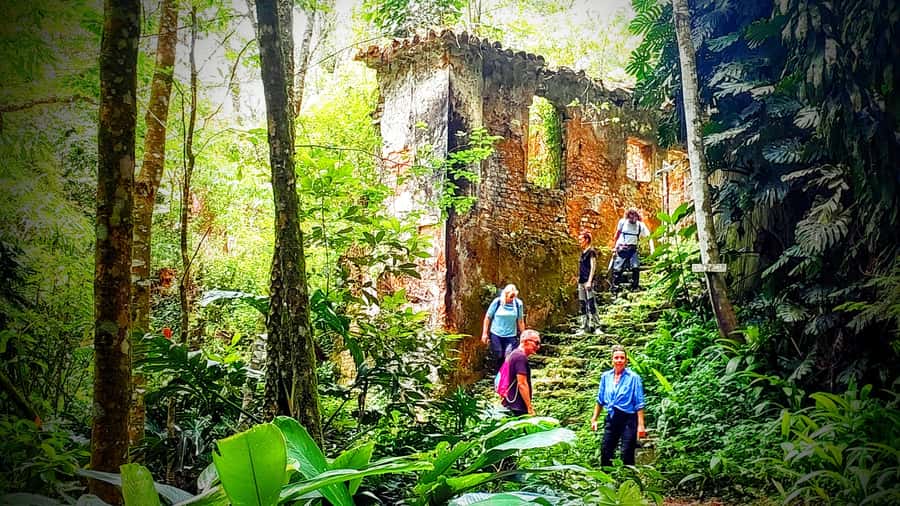
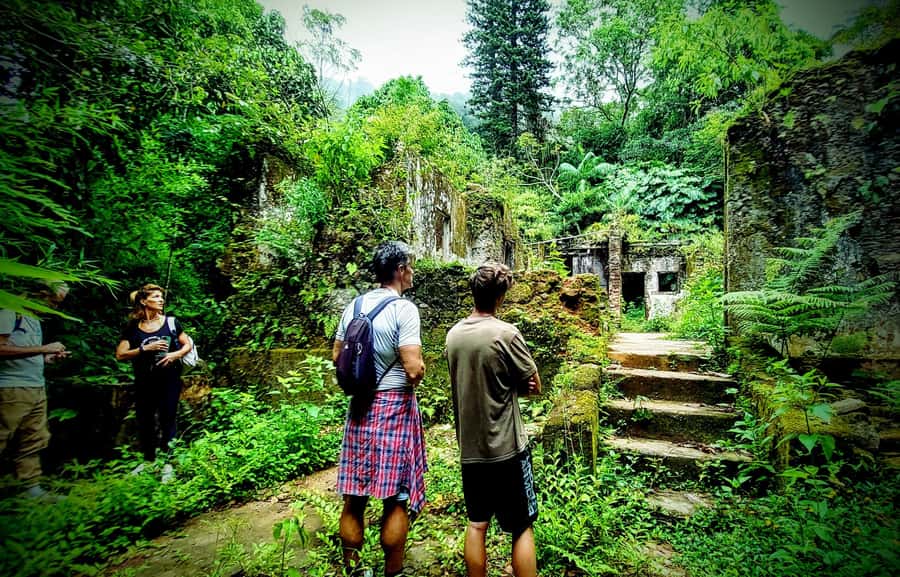
Capela Mayrink dates from 1850 and is one of the route’s clearest reminders that this forest was once occupied and managed. The chapel is a brief visit and photo stop, not a long indoor tour, but its presence changes how you read the forest around it.
The trails you follow were made during the period when coffee plantations occupied parts of the area. As you walk, the forest feels less like a blank green wall and more like a place with layers of human use.
That is one of the tour’s strongest features. The guide can explain the connection between agriculture, enslaved labor, estate life, and later forest restoration. You are not left to guess why an old structure sits in the trees or why a path seems too carefully formed to be a simple footpath.
more tijuca forest days
- Rio de Janeiro: Christ, Selaron Steps, and Tijuca Park Tour
★ 4.7 · 857 reviews - Rio de Janeiro: Guided Jeep Tour through Tijuca Rainforest
★ 4.3 · 740 reviews - Jeep Adventure: Guided Tour through Tijuca Rain Forest
★ 4.0 · 554 reviews - Rio: Half-Day Jeep Tour at Floresta da Tijuca
★ 4.5 · 353 reviews
Rough trails, steep sections, and the real fitness level
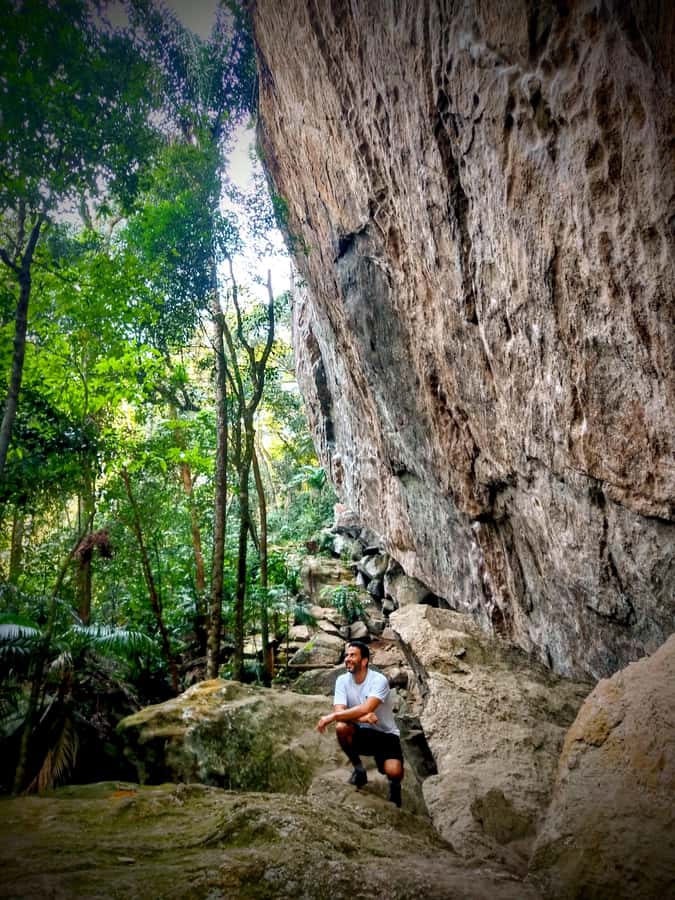
The advertised hike covers 6.2 kilometers and gains 448 meters in elevation. That is enough climbing to deserve respect, even if the route feels easy to some fit hikers.
The walk includes uphill and downhill sections on rainforest terrain. One steep portion has caught some people off guard, while experienced hikers have found the overall route fairly manageable. The difference comes down to fitness, heat, rain, and your comfort on uneven ground.
I would describe it as moderate rather than gentle. You do not need advanced mountaineering skills, but you should be comfortable walking for several hours and climbing steadily. Sports shoes with a firm sole are important. Bare feet are not allowed, and ordinary beach sandals would be a poor choice.
The forest canopy often keeps the trail cooler than Rio’s streets, which helps. Still, humidity and slippery ground can make the climb harder. Take the fitness rating seriously if you have heart problems, limited mobility, or little experience on hilly trails. The activity is not suitable for wheelchair users.
Cova da Onça and the suspension bridge
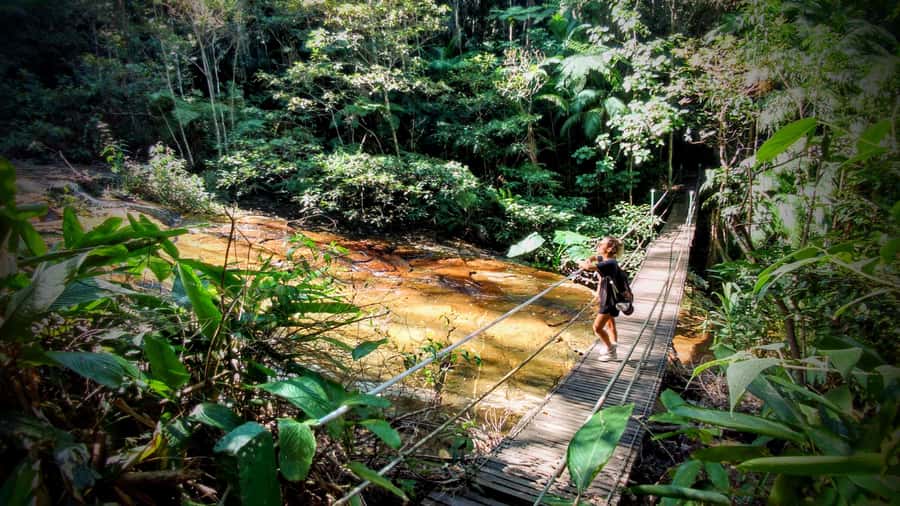
The Cova da Onça section adds a little more adventure to the route. You cross the Cova da Onça Suspension Bridge, then continue through the forest toward several small points of interest.
A suspension bridge is not a major engineering attraction, but it breaks up the walking and gives the route a different rhythm. You get a short burst of movement, a photo opportunity, and another reminder that the park is designed around trails, ravines, water, and steep hills.
The nearby Eucalyptus Forest contains an old slave cemetery. This is a quiet and serious stop. It gives the route historical weight, but it may also feel understated. There is no large museum or dramatic display. Your guide’s explanation is what helps you understand the place.
I appreciate that the route does not hide the difficult parts of the park’s past. The forest’s beauty exists alongside the story of forced labor and plantation life. That is worth hearing, even when the stop itself is simple.
Morcego’s Grotto, a short walk into the rock
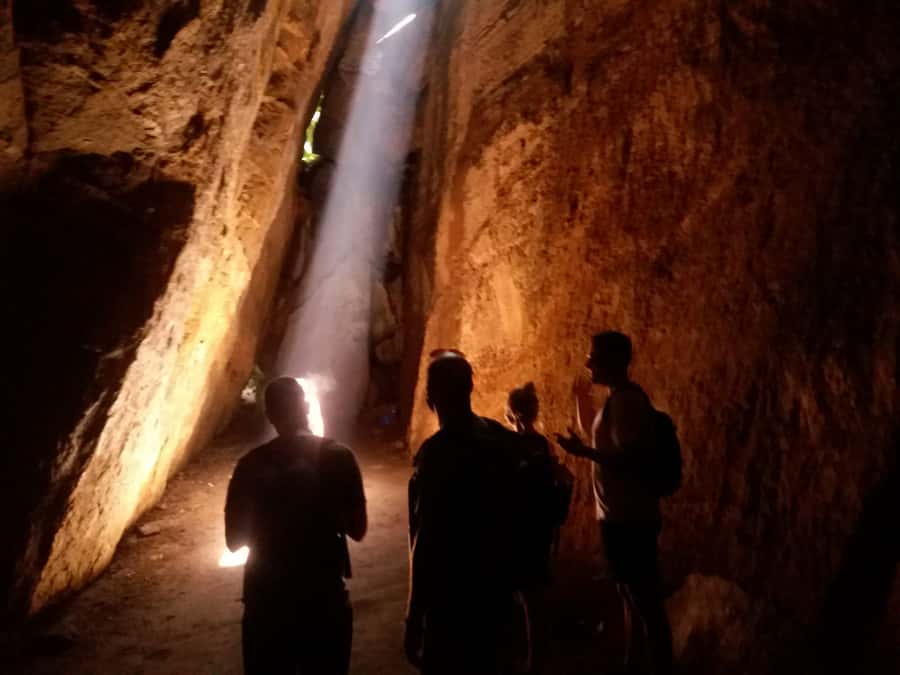
Morcego’s Grotto, also called the Bat Cave, is one of the most distinctive stops. It is described as the largest gneiss cave in Brazil, and reaching it requires a short hike over uneven ground.
The cave is not a polished attraction with bright lights and paved floors. That is part of its appeal. You enter a natural rock space inside the rainforest, with your guide explaining the geology and the name of the cave.
Do not count on seeing bats. Some groups have found bats resting inside, while others have not seen them. If bats are present, the responsible approach is to leave them undisturbed rather than try to force a sighting or photograph.
The cave is a good example of why a guide helps. Without one, you might walk past a dark opening, take a quick picture, and move on. With an explanation of the gneiss rock and the cave’s place in the park, the stop becomes more memorable.
Baronesa Cascade and the waterfall shower
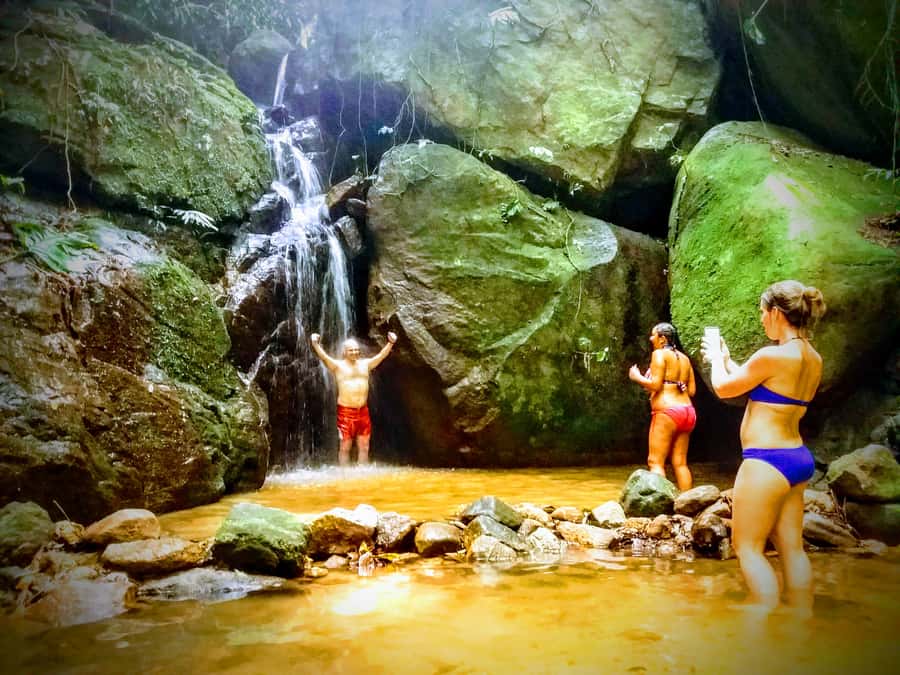
Near the later part of the circuit, you reach Cascata da Baronesa. This is the most hands-on stop of the day, since you can cool off under the falling water.
Bring a swimsuit, spare shirt, or quick-drying sportswear if you want to enjoy the shower. The tour information asks you to bring water, snacks, sunscreen, insect repellent, sports shoes, sportswear, and a daypack. Food and drinks are not supplied.
The waterfall is not presented as a long swimming break. It is a chance to cool your head and shoulders, enjoy the setting, and recover before the return walk. After several climbs, that small reward can feel perfectly timed.
Rain can change the experience. Wet weather may make the trail slick, but it can also make the forest feel more atmospheric. Guides have supplied ponchos during rainy outings, though I would still pack a light rain layer rather than depend entirely on borrowed equipment.
Ruins, fountains, and the return through the park
The return route passes the former residence of Barão d’Escragnolle, once one of the park’s managers. The building is now associated with Esquilos restaurant, but the important point for the hike is the glimpse into the people who managed and shaped the park.
You also see the Wallace Fountain, given to Brazil by English philanthropist Richard Wallace and made in France in 1870. Its sculpture represents goodness, charity, sobriety, and simplicity. It is an unexpected European object in a tropical forest, and a nice reminder that Tijuca’s story includes international connections as well as local ones.
The itinerary includes a secret stop, scenic viewpoints, and a stop identified as Mirante da Palmira. Guides may also point out broader views across Rio, and one outing included a particularly good view from Vista Chinesa. Conditions and the exact sequence can vary, so think of the viewpoints as welcome additions rather than the main reason to book.
The route finishes with more walking and sightseeing before you return to the vehicle. By then, most people have had enough exercise for one morning, even if the hike felt easy at the start.
Wildlife: enjoy the forest without expecting a zoo
Wildlife sightings are possible but never promised. One group saw capuchin monkeys and a Brazilian coati, while another caught sight of a sloth from the vehicle while leaving the park. Other outings saw no animals at all.
That variation is normal for a forest walk. The plants, rock, water, and old structures are the reliable attractions. Your guide may identify trees, explain rainforest ecology, or point out signs of animal life, but the animals set their own schedule.
This is a better experience if you enjoy noticing small details. Look at the plants, listen for birds, and watch the canopy, but do not judge the trip only by how many creatures appear. A guide with training in plants or ecology, such as Luiza, can add a great deal to this part of the day.
Insect levels also vary. Some outings have had few or no mosquitoes, but you should still use repellent. Rainforest conditions can change quickly.
The guides make the difference
The tour’s strongest asset is its guiding. Vini has received praise for combining forest facts with Brazil’s political, social, and cultural story. Riccardo is known for an upbeat style and clear explanations. Tito has guided groups through the forest’s plantation past, caves, waterfalls, and viewpoints.
Renata has been especially attentive to group comfort and timing. Luiza brings a botany background, which is useful if you want a closer look at the ecosystem. Gustavo has led the route at a steady pace and helped people find less obvious places.
Names and guide assignments can change, so you cannot book a specific person unless the operator confirms it. What you can expect is a bilingual guide in English and Portuguese, with the route explained in a way that connects nature to Rio and Brazil.
This matters because the forest’s attractions are not always self-explanatory. A chapel, fountain, cemetery, cave, and ruined home can seem like disconnected stops. A good guide turns them into one story.
Is $69 a fair price?
At $69 per person, the tour is fairly priced for a six-hour small-group outing that includes hotel transportation, a bilingual guide, and insurance. Rio’s South Zone pickup is especially useful if you are staying in one of the listed neighborhoods and want to avoid arranging a taxi or rideshare to the park.
The price does not include food, snacks, water, or other drinks. Bring enough for the morning and the hike. You also need to arrange your own transport if you are staying outside the pickup area.
The main value is not the number of sights. You could potentially see parts of Tijuca Forest independently, but the historical context, route planning, and access to less obvious attractions make the guided option more useful for a first visit.
Free cancellation up to 24 hours before the start gives you some protection if weather or plans change, and you can reserve without paying immediately. You will need to provide your full name, birth date, and passport number for insurance.
Who should book this Tijuca Forest hike?
Book it if you want a half-day break from Rio’s built-up areas and enjoy a mixture of walking, history, geology, and water. It suits reasonably fit adults, active older children, and anyone who likes a guide who talks as much about Brazil as about trees.
It is also a good choice if you are short on time. The route packs a lot into one outing: waterfall views, a chapel, plantation remains, a cemetery, a bridge, a cave, a cascade, and scenic stops.
Think twice if you dislike uneven ground, steep climbs, wet conditions, or riding in a compact van. You should also be comfortable with the possibility that wildlife will not appear.
The tour has earned a 4.9 rating from 536 bookings, and the pattern is clear: the guide, organization, and combination of nature with Brazilian history are the main strengths. The occasional weaker point is not poor service. It is that the forest can feel quiet or crowded depending on the day, and the animals may stay out of sight.
FAQ
How long is the hike?
The route covers 6.2 kilometers, or about 3.8 miles, and the walking portion takes roughly 2.5 to 3 hours. The full activity lasts about six hours.
How difficult is the walk?
It is rated moderate and includes 448 meters of elevation gain, with uphill and downhill sections over rough rainforest terrain. Good fitness and proper sports shoes are required.
Can I swim under the waterfall?
You can cool off under Baronesa Cascade during the tour. Bring a swimsuit or quick-drying clothing if you want to enjoy the waterfall shower.
Is hotel pickup included?
Transportation is included from designated hotels and hostels in Rio’s South Zone, including areas such as Copacabana, Ipanema, Leblon, Leme, Flamengo, Santa Teresa, Gloria, Catete, Urca, and Botafogo. If your address is not covered, a nearby meeting point may be provided.
Are food and drinks included?
No. You need to bring your own water, drinks, and snacks. Sunscreen, insect repellent, sportswear, a daypack, and suitable shoes are also recommended.
Is the tour offered in English?
Yes. The tour includes a live bilingual guide in English and Portuguese. Private and small-group options are available.
Should you book it?
I would book this hike if you want to understand Tijuca Forest rather than simply pass through it. The waterfall shower and cave add fun, but the best part is the way the route joins rainforest scenery with coffee farming, slavery, replanting, geology, and Rio’s growth.
Choose it for the guide-led learning, small groups, and easy pickup from the South Zone. Skip it if you want guaranteed wildlife, a gentle stroll, or a full-day wilderness trek. Pack water, snacks, repellent, sturdy shoes, and a change of clothes, then expect a rewarding workout in one of Rio’s most unusual settings.
More Hiking & Trekking in Rio de Janeiro
- Rio de Janeiro: Vidigal Favela Tour and Two Brothers Hike
★ 4.5 · 121 reviews - Rio de Janeiro: Dois Irmãos Peak Sunrise, Day or Sunset Hike
★ 4.7 · 94 reviews - Rio de Janeiro: Pedra da Gávea Guided Hike Tour
★ 4.9 · 86 reviews - Rio: Tijuca National Park Small-Group Hike to Pedra Bonita
★ 4.9 · 79 reviews
More Waterfalls near Rio de Janeiro
- Rio: Tijuca Forest & Horto Waterfalls Circuit Tour
★ 4.7 · 99 reviews - Hiking in the Tijuca Forest : Waterfalls and Caves
★ 5.0 · 72 reviews - Garganta do Céu and Waterfall hike in Pedra da Gávea
★ 5.0 · 71 reviews - Tijuca Forest Hike – Waterfalls & Caves, Nature & Wild Life!
★ 5.0 · 51 reviews
New in Rio de Janeiro this month
- Discover Rocinha: Guided Tour of the Famous Favela★ 4.5 · 3 reviews
- Rio de Janeiro: Hang Gliding or Paragliding Flight★ 5.0 · 3 reviews
- Rio de Janeiro: Hang gliding adventure★ 3.7 · 3 reviews
- Rio de Janeiro: Pedra Bonita & Tijuca Forest Hike Tour★ 5.0 · 3 reviews
- Rio de Janeiro: Local Experience in Forró dance★ 5.0 · 3 reviews
- Rio de Janeiro: Doors-off 30-min helicopter tour★ 5.0 · 3 reviews
- Rio de Janeiro: Pedra do Telégrafo; Grumari/ Prainha Beaches★ 5.0 · 3 reviews
- Rio de Janeiro: Sugar Loaf with Lunch and Helicopter Flight★ 4.7 · 3 reviews
Rio de Janeiro Tours, compared.

Rio de Janeiro: 6-Stop Highlights of Rio with Lunch
Read our review →
Christ the Redeemer Entry Ticket by Corcovado Train
Read our review →
Rio de Janeiro: Rocinha Favela Walking Tour with Local Guide
Read our review →
Rio: Christ the Redeemer, Sugarloaf, Selaron & BBQ Lunch
Read our review →
Rio De Janeiro: Half-Day Rocinha Favela Walking Tour
Read our review →
Rio de Janeiro: Angra dos Reis and Ilha Grande Full-Day Tour
Read our review →
Rio de Janeiro: Beginner Samba Lesson in Ipanema
Read our review →
Browse the lists this tour appears in