
Our review · RIO DE JANEIRO TOURS
African Heritage: Gastronomy and Musicality Experience
Rio’s African heritage is not tucked away in a museum case. It appears in the city’s food, music, public art, religious traditions, and everyday life. This private five-hour tour brings those pieces together, from the Morrinho model at MAR and Kobra’s enormous mural to Valongo Wharf and the samba traditions of Pedra do Sal.
I like the tour’s clear Afro-Brazilian focus and its shift from serious historical sites to shared food and live rhythm. I also like the private format, which gives you more room to ask questions and follow the subjects that matter to you. The main consideration is the pace: several stops come before a three-hour Pedra do Sal session, and the experience is not suitable for people with food restrictions.
Key points to know before booking
- See Rio through an Afro-Brazilian lens: The route connects art, enslavement, community life, food, religion, and music.
- Start at MAR with the Morrinho Project: A detailed favela model challenges simple stereotypes about life in Rio’s hillside communities.
- Visit the Pretos Novos memorial and Valongo Wharf: These are sober places that give essential context about the forced arrival of Africans in Brazil.
- Eat and make music at Pedra do Sal: The main three-hour portion includes Afro-Brazilian and Yoruba dishes plus a percussion workshop.
- Travel privately with your own group: The activity is limited to your party, with guides identified in past bookings as Isabella and Jaíse.
- Plan for extra drink costs: Food is included, but drinks are not.
Why this tour matters in Rio
Many Rio tours center on beaches, viewpoints, and famous monuments. Those places are worth seeing, but they do not explain how African cultures helped shape Brazil. This experience takes a different route through the port district and nearby historic areas, placing Black Brazilian life at the center of the story.
That approach is especially useful if you want more than a short introduction to Brazil’s past. The guide discusses how the slave trade affected the country’s economy and society, while also showing how African traditions survived and changed. You are not only looking at old stones. You are connecting those places with food, percussion, samba, religion, and present-day identity.
The tour is led by an Afro-Brazilian guide, with Isabella and Jaíse named in the available tour material. Past descriptions place strong emphasis on clear explanations, personal attention, and stories about daily life in Rio. Since two guide names appear, confirm who will lead your date if that matters to you.
More Historical Tours in Rio de Janeiro
- Rio de Janeiro: Historic Rio and Santa Teresa Half-Day Tour
★ 4.4 · 228 reviews - Rio de Janeiro: Little Africa Heritage Walking Tour
★ 4.9 · 177 reviews - Explore Little Africa : Unveiling Afro Heritage in Rio de Janeiro
★ 5.0 · 97 reviews
MAR and the Morrinho model: a different view of favelas
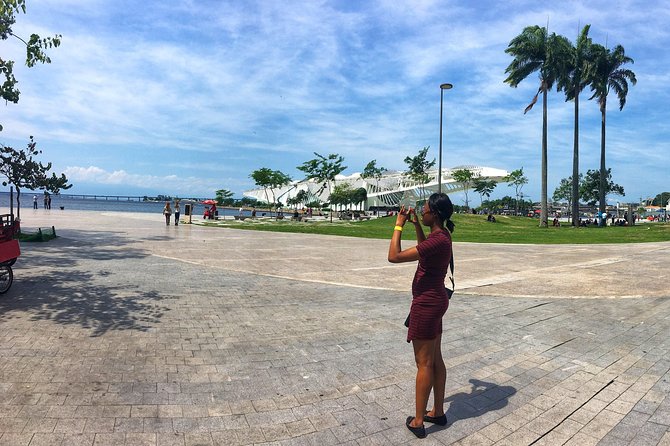
The tour begins at Museu de Arte do Rio, or MAR, at Praça Mauá. The first featured stop is the permanent Morrinho Project installation, a miniature recreation of the Pereira da Silva favela.
This is more than a model of buildings. It includes streets, residents, and scenes from ordinary community life. Its value is the way it pushes back against the common outside image of favelas as places defined only by violence. Instead, you see a working neighborhood with creativity, social ties, and its own daily rhythm.
You have about 25 minutes here, so this is an introduction rather than a long museum visit. That short stop works well if the guide gives the model a strong explanation, but it may feel brief if you want to examine every detail. Ask questions while you are there, especially about how the installation presents community life and how favela stories are often simplified.
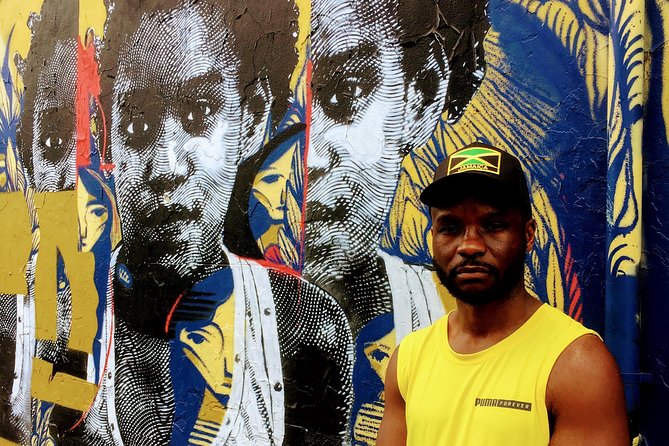
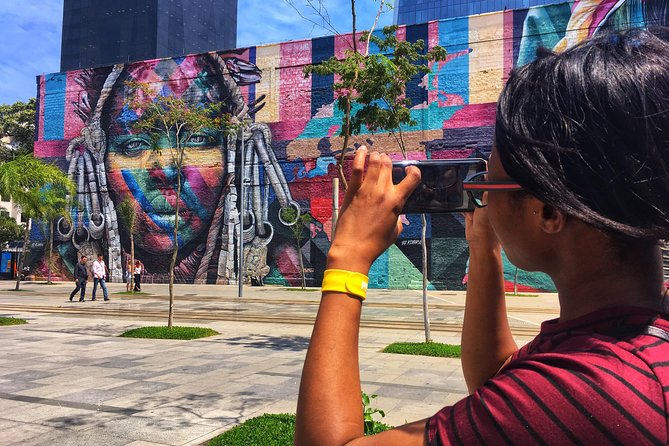
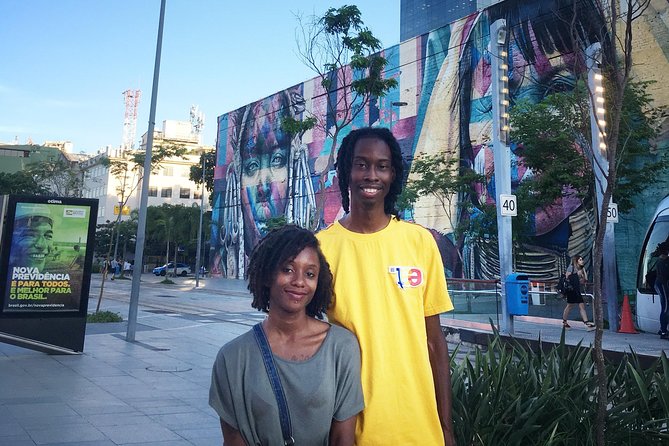
The itinerary also includes a look at Eduardo Kobra’s enormous graffiti mural. The artwork features ancestral ethnic groups and older cultures connected, directly or indirectly, with Brazil’s past. It gives the tour a strong visual counterpoint to the museum and memorial sites.
Pretos Novos: the tour’s most difficult stop
The Instituto de Pesquisa e Memória Pretos Novos, known as IPN, is one of the most important stops on the route. You visit an archaeological site and see a permanent exhibition connected to human remains found there.
This is not light sightseeing. The site confronts the treatment of Africans brought to Brazil under slavery, and it can change how you understand the scale and human cost of that period. The bones make the subject physical and immediate in a way that a textbook cannot.
You have roughly 40 minutes at IPN, the longest of the early historical visits. That gives the guide time to explain what was found and why the site matters. I would plan to listen carefully rather than rush through the exhibition. The subject is painful, but avoiding it would leave out a central part of Rio’s story.
The museum ticket is included. The setting also gives the later food and music portion more meaning. You first learn about forced displacement and oppression, then see how African traditions endured and became central to Brazilian culture.
Valongo Wharf and Little Africa

The next stop is Cais do Valongo, the historic Valongo Wharf. The visit lasts about 15 minutes, so expect a focused explanation rather than a long exploration.
The wharf and the surrounding area known as Little Africa help place Rio within the wider story of the Atlantic slave trade. This was a major point connected to the arrival of enslaved Africans, and the site carries international importance. The guide also explains local traditions and why this area matters to the history of humanity.
The short timing is the main limitation. You will not have a full afternoon to study the area or take in every nearby site. Still, the stop works as part of the route because it links directly with IPN and Pedra do Sal. Together, these places show the port district as a center of suffering, survival, cultural exchange, and resistance.
more history walks in Rio de Janeiro
- Learn the History of Rio with an Unforgettable City Center Walking Tour
★ 5.0 · 82 reviews - Rio’s city walking tour: a glimpse of history and olympic legacy
★ 4.5 · 78 reviews - Olympic Boulevard, Museum of Tomorrow & Historical Rio
★ 4.5 · 66 reviews - Rio: Olympic Boulevard, Museum of Tomorrow & History Tour
★ 4.1 · 47 reviews
Pedra do Sal: food, percussion, and living culture
Pedra do Sal is the heart of the experience. The program allows about three hours here, far longer than at the museums and historic sites. That gives you time to move from listening to participating.
You meet the remaining community associated with Quilombo Pedra do Sal, a place tied to Afro-descendant cultural resistance and heritage. The area is also known for outdoor samba sessions held weekly. The point is not simply to watch a performance. It is to understand why music and gathering remain important expressions of community and memory.
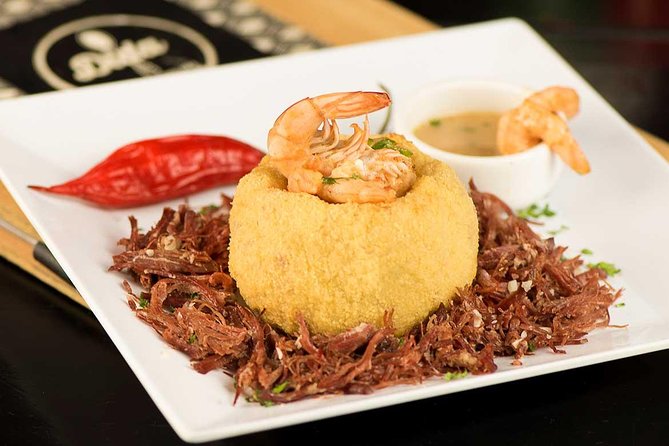
The food tasting highlights Afro-Brazilian and Yoruba cooking. These dishes are linked to traditions that remain common in the daily practices of religions with African roots. Food here is not a decorative extra. It shows how history survives through ingredients, preparation, ritual, and shared meals.
The tasting is included in the $110 price, but drinks are not. That is worth remembering, especially if the session becomes a relaxed social stop and you want something beyond the food provided. The tour information also says the activity is not suitable for people with food restrictions. If you have allergies, dietary rules, or strong limits on what you eat, this may not be the right booking.
The percussion workshop adds another hands-on layer. An instructor and drummer from the African continent lead the session, focusing on the musical traditions that continue to influence people today. You do not need to be a musician to get something from this. The value is in feeling rhythm as a shared practice rather than treating music as a performance behind glass.
For many people, this will be the most memorable part of the day. The earlier stops explain the past, while Pedra do Sal shows culture being practiced in the present. The three-hour block also keeps the tour from becoming a string of rushed photo stops.
Largo de São Francisco da Prainha: a social ending
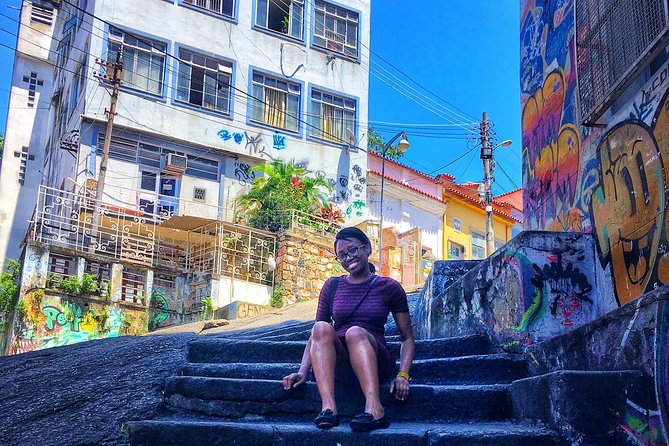
The tour ends at Largo de São Francisco da Prainha, in the Saúde area, around 15 minutes from the final scheduled stop. This square brings the route back to present-day Rio.
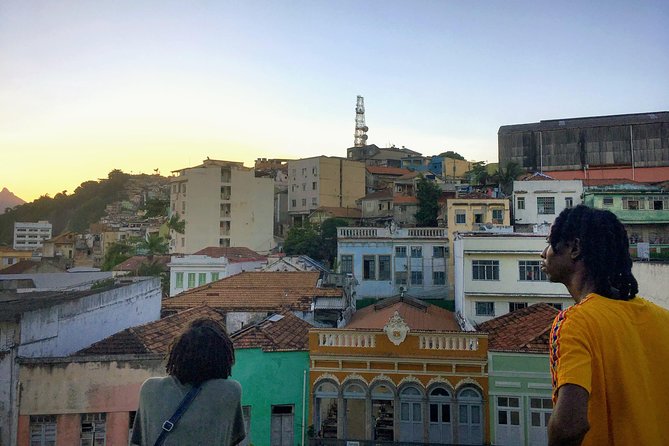
As the sun goes down behind Morro da Conceição, the square can fill with outdoor sounds such as samba, funk, jazz, and chorinho. Local bars provide cold beer and snacks, and Portuguese-style buildings frame the area. The atmosphere is informal, social, and distinctly tied to the neighborhood.
The scheduled visit is short, so think of it as a final orientation rather than a full evening out. Your tour ends here, at Largo São Francisco da Prainha, rather than returning to the starting point. That can be convenient if you want to continue exploring the district, but you should plan your own onward route.
What the $110 price gets you
At $110 per person, this is not a bargain sightseeing loop. You are paying for a private cultural experience with a specialist theme, a guide, museum access at IPN, a food tasting, and a percussion workshop.
The private format matters. Your group alone participates, so you can ask more questions and spend your attention on subjects that interest you. A solo booking can also feel unusually personal, while couples and small groups can keep the discussion focused rather than listening to a standard speech meant for a busload of people.
The value is strongest if you would otherwise need to arrange several separate visits and find your own context for them. MAR, IPN, Valongo Wharf, Pedra do Sal, and the final square do not tell one simple story when visited at random. The guide connects them through African ancestry, slavery, resistance, art, food, and music.
The price is less attractive if you mainly want famous sights or a casual food outing. The historical material is serious, and the food portion is tied to the cultural lesson. You should book this because you want to understand Rio, not just because you want lunch and a rhythm class.
Timing, meeting point, and practical details
The tour starts at 10:00 a.m. outside Museu do Amanhã, at Praça Mauá, 1, in central Rio. It ends at Largo de São Francisco da Prainha, also in the Saúde area. Since the start and finish are different, allow time to arrange your next activity or transport after the tour.
The full experience lasts about five hours. The early stops are compact, with 25 minutes at MAR, 40 minutes at IPN, and 15 minutes at Valongo Wharf. Pedra do Sal receives about three hours, making it the main cultural and social portion of the day.
The experience is near public transportation, and most people can participate. Service animals are allowed. The activity requires good weather, and a cancellation may lead to a different date or a full refund. It also requires a minimum number of participants, although the activity itself is private for your own group.
Because the tour is often booked well ahead, with an average lead time of about 69 days, do not leave it until the last moment if the date is important to you. You receive confirmation at booking, and cancellation is free up to 24 hours before the start time. Changes or cancellations inside that window are not accepted for a refund.
Who will get the most from this experience
I would choose this tour if you want a serious introduction to the African diaspora in Brazil and prefer a guide-led day over independent museum visits. It is a good match for curious solo visitors, couples, families, and friends who want history explained in plain language.
It also suits Black visitors seeking a diasporic perspective on Brazil. The focus on ancestry, resilience, cultural survival, and modern Black identity gives the tour a purpose that a general city walk may not offer.
You should think twice if you have food restrictions, dislike discussions of slavery and human remains, or want a loose schedule with plenty of unscheduled wandering. This is a focused experience, and the early part asks you to move through several significant sites before settling into the longer Pedra do Sal session.
The tour can also work well near the beginning of a Rio visit. It gives you context for Brazilian food, music, religion, and neighborhood life that you may notice elsewhere in the city. If you schedule it early, you can carry those connections into the rest of your stay.
Should you book African Heritage: Gastronomy and Musicality?
Yes, if you want Rio’s Afro-Brazilian culture treated as a central part of the city rather than a side note. The combination of IPN, Valongo Wharf, the Morrinho Project, Pedra do Sal, Afro-Brazilian food, and percussion gives you a much fuller picture than a standard sightseeing tour.
I would book it for the guide-led context and the private format, not just for the included meal. Confirm the guide’s name, bring an open mind for the memorial sites, and check the food issue before paying. If those points suit you, $110 buys a thoughtful half-day with a clear point of view and a strong connection between Rio’s past and its living culture.
FAQ
How long does the African Heritage: Gastronomy and Musicality Experience last?
The experience lasts approximately five hours.
Where does the tour begin?
It begins at Museu do Amanhã, Praça Mauá, 1, Centro, Rio de Janeiro, at 10:00 a.m.
Where does the tour end?
It ends at Largo de São Francisco da Prainha in the Saúde area of Rio de Janeiro.
Is the tour private?
Yes. Only your group participates in the private activity.
What food and music activities are included?
The tour includes a tasting of Afro-Brazilian and Yoruba dishes and a percussion workshop led by an instructor and drummer from the African continent.
Are drinks included?
No. Drinks are not included in the tour price.
Can I cancel for a full refund?
Yes, if you cancel at least 24 hours before the experience start time. Cancellations or changes made less than 24 hours in advance are not accepted for a refund.
New in Rio de Janeiro this month
- Discover Rocinha: Guided Tour of the Famous Favela★ 4.5 · 3 reviews
- Rio de Janeiro: Hang gliding adventure★ 3.7 · 3 reviews
- Rio de Janeiro: Pedra Bonita & Tijuca Forest Hike Tour★ 5.0 · 3 reviews
- Rio de Janeiro: Hang Gliding or Paragliding Flight★ 5.0 · 3 reviews
- Rio de Janeiro: Local Experience in Forró dance★ 5.0 · 3 reviews
- Rio de Janeiro: Doors-off 30-min helicopter tour★ 5.0 · 3 reviews
- Rio de Janeiro: Pedra do Telégrafo; Grumari/ Prainha Beaches★ 5.0 · 3 reviews
- Rio de Janeiro: Sugar Loaf with Lunch and Helicopter Flight★ 4.7 · 3 reviews
Rio de Janeiro Tours, compared.

Rio de Janeiro: 6-Stop Highlights of Rio with Lunch
Read our review →
Christ the Redeemer Entry Ticket by Corcovado Train
Read our review →
Rio de Janeiro: Rocinha Favela Walking Tour with Local Guide
Read our review →
Rio: Christ the Redeemer, Sugarloaf, Selaron & BBQ Lunch
Read our review →
Rio De Janeiro: Half-Day Rocinha Favela Walking Tour
Read our review →
Rio de Janeiro: Angra dos Reis and Ilha Grande Full-Day Tour
Read our review →
Rio de Janeiro: Beginner Samba Lesson in Ipanema
Read our review →
Browse the lists this tour appears in