
Our review · RIO DE JANEIRO TOURS
Olympic Boulevard, Museum of Tomorrow & Historical Rio
Rio’s best city stories are found away from Copacabana, in the old port and downtown streets where slavery, empire, faith, art, and Olympic renewal meet. This four-hour tour links Cais do Valongo, Olympic Boulevard, and the Museum of Tomorrow before walking into Rio’s colonial heart.
I like the easy hotel pickup from the South and West zones, and I like the mix of a major museum with quieter historic places such as São Bento Monastery and Praça XV. Guides including Carlos, Sandra, Alexia, and Newton have earned strong praise for clear explanations and a friendly pace. The trade-off is simple: you will walk a lot, and the shared van may spend time collecting other people.
Key points to know before booking
- A useful counterpoint to beach life: See downtown Rio, the revitalized port, and old colonial streets instead of spending another morning around Copacabana.
- The Museum of Tomorrow gets 90 minutes: Admission is included, and the interactive displays appeal especially to families and teenagers.
- History comes in several layers: Cais do Valongo, Little Africa, Portuguese colonial buildings, churches, and Olympic landmarks all fit into one route.
- Hotel transport saves time: Pickup and return are offered from main hotels in Copacabana, Ipanema, Leblon, Leme, and Barra da Tijuca.
- Comfortable shoes matter: The tour uses a van for transfers but becomes a walking tour once you reach the port and historic center.
- Plan around Sunday: Confeitaria Colombo is closed then, so the final stop will not operate as described on that day.
Why this half-day route works in Rio
At $72 per person, this is not the cheapest way to see downtown Rio. You are paying for round-trip transport, a professional guide, museum admission, São Bento Monastery admission, and a route that would be awkward to piece together on your own in four hours.
The value is best for a first visit or a short stay. You get a broad introduction without giving up a full day that could be used for Sugarloaf Mountain, Christ the Redeemer, or the beach. The van holds up to 19 people, though some departures are much smaller. One couple found only one other pair on the tour and moved through the stops quickly, while another person felt the shared pickups took too much time.
That difference is worth keeping in mind. A small group can feel almost private, but you cannot count on it. The scheduled start is 9 a.m., and your exact pickup point needs to be confirmed with the operator. One booking had a mismatch between the hotel named in the platform confirmation and the hotel named by the tour company. Check both messages early and settle any confusion before the morning of the tour.
More Historical Tours in Rio de Janeiro
- Rio de Janeiro: Historic Rio and Santa Teresa Half-Day Tour
★ 4.4 · 228 reviews - Rio de Janeiro: Little Africa Heritage Walking Tour
★ 4.9 · 177 reviews - Explore Little Africa : Unveiling Afro Heritage in Rio de Janeiro
★ 5.0 · 97 reviews
Cais do Valongo and the port’s difficult past
The first meaningful stop is Cais do Valongo, the old landing site connected to the forced arrival of enslaved Africans in Rio. You walk by with live commentary rather than spending a long period at a formal museum display, so the guide’s explanation matters here.
This is a brief stop, listed at about 15 minutes, but it gives the port district moral and historical weight. The area is often called Little Africa, and it helps explain why the renovated waterfront is more than a new promenade and modern buildings. You are looking at a place shaped by painful chapters in Brazil’s past.
The short timing may disappoint anyone hoping for a long, detailed study of the site. Still, placing Cais do Valongo near the start of the morning is smart. It gives meaning to the streets and public art that follow.
Olympic Boulevard and the Etnias mural
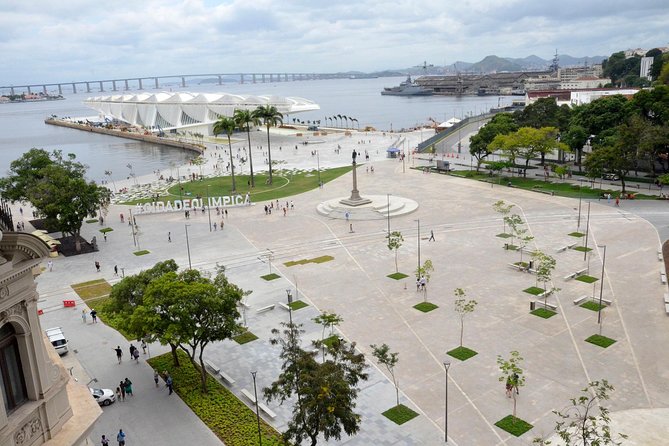
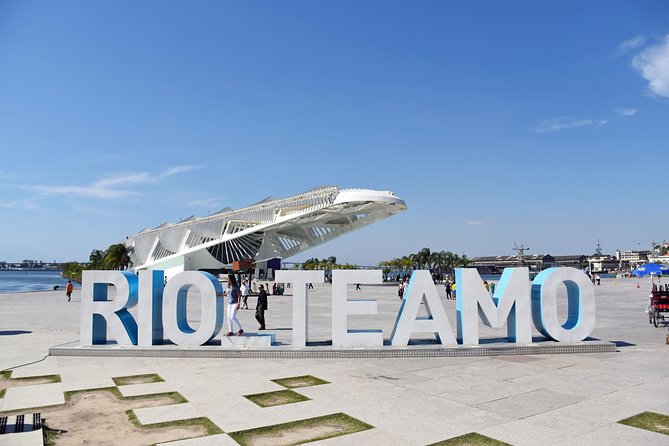
The tour then moves through Porto Maravilha, Rio’s revitalized port zone. The area was reshaped around the 2016 Olympics and now combines public art, museums, open walkways, and historic reminders.
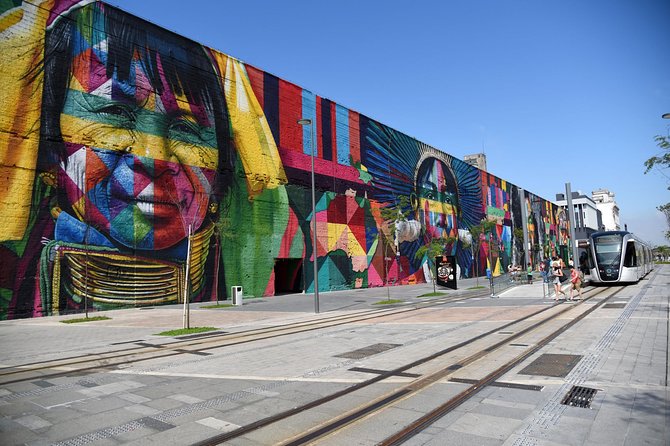
At Painel Etnias, you stop for photographs for about 10 minutes. The huge mural is one of the route’s most recognizable pieces of street art, and the stop gives you a visual break after the heavier subject of Cais do Valongo.
Expect a photo stop, not a full art lesson. If you want time to study the work or take many pictures, the schedule may feel brisk. The guide also takes you through the port area toward Mauá Square, which receives only a short visit of roughly five minutes. That is enough to get your bearings and see the redesigned public space, but not enough for extended shopping or wandering.
One point needs clear expectations: the title suggests an Olympic-focused outing, but the actual route gives the Olympics a supporting role. You see Olympic Boulevard and the Olympic cauldron, yet this is not a tour of a large Olympic park or a long visit to sports venues.
The Museum of Tomorrow’s 90-minute visit
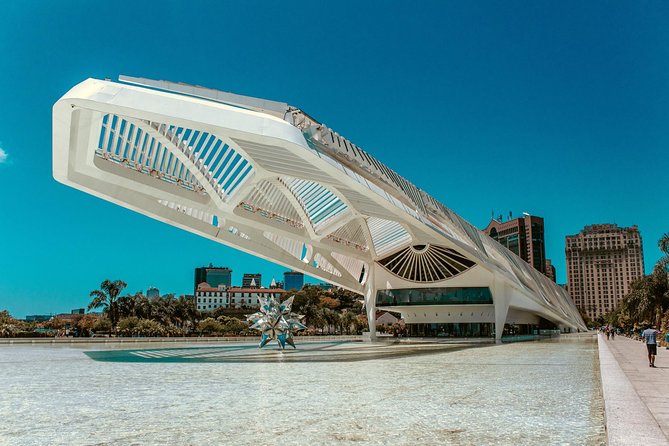
The Museum of Tomorrow is the main scheduled visit. You go inside for about an hour and a half, with admission included in the price.
The building itself is part of the appeal. Inside, the displays are interactive and built around questions about the future, science, humanity, and the planet. The format can work well for families and teenagers because you are not simply reading rows of labels. Several people especially valued the museum, while one person found it poor value and would have preferred more time for food and shopping.
That split is useful. If you enjoy modern museums, hands-on displays, and big questions about how people shape the future, the museum may be the strongest part of the morning. If your ideal Rio tour means churches, street life, markets, and old buildings, 90 minutes indoors may feel like too much.
You should also remember that the museum’s appeal is not mainly about Rio’s colonial past. It broadens the day beyond history. That contrast is one reason the route works, but it is also why the experience may not suit someone seeking a purely historic walking tour.
Afterward, the group strolls along Orla Conde, the waterfront promenade. This is a calmer stretch where you can pause, look across the water, and see the port from a different angle. It helps break up the indoor visit before the route turns toward downtown’s older buildings.
more Rio de Janeiro days to choose between
- Petrópolis Day Trip from Rio de Janeiro including Imperial Museum and Crystal Palace
★ 4.0 · 101 reviews - Rio: Olympic Boulevard, AquaRio and Museum of Tomorrow Tour
★ 4.5 · 54 reviews - Rio: Olympic Boulevard, Museum of Tomorrow & History Tour
★ 4.1 · 47 reviews - Museum of Tomorrow Guided Tour, Admission & Transfer
★ 4.5 · 38 reviews
São Bento Monastery and Rio’s church interiors
São Bento Monastery receives an internal visit of about 15 minutes. The stop is short, but the interior gives the tour a change of mood and texture after the open port and contemporary museum.
This is the kind of stop where a guide adds useful context. You are not just ticking off another church. The monastery connects Rio to its religious and artistic past, while the nearby Church of Our Lady of Candelaria is seen from outside as the group passes by. Candelaria is one of Brazil’s best-known churches and an important nineteenth-century artistic work, but it is not listed as an interior visit on this route.
That distinction matters. If you want time to sit quietly inside every church, this tour moves too fast. If you want a sample of Rio’s major religious architecture while keeping the morning manageable, the brief visits fit the schedule.
Colonial lanes around Praça XV
The most enjoyable part for many people may come after the museum, when the tour leaves the port’s broad modern spaces and enters the old center.
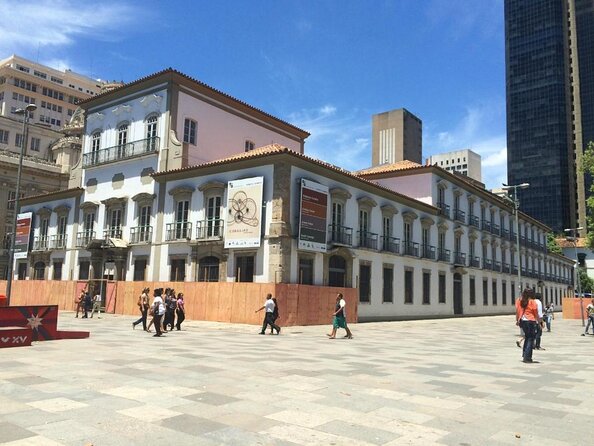
You pass through Travessa do Comércio, a narrow lane with preserved colonial features. The route also takes in an architectural landmark linking Praça XV to Travessa do Comércio, the Master Valentine Fountain, Paço Imperial, and Praça Quinze de Novembro.
Paço Imperial dates from the eighteenth century and once served as a residence for colonial governors. It is now a cultural center. The Master Valentine Fountain, also called the Colonial Fountain, was designed by Valentim da Fonseca e Silva during the colonial period. These details turn what might look like a simple stroll into a readable map of Rio’s political past.
Praça XV is visited with live commentary for about 15 minutes. You pass through the historic center rather than stopping at every building, so the guide’s storytelling holds the route together. Carlos was praised for making the walk enjoyable and taking regular breaks for different fitness levels. That is helpful, since the pavement, heat, and length of the walk can be more demanding than the four-hour duration suggests.
Confeitaria Colombo: the sweet finish
The final stop is Confeitaria Colombo, one of Rio’s historic pastry shops. You go inside for about 20 minutes, with a little extra time if you decide to eat. Food and drinks are not included, so bring some spending money if you want a pastry, coffee, or savory snack.
This is more than a quick refreshment stop. The old interior is part of the experience, and the shop gives you a pleasant look at Rio’s café culture after a morning of monuments and serious history. One person called the pastries the best part of the tour, and another enjoyed both sweet and savory choices.
Do not expect a full meal break. Twenty minutes is enough for a quick taste, not a relaxed lunch. Confeitaria Colombo is closed on Sundays, so check the operating day before you book if this stop matters to you.
Walking, weather, and the pace of the morning
The tour is advertised as a half-day experience, but it is best understood as a van-supported walking tour. The vehicle handles the longer transfers and hotel pickups. Once downtown, you walk between public squares, waterfront paths, historic lanes, churches, and the museum.
Wear comfortable shoes. That advice is not a formality. The route includes repeated short walks, pauses, and transitions between places, and warm weather can make the distance feel longer. One group had just arrived after a 26-hour flight and found the heat and walking tiring, even though they still enjoyed the outing.
The tour operates rain or shine. That can be an advantage in a tight Rio schedule, since you do not lose a planned morning to an ordinary shower. It also means you should carry suitable rain protection and accept that some outdoor stops may be less pleasant in wet weather.
A rainy day did not prevent one group from enjoying the museum and city walk, and guide Sandra received special praise for keeping the experience pleasant during a downpour. Still, rain can affect photographs, the waterfront stroll, and how comfortable you feel on the pavement.
Guides, languages, and group size
The guide provides live commentary in English, Spanish, and Portuguese. Names praised in the feedback include Carlos, Sandra, Alexia, and Newton. Their strengths were clear explanations, patience, friendliness, and practical help with planning later days in Rio.
That last point is worth noting. A good city guide does more than recite dates. The best guides on this route appear to help you connect the stops and make useful suggestions for the rest of your visit. Alexia was singled out for being informative and helpful, while Newton was described as clear and unhurried.
The maximum group size is 19 people. That is not a tiny walking group, and the shared van may collect people from several hotels. On a light departure, you might move quickly and receive more personal attention. On a full one, pauses and pickups can make the four-hour schedule feel tight.
Children must be accompanied by an adult. Children aged four and younger ride free if they do not occupy a seat, while adult pricing applies to other participants. Most people can take part, and service animals are allowed.
What the $72 price really buys
The $72 price makes the most sense when you value convenience. Getting from the beach districts to downtown, arranging museum entry, finding the historic sites, and returning to your hotel can take more planning than the map suggests. The air-conditioned van is especially useful in Rio’s heat.
You are also paying for structure. The route moves from slavery-era history to Olympic renewal, from contemporary ideas at the museum to colonial architecture and café culture. A guide helps you understand why these places belong in one morning.
The price is less compelling if you prefer to linger. You may want more time at Praça XV, longer at Confeitaria Colombo, or a slower look at the mural. You might also decide that the Museum of Tomorrow is not worth 90 minutes of your limited Rio time.
Free cancellation is available up to 24 hours before the start time. The experience requires a minimum number of participants, so a cancellation by the operator can result in another date, another experience, or a full refund. One late cancellation caused real trouble for a person leaving Rio that evening, so do not schedule this as your only possible activity on the final day.
Who should book this Rio city tour?
I would choose this for a first visit, a short stay, or a morning when you want downtown context without arranging several separate visits. It suits people who enjoy a blend of social history, architecture, public art, museums, and food.
Families may like the interactive museum. Couples and friends who want a manageable half-day can use the afternoon for another part of Rio. The multilingual format also helps mixed-language groups.
I would be cautious if you dislike walking, need a slow pace, or want a detailed Olympic-site tour. I would also skip it on Sunday if Confeitaria Colombo is a priority. And if your main interest is old churches, the route offers short interior visits rather than long periods inside each one.
FAQ
How long does the tour last?
The tour lasts approximately four hours and starts at 9 a.m.
What is included in the price?
The price includes the guided half-day walking tour, taxes and fees, a professional guide, round-trip transportation from listed hotel areas, Museum of Tomorrow admission, São Bento Monastery admission, and an air-conditioned van.
Is hotel pickup available?
Yes. Round-trip pickup is available from main hotels in Copacabana, Ipanema, Leblon, Leme, and Barra da Tijuca. You should arrange the pickup with the operator when confirming your reservation.
What languages does the guide speak?
Live tour commentary is available in English, Spanish, and Portuguese.
How large can the group be?
The maximum group size is 19 people.
Is food included?
No. Food and drinks at Confeitaria Colombo are available for purchase but are not included.
Is Confeitaria Colombo open every day?
No. Confeitaria Colombo is closed on Sundays.
Is the tour suitable for children?
Children must be accompanied by an adult. Children aged four and younger are complimentary if they do not occupy a seat. Most people can participate.
Can I cancel for a refund?
You can cancel up to 24 hours before the experience starts for a full refund. Changes or cancellations made less than 24 hours before the start time are not accepted for a refund. If the operator cancels because the minimum number of participants is not met, you will be offered another date or experience, or a full refund.
Should you book Olympic Boulevard, Museum of Tomorrow and Historical Rio?
Book it if you want a well-organized introduction to Rio beyond the beaches, especially with limited time. The mix of Cais do Valongo, the Etnias mural, the Museum of Tomorrow, São Bento, Praça XV, and Confeitaria Colombo gives you a surprisingly wide view of the city in one morning.
Just arrive ready to walk, confirm the hotel pickup, and keep your expectations clear. This is not a full Olympic complex tour, not a leisurely food outing, and not a slow church-by-church visit. It is a practical downtown sampler with strong guides, useful transport, and enough variety to help you decide where to spend the rest of your time in Rio.
More History Walks in Rio de Janeiro
- Learn the History of Rio with an Unforgettable City Center Walking Tour
★ 5.0 · 82 reviews - Rio’s city walking tour: a glimpse of history and olympic legacy
★ 4.5 · 78 reviews - Petropolis Bohemia: Historic tour and visit to the Bohemian Brewery
★ 4.5 · 45 reviews - Imperial Petrópolis – Historic Tour + Teresa Street and Lunch
★ 4.5 · 44 reviews
New in Rio de Janeiro this month
- Discover Rocinha: Guided Tour of the Famous Favela★ 4.5 · 3 reviews
- Rio de Janeiro: Hang gliding adventure★ 3.7 · 3 reviews
- Rio de Janeiro: Pedra Bonita & Tijuca Forest Hike Tour★ 5.0 · 3 reviews
- Rio de Janeiro: Hang Gliding or Paragliding Flight★ 5.0 · 3 reviews
- Rio de Janeiro: Local Experience in Forró dance★ 5.0 · 3 reviews
- Rio de Janeiro: Doors-off 30-min helicopter tour★ 5.0 · 3 reviews
- Rio de Janeiro: Pedra do Telégrafo; Grumari/ Prainha Beaches★ 5.0 · 3 reviews
- Rio de Janeiro: Sugar Loaf with Lunch and Helicopter Flight★ 4.7 · 3 reviews
Rio de Janeiro Tours, compared.
Rio de Janeiro: 6-Stop Highlights of Rio with Lunch
Read our review →
Christ the Redeemer Entry Ticket by Corcovado Train
Read our review →
Rio de Janeiro: Rocinha Favela Walking Tour with Local Guide
Read our review →
Rio: Christ the Redeemer, Sugarloaf, Selaron & BBQ Lunch
Read our review →
Rio De Janeiro: Half-Day Rocinha Favela Walking Tour
Read our review →
Rio de Janeiro: Angra dos Reis and Ilha Grande Full-Day Tour
Read our review →
Rio de Janeiro: Beginner Samba Lesson in Ipanema
Read our review →
Browse the lists this tour appears in