
Our review · RIO DE JANEIRO TOURS
Rio de Janeiro: Afrobrazilian Heritage & Black History Walk
Rio’s Afro-Brazilian story comes into sharp focus on this 150-minute walk through Saúde, Praça Mauá, and Pedra do Sal. You’ll hear about the Portuguese slave trade, Valongo Wharf, samba, and the religious traditions that grew from African cultures in Brazil.
I like the tour’s personal viewpoint, led by guides of African descent from Rio, and its focus on places rather than a classroom lecture. I also like the way it connects painful history with living culture, especially samba gatherings and the traditions of candomblé and umbanda. One thing to consider: this is a serious history tour, not a light sightseeing stroll, and food, museum entry, and transfers cost extra.
Key points at a glance
- Valongo Wharf: Visit the UNESCO World Heritage Site tied to the forced arrival and sale of millions of Africans.
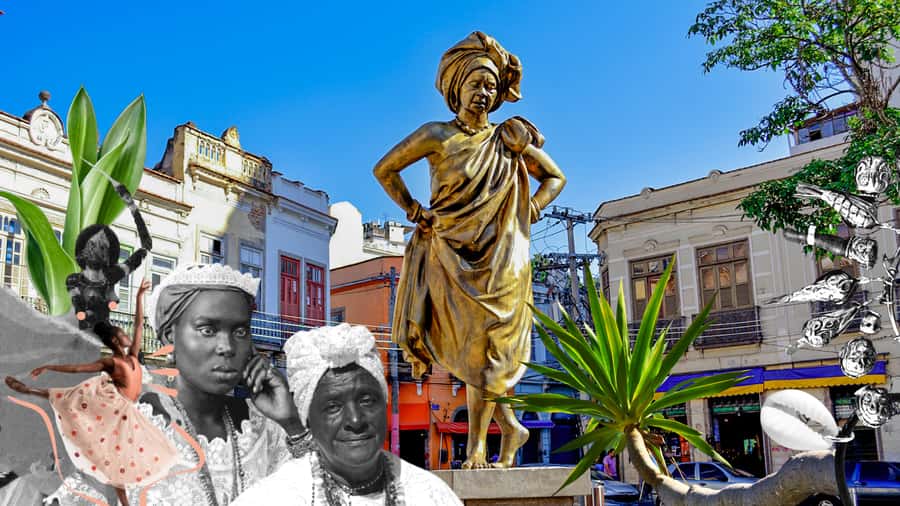
- Pedra do Sal: See the place linked to samba, early Carnival bloco parties, and weekly samba circles.
- Local guides: Kelly and Jaíse are named guides associated with the experience, with tours in English, Spanish, and Portuguese.
- Afro-Brazilian faiths: Learn how candomblé and umbanda developed, including the role of orishas, nkisis, and voduns.
- Downtown route: Walk through Saúde, Largo São Francisco da Prainha, Praça Mauá, and the wider area known as Little Africa.
- Practical format: The tour lasts 2.5 hours, runs rain or shine, and is wheelchair accessible.
Why this walk matters in Rio
Many first-time visits to Rio focus on beaches, viewpoints, and famous statues. Those places are worth seeing, but they explain only part of the city. This walk shifts attention to the port district, where African people, music, religion, food, and resistance shaped Rio’s identity.
The subject is difficult. The tour deals with human trafficking carried out by the Portuguese over more than 380 years, the arrival of enslaved Africans, and the system that sold people in the city. You should expect a direct account rather than a softened version of the past.
That seriousness is also the tour’s strength. The guide does not treat Afro-Brazilian culture as a decorative extra. You’ll learn how African descendants built communities, preserved belief systems, created music, and influenced Carnival and everyday life even under brutal conditions.
I find the use of an Afro-Brazilian guide especially valuable here. A guide such as Kelly can bring both historical research and family or community connections to the subject. Jaíse has also been praised for making the past feel clear and alive, and for sharing local ideas about samba events, restaurants, museums, art, and music.
More Historical Tours in Rio de Janeiro
- Rio de Janeiro: Historic Rio and Santa Teresa Half-Day Tour
★ 4.4 · 228 reviews - Rio de Janeiro: Little Africa Heritage Walking Tour
★ 4.9 · 177 reviews - Explore Little Africa : Unveiling Afro Heritage in Rio de Janeiro
★ 5.0 · 97 reviews
Meeting at Praça Mauá and entering Little Africa
The meeting point is under the trees in front of the Rio Art Museum, known as MAR, at Praça Mauá. This is a useful place to begin because the square sits at the edge of Rio’s port district and near several major cultural sites.
The supplied directions also list a possible starting point at Museu de Arte do, on Rua Pedro Ernesto, 32. Since the main meeting instructions specify the trees in front of MAR, I would confirm the exact meeting place with the guide by WhatsApp before setting out. That small check can save you from beginning a walking tour on the wrong side of the port area.
From Praça Mauá, the route moves toward Saúde. The walk takes about 15 minutes before the longer guided portion begins. This is not a sightseeing bus loop, so wear shoes you can comfortably use on city streets and bring water.
The area is often called Little Africa because of its strong links to African communities and cultural life. The name is not just a marketing label. It points to the concentration of port activity, markets, religious practices, music, and social networks that developed here after Africans were brought to Rio.
Valongo Wharf and the history beneath the city
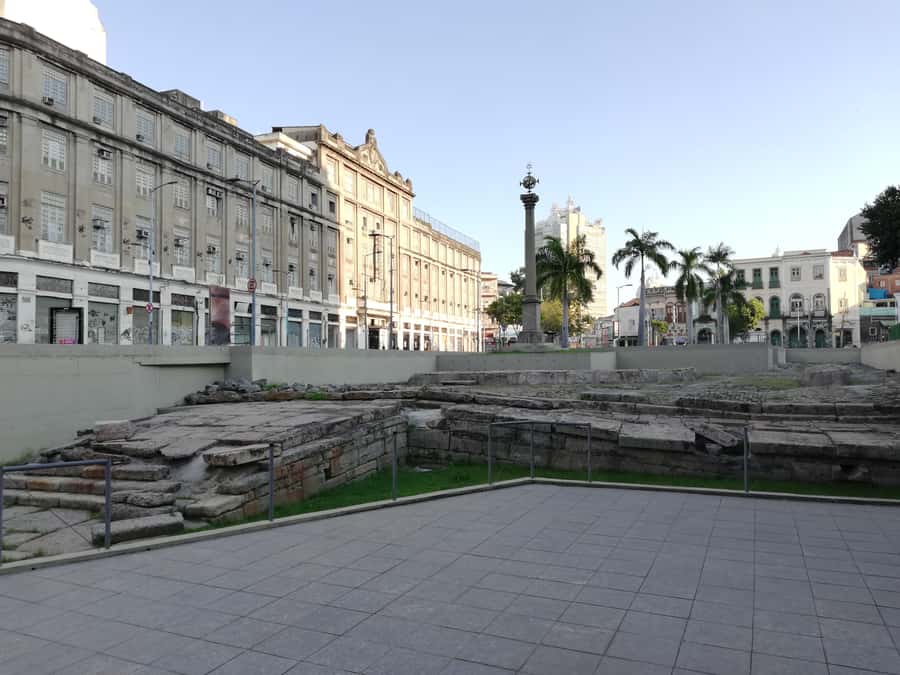
Valongo Wharf is the emotional center of the walk. It is a UNESCO World Heritage Site dedicated to the memory of the transatlantic slave trade, and it is tied to the arrival of millions of Africans who were sold as enslaved people in the Americas.
A stop here helps you understand the port as more than a scenic waterfront. This was a place where human beings were brought ashore, inspected, and sold. The physical site is important partly because it makes that history harder to ignore. Ordinary urban surroundings sit close to one of the most painful chapters in Rio’s past.
The guide explains how the Portuguese trafficking system operated over centuries and how enslaved Africans entered the city’s economy. You’ll also hear about the lives of African descendants after arrival, not only the violence inflicted upon them.
That distinction matters. A tour focused only on suffering can leave you with a narrow picture of Black life in Brazil. This walk continues into culture, worship, music, and community, showing how people maintained and reshaped traditions under oppression.
Give yourself time to listen carefully at Valongo Wharf. The subject can feel heavy, and the guide may cover more historical detail than you expect from a short city walk. If you prefer a purely casual outing, this may not be the right choice. If you want a better grasp of how Rio was formed, it is an important stop.
Praça Mauá, murals, and public memory
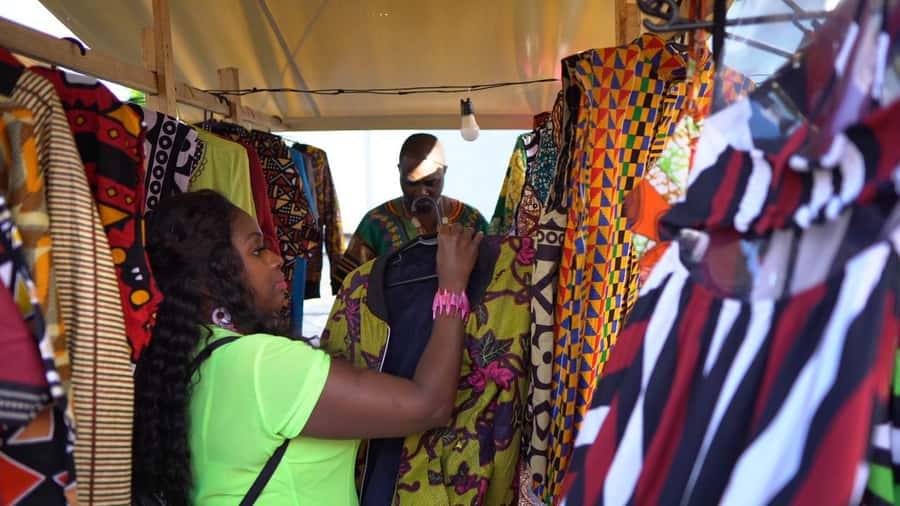
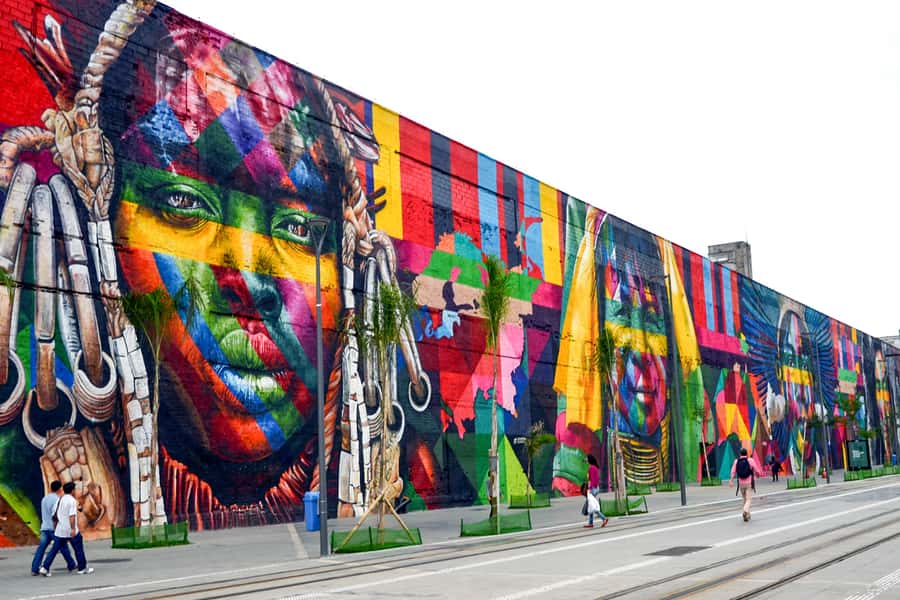
The route includes Praça Mauá and the Etnias mural, the large graffiti work by Brazilian artist Eduardo Kobra. The mural depicts Indigenous peoples from different parts of the world and adds a modern layer to a district filled with historical memory.
The artwork is not itself an Afro-Brazilian monument, but it fits the wider discussion about identity, race, Indigenous culture, and public space in Brazil. It also gives the walking route a visual change after the more solemn material at Valongo Wharf.
One practical point: entrance to the Rio Art Museum and the Museum of Tomorrow is not included. You can visit them separately if you have extra time and want more indoor culture, but the walk does not depend on entering either museum.
The murals are also one reason to bring a camera, though you should keep the focus on the guide’s explanation. This is a place where modern art and older history share the same streets.
More Walking Tours in Rio de Janeiro
- Rio de Janeiro: Rocinha Favela Walking Tour with Local Guide
★ 4.8 · 3,052 reviews - Rio De Janeiro: Half-Day Rocinha Favela Walking Tour
★ 4.7 · 2,272 reviews - Sunrise and Sunrise Walk Two Brothers with Local Guide
★ 5.0 · 193 reviews - Learn the History of Rio with an Unforgettable City Center Walking Tour
★ 5.0 · 82 reviews
Pedra do Sal, where samba takes center stage
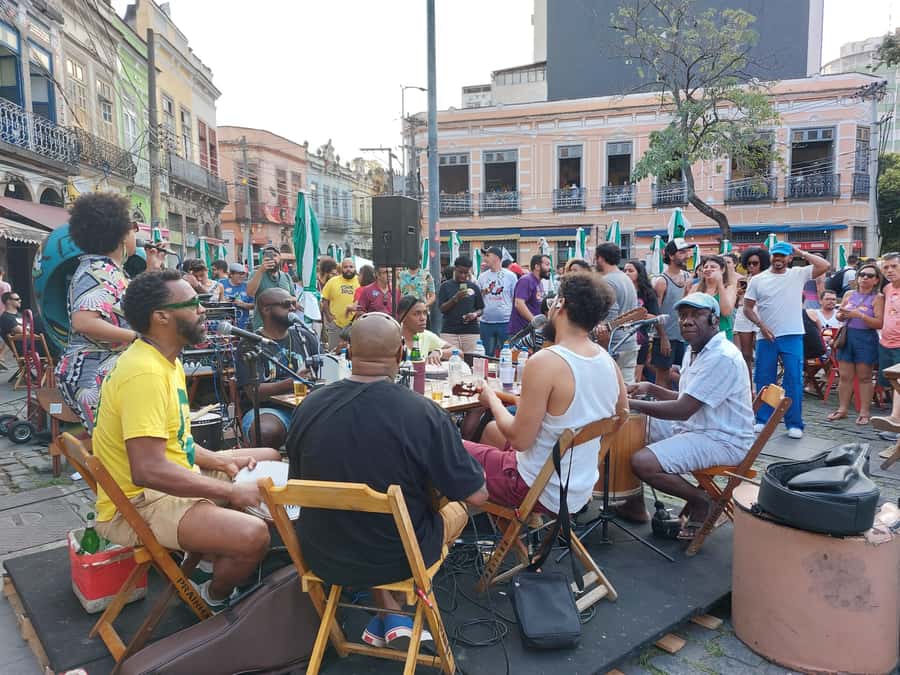
Pedra do Sal, or Rock of Salt, is the tour’s liveliest cultural stop. It is associated with the musicians who gathered there to sing and dance, and it is widely regarded as the birthplace of samba. The area is also considered the center of Little Africa.
The stone itself is tied to the old port district, while the surrounding cultural tradition links music, gathering, and Afro-Brazilian community life. You’ll hear how Pedra do Sal became a meeting place for musicians and how early Carnival bloco parties and parades grew from these social circles.
The tradition continues through weekly rodas de samba. A roda is a circle of musicians and singers, and the setting is part of the appeal. Rather than treating samba as a stage show designed only for visitors, the idea is to see it as a living social practice.
One guide, Stephanie’s guide Jaíse, has been known to suggest an authentic samba jam at a town square after the tour. That is not presented as part of the standard paid itinerary, so you should ask what is happening during your visit and plan to pay separately if you join a local event.
Food may also be available around Pedra do Sal, but food is not included in the tour price. Bring some Brazilian reais or another suitable way to pay for anything you decide to eat. The route does not promise a meal, so think of regional food as an optional addition, not a guaranteed stop with a set menu.
Candomblé, umbanda, and the orishas
The religious section gives the tour a wider purpose. You’ll learn about the origins of candomblé and umbanda, two Afro-Brazilian religions shaped by African traditions and their contact with Christianity in Brazil.
The guide discusses syncretism, the process through which African religious ideas and symbols became linked with Christian figures and practices. This was not a simple replacement of one faith by another. It was also a way for African traditions to survive, adapt, and remain meaningful under colonial rule and religious pressure.
You’ll hear about orishas, nkisis, and voduns, as well as Brazilian ancestral gods and goddesses connected with nature. These traditions can be unfamiliar if you have only encountered Brazil through Carnival or football, so the guide’s explanation is useful.
The subject deserves care. Candomblé and umbanda are not costume themes or folklore props. They are living religions with their own sacred ideas, communities, and practices. The tour introduces their origins and cultural legacy without suggesting that a short walk can explain every part of them.
I like this section because it connects the old port district with present-day Brazil. The history is not locked in a museum display. It continues in music, worship, family traditions, food, and local celebrations.
What the 150-minute format feels like
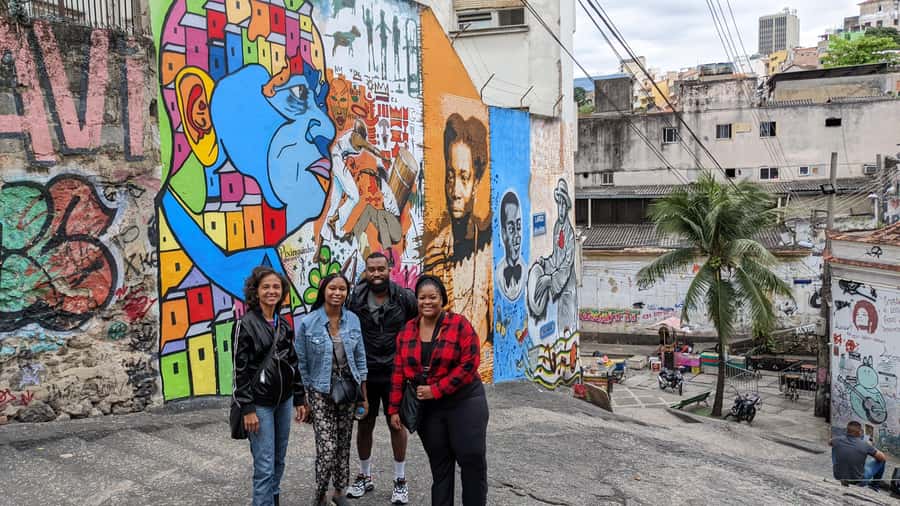
Two and a half hours is enough time to cover the main sites without turning the walk into an all-day commitment. You’ll receive a guided account of the port district, visit Valongo Wharf, walk through Saúde, discuss Afro-Brazilian religions, and finish around Pedra do Sal or one of the listed drop-off areas.
The route is still a city walk, so the pace and comfort will depend on the weather and your footwear. The tour runs rain or shine. Bring a reusable water bottle, comfortable clothing, a hat, and rain gear.
The route is wheelchair accessible, which is an important practical advantage. You should still confirm the exact route and current street conditions if you have specific mobility needs, since the experience takes place outdoors and includes walking between sites.
The tour is offered in English, Spanish, and Portuguese. A French-speaking participant found the language options less useful because French was not available, so do not assume that a booking page in your preferred language means the tour itself is conducted in that language. Select English, Spanish, or Portuguese when booking.
Is $64 a fair price?
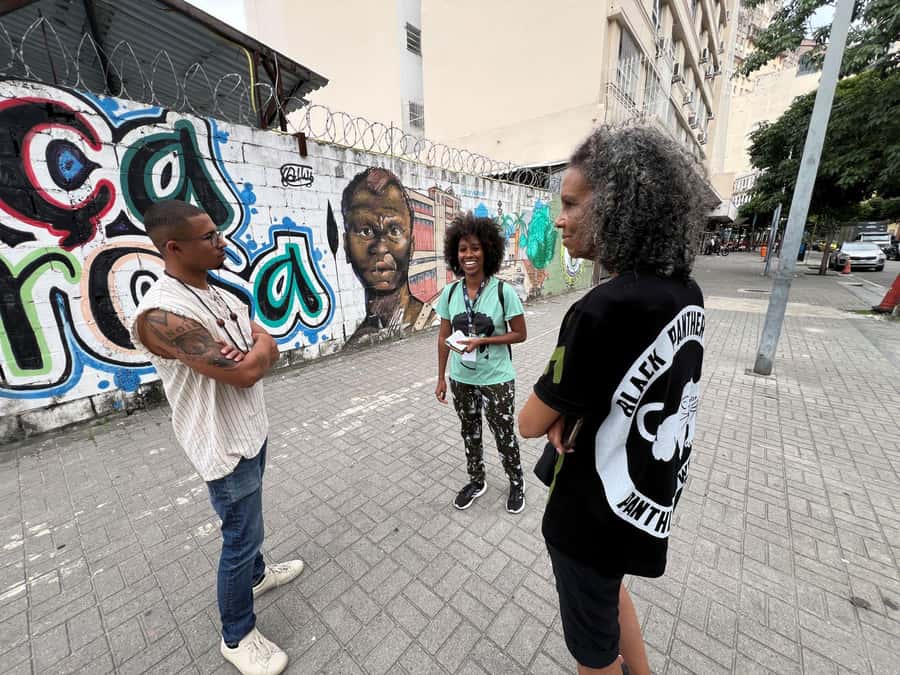
At $64 per person, this is not the cheapest way to spend two and a half hours in downtown Rio. The price makes more sense if you value a dedicated guide, historical interpretation, and a focused look at Afro-Brazilian culture rather than simply walking between landmarks.
You are paying for a specialist subject and for help connecting several sites that can otherwise feel unrelated. Valongo Wharf, the port, the murals, Saúde, and Pedra do Sal each tell only part of the story. The guide’s job is to link them.
The price does not include museum admission, food, or transfers. That means you should add transport to and from the meeting point and allow extra money if you want to eat near Pedra do Sal or visit MAR or the Museum of Tomorrow.
The strongest value comes when you use the guide’s local suggestions after the walk. Tips about samba, art, restaurants, museums, and local programming can help you plan the rest of your stay. I would book this early in a Rio visit, then use the recommendations to shape later evenings and visits.
Who will get the most from this experience?
I would recommend the walk to anyone who wants Rio’s history explained through its Black communities and cultural traditions. It suits first-time visitors who want more than the usual postcard route, as well as returning visitors who have already seen the major sights.
It is especially useful for people interested in:
- Brazilian history and the Atlantic slave trade
- Black culture in the Americas
- Samba and Carnival
- Candomblé, umbanda, and religious syncretism
- Public art and the port district
- Local music and food suggestions
Families with older children may find it worthwhile, but the subject of enslavement is serious. You should decide if your children are ready for frank historical discussion.
I would not choose this as a general introduction to every part of Rio. It does not cover Christ the Redeemer, Sugarloaf, the beaches, or the city’s major viewpoints. It is a focused cultural walk, and that focus is exactly why it works.
Useful planning details before you go
The tour can be canceled up to 24 hours in advance for a full refund, and you can reserve now and pay later. That is helpful if your Rio schedule depends on weather or changing plans.
The guide asks you to use WhatsApp for faster communication. Save the contact details before leaving your hotel, and keep your travel insurance number and operation details handy. Travel insurance is not mandatory for this walk, but the provider recommends it for outdoor activities.
Private groups may be arranged for another date with about 24 hours’ notice. Transfer fees apply and depend on vehicle availability. If you want a private version, ask before booking rather than assuming a standard group reservation can be altered.
At the end, listed drop-off points include Cais do Valongo, the Etnias mural, and Largo São Francisco da Prainha. These locations can help you continue exploring the port district on foot, but confirm the final stop with your guide on the day.
Should you book the Little Africa walk?
Book it if you want a serious, human account of Rio’s African roots, led by someone who can explain both the historical events and their cultural meaning today. The high rating of 4.9 from nine bookings reflects the strongest parts of the experience: careful teaching, personal connection, detailed history, and useful local advice.
Kelly has been especially praised for her research and personal connection to the subject. Jaíse has been praised for clear historical storytelling and for extending the experience with samba suggestions. Those details matter because the quality of this tour depends heavily on the guide.
Skip it if you want a relaxed sightseeing walk with little discussion of slavery, religion, or social history. Also reconsider if you need a French-language guide, want all food and transport included, or prefer indoor attractions.
For the right audience, $64 buys more than a walk through old streets. It gives you a clearer way to read Rio, from the port where enslaved Africans arrived to the music and faith traditions that continue to shape the city.
FAQ
Where does the tour meet?
Meet under the trees in front of the Rio Art Museum, or MAR, at Praça Mauá.
How long does the tour last?
The experience lasts 150 minutes, or 2.5 hours.
Which languages are available?
The tour is offered in English, Spanish, and Portuguese.
Is the tour wheelchair accessible?
Yes, the activity is listed as wheelchair accessible.
Does the tour visit Valongo Wharf?
Yes. Valongo Wharf is visited as a UNESCO World Heritage Site connected with the memory of the transatlantic slave trade.
Is food included?
No. Food is not included. Regional food may be available around Pedra do Sal, but you pay separately.
Are museum tickets included?
No. Entrance to the Museum of Tomorrow and the Rio Art Museum is not included.
Does the tour run in bad weather?
Yes. The tour takes place rain or shine. Bring rain gear, a hat, comfortable clothing, and a reusable water bottle.
Can I cancel the booking?
Yes. You can cancel up to 24 hours in advance for a full refund. You can also reserve now and pay later.
More History Walks in Rio de Janeiro
- Rio’s city walking tour: a glimpse of history and olympic legacy
★ 4.5 · 78 reviews - Olympic Boulevard, Museum of Tomorrow & Historical Rio
★ 4.5 · 66 reviews - Rio: Olympic Boulevard, Museum of Tomorrow & History Tour
★ 4.1 · 47 reviews - Petropolis Bohemia: Historic tour and visit to the Bohemian Brewery
★ 4.5 · 45 reviews
New in Rio de Janeiro this month
- Discover Rocinha: Guided Tour of the Famous Favela★ 4.5 · 3 reviews
- Rio de Janeiro: Hang gliding adventure★ 3.7 · 3 reviews
- Rio de Janeiro: Pedra Bonita & Tijuca Forest Hike Tour★ 5.0 · 3 reviews
- Rio de Janeiro: Hang Gliding or Paragliding Flight★ 5.0 · 3 reviews
- Rio de Janeiro: Doors-off 30-min helicopter tour★ 5.0 · 3 reviews
- Rio de Janeiro: Local Experience in Forró dance★ 5.0 · 3 reviews
- Rio de Janeiro: Pedra do Telégrafo; Grumari/ Prainha Beaches★ 5.0 · 3 reviews
- Rio de Janeiro: Sugar Loaf with Lunch and Helicopter Flight★ 4.7 · 3 reviews
Rio de Janeiro Tours, compared.

Rio de Janeiro: 6-Stop Highlights of Rio with Lunch
Read our review →
Christ the Redeemer Entry Ticket by Corcovado Train
Read our review →
Rio de Janeiro: Rocinha Favela Walking Tour with Local Guide
Read our review →
Rio: Christ the Redeemer, Sugarloaf, Selaron & BBQ Lunch
Read our review →
Rio De Janeiro: Half-Day Rocinha Favela Walking Tour
Read our review →
Rio de Janeiro: Angra dos Reis and Ilha Grande Full-Day Tour
Read our review →
Rio de Janeiro: Beginner Samba Lesson in Ipanema
Read our review →
Browse the lists this tour appears in