
Our review · RIO DE JANEIRO TOURS
Rio Culture and History through the Art of Traditional Foods
Rio’s food story comes alive through small bites on this six-hour walk from downtown toward Santa Teresa. You’ll taste pão de queijo, coxinha, açaí, tapioca, and cachaça, then ride the charming Santa Teresa tram across the Lapa Arches and past Ruinas Park.
I like the way food is tied to family traditions and Rio’s daily life, rather than treated as a string of unrelated samples. I also like the personal touch from guides such as Romayne and Camila, who know the people behind the counters and can add useful sightseeing along the route. The main drawback is the $198 price, which is high for a walking tour, so you’ll want to arrive hungry and make full use of the food and drinks included.
Key points at a glance
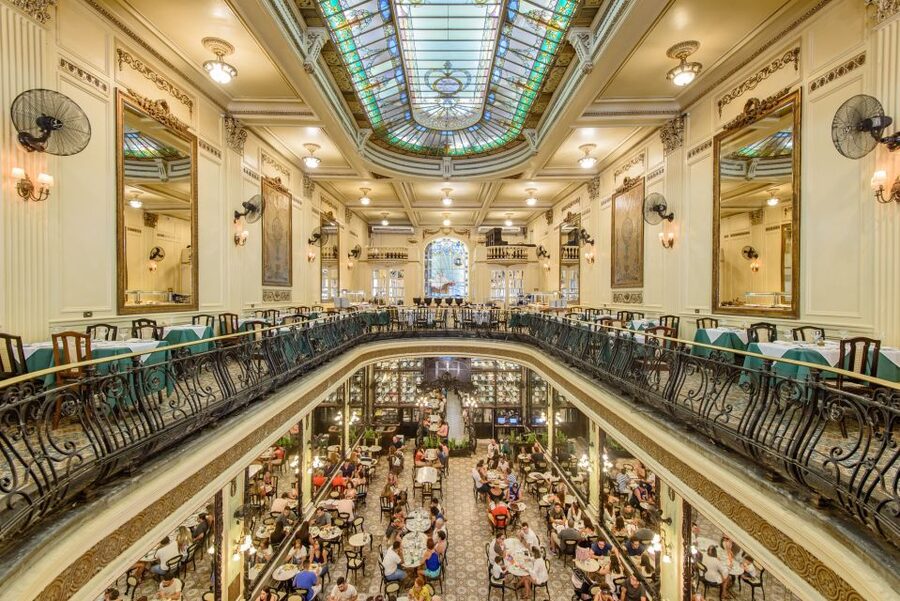
- Colombo confectionery: Browse one of Rio’s best-known sweet shops, with pastries and salty snacks in an ornate downtown setting.
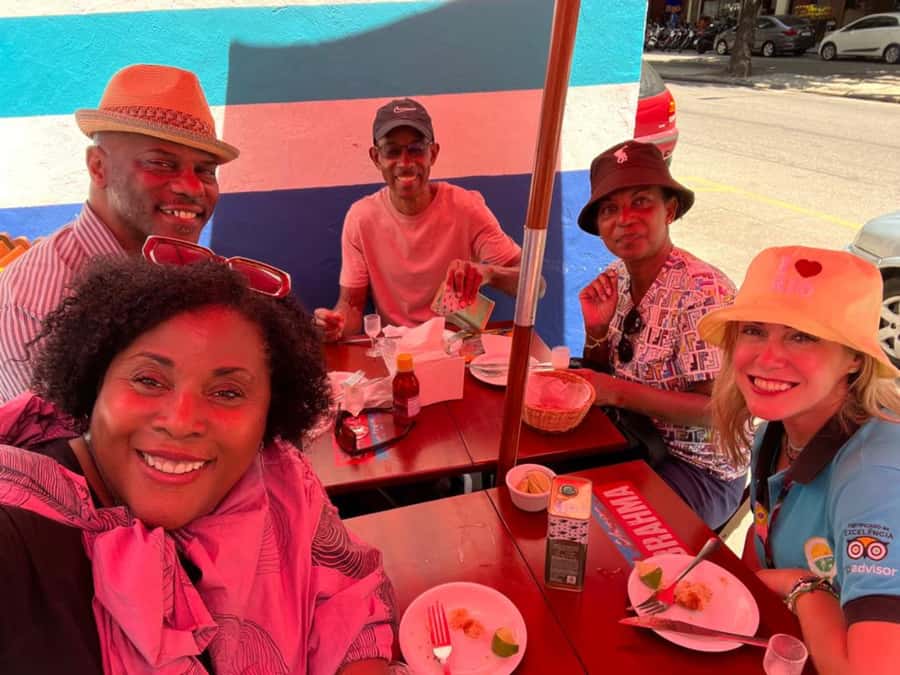
- Traditional Brazilian flavors: Sample manioc flour, açaí, tapioca, pão de queijo, coxinha, bacalao fritters, brigadeiros, beer, and cachaça.
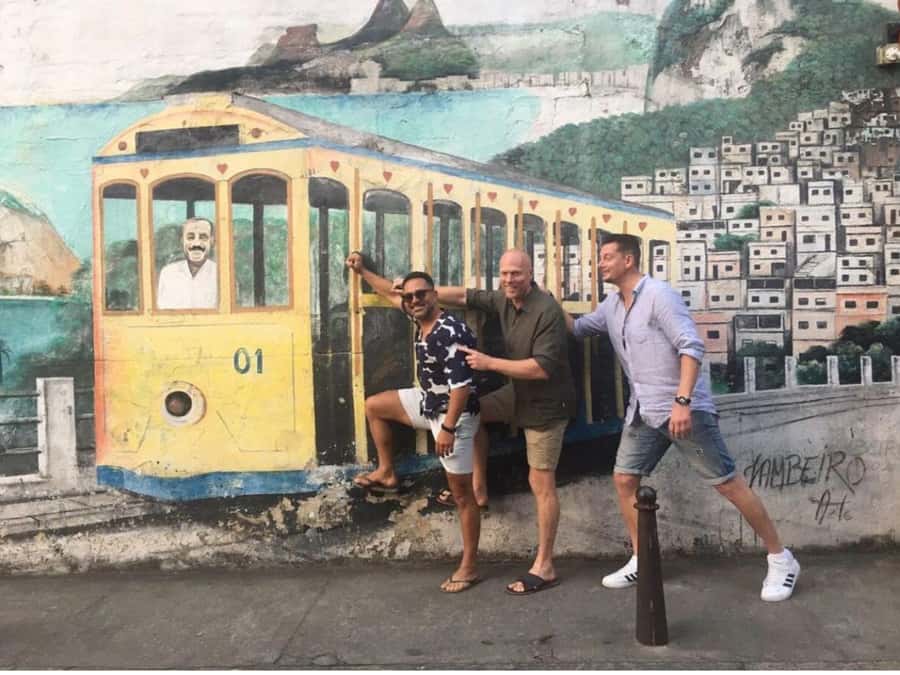
- Historic tram ride: Cross the Lapa Arches aqueduct and pass Ruinas Park on the way to Santa Teresa.
- Food with context: Your guide explains how ingredients and family food customs fit into Brazilian culture.
- Sightseeing built into lunch: The route includes Lapa, downtown Rio, and Santa Teresa, with possible stops at notable cultural sights.
- Manageable walking: The walk covers about one mile, though the six-hour schedule includes standing, tasting, and sightseeing.
A food tour that doubles as a Rio orientation
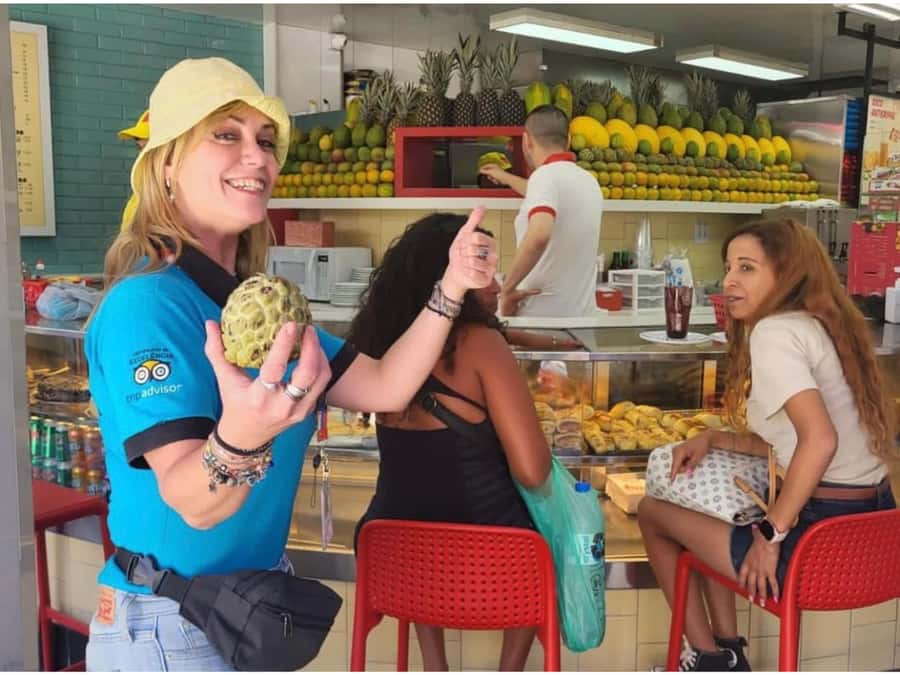
This experience works because it gives you several ways to read Rio at once. You taste the city, hear how its dishes developed, and move through neighborhoods with very different personalities.
The route begins around downtown Rio and reaches Santa Teresa, with Lapa as an important part of the day. You are not simply taken from one restaurant to another. The guide uses each food stop to explain ingredients such as manioc flour and tapioca, along with the customs built around them.
I find that approach useful during a first stay. A plate of coxinha means more when you know it is part of Brazil’s beloved snack culture. A sip of cachaça becomes more interesting when it is connected to local drinking habits and the long family traditions behind the places you visit.
The tour is led in English or Spanish. Guides named in the experience include Romayne and Camila. Romayne is described as having decades of guiding experience, while Camila is noted for her warmth, strong English, and enthusiasm for Brazilian food and history.
Guide quality matters here. Much of the value comes from explanations, introductions, and small details you would miss if you simply ordered the same foods on your own.
More Historical Tours in Rio de Janeiro
- Rio de Janeiro: Historic Rio and Santa Teresa Half-Day Tour
★ 4.4 · 228 reviews - Rio de Janeiro: Little Africa Heritage Walking Tour
★ 4.9 · 177 reviews - Explore Little Africa : Unveiling Afro Heritage in Rio de Janeiro
★ 5.0 · 97 reviews
Starting with Brazilian comfort food
Arrive for check-in at 10:30 a.m., with departure scheduled for 10:45 a.m. The exact meeting point is provided at booking, and you should arrive at least 10 minutes early.
The day’s tasting list centers on familiar Brazilian foods rather than hard-to-find luxury dishes. Expect samples such as pão de queijo, the warm cheese bread found across Brazil, and coxinha, a savory snack usually associated with shredded chicken and a crisp exterior.
You may also taste bacalao fritters, brigadeiros, and other sweet and salty items. One guide surprised a small group with homemade brigadeiros, a nice example of how a personal guide can add something beyond the fixed food list. That treat should not be treated as guaranteed, but it shows the kind of family connection this tour aims to share.
Come hungry. The food is spread across the day, and the tastings are paired with drinks in several places. You will also try ingredients that are central to Brazilian cooking, including açaí, tapioca, and manioc flour.
The tour is not designed as a formal cooking class. You will learn how foods fit into Rio’s culture, but you should not expect to prepare the dishes yourself.
Colombo confectionery and Rio’s sweet tooth

A major stop is Colombo confectionery, one of Rio’s famous traditional food addresses. The appeal is not only the sweets. The building and old-fashioned atmosphere add a sense of occasion to the tasting.
You can expect a spread of sweets and salty snacks, giving you a chance to compare Rio’s pastry traditions with its everyday snack culture. This is a good stop for anyone who wants a break from the standard sightseeing circuit.
The setting also helps explain why food matters so much in Rio. Confectioneries, cafés, bakeries, and snack counters are social places as well as places to eat. Your guide can connect what is on the plate to local habits and family recipes.
One practical point: Colombo is a popular destination, and the experience may feel more like a guided sampling visit than a quiet sit-down meal. If you want a long lunch with your own choice of dishes, this tour is not built around that format.
Cachaça, beer, and the drinks between stops
Food is only half of the day. Tastings include local beer and cachaça, the Brazilian spirit made from sugarcane. You will also encounter drinks tied to the country’s broader food culture, including caipirinhas according to the tasting experience described by the guide.
The drinks help make the tour feel social, but they also affect the pace of the day. You are walking, standing, eating, and listening for six hours, so keep your own limits in mind.
Additional food and drinks outside the included itinerary cost extra. The price covers the listed tastings and samples, but it does not mean every item available at every stop is included.
This is one reason to read the tour as a guided food experience rather than an all-you-can-eat outing. The included portions are meant to introduce you to a range of Brazilian flavors. You may still want to buy something extra if you discover a favorite.
more history walks in Rio de Janeiro
- Learn the History of Rio with an Unforgettable City Center Walking Tour
★ 5.0 · 82 reviews - Rio’s city walking tour: a glimpse of history and olympic legacy
★ 4.5 · 78 reviews - Olympic Boulevard, Museum of Tomorrow & Historical Rio
★ 4.5 · 66 reviews - Rio: Olympic Boulevard, Museum of Tomorrow & History Tour
★ 4.1 · 47 reviews
The tram across the Lapa Arches
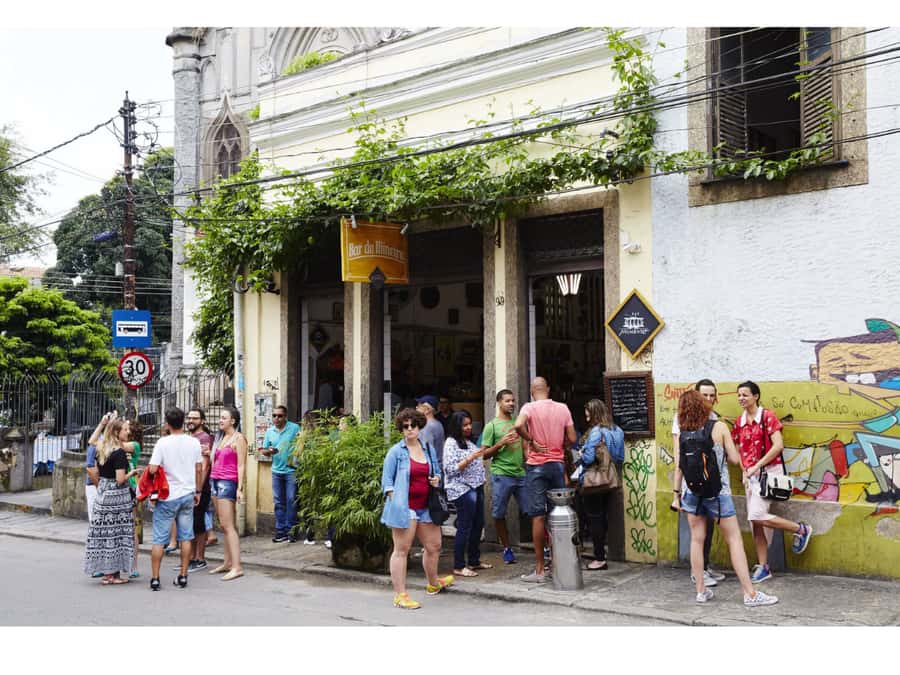
The Santa Teresa tram is one of the day’s most memorable pieces of transport. Instead of using a standard vehicle to reach the hilltop neighborhood, you ride over the Lapa Arches aqueduct and pass Ruinas Park.
The ride gives the route a sense of place. You see Rio from a moving tram, then continue toward Santa Teresa with views over parts of the city. It is a small but important contrast to the food stops, since the day is not confined to cafés and shops.
The tram ticket is included, as are entrance fees connected with the planned route. The tram ride also breaks up the walking, which helps keep the roughly one-mile walk manageable for most fitness levels.
Still, the overall day lasts six hours. A modest distance on a map can feel longer when you add standing at counters, waiting for food, listening to explanations, and moving between stops. Wear comfortable clothes and shoes, and bring sunglasses and a sun hat.
Lapa, downtown, and Santa Teresa in one day
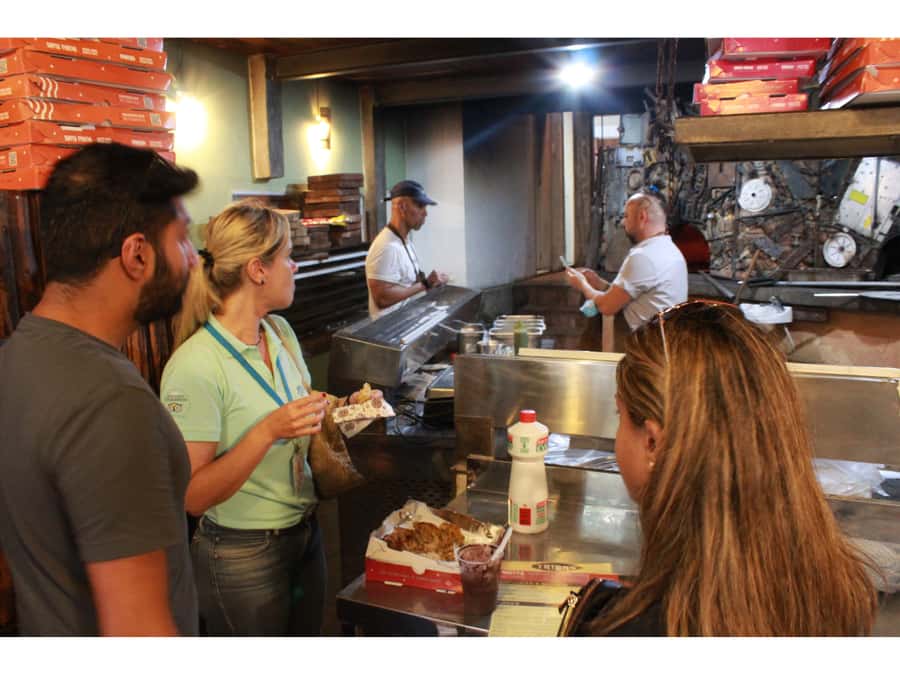
Lapa is known for its arches, nightlife, bars, and restaurants. Santa Teresa has its own hilltop character, with more bars, restaurants, and creative venues. Moving through both areas lets you compare two sides of Rio’s social life.
The route also passes through downtown, where the guide can add cultural sights to the food program. One highly praised day included the library reading room and other central Rio landmarks. Another guide managed to reach a major viewpoint and the Selarón Steps later in the day.
These extra sights should be viewed as route-dependent, not guaranteed stops. The official experience promises the Lapa and Santa Teresa neighborhoods, the tram, Ruinas Park, food venues, and cultural explanations. A guide may adjust the order or add sights when time and conditions allow.
That flexibility can be a strength. A guide with local relationships may show you places you would not find through a standard sightseeing route. It also means you should ask at the beginning what the day’s exact plan includes.
Why the guide makes the difference
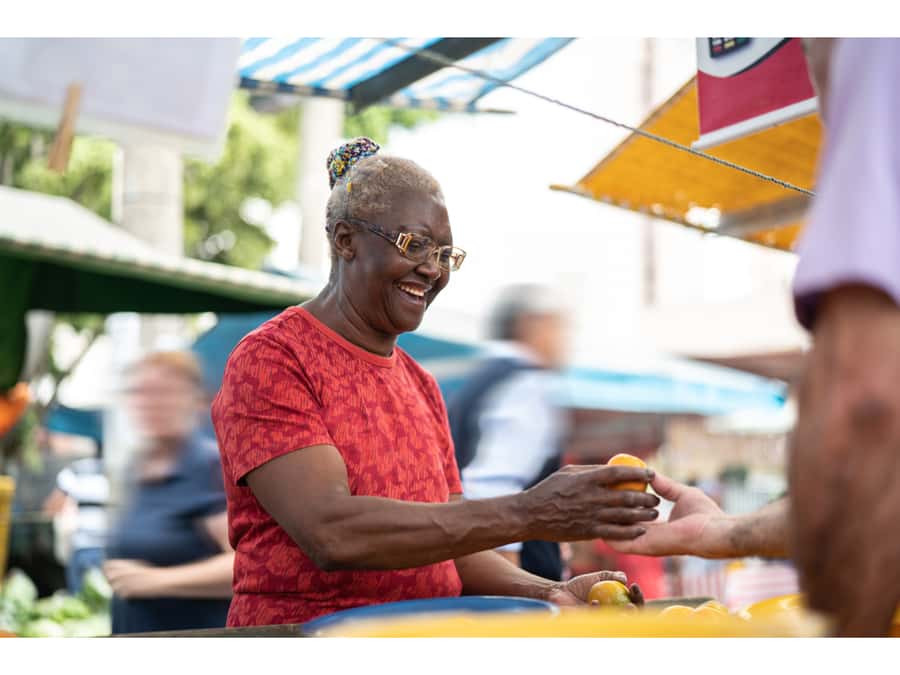
The food itself is easy to praise, but the guide determines how much you take away. Romayne is described as energetic, attentive, and deeply connected to food venues around Rio. Camila is described as personable and passionate about both Brazilian cooking and local life.
Those relationships can change the feel of a stop. Instead of entering as an anonymous customer, you may be introduced to staff and receive a clearer explanation of what you are tasting.
The guide also answers questions about how people live in Rio, not just what they eat. That matters because Brazilian food is shaped by home cooking, street snacks, regional ingredients, and family routines.
The best use of your time is to ask questions. Ask how a dish is normally eaten, which ingredients are common at home, and where a local might order the same food outside the tour. The activity specifically includes time for your questions, so take advantage of it.
The guide’s language matters too. English and Spanish are offered, but the tour’s success depends on clear conversation. If a certain language is essential to you, confirm it when booking.
Is $198 a good value?
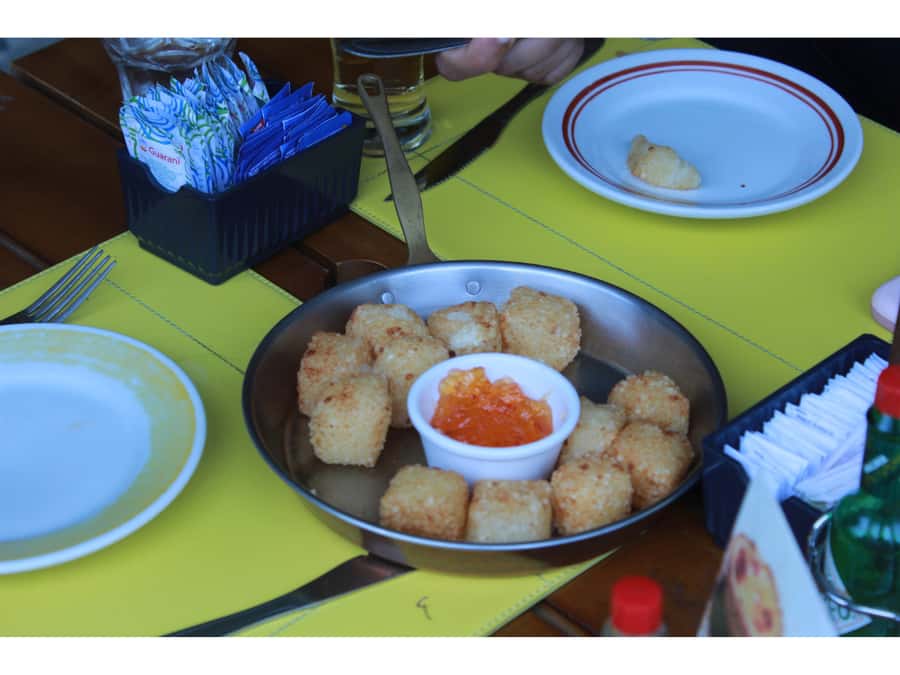
At $198 per person, this is not a bargain walking tour. You are paying for six hours, a professional guide, food samples, drinks included in the itinerary, the tram ticket, entrance fees, and a sightseeing route through several central areas.
The value improves if you want both a food introduction and a city orientation. Booking separate tastings, finding Colombo, understanding the neighborhoods, arranging the tram, and hiring a guide could take more time and effort than expected.
The price is harder to justify if you mainly want a large meal. Portions are tastings, and extra food or drinks cost more. You are paying for range, explanation, transport, and local access rather than a single generous lunch.
I would compare the cost with your first-day plans. If you are new to Rio and want a guide to help you understand local food and downtown neighborhoods, the price can make sense. If you already know Rio’s food scene and prefer to eat independently, spend the money at several restaurants instead.
The experience has a 4.6 rating from nine reviews, with repeated praise for the guides, the range of tastings, and the mix of food and sightseeing. That is a positive signal, though the number of ratings is still small.
Who should book this experience?

This tour suits you if you want a guided introduction to Brazilian food without giving up city sightseeing. It is especially useful for first-time visitors who want context for dishes they may see throughout Brazil.
It also suits curious eaters who are happy to sample many small portions. You should enjoy trying unfamiliar combinations and asking questions, since the educational side is as important as the snacks.
The experience may work well for couples or small private groups. The individual accounts describe intimate outings, including a group of two, but the standard group size is not provided, so confirm that detail before booking if it matters to you.
You should think twice if you dislike walking, standing, alcohol tastings, or a full six-hour schedule. The walking distance is only about one mile, but the day is active and food-focused.
People with strict dietary needs should ask about options before booking. The available information lists the foods served but does not promise vegetarian, vegan, gluten-free, or allergy-specific substitutions.
Large luggage and large bags are not allowed. Leave suitcases at your accommodation, and bring only what you need for a sunny day outdoors.
Hotel pickup and drop-off are not included. One personal account describes a guide arranging a hotel meeting and later transport, but you should not count on that service. Plan your own way to and from the designated meeting point.
Free cancellation is available up to 24 hours before departure for a full refund. You can also reserve now and pay later, which helps if your Rio schedule is still taking shape.
My call: book it for food, stories, and local connections
I would book this tour if I wanted a guided first look at Rio’s food culture and neighborhoods in one day. The combination of traditional snacks, Colombo confectionery, cachaça, local beer, the tram, and guide-led storytelling gives you more than a basic tasting route.
The strongest reason to choose it is the guide. Romayne and Camila are associated with the kind of personal attention that turns a list of samples into a better understanding of Rio life.
I would skip it if your priority is a cheap meal, a fixed sightseeing checklist, or complete control over what you eat. At $198, the tour asks you to value the explanations, introductions, and transport as much as the food.
For most first-time visitors who can handle a long morning and afternoon of tasting and walking, it is a useful way to meet Rio through its everyday flavors.
FAQ
How long does the Rio food tour last?
The experience lasts six hours.
What time should I arrive?
Check-in is at 10:30 a.m., and departure is at 10:45 a.m. You should arrive at least 10 minutes before departure.
Which languages are available?
The live guide is available in English and Spanish.
What foods and drinks are included?
Samples can include pão de queijo, coxinha, açaí, tapioca, manioc flour-based foods, sweets, bacalao fritters, brigadeiros, local beer, cachaça, and caipirinhas. The exact tastings may vary.
Is the tram ride included?
Yes. The tram ticket is included in the tour price.
How much walking is involved?
The walking distance is about one mile, which is suitable for most fitness levels. The six-hour day also includes standing and moving between food and sightseeing stops.
Is hotel pickup included?
No. Hotel pickup and drop-off are not included. You should make your own way to the designated meeting point.
Can I cancel the tour?
Yes. You can cancel up to 24 hours in advance for a full refund. Reserve now and pay later is also available.
New in Rio de Janeiro this month
- Discover Rocinha: Guided Tour of the Famous Favela★ 4.5 · 3 reviews
- Rio de Janeiro: Hang gliding adventure★ 3.7 · 3 reviews
- Rio de Janeiro: Pedra Bonita & Tijuca Forest Hike Tour★ 5.0 · 3 reviews
- Rio de Janeiro: Hang Gliding or Paragliding Flight★ 5.0 · 3 reviews
- Rio de Janeiro: Doors-off 30-min helicopter tour★ 5.0 · 3 reviews
- Rio de Janeiro: Local Experience in Forró dance★ 5.0 · 3 reviews
- Rio de Janeiro: Pedra do Telégrafo; Grumari/ Prainha Beaches★ 5.0 · 3 reviews
- Rio de Janeiro: Sugar Loaf with Lunch and Helicopter Flight★ 4.7 · 3 reviews
Rio de Janeiro Tours, compared.

Rio de Janeiro: 6-Stop Highlights of Rio with Lunch
Read our review →
Christ the Redeemer Entry Ticket by Corcovado Train
Read our review →
Rio de Janeiro: Rocinha Favela Walking Tour with Local Guide
Read our review →
Rio: Christ the Redeemer, Sugarloaf, Selaron & BBQ Lunch
Read our review →
Rio De Janeiro: Half-Day Rocinha Favela Walking Tour
Read our review →
Rio de Janeiro: Angra dos Reis and Ilha Grande Full-Day Tour
Read our review →
Rio de Janeiro: Beginner Samba Lesson in Ipanema
Read our review →
Browse the lists this tour appears in