
Our review · RIO DE JANEIRO TOURS
Rio de Janeiro: Historical Downtown and Lapa Walking Tour
Rio’s best history lesson may begin far from the beach. This three-hour walk through downtown and Lapa connects grand civic buildings, old religious sites, daily city life, and the political stories that shaped Rio. You start at Theatro Municipal in Cinelândia, then walk through the old center with a guide who explains how kings, emperors, freedom fighters, and revolutionaries helped shape the city.
I like the contrast between grand old architecture and modern Rio life, and I like that the tour includes interior visits to the old cathedral, Imperial Palace, and National Library rather than keeping you on the pavement. The small group, limited to 10 people, also gives you a better chance to ask about restaurants, photographs, samba, and evening plans.
The main drawback is that downtown Rio does not offer a major sight at every turn. If you want nonstop postcard views, this may feel slower than a beach or mountain excursion. Some visitors have also found a guide’s English accent difficult to follow, so listening carefully matters.
Key points at a glance
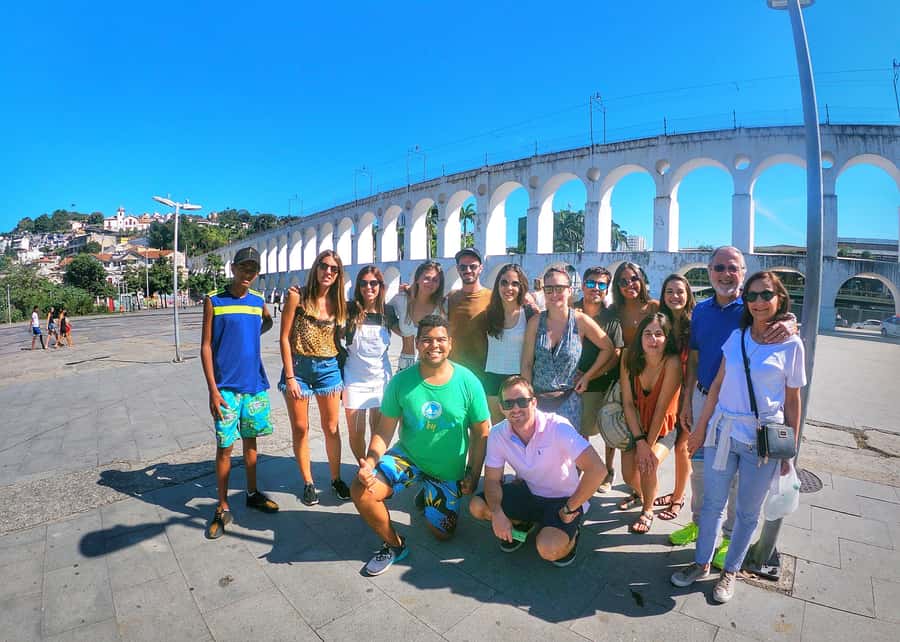
- Three hours through downtown and Lapa: A useful first walk for understanding Rio beyond Ipanema and Copacabana.
- Three interior visits included: Enter the old cathedral, Imperial Palace, and National Library.
- Meeting point at Theatro Municipal: Begin in Praça Cinelândia, one of the city center’s grand public spaces.
- Small groups of up to 10: The size suits questions and, when available, route changes.
- Practical local advice: Ask your guide about photo spots, restaurants, samba, and caipirinhas.
- A rain-or-shine outing: Wear comfortable shoes and be ready to walk in changing weather.
Why start Rio in the historic center?
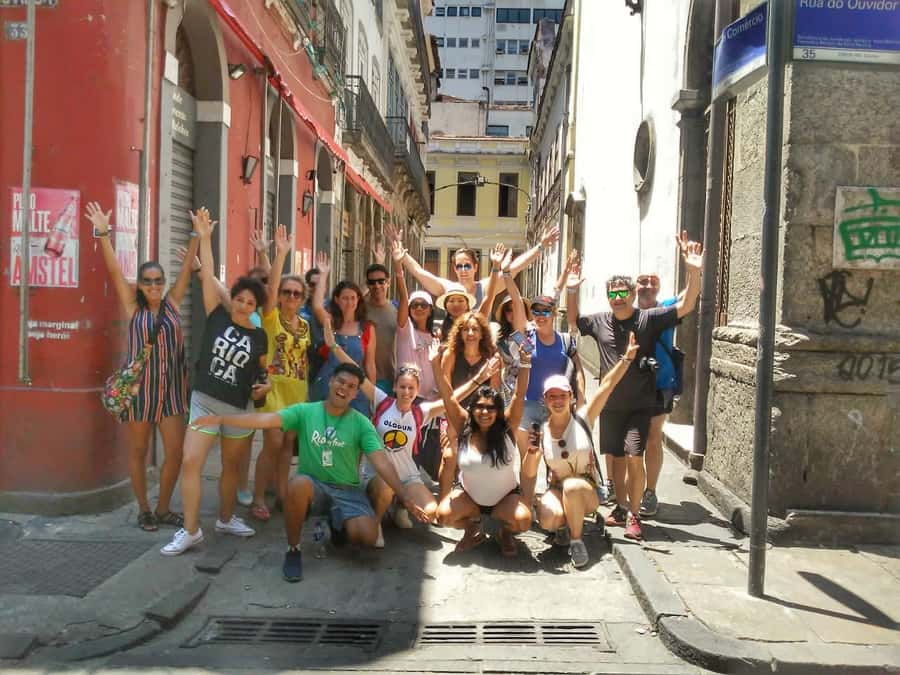
Rio is often sold through its beaches, granite peaks, and sea views. Those sights matter, but they do not explain how the city became the political and cultural center it is today. This walk gives you a first look at the older Rio, where public buildings, churches, palaces, and libraries reveal a very different side of the city.
I like this as an opening activity because it helps you place the rest of your visit. After three hours here, the beaches are no longer the whole story. You begin to see Rio as a city shaped by royal power, imperial rule, political conflict, public institutions, and everyday street life.
The tour also puts history next to ordinary routines. You may pass people going to work, shopping, or handling errands while your guide points out buildings linked to earlier centuries. That mix is part of the experience. You are not walking through a preserved museum district. You are seeing an active city center with an older architectural layer still in view.
The experience carries a rating of 4.4 from 32 ratings, which fits the overall picture: strong praise for the information and guides, with some limits tied to downtown itself and communication style.
More Historical Tours in Rio de Janeiro
- Rio de Janeiro: Historic Rio and Santa Teresa Half-Day Tour
★ 4.4 · 228 reviews - Rio de Janeiro: Little Africa Heritage Walking Tour
★ 4.9 · 177 reviews - Explore Little Africa : Unveiling Afro Heritage in Rio de Janeiro
★ 5.0 · 97 reviews
Meeting Theatro Municipal at Praça Cinelândia
The tour begins in front of Theatro Municipal, at Praça Cinelândia. This is a sensible meeting point because it places you in one of downtown Rio’s most recognizable civic settings before the walk even starts.
You should arrive ready to identify your guide and group in a busy public square. One useful piece of practical advice is to confirm the exact meeting details before leaving your hotel. A participant found the meeting point less precise than expected and had trouble reaching the organizer by phone during the activity. That is easy to avoid with a careful check of the booking instructions and a charged phone.
From Cinelândia, the guide sets the tone for the walk. The focus is not just on façades. You will hear how the city center changed over time and how Rio’s role in Brazil’s story affected its buildings and public spaces.
The guides lead in English, Portuguese, or Spanish. The strongest feedback centers on their command of Rio’s story and their willingness to answer questions. If you choose an English tour, listen for the guide’s speaking style early on. One participant found a strong accent hard to follow, so do not hesitate to ask for a slower explanation or a repeated point.
Inside the old cathedral
The interior visit to the old cathedral gives the tour a welcome change of pace. Instead of viewing religious architecture only from the street, you get to enter and consider the building as a place of worship and part of Rio’s older civic life.
The supplied details do not identify the cathedral by name or list its interior features, so you should not expect a room-by-room architectural lecture in advance. What you can expect is a guide-led explanation of its place in the city’s past, set within a walk that deals with courts, rulers, political movements, and social change.
I value the stop because interiors often make a historic district easier to understand. Stone, decoration, scale, and quiet can say things that a street façade cannot. At the same time, the cathedral is one part of a three-hour route, not a long specialist visit. If sacred art is your main interest, ask questions while you are inside.
The Imperial Palace and Rio’s royal chapter

The Imperial Palace brings the story of kings, queens, and emperors into sharper focus. Rio is known for its beach culture and relaxed public life, but this stop points to its connection with one of the most classical European courts in the Americas.
The palace visit is especially useful for readers who want more than dates and building names. Ask your guide how the palace fits into the transformation of the city center and how royal or imperial power affected Rio’s public identity. The tour is designed to connect monuments with the people and events around them, including freedom fighters and revolutionaries.
The information provided does not promise a long interior tour or specify which rooms you will see. Think of the palace as an important chapter in the route, with the guide supplying the meaning. That approach works well for a first visit, although specialists may want a separate palace-focused experience with more time for architectural detail.
One particularly good feature is the chance to ask questions as you go. A private booking can sometimes leave you as the only participant with the guide, and one such experience allowed route changes and extra attention. In a normal small group, the guide still has room to respond, but the exact amount of flexibility depends on the group.
More Walking Tours in Rio de Janeiro
- Rio de Janeiro: Rocinha Favela Walking Tour with Local Guide
★ 4.8 · 3,052 reviews - Rio De Janeiro: Half-Day Rocinha Favela Walking Tour
★ 4.7 · 2,272 reviews - Sunrise and Sunrise Walk Two Brothers with Local Guide
★ 5.0 · 193 reviews - Learn the History of Rio with an Unforgettable City Center Walking Tour
★ 5.0 · 82 reviews
The National Library and the city’s public institutions
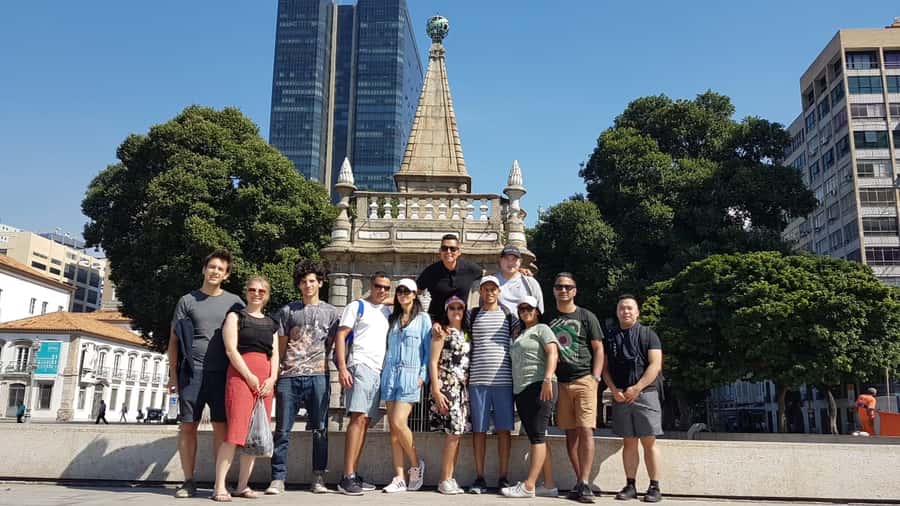
The National Library adds another layer to the route. Churches and palaces show religious and political power. A library points toward learning, public culture, and the institutions that preserve a country’s written record.
Again, the supplied details do not list particular rooms, collections, or exhibits. The value is in seeing the building as part of downtown’s wider story and hearing how the city center developed over the centuries.
This stop also strengthens the tour’s contrast between old and new. A historic institution continues to sit within a working urban district. You get architecture and history, but you also remain close to the everyday city outside. That is what makes the walk feel more grounded than a route made only of isolated monuments.
I would keep your expectations at the right level. This is not a research tour or a long library visit. It is one of several connected stops, each helping you understand how Rio’s center changed from an imperial capital into a modern city.
Lapa and the everyday rhythm of downtown
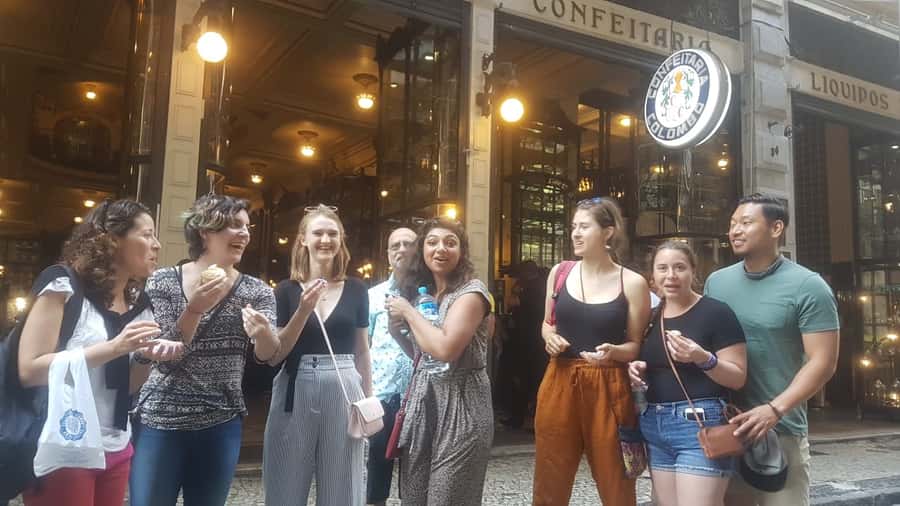
Lapa brings the walk closer to the character most people associate with Rio’s nightlife and social life. The experience description emphasizes daily life, and this is where that promise matters most. You are not simply ticking off buildings. You are walking through a part of the city where history and current routines share the same streets.
The route connects downtown with Lapa rather than treating them as separate subjects. That lets you compare formal civic spaces with an area linked in the tour’s advice to samba, drinks, and evening plans. Your guide can point you toward areas for dancing samba and trying caipirinhas, though the tour itself is a walking experience, not a scheduled nightlife outing.
The guide can also help with photographs and restaurant ideas. These suggestions may be especially useful early in your stay, when you are still learning how the center fits together. Ask for recommendations that match your schedule and interests rather than collecting a long list.
The limitation is simple: Lapa and the historic center may not impress you at every moment. One rating of three out of five made the fair point that the old town is not packed with major highlights. If you need a major monument every few minutes, you may prefer a sightseeing tour built around Rio’s most famous attractions. If you enjoy connecting ordinary streets with the city’s past, the slower rhythm can work well.
A coffee stop that gives the walk breathing room
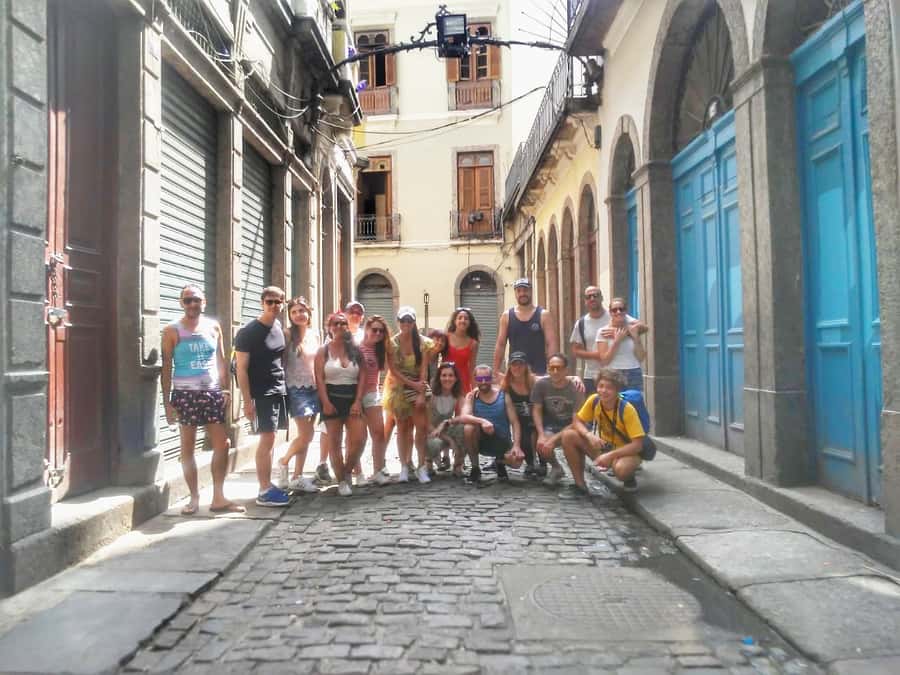
One participant described a well-timed pause at Colombo café. The official inclusions list the walking tour and interior visits, but does not state that food or drinks are included, so treat this as a possible stop or recommendation rather than a guaranteed part of the price.
A pause such as this matters on a three-hour walk. It gives you time to sit, ask follow-up questions, and watch the center operate around you. It also keeps the experience from becoming a nonstop stream of dates and architectural facts.
Do not book this tour expecting a meal. If the café stop happens, budget separately for anything you order and confirm with the guide how much time is available. The useful part is not only the coffee. It is the chance to connect the formal history of the route with the ordinary habit of stopping for a drink in the city center.
What the guide adds to the buildings
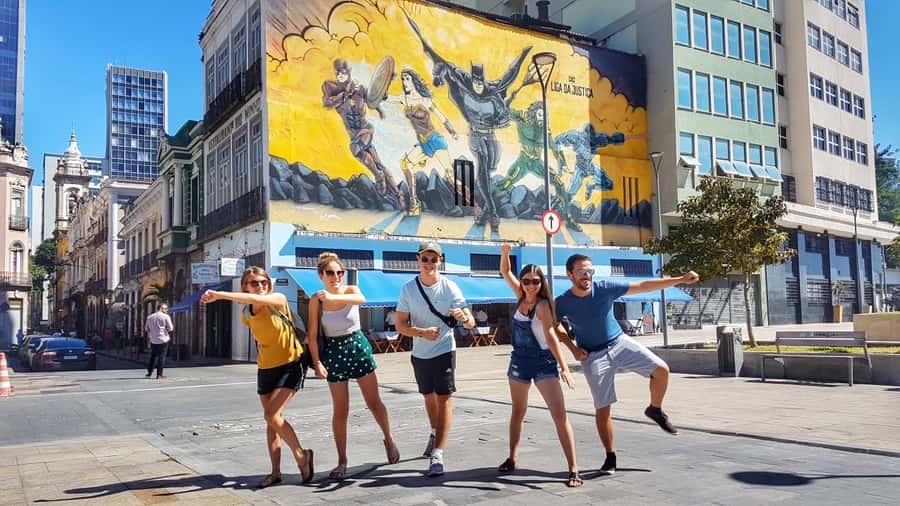
The strongest part of this experience is the human explanation. Several ratings praise the guides for clear information, strong command of Rio’s story, and answers to nearly every question. One participant had an exclusive tour with just the guide and one guest, allowing changes to the route and extra time at places of interest.
That does not mean every departure will be private. The normal group limit is 10 people, which is still small enough for a more personal walk than a large coach outing. You can ask about the building in front of you, request a recommendation, or clarify a point without shouting across a crowd.
The guide’s personal knowledge also reaches beyond the formal route. You can ask where to take a good picture, which restaurants suit your plans, or where to go later for samba and caipirinhas. These tips are not a substitute for checking current opening hours or conditions, but they can help you shape the rest of your stay.
Language choice matters. English, Portuguese, and Spanish are available, but clarity may vary by guide. If you are not fully comfortable with the tour language, stand near the guide and ask for key points to be repeated. That small step can make a large difference on a history-heavy walk.
Is three hours enough for the route?

Three hours is a useful middle ground. You have time for several historic buildings, explanations of Rio’s development, and a look at downtown and Lapa without giving up an entire day.
You should still expect a steady walking pace. Comfortable shoes are essential, and the activity takes place rain or shine. The details do not promise shelter at every stop, so bring whatever protection you normally use for wet or hot weather.
The tour is not suitable for people with mobility impairments. The route includes walking through the city center and Lapa, with multiple stops and transitions between them. If stairs, uneven pavement, or extended walking are concerns, ask the provider for current route details before booking.
The short duration also means the guide must choose what to explain. You will receive an overview of Rio’s history and culture rather than a complete account of every building. I see that as a strength for a first visit, but a limitation for anyone seeking a specialist study of architecture, politics, or religious art.
Does the $60 price make sense?
At $60 per person, this is not the cheapest way to walk around downtown. The price makes more sense if you use the guide well and care about the included interior visits.
You are paying for three hours of guided interpretation, a small group capped at 10, language choices, and entry into the old cathedral, Imperial Palace, and National Library as part of the walk. You also receive the practical value of local suggestions for food, photos, and evening plans.
The value drops if you mainly want to wander outside and take pictures. You can see many public streets without paying for a guide, and the old center does not offer a major attraction at every corner. The price is easier to justify for a first-time visit, especially if you want context and do not know which buildings are worth entering.
Flexible booking helps reduce the risk. You can cancel up to 24 hours before the start for a full refund, and the reserve-now, pay-later option lets you hold a place without paying immediately. Those policies do not change the tour itself, but they are useful when Rio plans are still shifting.
Who should book this downtown walk?
I would choose this tour if you want to understand Rio before spending the rest of your time on beaches and viewpoints. It suits curious first-time visitors, architecture fans who like comparing old and new buildings, and anyone who prefers a guide’s explanation to reading plaques alone.
It also works for people who want practical help with the rest of their stay. Ask about photographs, restaurants, samba, and drinks while the guide has your attention. That can be as useful as the formal history.
I would think twice if you have limited mobility, dislike walking in rain, or want a route made only of famous sights. The historic center has quieter stretches, and the appeal depends on your interest in urban history rather than constant spectacle.
Should you book the Historical Downtown and Lapa Walking Tour?
Book it if you want a compact introduction to Rio’s political, religious, and architectural past, with enough contact with daily city life to keep the story grounded. The old cathedral, Imperial Palace, and National Library give the walk a clear purpose, while Lapa adds a more current side of Rio.
The best strategy is to take it near the start of your stay, when recommendations can still shape your plans. Wear comfortable shoes, confirm the meeting point at Theatro Municipal, and choose a language you can follow easily.
Skip it if your priority is mountain scenery, beach time, or a packed list of headline attractions. For everyone else, the $60 cost is reasonable when you value a small group, interior visits, and a guide who can explain what you are seeing instead of simply naming it.
FAQ
Where does the tour meet?
The meeting point is in front of Theatro Municipal at Praça Cinelândia in Rio de Janeiro.
How long does the walking tour last?
The tour lasts three hours.
Which languages are available?
Guides are available in English, Portuguese, and Spanish.
What places are visited inside?
The tour includes interior visits to the old cathedral, Imperial Palace, and National Library.
What should I bring?
Bring comfortable shoes because the experience takes place on foot.
Does the tour run in bad weather?
Yes. The walk takes place rain or shine.
More History Walks in Rio de Janeiro
- Rio’s city walking tour: a glimpse of history and olympic legacy
★ 4.5 · 78 reviews - Olympic Boulevard, Museum of Tomorrow & Historical Rio
★ 4.5 · 66 reviews - Rio: Olympic Boulevard, Museum of Tomorrow & History Tour
★ 4.1 · 47 reviews - Petropolis Bohemia: Historic tour and visit to the Bohemian Brewery
★ 4.5 · 45 reviews
More Samba Nights in Rio de Janeiro
- Rio de Janeiro: Beginner Samba Lesson in Ipanema
★ 4.9 · 1,071 reviews - Rio: Pub Crawl in Lapa with Cachaça Tasting and Live Samba
★ 4.7 · 881 reviews - Rio: Carnival Backstage Tour at Samba City with Cocktail
★ 4.6 · 520 reviews - Hop-ON Hop-OFF Sightseeing Bus in Rio de Janeiro – Rio Samba Bus
★ 3.5 · 457 reviews
New in Rio de Janeiro this month
- Discover Rocinha: Guided Tour of the Famous Favela★ 4.5 · 3 reviews
- Rio de Janeiro: Hang gliding adventure★ 3.7 · 3 reviews
- Rio de Janeiro: Pedra Bonita & Tijuca Forest Hike Tour★ 5.0 · 3 reviews
- Rio de Janeiro: Hang Gliding or Paragliding Flight★ 5.0 · 3 reviews
- Rio de Janeiro: Doors-off 30-min helicopter tour★ 5.0 · 3 reviews
- Rio de Janeiro: Local Experience in Forró dance★ 5.0 · 3 reviews
- Rio de Janeiro: Pedra do Telégrafo; Grumari/ Prainha Beaches★ 5.0 · 3 reviews
- Rio de Janeiro: Sugar Loaf with Lunch and Helicopter Flight★ 4.7 · 3 reviews
Rio de Janeiro Tours, compared.

Rio de Janeiro: 6-Stop Highlights of Rio with Lunch
Read our review →
Christ the Redeemer Entry Ticket by Corcovado Train
Read our review →
Rio de Janeiro: Rocinha Favela Walking Tour with Local Guide
Read our review →
Rio: Christ the Redeemer, Sugarloaf, Selaron & BBQ Lunch
Read our review →
Rio De Janeiro: Half-Day Rocinha Favela Walking Tour
Read our review →
Rio de Janeiro: Angra dos Reis and Ilha Grande Full-Day Tour
Read our review →
Rio de Janeiro: Beginner Samba Lesson in Ipanema
Read our review →
Browse the lists this tour appears in