
Our review · RIO DE JANEIRO TOURS
Rio: Historical Walking Tour
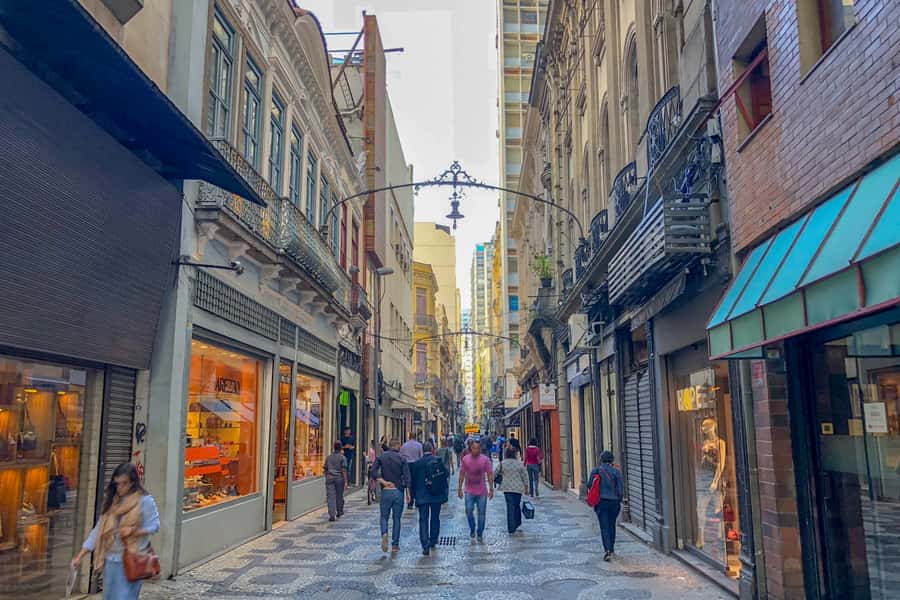
Rio’s center is where the city’s story feels most visible: grand civic buildings, old churches, imperial sites, and narrow lanes all packed into a walkable four-hour route. You ride the subway from Copacabana, then explore downtown on foot with a local guide.
I like the small-group format, which gives you room to ask about politics, the economy, and Brazil’s past. I also like the route’s mix of famous buildings and less obvious corners, including Travessa do Comércio and the former home of Carmen Miranda. The main drawback is the amount of walking, with cobblestones and no wheelchair access.
Key points
- Cinelândia sets the tone: Begin among downtown Rio’s grand French-influenced buildings and historic civic spaces.
- The subway is part of the experience: You travel between Copacabana and the old city center as locals do, rather than relying only on a tour vehicle.
- The route packs in major landmarks: Confeitaria Colombo, Tiradentes Palace, Praça XV, Teles Arch, and Candelária all fit into one outing.
- Church interiors add depth: The Monastery Church of Santo Antônio, the Ordem Terceira de São Francisco da Penitência, and Candelária show another side of Rio’s past.
- Guides shape the day: English, Spanish, and Portuguese are available, and guides including Mathilda, Monique, Lucien, and Ernani have received praise for flexibility and clear explanations.
- Plan for a serious walk: The tour is not suitable for people with mobility difficulties or wheelchair users.
Why Rio’s Downtown Deserves a Walking Tour
Rio is often sold through beaches, mountain views, and samba. Those are real parts of the city, but downtown explains how Rio became the country’s former capital and political center. This tour gives you four hours to read that story through streets, plazas, churches, fountains, and public buildings.
I like the decision to begin with the subway. It makes the trip feel tied to the city rather than sealed inside a private vehicle. From Copacabana, you head toward Cinelândia, an area shaped by French architectural influence. The ride also gives you a practical look at how the city connects its beach neighborhoods with its historic core.
Once you arrive, the pace changes. You are no longer looking through a window. You walk from one site to the next, with time to notice carved details, old façades, public monuments, and the changing scale of the streets. Downtown Rio rewards attention, and a guide helps connect buildings that can otherwise seem like a collection of unrelated sights.
More Historical Tours in Rio de Janeiro
- Rio de Janeiro: Historic Rio and Santa Teresa Half-Day Tour
★ 4.4 · 228 reviews - Rio de Janeiro: Little Africa Heritage Walking Tour
★ 4.9 · 177 reviews - Explore Little Africa : Unveiling Afro Heritage in Rio de Janeiro
★ 5.0 · 97 reviews
Cinelândia and the First Architecture Lesson
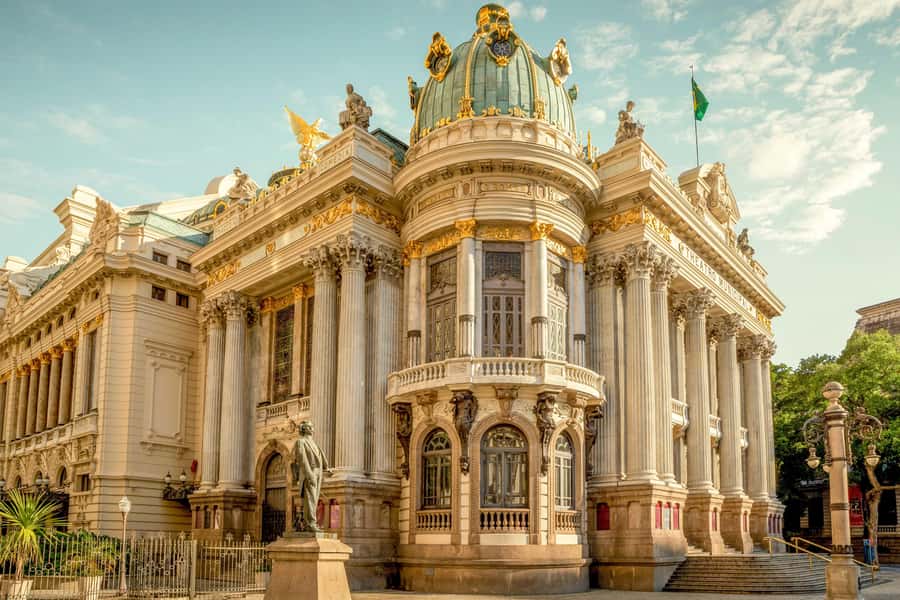
Cinelândia is a strong starting point because it immediately gives the tour a sense of place. The area contains relics of Rio’s French architectural influence, so you begin with broad civic surroundings and formal façades rather than a random city walk.
The first part also passes the Naval Club, the Monastery Church of Santo Antônio, and the Ordem Terceira de São Francisco da Penitência. These stops show how different institutions shaped the old center. Military life, monastic life, and religious brotherhoods all appear within the same stretch of downtown.
The churches are especially useful for breaking up the walk. Exterior architecture can tell you about power and public taste, but church interiors, when accessible, bring in Rio’s religious traditions and decorative arts. Do not expect a long stop at every building. The route covers a great deal in four hours, so your guide will balance short visits, exterior explanations, and walking time.
Confeitaria Colombo, a Historic Pause
Confeitaria Colombo was built in 1894 and is one of the route’s most appealing stops. It is more than a place to buy something sweet. The café represents an older Rio of formal dining rooms, polished décor, and European influence.
You should think of this as a visual and cultural stop rather than a meal break. Drinks and food are not included, so any purchase is your responsibility. Since the tour lasts four hours, ask your guide how much time is available before ordering anything. A quick look may fit comfortably, while a full coffee break could put pressure on the rest of the route.
Still, Colombo gives the walk a welcome change of rhythm. After churches and public buildings, a historic café helps you picture how downtown functioned as a social center. It is also one of the stops that makes the tour useful for visitors who enjoy architecture but want more than a parade of façades.
Tiradentes Palace and the Route Toward Praça XV

From Colombo, the walk continues toward Tiradentes Palace, described as the State Hall. This is one of the places where the guide’s commentary matters most. A building tied to government is not simply something to photograph. It points to the political role of central Rio and to the city’s period as the country’s capital.
You then reach Praça XV, one of the key public spaces on the route. Here, the tour includes the Imperial Palace, the statue of General Osório, Mestre Valentim’s Fountain, and the Teles Arch. The concentration of sights makes this part feel like a compact lesson in public memory.
The Imperial Palace brings the monarchy into the story. The statue and fountain add different layers, one tied to a military figure and the other to the city’s artistic and civic history. Teles Arch then shifts the mood again, leading you toward older lanes and a more intimate section of the center.
This is a good stretch for questions. The guides have been praised for discussing not only history but also Brazilian politics and the economy. If those subjects interest you, say so early. A flexible guide can shape the emphasis to match your curiosity, as long as time and access allow.
More Walking Tours in Rio de Janeiro
- Rio de Janeiro: Rocinha Favela Walking Tour with Local Guide
★ 4.8 · 3,052 reviews - Rio De Janeiro: Half-Day Rocinha Favela Walking Tour
★ 4.7 · 2,272 reviews - Sunrise and Sunrise Walk Two Brothers with Local Guide
★ 5.0 · 193 reviews - Learn the History of Rio with an Unforgettable City Center Walking Tour
★ 5.0 · 82 reviews
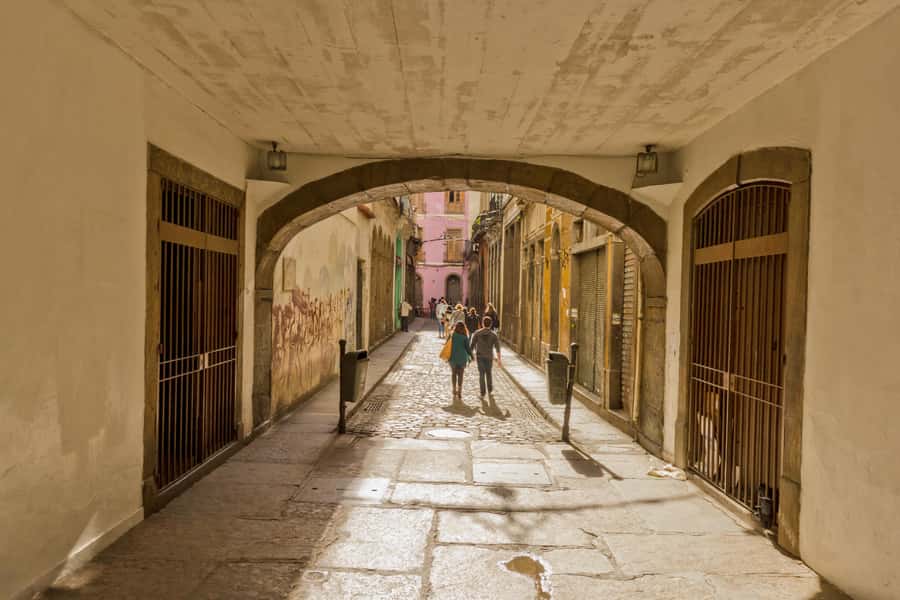
Teles Arch and Travessa do Comércio
Teles Arch leads to the cobblestoned Travessa do Comércio. This is one of my favorite details in the route because it gives you a street-level sense of old Rio. Grand plazas explain official history, while a narrow lane suggests how people moved through and used the city in daily life.
Cobblestones also bring a practical warning. Wear shoes with a firm sole and expect uneven footing. The tour is not recommended for anyone with walking difficulties, and wheelchair users cannot take part. Even able-bodied visitors should pace themselves, since the walk continues through several more sites.
The route also passes the former residence of Carmen Miranda. That detail broadens the tour beyond colonial and imperial landmarks. Carmen Miranda connects Rio to popular culture and to the public image of Brazil that reached audiences far beyond the city.
You may not spend a long time at every location. The value is in the sequence: imperial buildings, civic monuments, old lanes, and a famous cultural figure all appear within one downtown walk. That range keeps the tour from feeling like a single-theme architecture lesson.
Churches, Cultural Centers, and Candelária
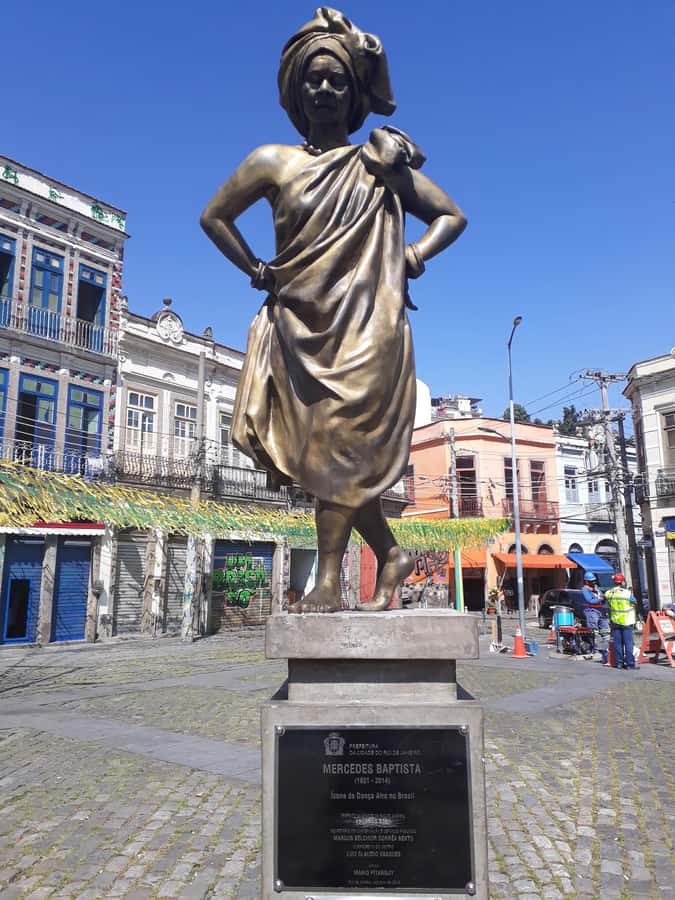
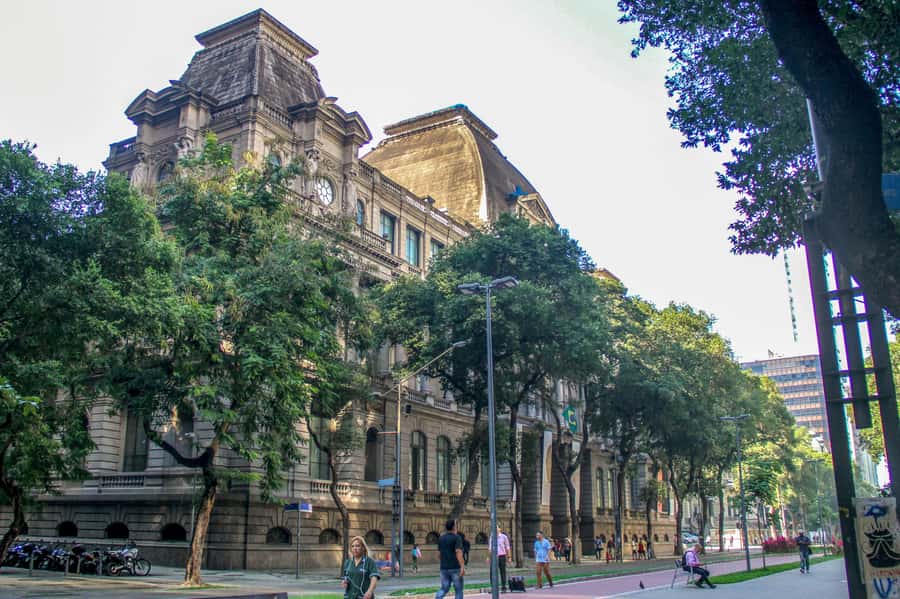
The final stretch includes the Church of Our Lady of the Merchants, the Post Office Cultural Center, France-Brazil House, the Bank of Brazil Cultural Center, and Candelária Church. These stops show how the old center continues to hold religious, commercial, and cultural roles at once.
Several venues are visited when open. That qualification matters. Cultural centers and churches may not always be accessible during your tour, so you should treat some interiors as possible additions rather than guaranteed stops. Even when a building is closed, the exterior and surrounding area remain part of the walking route.
The Bank of Brazil Cultural Center and France-Brazil House add a different kind of interest from the churches and imperial sites. Their presence reflects the way historic buildings can be used for cultural programming, not just preserved as monuments. The Post Office Cultural Center adds another example of an old downtown institution being connected with public culture.
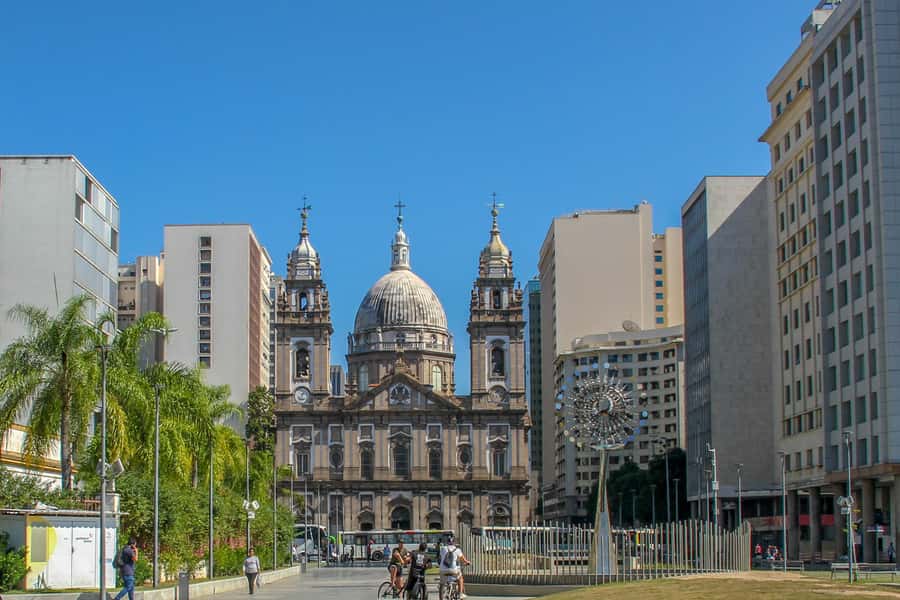
Candelária Church is a fitting final landmark. It gives the route a strong architectural finish and returns the focus to religion, public ceremony, and the long history of Rio’s center. Largo da Candelária is also specifically included in the route, so you get both the wider public setting and the church itself when open.
What the Guides Add to the Walk
A route like this depends heavily on the person leading it. Without context, downtown Rio can become a blur of names and façades. The guide’s job is to explain why each place matters, keep the group moving, and make room for questions.
The available languages are English, Spanish, and Portuguese. That makes the tour practical for a wide range of visitors, but confirm your preferred language when booking because guide assignments can vary.
Several guide names appear in the tour’s feedback, including Lucien, Monique, Ernani, and Mathilda. Lucien was singled out for excellent guiding, while Monique was described as a pleasure to spend time with. Ernani received praise for being prepared, and Mathilda was noted for adapting the route to the interests of a very small group.
That last point is useful. One booking had only two people, and the guide combined the group’s requests with the planned route. You should not assume every departure will be private or equally flexible, but the small-group setup gives you a better chance to ask questions and request modest adjustments than a large coach tour would.
The strongest praise centers on detailed cultural and historical commentary. One guide covered history, politics, and the economy, while another led the group to special places they might not have found alone. That is the real reason to book this rather than simply follow a downtown map.
Is $79 a Fair Price?
At $79 per person, this is not the cheapest way to see downtown Rio. You could walk through parts of the center independently and pay only for individual admissions or purchases. The price makes more sense if you value explanation, route planning, included subway transport, and a small group.
Entrance fees are included, though access to some cultural sites depends on whether they are open. Drinks and meals are not included, so budget separately for anything you buy at Confeitaria Colombo or elsewhere.
The four-hour length is another part of the value. You are not paying for a quick photo stop at one landmark. The route links Cinelândia, Praça XV, Travessa do Comércio, cultural centers, churches, and Candelária. For a first visit to Rio, that gives you a useful framework for returning downtown on your own.
I would be less convinced if you dislike walking, already know Rio’s central landmarks well, or want a relaxed café-and-shopping outing. The tour covers a lot of ground, and its strength is the amount of history packed into one morning or afternoon.
Meeting Point, Subway Ride, and Timing

The listed starting option is at Avenida Atlântica 1702, near Copacabana Palace, A Belmond Hotel. The meeting point can vary according to the option you book, so check your confirmation carefully rather than going straight to the hotel without checking.
The tour finishes at Copacabana Palace, and the return to your hotel is by subway. The subway is included in the experience and helps keep the outing connected to everyday Rio. It also means you should be ready to move through stations and walk after arriving downtown.
Starting times vary, so check availability for the day you want. Four hours is long enough to fill a substantial part of your day, but short enough to pair with another activity if you plan carefully. I would avoid scheduling a tight reservation immediately afterward. Stops can take different amounts of time, and the walking route is the main event.
Who Should Book This Rio History Tour?
This tour suits you best if you want to understand Rio beyond the postcard views. It works especially well for first-time visitors who want a guided introduction to downtown, architecture fans who enjoy churches and civic buildings, and anyone who prefers questions and conversation to a recorded audio guide.
It is also a good fit if you want to see several major sites without working out the route yourself. The combination of subway travel and walking gives the experience a local feel while still providing structure.
I would choose something else if you have limited stamina, use a wheelchair, or find cobblestones difficult. The route includes a lot of walking and is not suitable for people with mobility impairments.
The tour has a 4.7 rating from 32 reviews, with particularly strong praise for guide quality, preparation, flexibility, and cultural explanation. Those are the points I would weigh most heavily. The buildings are worthwhile, but the guide is what turns the route into a connected story.
Should You Book It?
Book this tour if you want a focused introduction to downtown Rio and like learning how architecture, government, religion, commerce, and popular culture fit together. The subway ride, small group, included entrance fees, and four-hour route make the $79 price reasonable for a guided first look.
Skip it if you want a slow day, dislike uneven streets, or prefer to choose every stop yourself. For most able-bodied visitors with an interest in Rio’s past, this is a smart way to see the former capital’s center before returning on your own for the places that deserve more time.
FAQ
How long does the Rio Historical Walking Tour last?
The tour lasts four hours, including the subway travel and guided walking tour in downtown Rio.
Where does the tour start?
One listed starting option is Avenida Atlântica 1702, at Copacabana Palace, A Belmond Hotel. The meeting point may vary depending on the option booked.
Where does the tour finish?
The tour finishes at Copacabana Palace, A Belmond Hotel.
Is subway transportation included?
Yes. Transport by subway is included, and the tour uses the subway to travel between Copacabana and downtown Rio.
Which languages are available?
The live guide is available in English, Spanish, and Portuguese.
Are entrance fees included?
Yes, entrance fees are included. Some cultural centers and churches are visited when open.
Are meals and drinks included?
No. Drinks and meals are not included in the tour price.
Is the tour suitable for wheelchair users?
No. The tour is not suitable for wheelchair users or people with mobility impairments.
Can I cancel for a full refund?
Yes. You can cancel up to 24 hours in advance for a full refund. You can also reserve now and pay later, which keeps your plans flexible.
More History Walks in Rio de Janeiro
- Rio’s city walking tour: a glimpse of history and olympic legacy
★ 4.5 · 78 reviews - Olympic Boulevard, Museum of Tomorrow & Historical Rio
★ 4.5 · 66 reviews - Rio: Olympic Boulevard, Museum of Tomorrow & History Tour
★ 4.1 · 47 reviews - Petropolis Bohemia: Historic tour and visit to the Bohemian Brewery
★ 4.5 · 45 reviews
New in Rio de Janeiro this month
- Discover Rocinha: Guided Tour of the Famous Favela★ 4.5 · 3 reviews
- Rio de Janeiro: Hang Gliding or Paragliding Flight★ 5.0 · 3 reviews
- Rio de Janeiro: Hang gliding adventure★ 3.7 · 3 reviews
- Rio de Janeiro: Pedra Bonita & Tijuca Forest Hike Tour★ 5.0 · 3 reviews
- Rio de Janeiro: Local Experience in Forró dance★ 5.0 · 3 reviews
- Rio de Janeiro: Doors-off 30-min helicopter tour★ 5.0 · 3 reviews
- Rio de Janeiro: Pedra do Telégrafo; Grumari/ Prainha Beaches★ 5.0 · 3 reviews
- Rio de Janeiro: Sugar Loaf with Lunch and Helicopter Flight★ 4.7 · 3 reviews
Rio de Janeiro Tours, compared.

Rio de Janeiro: 6-Stop Highlights of Rio with Lunch
Read our review →
Christ the Redeemer Entry Ticket by Corcovado Train
Read our review →
Rio de Janeiro: Rocinha Favela Walking Tour with Local Guide
Read our review →
Rio: Christ the Redeemer, Sugarloaf, Selaron & BBQ Lunch
Read our review →
Rio De Janeiro: Half-Day Rocinha Favela Walking Tour
Read our review →
Rio de Janeiro: Angra dos Reis and Ilha Grande Full-Day Tour
Read our review →
Rio de Janeiro: Beginner Samba Lesson in Ipanema
Read our review →
Browse the lists this tour appears in