
Our review · SALVADOR TOURS
Salvador: 4-Hour Candomblé Mysteries Tour
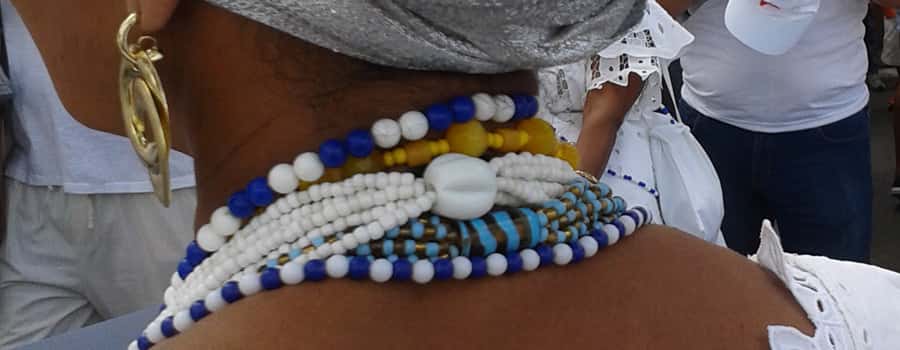
Salvador’s Candomblé traditions make more sense when you see them alongside the city’s museums, old neighborhoods, and places of worship. This four-hour tour connects the story of enslaved Africans, maroon communities, and African-Brazilian faiths rather than treating Candomblé as a mysterious sideshow. I especially like the small private group of up to six and the chance to visit a terreiro with a local guide who is initiated in these traditions. The stops also give you fine photo views, from Dique do Tororó to Pelourinho.
The main caution is that the schedule is tight, and the tour covers several subjects in one morning or afternoon. You should also confirm which entrance fees are included before paying: the published details say they are covered, but one recent booking involved an additional 20 reais per person for entry.
Key points to know before booking
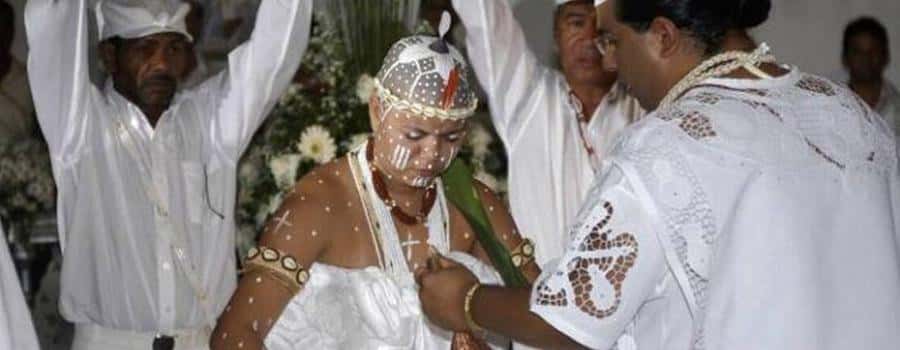
- See Candomblé in its cultural setting: The tour links religious practice with slavery, resistance, neighborhood growth, and African identity in Brazil.
- Visit the Afro-Brazilian Museum and Pierre Verger Gallery: These stops give the tour a solid historical and visual base.
- Enter a Candomblé terreiro: You visit a house connected to the Ewe-Fon tradition, with an optional sacred-oracle consultation at extra cost.
- Meet local perspectives: The guide from the maroon-community neighborhood is initiated in these traditions and explains the area’s past and present.
- Travel privately in a group of no more than six: Hotel or port pickup, drop-off, and air-conditioned transport are included.
- Dress carefully: Knees and shoulders must be covered for museums and places of worship, with no shorts or sleeveless tops.
Why Salvador’s Candomblé story needs context
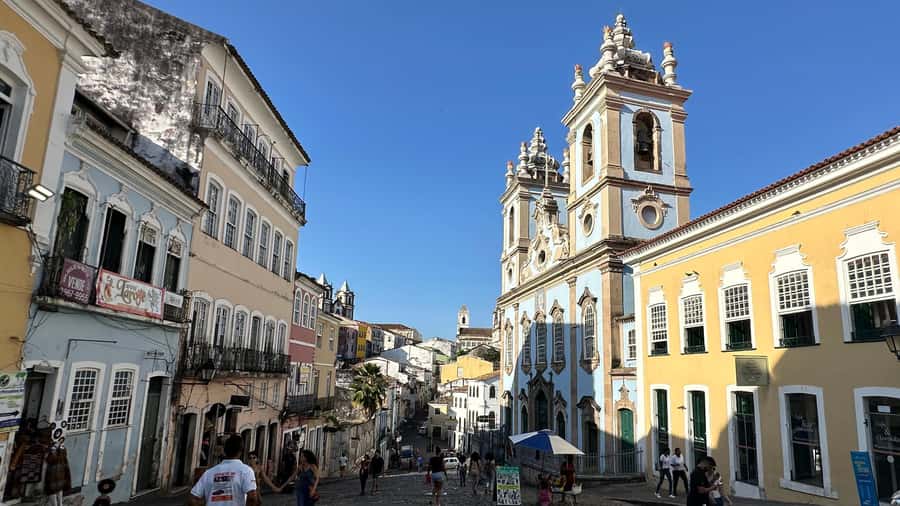
Salvador is often called the Black Rome because it has the largest Black population outside Africa. That phrase is useful, but it can also make the city seem like a museum piece. This tour helps you see African-Brazilian culture as a living part of Salvador, shaped by forced migration, survival, adaptation, and community life.
Candomblé developed through the meeting of African religious traditions, Indigenous influences, and the realities of colonial Brazil. Its sacred houses, ceremonies, symbols, and deities have often been misunderstood by outsiders. The route is designed to correct those old distortions rather than repeat them.
I like that the experience does not begin at a terreiro. You first learn how people arrived in Brazil, how identities were preserved under slavery, and how religious life helped communities maintain ties to Africa. By the time you reach the Candomblé site, the visit has a human and historical frame.
This matters if you are new to the subject. You will get more from the religious visit if you understand that it is not a staged folklore performance. The guide’s job is to explain what you are seeing with respect and to make clear which practices are public and which are sacred.
Other Salvador days that go well with this one:
- Cooking class in Salvador, an authentic dinning experience
★ 5.0 · 132 reviews - Tour to the Frades Islands and Itaparica, from Salvador – Ba
★ 4.0 · 130 reviews - From Salvador: Schooner Tour to Frades Islands and Itaparica
★ 3.9 · 98 reviews
Starting at the Afro-Brazilian Museum
The first major stop is the Afro-Brazilian Museum, where the collection covers enslaved Africans, the transatlantic trade, and the movement of people and identities between Africa and Brazil. Objects from different parts of the African continent show that there was no single African culture carried across the Atlantic.
This is an important distinction. Enslaved people came from different regions, spoke different languages, and brought varied artistic and religious traditions. A museum visit can make that large subject easier to grasp through objects, images, and material evidence.
You should expect the guide to connect the exhibits to Salvador’s wider story. The point is not simply to look at museum pieces, but to understand how African ideas continued in Brazil despite the violence of slavery and colonial rule.
The museum stop is listed as part of a short four-hour route, so do not expect unlimited time in every gallery. If you like museums and want to read every label, you may wish for a longer visit. If you prefer a guided overview tied to the rest of the day, the compact format works well.
Pierre Verger’s photographs and records
The Pierre Verger Gallery adds a personal, visual layer to the tour. Verger was a French anthropologist and photographer who documented slavery’s legacy, African-Brazilian culture, and the links between Brazil and West Africa.
Photographs can bring the subject closer than dates and definitions alone. They show people, streets, ceremonies, and social life, helping you connect Salvador with the Atlantic world rather than viewing its African influence as something locked in the past.
The gallery also includes audio-visual documentation. That is useful for a subject that cannot be fully understood through objects alone. Sound, movement, and spoken explanation can help you picture traditions that are often reduced to a few familiar symbols.
I would pay attention to how your guide handles this stop. Guides such as Nilson and Fernando have been praised for explaining the subject clearly and for adapting the discussion to personal interests. Maria Nunes was also singled out for detailed explanations, while Monia was praised for her strong command of the subject and warm manner.
Meeting a maroon-community neighborhood
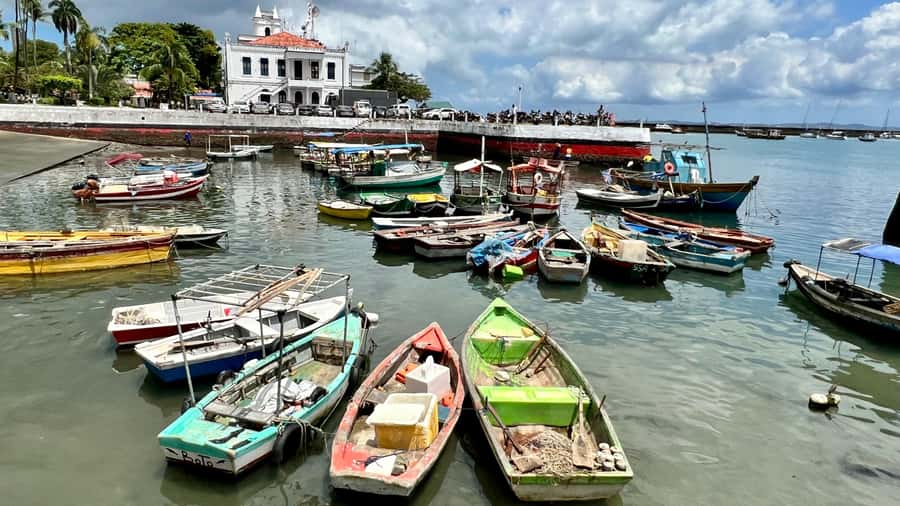
The route then moves from formal cultural sites into a neighborhood connected to a maroon community. In Brazil, maroon communities were settlements formed by people who escaped slavery and built places of refuge. These communities protected people, cultural practices, and religious traditions during the colonial and post-abolition periods.
This part gives the history a physical setting. You see how a refuge associated with Black resistance developed into an urban area, including the growth of a slum. The streets are not just background for photographs. They help show how survival, migration, poverty, faith, and city growth can occupy the same space.
A local community guide accompanies you here. The guide is initiated in Candomblé traditions and understands the historical processes behind the neighborhood. That local connection is one of the tour’s strongest features because it moves the explanation beyond a standard city sightseeing script.
You should come ready to listen and observe. This is not presented as a polished attraction with every surface prepared for visitors. That may be exactly what you want if you care about how Salvador’s communities developed in real life. It may feel less comfortable if you prefer a simple, quick photo stop with little social or historical discussion.
A different side of Salvador altogether:
- Tour Praia do Forte and Guarajuba, Leaving Salvador-Bahia.
★ 4.5 · 97 reviews - Afro-Brazilian Roots Private City Tour in Salvador
★ 4.7 · 88 reviews - Transfer Salvador Airport / Hotel in Salvador
★ 5.0 · 78 reviews - Transfer Iberostar selection or Iberostar waves go and go
★ 5.0 · 76 reviews
Dique do Tororó and Salvador’s outdoor symbols
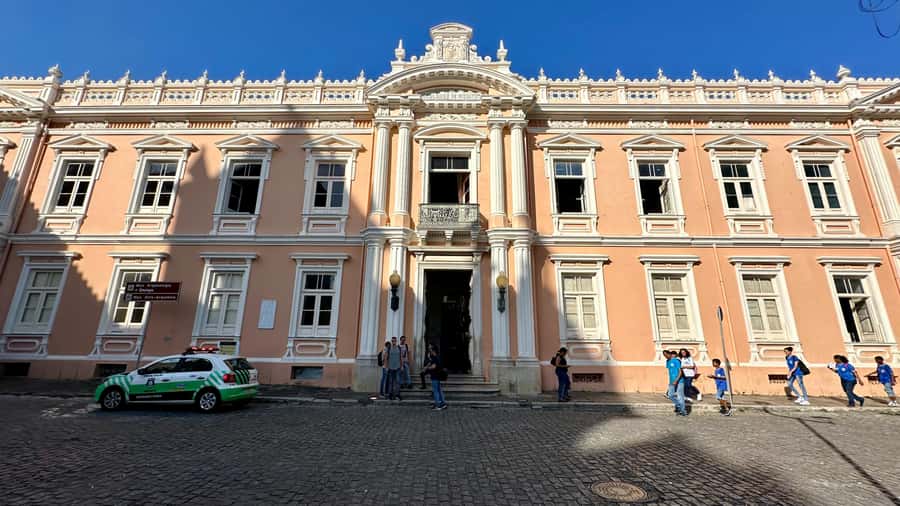
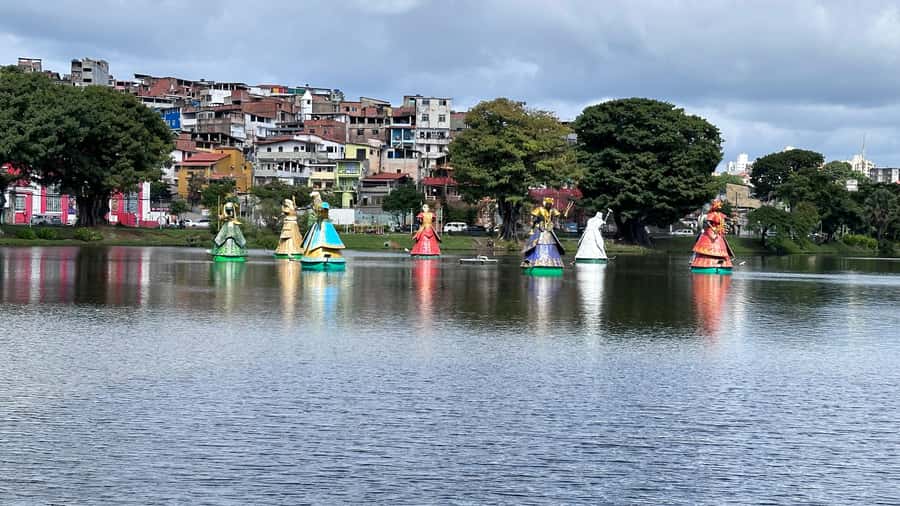
Dique do Tororó provides a change of pace. The stop lasts about 20 minutes and includes time for photographs and a guided explanation.
The lake is known for its large Candomblé-associated figures, making it a useful place to see religious imagery in a public setting. It also gives you an open view of one of Salvador’s recognizable sites after the more concentrated museum visits.
Do not expect a long walk or a full park visit during this stop. The time is better suited to taking photographs, hearing the guide’s explanation, and getting your bearings. If you enjoy city views and visual symbols, this will likely be one of the easiest parts of the tour to appreciate.
The route includes several photo pauses, so bring a phone or camera with enough battery. The experience is not only an indoor history lesson. It uses streets, water, architecture, and public art to show how African-Brazilian identity appears across Salvador.
Entering a Candomblé terreiro
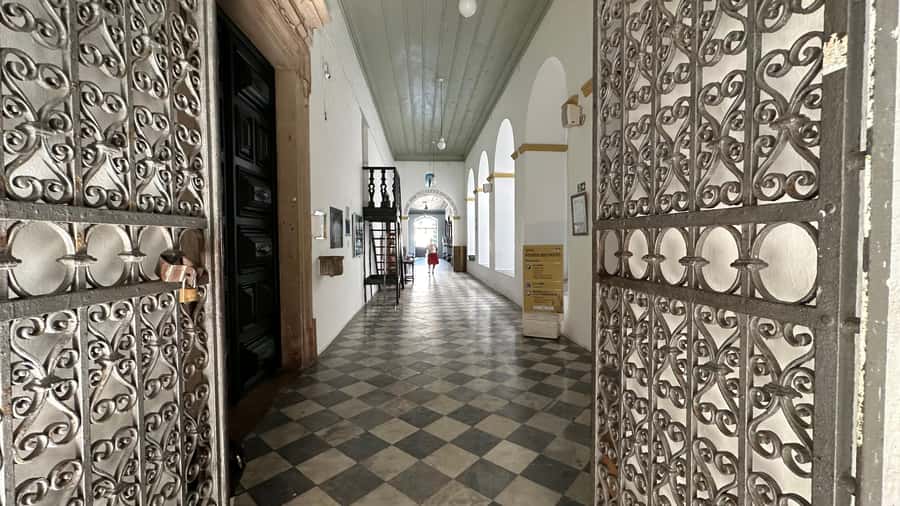
The visit to a Candomblé terreiro is the tour’s most distinctive stop. A terreiro is a Candomblé religious house, and this one belongs to the Ewe-Fon nation, connected to a Daomean origin.
The wording and traditions can be unfamiliar, so this is where the guide’s preparation matters most. You are not simply entering a building to see decorations. You are being introduced to a place of worship, and the dress rules apply for that reason.
The visit may include an optional consultation with the sacred oracle. This activity costs extra, so it is not part of the standard 110-dollar price. If you are interested, ask about the added fee and what the consultation involves before you agree.
Keep your expectations respectful and flexible. The provided information does not promise a ceremony, music, dancing, or a particular ritual. The reliable expectation is an introduction to the terreiro, its tradition, and its role in the route. That distinction is important because Candomblé is a faith, not a show arranged for sightseeing.
Walking through Pelourinho
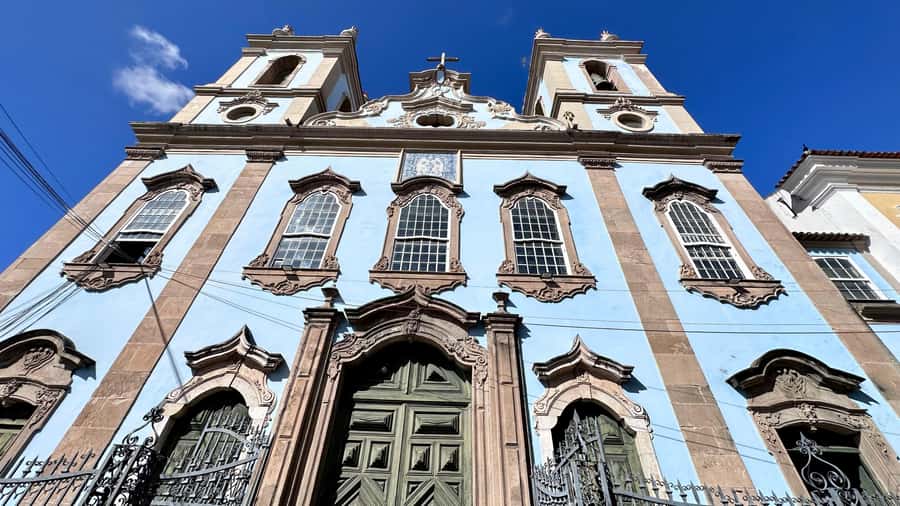
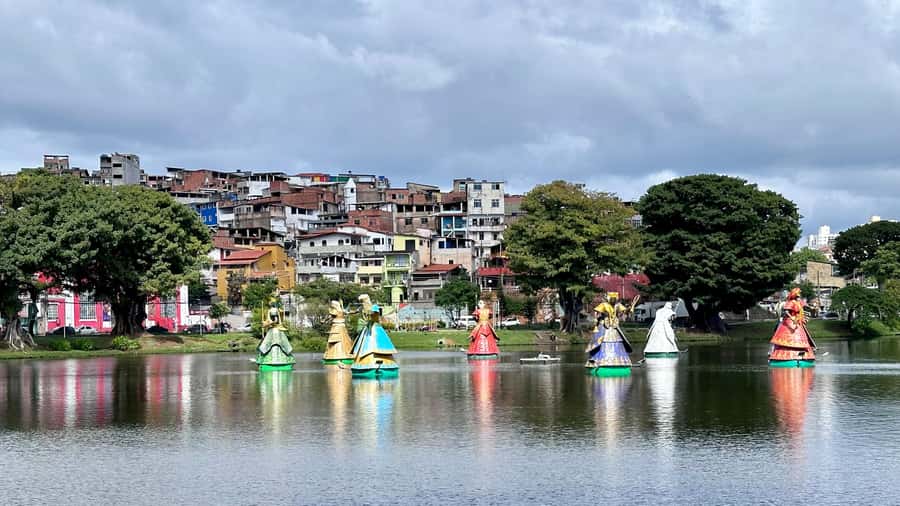
The final major stop is Pelourinho, Salvador’s best-known historic center. The visit lasts about 45 minutes and includes a photo stop and guided walking.
Pelourinho is a natural place to finish because its streets show the city’s colonial architecture and public history. You can connect the earlier discussion of slavery, African identity, and religious survival with the buildings and urban spaces that shaped Salvador.
The stop is long enough for an introduction, photographs, and a focused walk, but not for a full exploration of every church, museum, or side street. If you plan to return to Pelourinho on your own, use the guide’s suggestions. Nilson, in particular, has been praised for pointing out places and details that are easy to miss alone, as well as offering ideas for what to do later in Salvador.
I like Pelourinho as the closing stop because it gives the tour a broad city view. You have moved from museum collections to a gallery, from public sculpture to a neighborhood, and then to a Candomblé house. The old center helps pull those strands together.
What the four-hour schedule feels like
The tour includes pickup in Salvador City, transport in an air-conditioned vehicle, and return to your hotel or port. With a maximum of six people, you avoid the delays and distance that often come with a large sightseeing bus.
The private format is especially useful here. Religious and historical subjects often lead to questions, and a small group gives you more room to ask them. Guides can also adjust the emphasis. One booking described Nilson changing the route discussion to suit personal needs and interests, which is a valuable feature on a subject that can be quite personal.
Still, four hours goes quickly. You are covering a museum, gallery, neighborhood, lake, terreiro, and historic center, with driving between sites. The route gives you a connected introduction, not an exhaustive study of Candomblé or Salvador’s Black history.
I would choose this tour early in your stay if you want a framework for the city. You can then return to Pelourinho, museums, or other cultural sites with a better sense of what you are seeing. It also works well if you have limited time in Salvador and want one guided route rather than several separate admissions and taxi rides.
Is the 110-dollar price fair?
At 110 dollars per person, the tour is not a budget outing. Its value depends heavily on your group size. For one or two people, the price buys a private guide, a private vehicle, hotel or port pickup, four hours of transport, and access to a set of culturally important stops. For a group of up to six, the cost becomes easier to justify when shared across the group.
Entrance fees are listed as included, but you should verify this before departure. One booking reported paying an extra 20 reais per person for admission, even though the advertised details indicated that entrance fees were covered. The amount is modest compared with the total price, but unclear costs are frustrating.
Food and drinks are not included. Four hours is short enough that this is not a major issue, but plan a meal or snack before or after the experience.
The flexible booking terms help if your plans may change. You can cancel up to 24 hours before the start for a full refund, and you can reserve without paying immediately. Starting times depend on availability.
Guides, languages, and the best match for you
The tour can be conducted in English, Spanish, French, Italian, or Portuguese. Named guides connected with strong experiences include Monia, Fernando, Maria Nunes, and Nilson. The most useful pattern is clear: guide quality matters a great deal on this tour because the subject needs explanation, tact, and local context.
I would recommend it to you if you:
- Want African-Brazilian history connected to present-day Salvador
- Prefer a private route to a large group excursion
- Enjoy museums, photography, city walks, and cultural discussion
- Are curious about Candomblé but want an accurate introduction
- Have only a short time in Salvador
- Are comfortable visiting a place of worship respectfully
I would hesitate if you want a relaxed sightseeing drive with long stops, a food-focused outing, or guaranteed live religious ceremonies. The schedule is active, and the subject asks you to pay attention.
Wear clothing that covers your knees and shoulders. Shorts and sleeveless tops are not allowed at the selected museums and places of worship, and you could be refused entry if you ignore the rule. This applies to men and women.
Should you book this Salvador tour?
Book it if you want Salvador’s African and Indigenous influences explained through real places, not reduced to a few postcard images. The museum, Pierre Verger Gallery, maroon-community neighborhood, terreiro, Dique do Tororó, and Pelourinho form a thoughtful four-hour arc.
The best reason to choose it is the combination of private transport and local interpretation. The main reasons to pause are the quick pace, the possible entrance-fee confusion, and the extra charge for the sacred-oracle consultation.
Ask the provider to confirm every admission cost and decide in advance if you want the optional oracle consultation. Then dress properly, keep your questions respectful, and book this when you want cultural depth in a compact format.
FAQ
How long does the Candomblé Mysteries Tour last?
The tour lasts four hours. Starting times depend on availability.
Is hotel pickup included?
Yes. Pickup and drop-off are included from your hotel lobby in Salvador City. Port pickup and drop-off are also listed as included.
What languages are available?
The live guide service is available in English, Spanish, French, Italian, and Portuguese.
How large is the group?
The experience is a private group tour with a maximum of six people.
Is the sacred-oracle consultation included?
No. The consultation is optional and costs extra.
What should I wear?
You must cover your knees and shoulders at the selected museums and places of worship. Shorts and sleeveless tops are not allowed for men or women.
New in Salvador this month
- From Salvador: Schooner Tour to Frades Island★ 3.9 · 3 reviews
- From Salvador: Quilombo Heritage Daytrip with Lunch★ 3.4 · 3 reviews
- Salvador: Caipirinha Masterclass with Unlimited Drinks★ 4.2 · 4 reviews
- Salvador: Schooner Cruise with Pickup and Itaparica Stop★ 3.8 · 5 reviews
- BOXE CLASS – EX BAHIAN CHAMPION (SALVADOR-BA)★ 5.0 · 7 reviews
- Salvador by Night: Pelourinho & Old Town Tour★ 4.3 · 8 reviews
- Salvador: 3-Hour Percussion Class★ 4.9 · 10 reviews
- Salvador: Traditional Drumming and Percussion Workshop★ 4.4 · 10 reviews
Salvador Tours, compared.
Cooking class in Salvador, an authentic dinning experience
Read our review →
Tour to the Frades Islands and Itaparica, from Salvador – Ba
Read our review →
From Salvador: Schooner Tour to Frades Islands and Itaparica
Read our review →
Tour Praia do Forte and Guarajuba, Leaving Salvador-Bahia.
Read our review →
Afro-Brazilian Roots Private City Tour in Salvador
Read our review →


Schooner Trip Only Ilha dos Frades, Leaving Salvador-Bahia.
Read our review →Browse the lists this tour appears in