
Our review · SALVADOR TOURS
Salvador: Traditional Drumming and Percussion Workshop
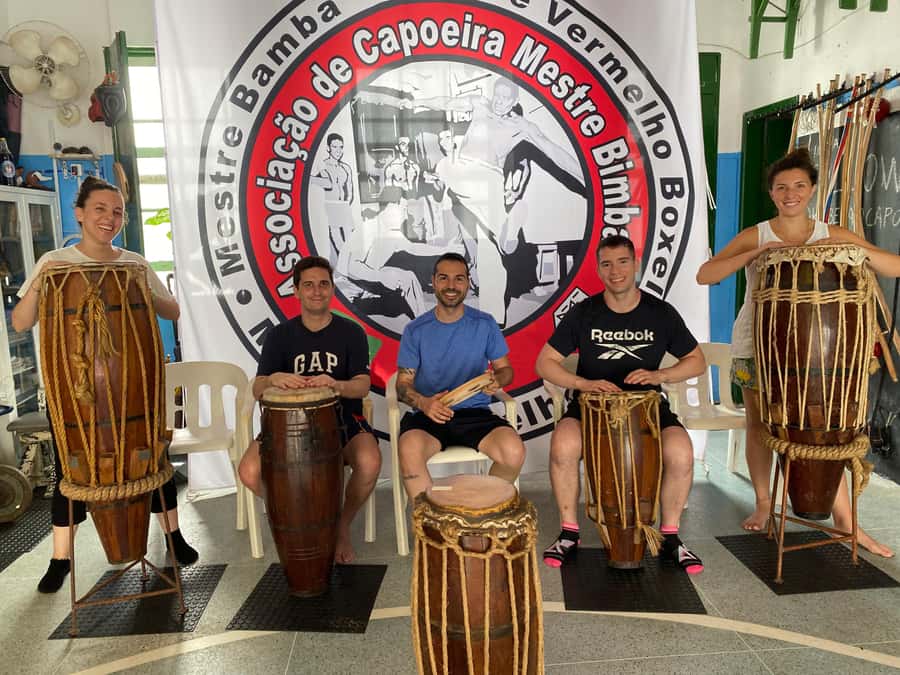
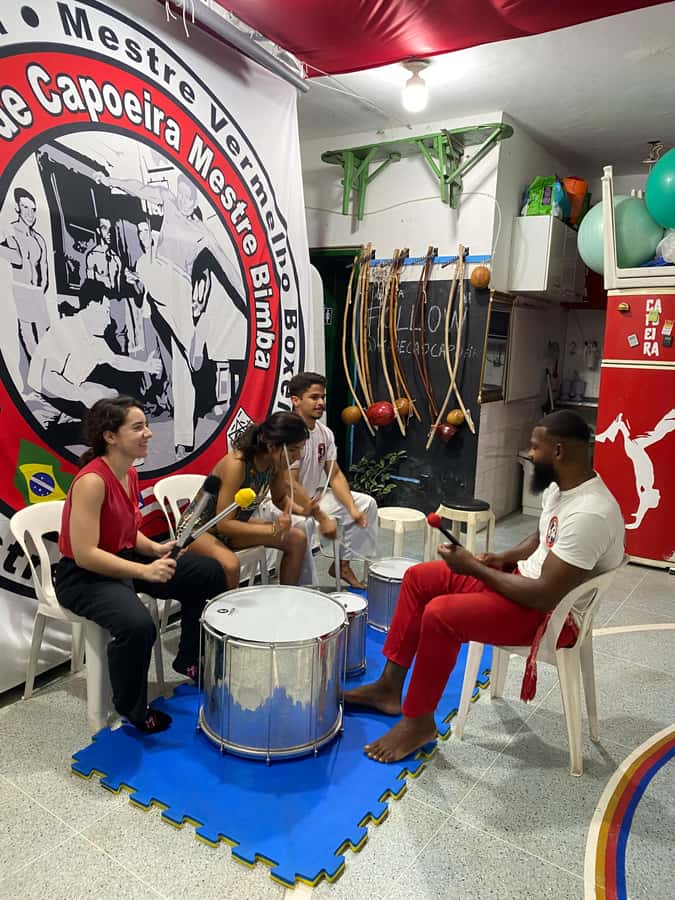
Mestre Bimba’s first school in Pelourinho offers more than a basic music lesson. In one hour, you learn Afro-Brazilian rhythms inside a place linked to capoeira, resistance, and cultural survival. I like the small group limit of 10 and the chance to work with an instructor such as Yasmin, who has been praised for patient, careful teaching.
I also like that you need no musical background and that the class gives you cultural context along with the beats. The main caution is language: English is offered, but one booking had an instructor who could not teach in English, so confirm your language needs before paying.
Key points to know before booking
- Location with meaning: The class takes place at Associação de Capoeira Mestre Bimba, near Ó Paí Ó Restaurante and São Domingos Gusmão Church in Largo do Terreiro de Jesus.
- One-hour format: The short session fits neatly into a morning or afternoon of exploring Salvador’s historic center.
- No musical experience required: You learn basic movements, posture, rhythms, and percussion techniques from the ground up.
- Personal instruction: Groups are limited to 10, and some sessions may feel almost like a private lesson.
- Portuguese and English offered: Language support is advertised in both languages, though English delivery may vary by instructor.
- Good value at $43: You receive the class and instruction, but transport, food, and drinks are your responsibility.
Learning music where capoeira took root
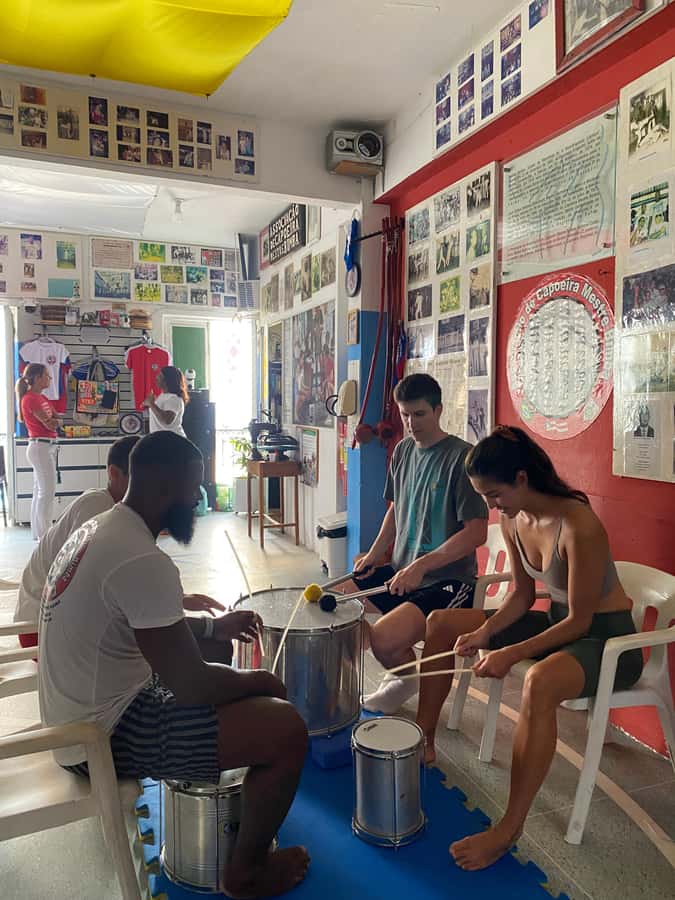
The setting gives this workshop its strongest character. Associação de Capoeira Mestre Bimba is identified as Mestre Bimba’s first school, a place connected to the development and protection of Afro-Brazilian cultural practices.
That matters because drumming here is not presented as a detached craft lesson. The rhythms connect with capoeira, samba, and the broader cultural life of Salvador. During the late 19th century, these practices were treated with suspicion and at times criminalized. The class helps you understand how once-persecuted forms became central symbols of Brazilian identity.
I appreciate that context because it gives the lesson a reason to exist beyond entertainment. You are not simply learning how to repeat a beat. You are being shown how music, movement, and community helped preserve identity under pressure.
The school is also in Pelourinho, Salvador’s historic center. You can pair the class with a walk through Largo do Terreiro de Jesus, a meal at Ó Paí Ó Restaurante, or a visit near São Domingos Gusmão Church. Since the session lasts only an hour, it is easy to fit into a larger afternoon.
more Salvador days to choose between
- Cooking class in Salvador, an authentic dinning experience
★ 5.0 · 132 reviews - 4h Cooking Class in Salvador with 9 Recipes & Bottomless Drinks
★ 5.0 · 73 reviews - Salvador: Capoeira Class at Mestre Bimba’s 1st Ever School.
★ 4.9 · 34 reviews
What happens during the one-hour class
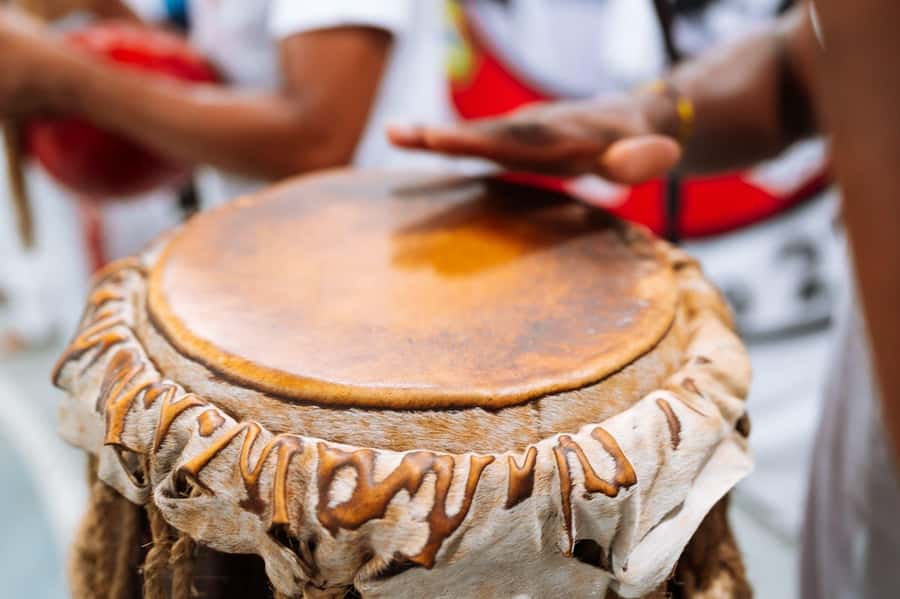
The class begins with an introduction to the instruments and the traditions behind them. You can expect the instructor to explain how the percussion connects with capoeira and other Afro-Brazilian forms before asking you to play.
You then work on the practical basics. That includes hand position, posture, gestures, and the timing needed to keep a rhythm. If you feel awkward at first, that is normal. The instruction is designed for people who have never played music.
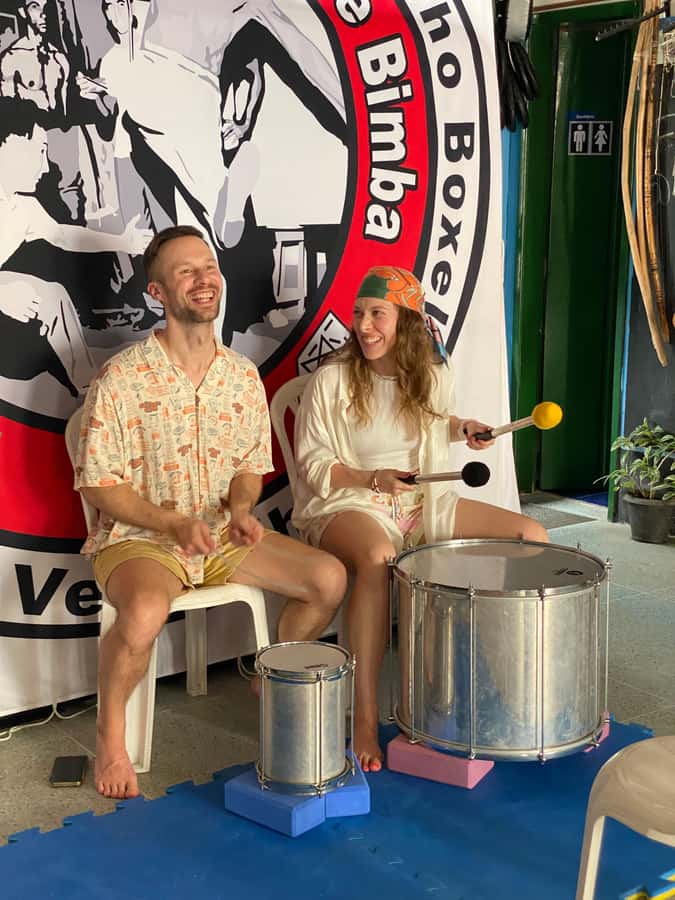
The teaching style can be attentive and hands-on. Yasmin, one instructor named in the available experience details, has provided one-to-one instruction on capoeira percussion instruments and drumming. Her approach included correcting gestures and posture, then showing several ways to make percussion and several different rhythms.
That sort of correction is useful. A short class cannot turn you into a skilled percussionist, but it can help you avoid simply hitting the instrument at random. You learn how the body contributes to the sound, which is often the difference between noise and a recognizable pattern.
The lesson may also include more than one type of percussion instrument. The exact selection can vary, but the class description and participant account refer to a variety of Brazilian percussion instruments connected with capoeira. You should expect an introduction rather than a full technical course.
At the end, you have had time to play, repeat patterns, and connect the sounds with their cultural setting. One hour is a sensible length for this format. It is long enough to learn a few basic ideas, yet short enough to keep the session light during a day of sightseeing.
Why the cultural background improves the lesson
Music lessons can feel thin when they focus only on technique. This one has a stronger foundation because it explains the social history behind the rhythms.
Capoeira, samba, and drumming were once subject to suspicion and legal restrictions in Brazil. Their survival reflects the work of Afro-Brazilian communities that kept practicing, teaching, and adapting these forms. Knowing that changes how you hear the rhythm. It becomes part of a larger story about community and resilience.
The school is described as a Quilombo of resistance. In this context, that language points to a place of protection, self-definition, and cultural survival. I would pay attention during this part of the class, even if your main goal is simply to try an instrument. The explanation adds meaning you will not get from a casual music demonstration.
This is also a good way to encounter Salvador beyond its architecture. Pelourinho is famous for its colorful streets and historic buildings, but the city’s culture is not just something to look at. It is also something people practice, teach, and pass on. A drumming class gives you a small but direct connection to that living tradition.
The teaching style and language question
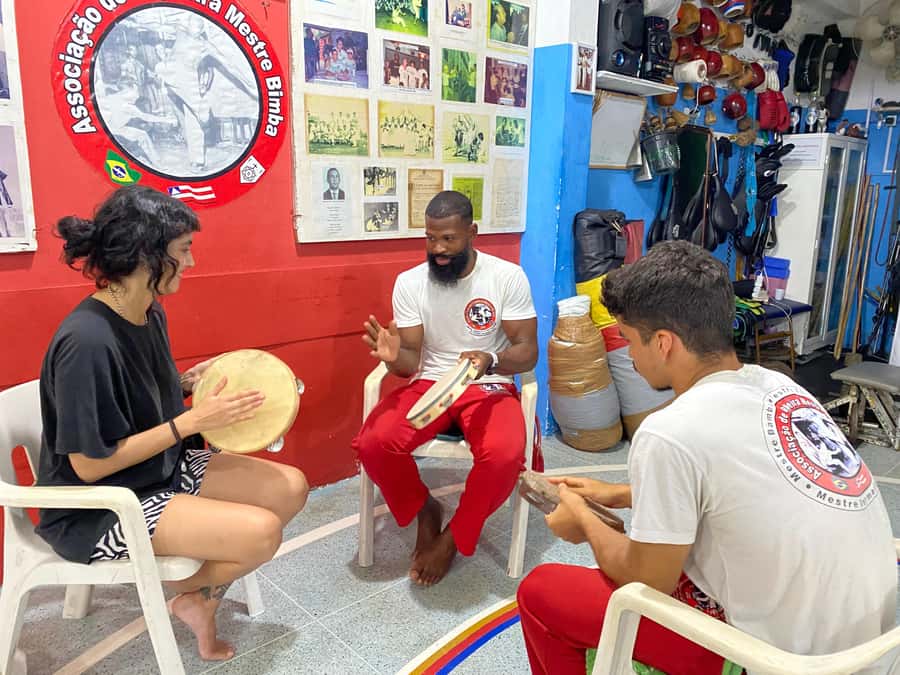
The class is offered in Portuguese and English, which makes it accessible to many international visitors. Still, I would treat the language as an important booking detail rather than a guarantee of a fully English-led session.
One participant who booked an English class found that the teacher could not speak English. That did not erase the value of the music lesson, but it could make posture, rhythm, and historical explanations harder to follow. If English instruction is essential for you, contact the provider before booking and confirm who will teach your session.
The strongest teaching account comes from a one-to-one class with Yasmin. Her instruction was described as thoughtful, patient, and kind, with clear help on technique and background. A private-feeling lesson is possible even though the advertised group limit is 10, but you should not assume every departure will be one-to-one.
Portuguese speakers may have the easiest time if the instructor changes. English speakers can still enjoy the physical part of the class, since rhythm and demonstration cross language barriers, but the cultural explanation may be less complete if communication is limited.
A different side of Salvador altogether:
- Tour to the Frades Islands and Itaparica, from Salvador – Ba
★ 4.0 · 130 reviews - From Salvador: Schooner Tour to Frades Islands and Itaparica
★ 3.9 · 98 reviews - Tour Praia do Forte and Guarajuba, Leaving Salvador-Bahia.
★ 4.5 · 97 reviews - Afro-Brazilian Roots Private City Tour in Salvador
★ 4.7 · 88 reviews
Is $43 a fair price?
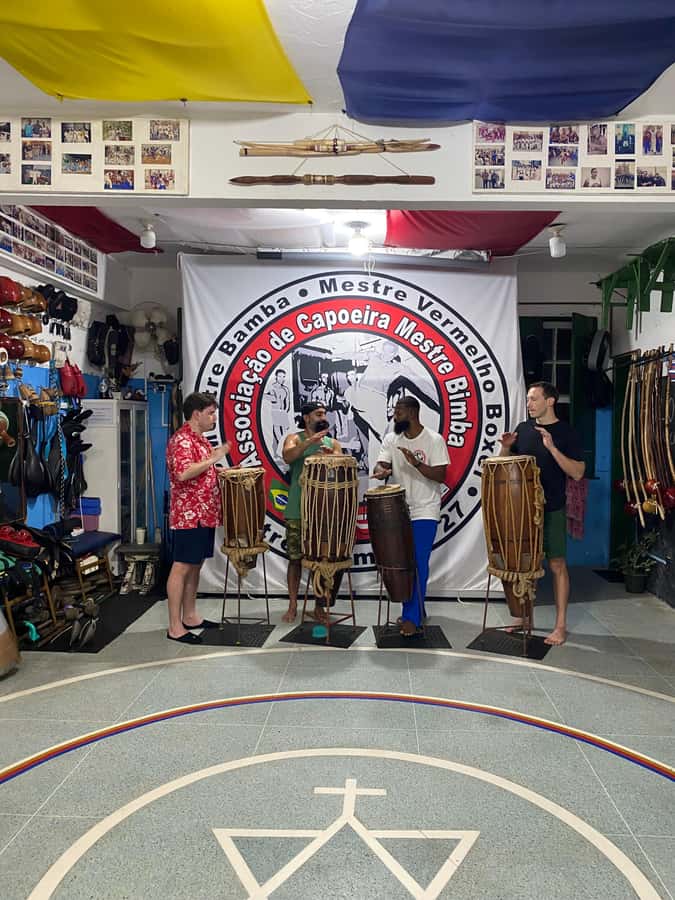
At $43 per person, this is not the cheapest way to spend an hour in Salvador. It is also more than a quick performance watched from the street. The value depends on what you want from the session.
For your money, you receive the drumming workshop and an instructor. You do not receive hotel pickup, drop-off, meals, or drinks. Since the meeting point is in Pelourinho, you must arrange your own way there and back.
I consider the price reasonable if you value direct participation and cultural instruction. You are paying for access to a historic capoeira school, guidance from a teacher, and the chance to play the instruments yourself. That is a different experience from simply attending a show.
The location adds value because it can serve as part of a larger day. You might have lunch nearby, visit the church, walk through Largo do Terreiro de Jesus, and then attend the class. One participant combined the session with sightseeing during Carnaval, effectively joining two activities in the same area.
The price is less attractive if you want a long workshop or serious musical training. One hour gives you an introduction, not a course. If you already play percussion and want advanced technique, you may find the session too basic.
Making the most of the Pelourinho meeting point
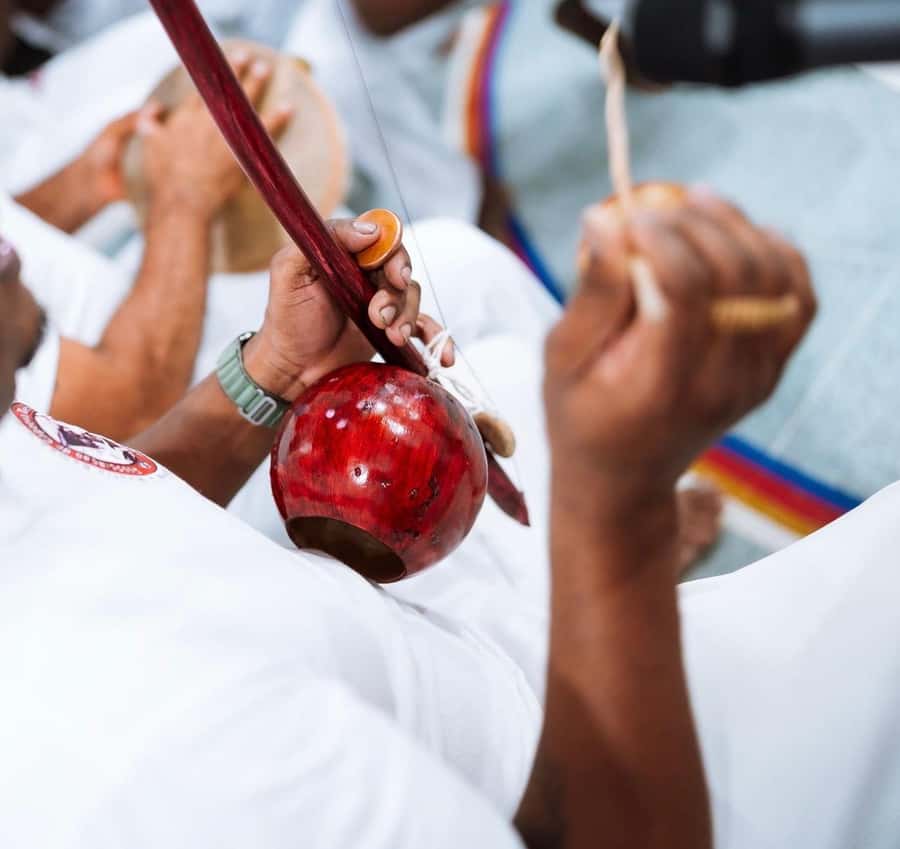
You meet at Associação de Capoeira Mestre Bimba. No pickup service is provided, so plan to arrive at the association itself rather than waiting for transportation at your hotel.
The meeting point is near two useful reference spots: Ó Paí Ó Restaurante and São Domingos Gusmão Church in Largo do Terreiro de Jesus. Use those landmarks to orient yourself, especially if you are already walking around Pelourinho.
I would allow enough time to find the school without rushing. The class is only an hour, and arriving late could reduce the part you care about most: the actual instruction. The supplied details do not specify a hotel transfer, route, or parking arrangement, so your own plans need to cover those basics.
The central location is a major advantage. You can build the workshop into a day of exploring Salvador rather than making a separate trip only for the class. It also makes the activity practical for people staying near the historic center.
Who will enjoy this class most
I would recommend it first to curious first-time visitors who want to do something active in Salvador. You do not need to know how to read music, keep time, or play an instrument. A willingness to try is enough.
It also suits families and small groups looking for a shared activity, though the provided details do not specify a minimum age. The 10-person cap should help keep the teaching focused, but the actual feel depends on how many people book your time.
Music fans will appreciate the chance to handle Brazilian percussion instruments instead of only hearing about them. Capoeira followers may find the connection to Mestre Bimba especially meaningful.
This is less suitable for someone seeking a full-day cultural program, a formal concert, or advanced percussion training. It is an introductory class with historical explanation, not a long performance or professional workshop.
Strengths and limitations at a glance
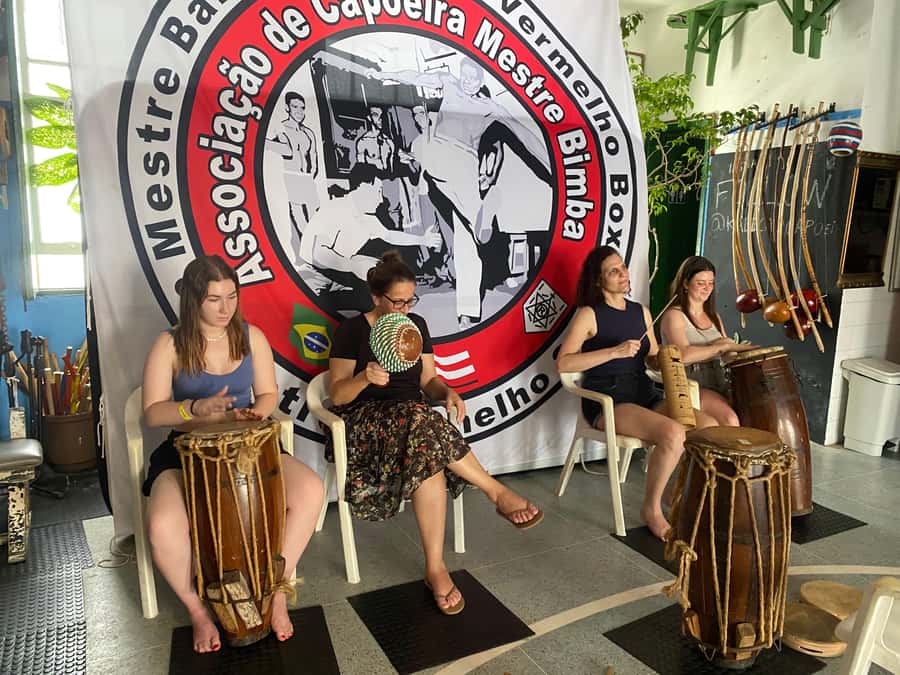
The best feature is the combination of place and participation. You are learning inside an institution connected with Mestre Bimba and capoeira, then using your own hands to produce the rhythms.
The second strong point is the teaching approach. The experience can include corrections to posture and technique, different ways to play, and more than one rhythm. Yasmin’s patient, attentive style is a particularly useful example of what a good session can offer.
The one-hour length is another advantage. You can fit it between other plans, and you are unlikely to feel trapped in a lesson that moves too slowly. For many people, one hour is enough to get a taste without making music the entire day.
The main weakness is the possible mismatch between advertised language and actual instruction. Portuguese and English are listed, but the quality of English teaching may depend on the instructor assigned to your time.
A second limitation is what is not included. There is no transport, food, or drink, and you must find the meeting point yourself. None of that is a problem if you are already planning to visit Pelourinho, but it matters if you expect a door-to-door tour.
Booking flexibility and practical details
You can cancel up to 24 hours before the activity for a full refund. The reserve-now, pay-later option lets you hold a place without paying immediately, which is useful when your Salvador plans are still changing.
Starting times depend on availability, so check the schedule before arranging nearby meals or sightseeing. The class lasts one hour, and the group limit is 10 participants.
Wear whatever lets you sit, stand, and move your arms comfortably. The provided information does not specify a dress code or equipment to bring. The workshop and instructor are included, while meals and beverages are not.
Should you book the Salvador drumming workshop?
I would book this class if you want a short, active cultural experience in Pelourinho and like the idea of learning from a tradition rather than only observing it. The historic school, the capoeira connection, and the chance to try several rhythms give the $43 price a clear purpose.
Book it with realistic expectations. You will get an introduction, not mastery. Confirm English instruction in advance if you do not speak Portuguese, and remember that you must make your own way to Associação de Capoeira Mestre Bimba.
For a first taste of Afro-Brazilian percussion, this is a well-sized experience. It fits neatly into a sightseeing day, welcomes beginners, and gives you a better ear for the music you will hear elsewhere in Salvador.
FAQ
Do I need musical experience?
No. The activity is designed for beginners, and no previous music experience is required.
How long does the workshop last?
The workshop lasts one hour.
What languages are offered?
Instruction is offered in Portuguese and English. If English support is important to you, confirm the language with the provider before booking because instructor availability may vary.
Where is the meeting point?
You meet at Associação de Capoeira Mestre Bimba. The association is near Ó Paí Ó Restaurante and São Domingos Gusmão Church in Largo do Terreiro de Jesus.
Is hotel pickup included?
No. Hotel pickup and drop-off are not provided, so you must arrange your own transport to the meeting point.
Can I cancel or pay later?
You can cancel up to 24 hours in advance for a full refund. A reserve-now, pay-later option is available, allowing you to book without paying immediately.
New in Salvador this month
- From Salvador: Schooner Tour to Frades Island★ 3.9 · 3 reviews
- From Salvador: Quilombo Heritage Daytrip with Lunch★ 3.4 · 3 reviews
- Salvador: Caipirinha Masterclass with Unlimited Drinks★ 4.2 · 4 reviews
- Salvador: Schooner Cruise with Pickup and Itaparica Stop★ 3.8 · 5 reviews
- BOXE CLASS – EX BAHIAN CHAMPION (SALVADOR-BA)★ 5.0 · 7 reviews
- Salvador by Night: Pelourinho & Old Town Tour★ 4.3 · 8 reviews
- Salvador: 3-Hour Percussion Class★ 4.9 · 10 reviews
- Salvador: CAPOEIRA CLASS – CULTURAL★ 4.6 · 13 reviews
Salvador Tours, compared.
Cooking class in Salvador, an authentic dinning experience
Read our review →
Tour to the Frades Islands and Itaparica, from Salvador – Ba
Read our review →
From Salvador: Schooner Tour to Frades Islands and Itaparica
Read our review →
Tour Praia do Forte and Guarajuba, Leaving Salvador-Bahia.
Read our review →
Afro-Brazilian Roots Private City Tour in Salvador
Read our review →


Schooner Trip Only Ilha dos Frades, Leaving Salvador-Bahia.
Read our review →Browse the lists this tour appears in