
Our review · SALVADOR TOURS
Salvador: Capoeira Class at Mestre Bimba’s 1st Ever School.
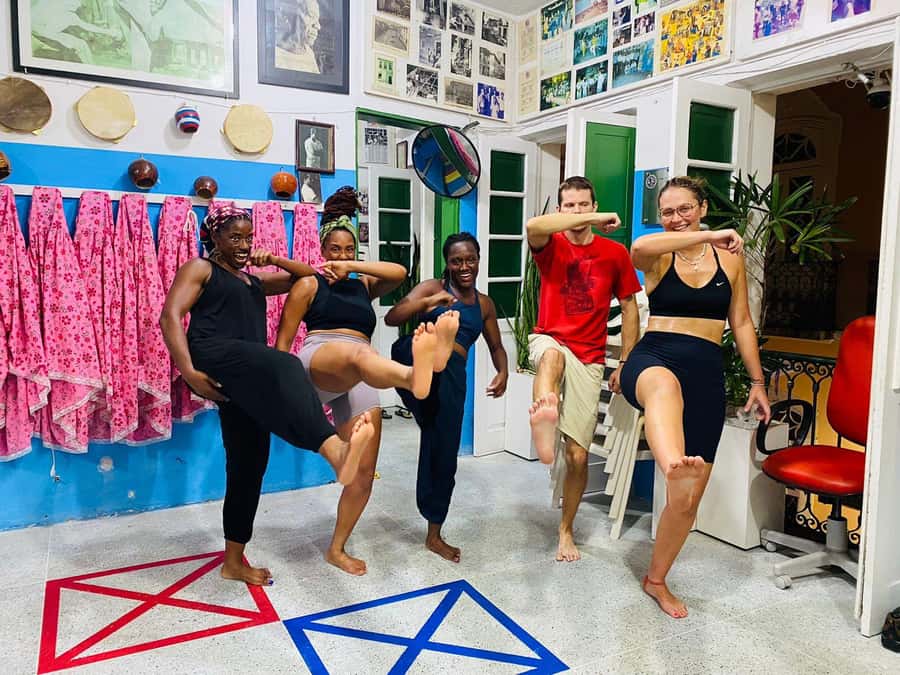
Capoeira is not simply a dance class with a few kicks added. At Associação de Capoeira Mestre Bimba, you learn an Afro-Brazilian martial art shaped by fight, music, dance, acrobatics, and ancestry. The school traces its roots to 1937, when Mestre Bimba founded Brazil’s first capoeira school.
I like two things right away: the lesson is built for people who have never trained before, and Yasmin teaches with patience, clear demonstrations, and plenty of cultural context. The main consideration is physical effort. One hour can leave your legs sore for days, so bring comfortable clothes and expect to sweat.
Key points to know before booking
- Brazil’s first capoeira school: Train at the Associação de Capoeira Mestre Bimba, founded by Mestre Bimba in 1937.
- Designed for complete beginners: You learn basic attacks, defenses, and flowing movements without prior experience.
- More than a workout: The lesson explains capoeira’s Afro-Brazilian roots and cultural role in Salvador.
- English and Portuguese instruction: Yasmin can teach in English, making the class easier to follow if you do not speak Portuguese.
- A one-hour commitment: The short session fits neatly into a day of exploring Salvador, though the workout is still demanding.
- Central meeting point: Find the school near Ó Pai Ó Restaurante and São Domingos Gusmão Church in Largo do Terreiro de Jesus.
Why this capoeira class belongs in your Salvador plans
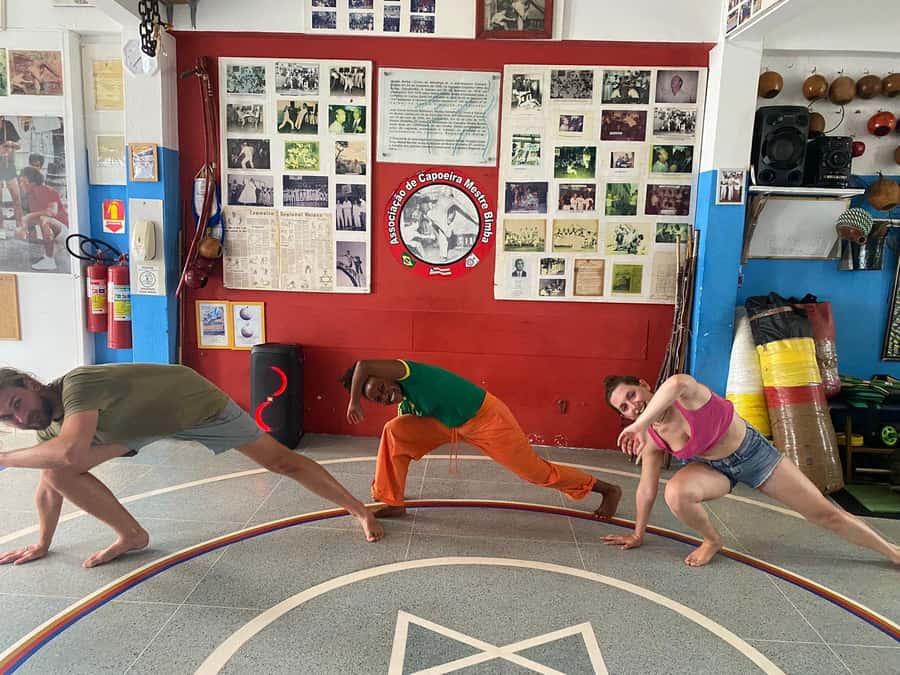
Salvador is one of the best places in Brazil to encounter capoeira as a living part of local culture rather than as a staged show. The art developed through Afro-Brazilian experience and carries physical, musical, and social meaning. In this class, you do not just copy movements. You get a basic explanation of why capoeira matters before putting your body to work.
That setting adds weight to the hour. The Associação de Capoeira Mestre Bimba is identified as the first capoeira school in Brazil, founded in 1937. For a visitor, that gives the lesson a strong sense of place. You are not learning a generic fitness routine in a hotel gym. You are training at a school tied directly to one of the central names in capoeira.
I also like the scale of the commitment. One hour is long enough to learn the foundation and short enough to fit between visits to Salvador’s historic center, churches, museums, and restaurants. You will not become a capoeira practitioner in one session, but you can leave with a feel for the movement and a better grasp of the art’s purpose.
more Salvador days to choose between
- Cooking class in Salvador, an authentic dinning experience
★ 5.0 · 132 reviews - 4h Cooking Class in Salvador with 9 Recipes & Bottomless Drinks
★ 5.0 · 73 reviews - Salvador: CAPOEIRA CLASS – CULTURAL
★ 4.6 · 13 reviews
Meeting the school in Largo do Terreiro de Jesus
You meet at the Associação de Capoeira Mestre Bimba. There is no pickup service, so you need to make your own way there. The meeting point is in Largo do Terreiro de Jesus, with Ó Pai Ó Restaurante and São Domingos Gusmão Church offered as nearby landmarks.
That detail matters in Salvador’s old center, where a clear landmark can be more useful than a street number. Plan to arrive with enough time to locate the school without rushing. You are responsible for getting to the meeting point, and the activity does not include transport.
The location also makes this easy to pair with sightseeing. You can build the class into a day in the historic center instead of setting aside a whole morning or afternoon for a distant excursion. Since the session lasts only one hour, it works well for visitors with a tight schedule.
The first movements: learning without feeling lost
The class is directed at beginners who have never trained capoeira. That is important. You do not need martial arts experience, dance training, flexibility, or a special level of fitness to take part.
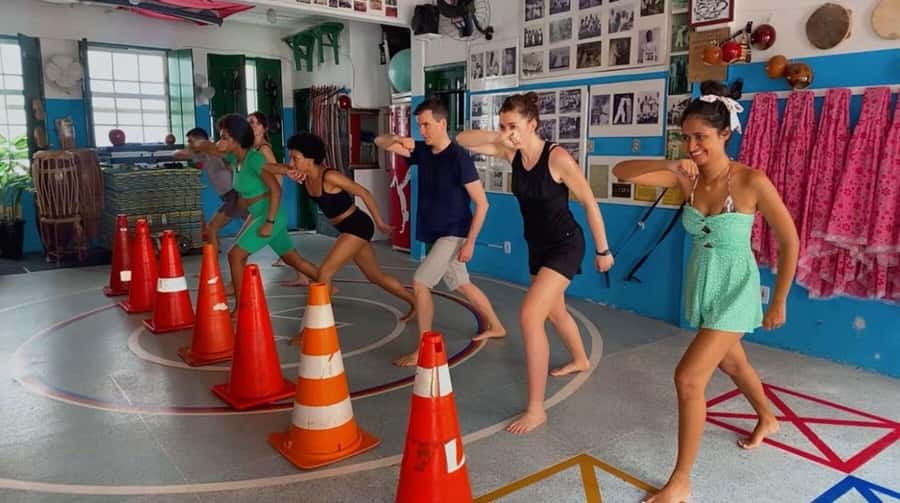
Yasmin begins with instruction in the basic movements and demonstrates what you should do. The teaching approach is gradual, with time to make sure you understand before moving on. This is especially helpful because capoeira can look fast and complicated when you first see it.
You will work on attacks, defenses, and flow movements. The point is not to throw hard strikes at another person. It is to learn how capoeira connects offense, defense, rhythm, and continuous movement. Even simple steps require attention, balance, and coordination.
That makes the class suitable for a wide range of people. A mother and daughter with no previous experience found the session welcoming, while other students with more experience were also described as kind. You should still expect to work. Beginner-friendly does not mean effortless.
Capoeira as movement, music, and memory
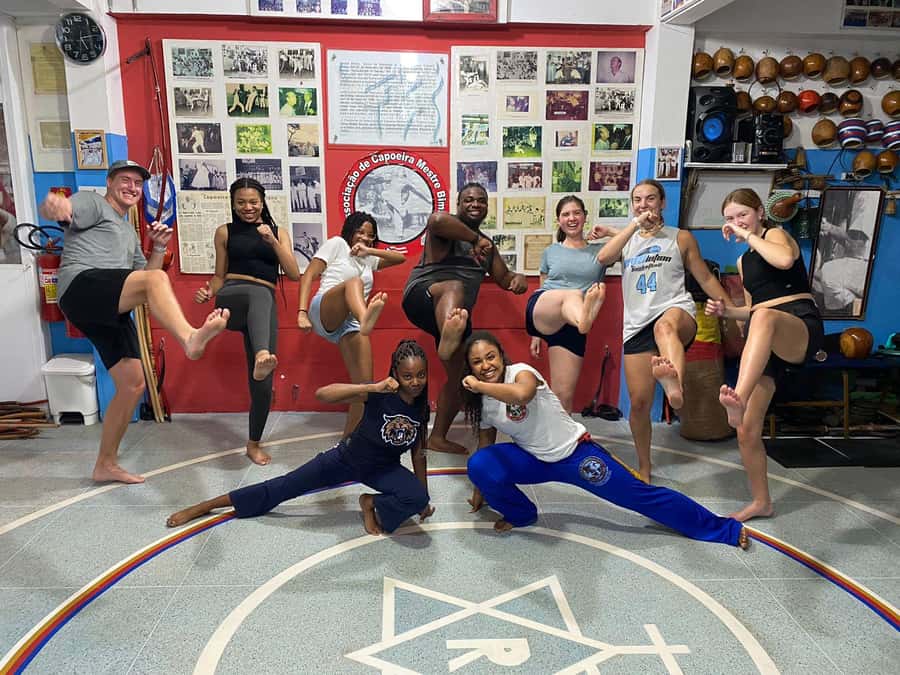
The best part of this activity is the link between the physical lesson and Salvador’s culture. Capoeira combines martial art, dance, music, acrobatics, discipline, self-defense, and fitness. Those parts are not separate decorations. They belong to the same practice.
The cultural explanation helps you understand why the movements matter. Capoeira is closely tied to Afro-Brazilian ancestry, and the instructor discusses its historical importance alongside the physical work. This gives you a more useful introduction than simply watching a performance and taking a few photographs.
The class can also change how you see capoeira later in your trip. After learning the basic ideas, you may recognize the relationship between movement, rhythm, and circle-based practice when you encounter capoeira elsewhere in Salvador. You will have a small amount of practical experience to connect with what you see.
Do not expect a full academic lecture. The experience lasts one hour, and much of that time is active. Still, the history and cultural background are treated as an essential part of the lesson, not as a quick sentence before the exercise begins.
A different side of Salvador altogether:
- Tour to the Frades Islands and Itaparica, from Salvador – Ba
★ 4.0 · 130 reviews - From Salvador: Schooner Tour to Frades Islands and Itaparica
★ 3.9 · 98 reviews - Tour Praia do Forte and Guarajuba, Leaving Salvador-Bahia.
★ 4.5 · 97 reviews - Afro-Brazilian Roots Private City Tour in Salvador
★ 4.7 · 88 reviews
Yasmin’s teaching style and language options
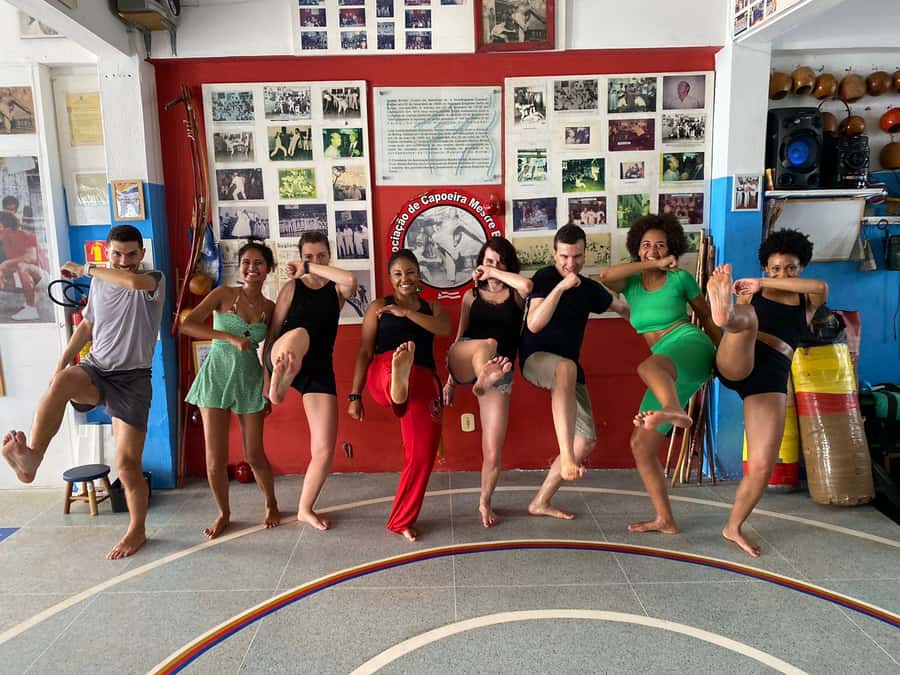
Yasmin receives especially strong praise for being patient, warm, encouraging, and clear. She demonstrates the movements and checks that students understand before moving ahead. That can make a big difference when you are trying to coordinate your arms, legs, balance, and rhythm at the same time.
She also shares the story and cultural background of capoeira. Her teaching is not limited to exercise instruction, which is one reason this class works well for someone looking for a specifically Salvador experience.
Instruction is available in English and Portuguese. English-speaking visitors can follow the lesson without needing to know Portuguese, while Portuguese speakers have that option as well. The language support is practical, but the class still connects you to a Brazilian art form rather than translating Salvador out of the experience.
The school has more than 80 years of teaching experience. That does not mean the session is formal or intimidating. The tone described by the information available is welcoming and inclusive, with beginners encouraged to take part at their own level.
How strenuous is one hour of capoeira?
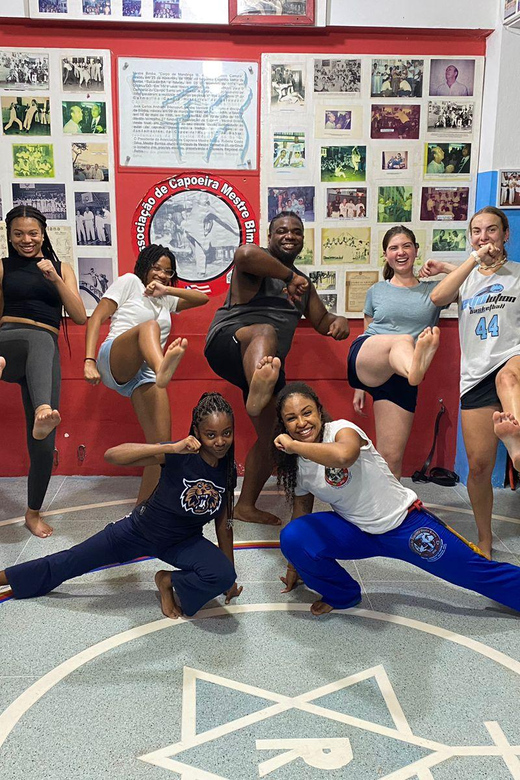
You should treat this as a workout, not a gentle cultural demonstration. You will use your legs, core, arms, and lungs while repeating movements and learning to flow from one position to another. One participant described it as an intense workout, with sore legs lasting for days.
That warning is useful. You do not need to be fit to book, but you should be ready for physical effort. Wear comfortable sports clothes and bring water. Bottled water is included, but bringing an additional water bottle is sensible, especially if Salvador is hot or you plan to continue sightseeing afterward.
The class may feel awkward at first. That is normal with any new movement practice, and the beginner focus helps. You are not expected to perform advanced acrobatics or already understand the rhythm. Focus on copying the demonstrations, breathing steadily, and learning the basic patterns.
If you have physical limitations, the supplied information does not describe specific adaptations or accessibility arrangements. You should ask the provider before booking if you need a modified lesson.
What makes the historic setting valuable
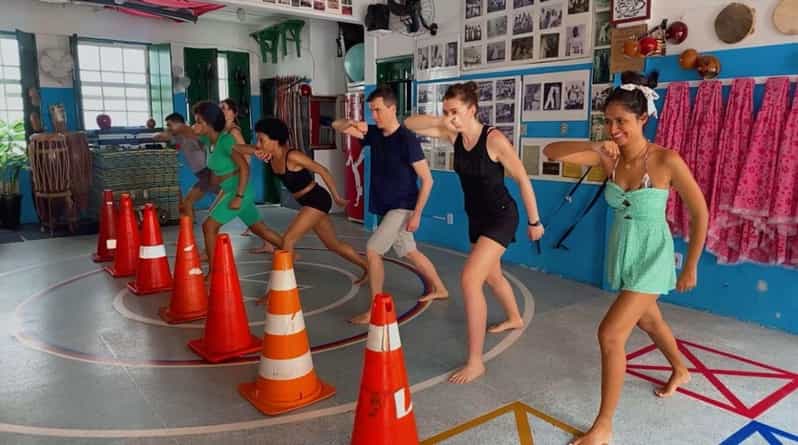
Mestre Bimba’s name is central to this experience. The school was founded in 1937, and its connection to him gives the class a direct link to the development of capoeira in Brazil. That history is part of the value of the visit.
You also get something that a regular workout class cannot provide: a physical way to connect with Salvador. Reading about Afro-Brazilian culture has its place, but learning a movement, hearing the explanation behind it, and trying to follow the flow gives you a more direct understanding.
This is still an introductory class, not a museum visit or a long cultural tour. You will not cover every chapter of capoeira’s development in an hour. But the setting and instruction give the workout a purpose beyond burning calories.
I would schedule it early in your time in Salvador if possible. That way, you can keep noticing capoeira as you explore the city. If your trip allows more than one day, the class fits particularly well because you have time to place the experience within a wider visit.
Is $43 a fair price?
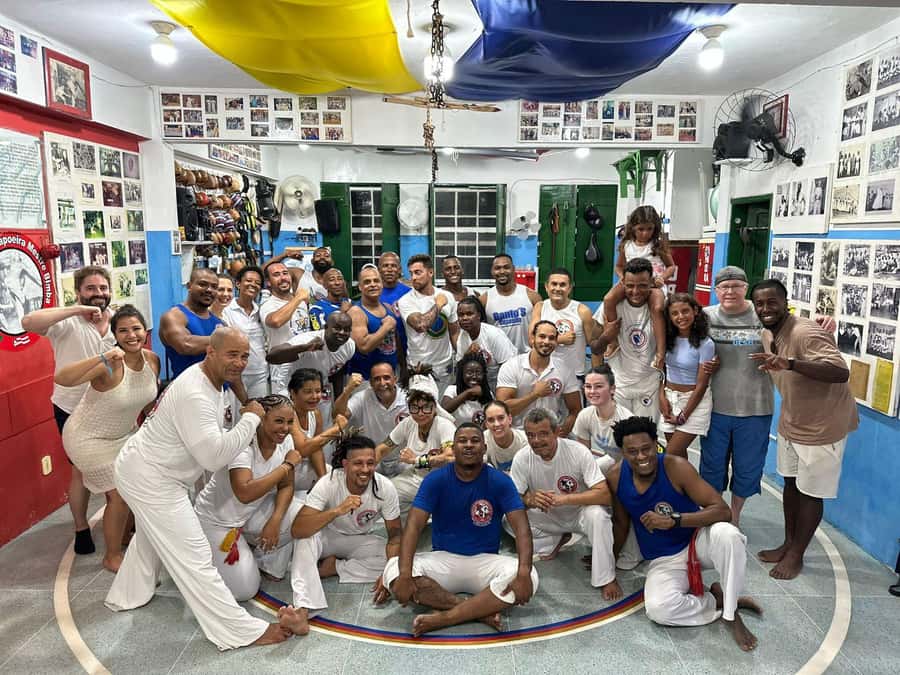
At $43 per person, this costs more than an ordinary drop-in exercise class in many places. The price makes more sense when you consider what is included: instruction at a historic capoeira school, English or Portuguese teaching, an introduction to Afro-Brazilian culture, bottled water, and a central location.
The lesson is only one hour, so you should not book it expecting a half-day program or a long performance. Its value comes from the setting and the focused introduction. You are paying for access to a specific cultural institution and for guided instruction from someone who can explain both the movements and their meaning.
I think the price is reasonable for a visitor who wants an active, place-specific experience. It is less compelling if you only want a cheap workout or if you already train capoeira regularly. The class is built around beginners, so experienced practitioners may find the material basic.
The strong overall rating of 4.9 from 34 reviews supports the idea that the lesson delivers what it promises, especially for first-timers. The repeated praise focuses on the instructor’s patience, the cultural explanation, and the feeling of welcome. Those are exactly the areas that matter most in a short introductory class.
Who should book this experience?
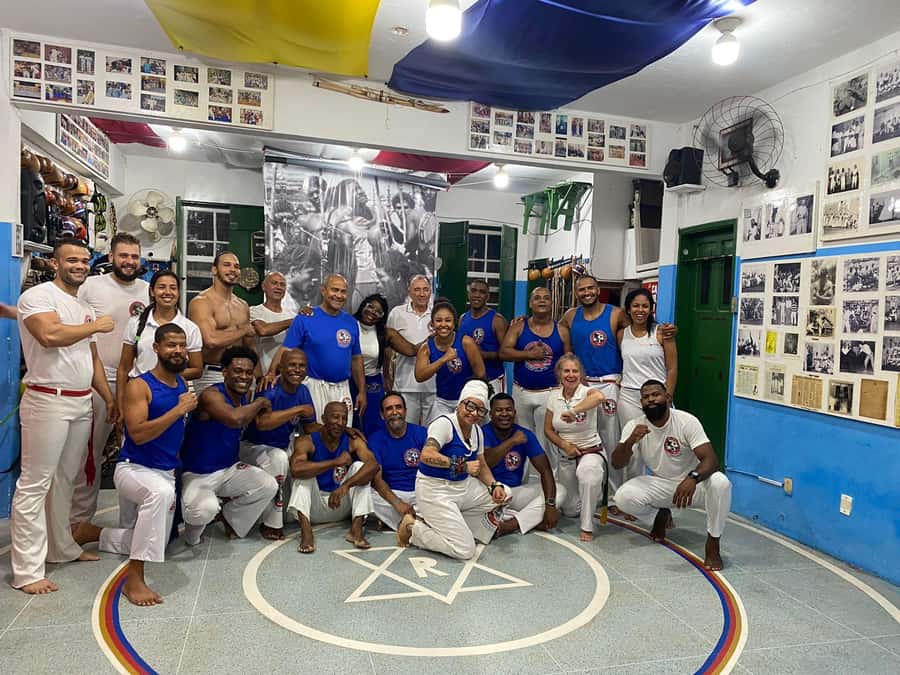
I would recommend it to you if you want to do more than look at Salvador. The class suits people who enjoy hands-on cultural activities, especially those interested in Afro-Brazilian traditions, dance, music, martial arts, or local history.
It is also a good choice for solo visitors, couples, families with older children, and friends who want to try something unusual together. You can attend without prior training, and the teaching style is designed to help nervous beginners settle in.
You may want to skip it if you strongly dislike exercise, have no interest in learning physical movements, or want a passive cultural presentation. The workout is real, and the class asks you to participate rather than watch.
If you enjoy it, ask about other classes at the school. One participant learned that samba and other dance styles are also taught there. Those options are not part of this booking, but the school may offer more ways to continue your connection with Brazilian movement.
Practical details for a smoother class
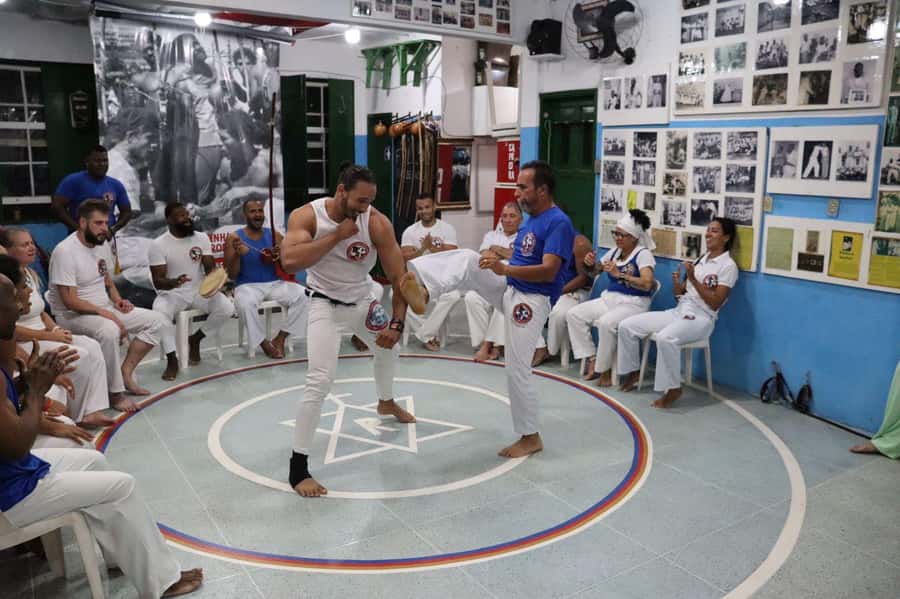
Book with the one-hour duration in mind. Check the available starting times and plan your route to Largo do Terreiro de Jesus before the day begins. Since there is no pickup, allow time to find the Associação de Capoeira Mestre Bimba using the nearby restaurant and church as reference points.
Wear comfortable sports clothing. You will need freedom of movement, and the class can be sweaty. Bring a water bottle even though bottled water is included.
The activity offers free cancellation up to 24 hours before the start time for a full refund. You can also reserve now and pay later, which helps if your Salvador schedule is still changing.
Should you book Mestre Bimba’s capoeira class?
Book it if you want a short but meaningful introduction to Salvador through movement. The combination of Brazil’s first capoeira school, Yasmin’s patient English instruction, beginner-level teaching, and Afro-Brazilian cultural context gives the hour real substance.
Go in prepared to sweat, make a few mistakes, and use muscles that may complain the next day. That is part of the deal. If you want an authentic activity that gets you off the sightseeing path and into the practice itself, this is a strong choice for your Salvador itinerary.
FAQ
Do I need previous capoeira experience?
No. The class is designed for beginners who have never trained capoeira, and the instructor teaches the basic movements step by step.
Who teaches the class?
The class is taught by Yasmin, who provides demonstrations, patient guidance, and historical and cultural information about capoeira.
What languages are available?
Instruction is available in English and Portuguese.
Where do I meet the instructor?
You meet at the Associação de Capoeira Mestre Bimba in Largo do Terreiro de Jesus. Ó Pai Ó Restaurante and São Domingos Gusmão Church are nearby landmarks.
Is transportation included?
No. The school does not offer pickup service, so you need to make your own way to the meeting point.
How long does the class last?
The class lasts one hour.
What is included in the price?
Bottled water is included. The listed price is $43 per person.
New in Salvador this month
- From Salvador: Schooner Tour to Frades Island★ 3.9 · 3 reviews
- From Salvador: Quilombo Heritage Daytrip with Lunch★ 3.4 · 3 reviews
- Salvador: Caipirinha Masterclass with Unlimited Drinks★ 4.2 · 4 reviews
- Salvador: Schooner Cruise with Pickup and Itaparica Stop★ 3.8 · 5 reviews
- BOXE CLASS – EX BAHIAN CHAMPION (SALVADOR-BA)★ 5.0 · 7 reviews
- Salvador by Night: Pelourinho & Old Town Tour★ 4.3 · 8 reviews
- Salvador: 3-Hour Percussion Class★ 4.9 · 10 reviews
- Salvador: Traditional Drumming and Percussion Workshop★ 4.4 · 10 reviews
Salvador Tours, compared.
Cooking class in Salvador, an authentic dinning experience
Read our review →
Tour to the Frades Islands and Itaparica, from Salvador – Ba
Read our review →
From Salvador: Schooner Tour to Frades Islands and Itaparica
Read our review →
Tour Praia do Forte and Guarajuba, Leaving Salvador-Bahia.
Read our review →
Afro-Brazilian Roots Private City Tour in Salvador
Read our review →


Schooner Trip Only Ilha dos Frades, Leaving Salvador-Bahia.
Read our review →Browse the lists this tour appears in