
Our review · SALVADOR TOURS
Salvador: CAPOEIRA CLASS – CULTURAL
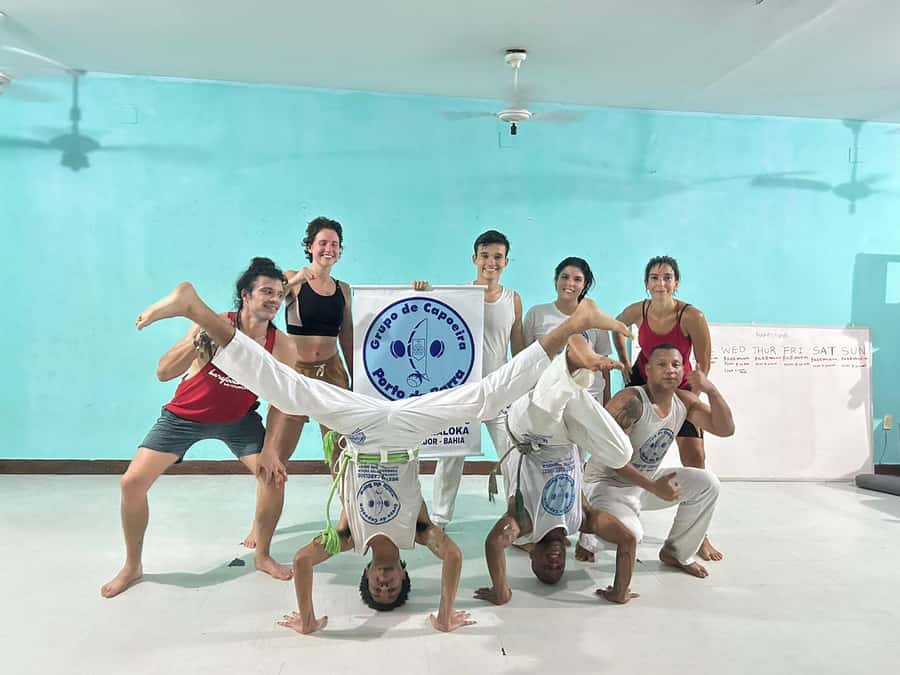
Capoeira turns a workout into a lesson in Brazilian culture. In this 90-minute Salvador class, you learn the basics of a martial art that also uses dance, music, rhythm, and personal expression. The session begins with warm-up drills, then moves into kicks, spins, acrobatics, songs, and instruments.
I like the small group of up to eight people, since the instructor can give you more attention. I also like the price: at $17, you get a full class, workout tools, water, and a cultural experience rather than a quick photo stop. The main thing to consider is that instruction is in Portuguese, so you need to be comfortable learning through demonstration, movement, and simple visual cues.
Key points at a glance
- Portuguese-language instruction: You follow the movements by watching the instructor, even if you speak no Portuguese.
- More than exercise: The class connects kicks and spins with capoeira’s history, music, songs, and role in resistance and empowerment.
- Small class size: Up to eight participants allows for a more personal lesson.
- Hands-on music: You may play capoeira instruments and learn songs as part of the session.
- Good evening timing: Classes run Mondays and Wednesdays at 7:30 PM, leaving your daytime free.
- Low-cost cultural activity: The $17 price includes the instructor, class, workout tools, and water.
Why capoeira fits Salvador so well
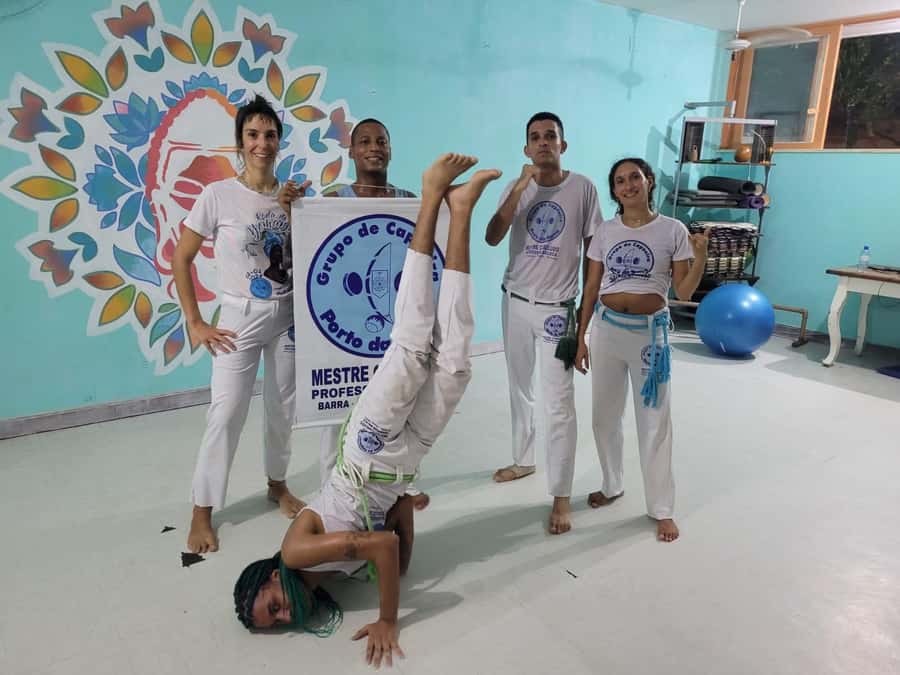
Capoeira is not simply a set of fighting techniques. It combines movement, music, rhythm, and social exchange, so a lesson gives you a way to connect with Brazil through your whole body.
The class presents capoeira as an art shaped by resistance and empowerment. That context matters. When you learn why the movements and music matter, the session feels less like a standard fitness class and more like an introduction to a living cultural practice.
You should expect a practical lesson, not a lecture. The instructor explains the historical and cultural background while guiding you through physical work. You learn by moving, repeating, listening, and watching.
That mix suits Salvador especially well. You are not just seeing local culture from the outside. You are taking part in one of its most recognizable forms of expression, at a level designed for beginners.
more Salvador days to choose between
- Cooking class in Salvador, an authentic dinning experience
★ 5.0 · 132 reviews - 4h Cooking Class in Salvador with 9 Recipes & Bottomless Drinks
★ 5.0 · 73 reviews - Salvador: Capoeira Class at Mestre Bimba’s 1st Ever School.
★ 4.9 · 34 reviews
Starting with a 7:30 PM warm-up
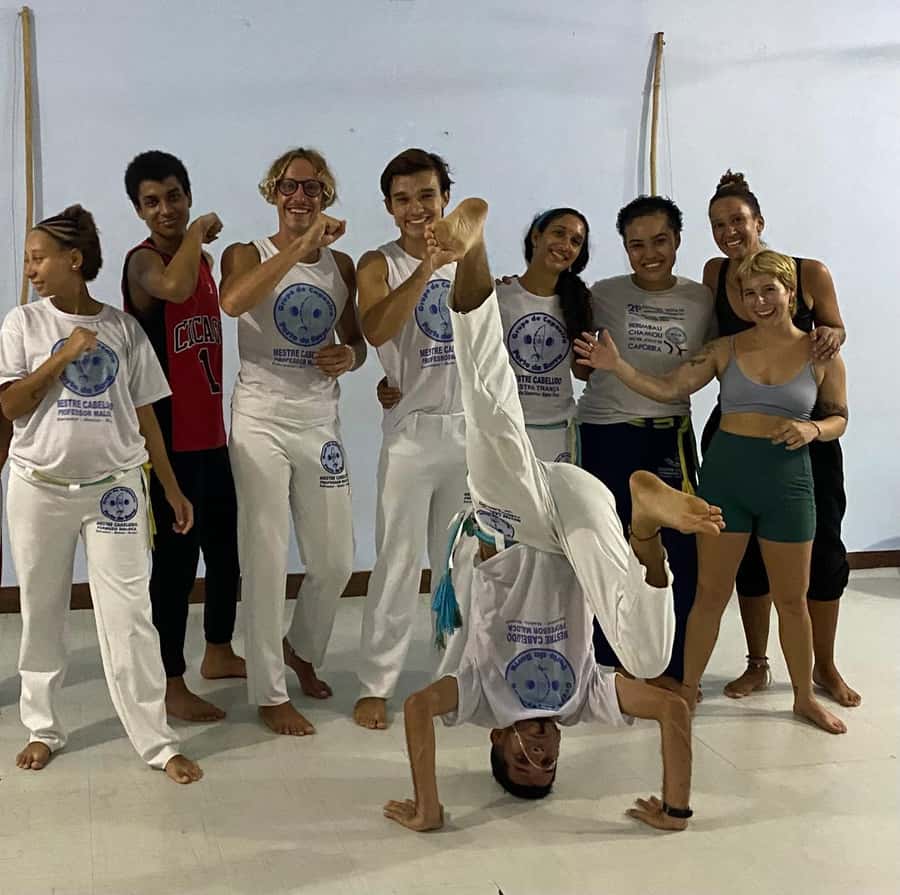
The class meets at Hostel Nomads and begins at 7:30 PM on Mondays and Wednesdays. The evening schedule works well if you want to spend the day sightseeing and reserve one night for an active cultural experience.
The opening warm-up focuses on agility, flexibility, and coordination. These are not filler exercises. Capoeira asks you to shift your weight, control your balance, and move smoothly from one position to another, so your body needs preparation before the faster sequences begin.
I would arrive ready to move rather than expecting a passive demonstration. The class includes physical conditioning, and the 90-minute length gives you enough time to work through the basics without turning the session into a rushed sample.
The warm-up also gives the instructor a chance to see how the group moves. With no more than eight people, you should have a better chance of receiving corrections and guidance than in a large drop-in class.
Learning kicks, spins, and body control
After the warm-up, the instructor introduces capoeira movements through sequences of kicks, spins, and acrobatics. The emphasis is on technique and expression, not simply on moving as fast or as high as possible.
That distinction is useful for beginners. You do not need to arrive with martial arts or dance experience listed on your résumé. You need patience, attention, and a willingness to repeat unfamiliar movements.
Some of the physical work may feel demanding. One of the class’s strengths is that it gives you a real workout, but that also means you should not treat it as a gentle cultural demonstration. The 90 minutes are active and can test your flexibility, coordination, and stamina.
The movements are taught as part of a larger sequence. You learn how a kick, turn, or shift of weight fits into capoeira’s flowing style. This makes the lesson more interesting than practicing isolated exercises with no cultural setting.
The instructor is described as attentive and professional, with a teaching style that focuses on helping beginners understand the basics. You can expect clear demonstrations and repeated practice, though the language barrier means you should watch closely and ask for clarification when needed.
Why the Portuguese language matters
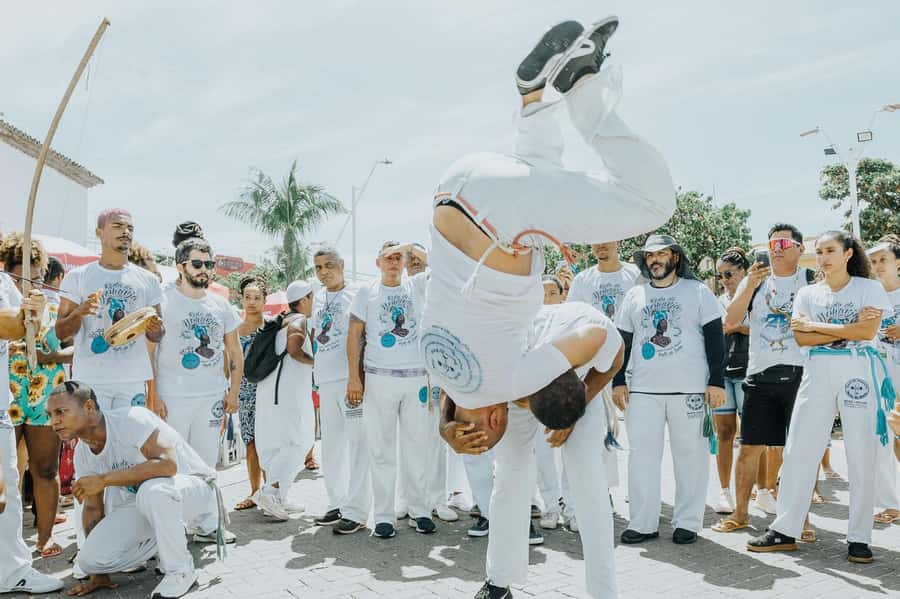
The instructor teaches in Portuguese. That is the most important practical point to consider before booking.
If you speak Portuguese, you will have an easier time following explanations about technique, history, and songs. If you do not, you can still take part. The class relies heavily on physical demonstration, and a past participant specifically noted that the experience worked well even without speaking Portuguese.
I would think of the language difference as part of the challenge, not an automatic barrier. You will need to copy movements from the instructor and pay attention to timing. Short instructions may not be clear at first, especially during a fast sequence.
The class may suit you best if you enjoy learning by watching and doing. It is less suitable if you want detailed explanations in English or need every movement broken down verbally before trying it.
The language also keeps the experience connected to its local setting. You are not receiving a heavily packaged version of capoeira designed for international visitors. You are entering a Portuguese-speaking class and adapting to the way it is taught.
A different side of Salvador altogether:
- Tour to the Frades Islands and Itaparica, from Salvador – Ba
★ 4.0 · 130 reviews - From Salvador: Schooner Tour to Frades Islands and Itaparica
★ 3.9 · 98 reviews - Tour Praia do Forte and Guarajuba, Leaving Salvador-Bahia.
★ 4.5 · 97 reviews - Afro-Brazilian Roots Private City Tour in Salvador
★ 4.7 · 88 reviews
From martial movement to music and song
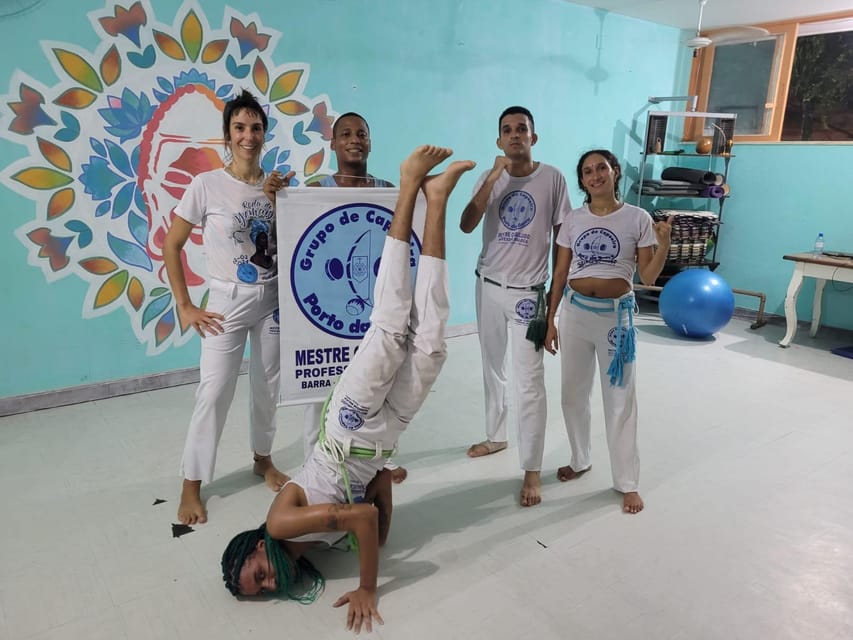
Capoeira’s music is not an optional extra. Songs and instruments help create the rhythm and shared structure of the practice.
The class can include a chance to play the instruments and learn songs. This changes the pace of the lesson and helps you understand that capoeira is not only about kicks and physical control. Sound, timing, and group participation are part of the art.
For me, this is one of the best reasons to choose the class over a normal workout. You leave with more than sore muscles or a few movements to imitate. You get a glimpse of how music helps shape the activity and bring the group together.
You should not expect to become a capoeira musician in one session. The value is in trying the instruments, following the songs, and seeing how the musical side fits with the movement.
This section may also be where the class feels most social. Even in a small group, learning a song or taking a turn with an instrument gives you a way to participate when you are still unsure of the physical sequences.
A cultural lesson with a real physical edge
The class describes capoeira as a way of life connected to history, music, community, and personal change. Those ideas are introduced alongside the physical practice, rather than treated as separate background information.
That approach gives the workout more meaning. A kick is not presented only as a stretch or fitness drill. It becomes part of an art shaped by discipline, expression, and shared tradition.
At the same time, you should keep your expectations realistic. Ninety minutes cannot give you a full history of capoeira or advanced mastery of its movements. You will get an introduction, some basic technique, and a feel for the energy of the practice.
That is enough for a first step. The class is especially useful if you want to understand why capoeira includes both combat-like movement and dance-like flow. It shows how those elements can exist together without reducing the art to either one.
The session also gives you a chance to test your own interest. You may discover that you want to take more classes after returning home, or you may decide that capoeira is enjoyable for one evening but not your preferred form of exercise. Either result makes the experience useful.
What the 90 minutes mean for your evening
The class has a clear advantage in its compact format. At 90 minutes, it fits into a busy Salvador schedule without taking an entire day.
You can plan it as an evening activity after sightseeing, but remember that the session is active. It may be wise to leave enough time before class to arrive at Hostel Nomads without rushing and to avoid scheduling another demanding activity immediately afterward.
The 7:30 PM start gives the lesson a distinct evening feel. You are not squeezing it into a midday gap between museums and meals. It becomes the main event for the night.
The fixed schedule is also a limitation. Classes are held only on Monday and Wednesday at 7:30 PM, so you need to match your plans to those times. The activity does not offer the same flexibility as a daily walking tour.
The 90-minute duration is long enough to make the $17 fee feel worthwhile. You receive a full lesson instead of a short performance or ten-minute introduction. For a budget-conscious visitor, that combination of time, instruction, water, and equipment is strong value.
The value of a $17 cultural workout
At $17 per person, this is an inexpensive way to add a participatory activity to your Salvador plans. You are paying for a class led by a master capoeira instructor, along with workout tools and water.
The value is strongest if you want both physical activity and cultural context. A standard fitness class might give you exercise, but not the explanation of capoeira’s roots, music, and social meaning. A performance might give you spectacle, but not the chance to learn the movements yourself.
This class sits between the two. You work out, learn basic technique, and take part in music and songs. The small group size adds value because the instructor has fewer people to watch and guide.
The price does not guarantee advanced training or a long-term course. You should book it as an introduction, not as a substitute for regular capoeira practice. Still, the cost is modest enough that beginners can try it without making a major commitment.
A current rating of 4.6 from 13 ratings supports the idea that the class delivers a satisfying first experience. The strongest themes in the feedback are the instructor’s attention, the fun and intensity of the workout, and the chance to learn both movement and music.
Who will enjoy this class most
I would recommend this class to you if you like active cultural experiences. You should be ready to sweat, repeat movements, and accept that your first attempts may feel awkward.
It suits solo visitors, couples, and small groups who want a shared activity that feels different from a standard sightseeing stop. The limit of eight participants helps keep the class personal and avoids the feel of a large tourist production.
It is also a good choice if you are curious about dance, martial arts, rhythm, or Brazilian culture but have never tried capoeira. You do not need to present yourself as an athlete. The session is designed around basic introduction and guided practice.
You may want to skip it if you strongly prefer English-language instruction, dislike physical activity, or have only a narrow time window that does not include Monday or Wednesday at 7:30 PM.
If you have concerns about flexibility or acrobatics, keep in mind that the listed class includes warm-up, technique, and conditioning, but it does not promise that every participant must perform advanced tricks. You can ask the instructor for guidance during the session.
Booking flexibility and simple planning
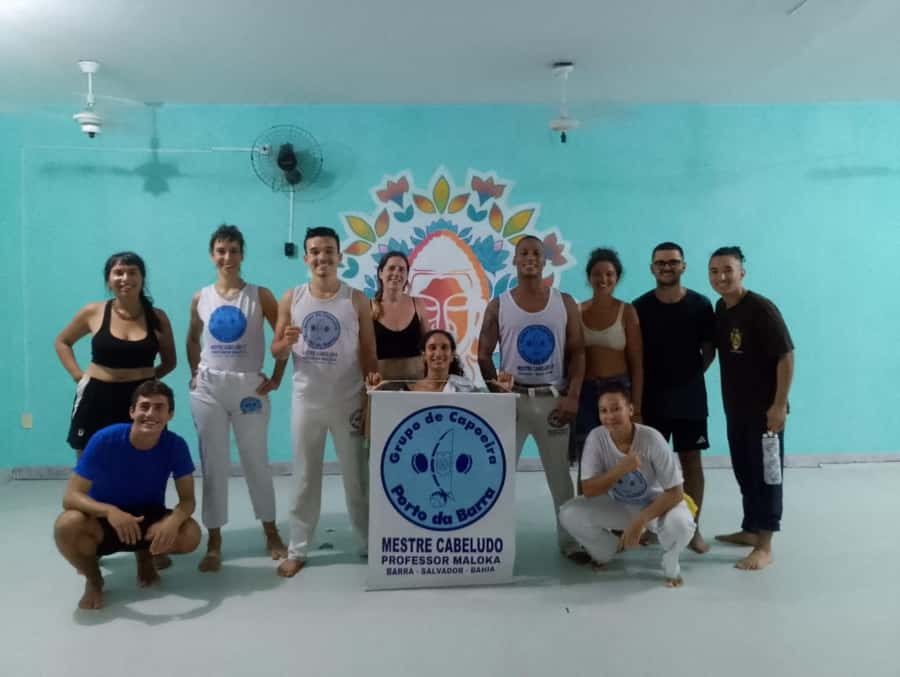
You can reserve now and pay later, which helps if your Salvador schedule is still changing. Free cancellation is available up to 24 hours in advance for a full refund.
The meeting point is Hostel Nomads. Since the class starts at a set evening time, check the current availability when you book and plan to be there before the 7:30 PM start.
Portuguese is the only listed class language. That fact should appear near the top of your decision, not as a small footnote. You can still participate without Portuguese, but your experience will depend on watching closely and learning through movement.
The activity is limited to eight participants. If the small-group format matters to you, reserve early enough to match your preferred Monday or Wednesday.
Should you book the Salvador capoeira class?
Book it if you want a low-cost, hands-on introduction to Brazilian culture that also gives you a proper workout. The combination of kicks, spins, music, songs, and historical context makes this more memorable than a basic exercise session.
I especially like it for people who want to participate rather than just watch. You may leave with a better sense of capoeira’s rhythm and purpose, plus a few basic movements and songs to remember.
Think twice if Portuguese-language teaching will frustrate you or if you want a polished performance instead of active instruction. For everyone else, $17 and 90 minutes is a fair exchange for a small-group class with a capable instructor and a clear cultural focus.
FAQ
How much does the Salvador capoeira class cost?
The class costs $17 per person.
How long does the capoeira class last?
The class lasts 90 minutes.
When are the classes held?
Classes are held every Monday and Wednesday at 7:30 PM.
Where is the meeting point?
The meeting point is Hostel Nomads.
What language does the instructor speak?
The instructor teaches in Portuguese.
How many people can join the class?
The group is limited to eight participants.
Is the class suitable for someone who does not speak Portuguese?
Yes. You can take part without speaking Portuguese, but you will need to follow demonstrations and learn through movement.
What is included in the price?
The price includes the capoeira class, a master capoeira instructor, workout tools, and water.
Can I cancel the booking for a refund?
You can cancel up to 24 hours in advance for a full refund. You can also reserve now and pay later.
New in Salvador this month
- From Salvador: Schooner Tour to Frades Island★ 3.9 · 3 reviews
- From Salvador: Quilombo Heritage Daytrip with Lunch★ 3.4 · 3 reviews
- Salvador: Caipirinha Masterclass with Unlimited Drinks★ 4.2 · 4 reviews
- Salvador: Schooner Cruise with Pickup and Itaparica Stop★ 3.8 · 5 reviews
- BOXE CLASS – EX BAHIAN CHAMPION (SALVADOR-BA)★ 5.0 · 7 reviews
- Salvador by Night: Pelourinho & Old Town Tour★ 4.3 · 8 reviews
- Salvador: 3-Hour Percussion Class★ 4.9 · 10 reviews
- Salvador: Traditional Drumming and Percussion Workshop★ 4.4 · 10 reviews
Salvador Tours, compared.
Cooking class in Salvador, an authentic dinning experience
Read our review →
Tour to the Frades Islands and Itaparica, from Salvador – Ba
Read our review →
From Salvador: Schooner Tour to Frades Islands and Itaparica
Read our review →
Tour Praia do Forte and Guarajuba, Leaving Salvador-Bahia.
Read our review →
Afro-Brazilian Roots Private City Tour in Salvador
Read our review →


Schooner Trip Only Ilha dos Frades, Leaving Salvador-Bahia.
Read our review →Browse the lists this tour appears in