
Our review · SALVADOR TOURS
Salvador: 3-Hour Percussion Class
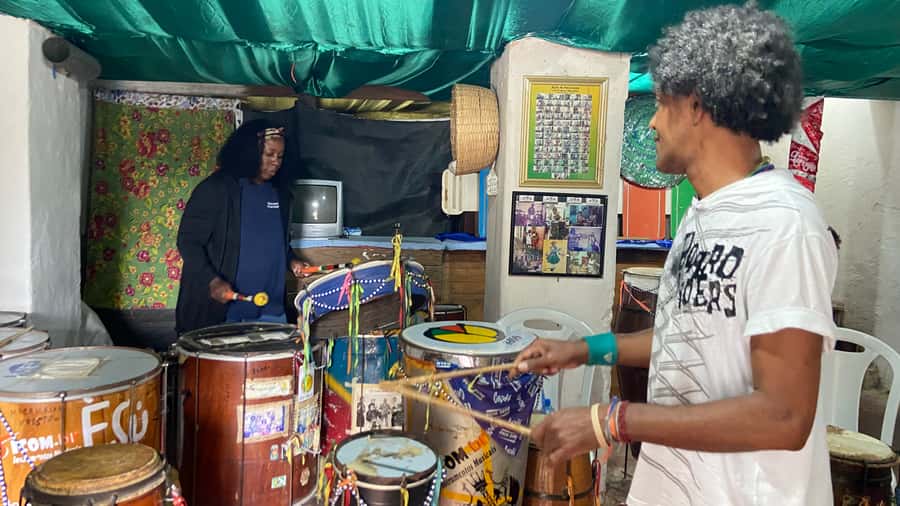
Salvador’s music is not just something you hear from a stage. It is part of daily life, and this class puts you right inside that tradition with drums in your hands. You’ll learn rhythms tied to samba, samba-reggae, and Afro-Brazilian music, then play them together in a small group.
I like the maximum six-person group, which gives the instructor room to correct your technique and adjust the lesson to your level. I also like the language support, especially if you do not speak Portuguese. The guide can translate the instructor’s demonstrations, so the lesson remains clear rather than turning into a guessing game.
The main drawback is the advertised three hours. That time includes hotel transportation, and several participants received about 90 minutes to 1 hour 45 minutes of actual instruction. At $90 per person, that shorter class time matters.
Key points before you book
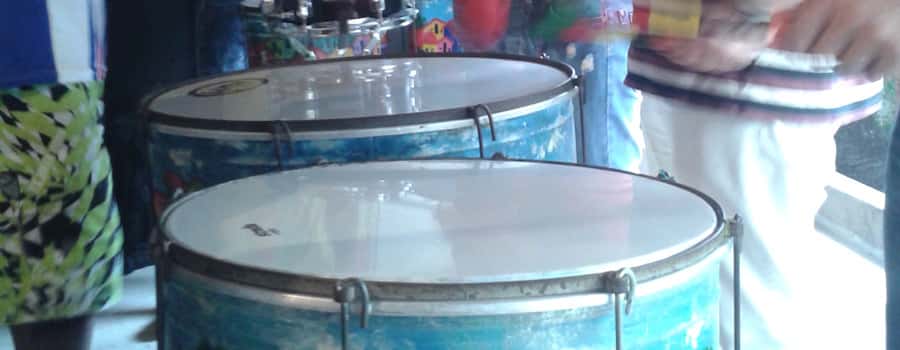
- Play several Brazilian percussion instruments: The class gives you hands-on time with different drums instead of limiting you to a single beat.
- Learn samba-reggae from a local musician: Maestro Macambira leads the lesson and is described as patient, friendly, and attentive to different skill levels.
- Expect language help during the class: Instruction is available in English, Spanish, and Portuguese, with translation support when needed.
- Make music as a group: The lesson builds toward playing rhythms together, which is often the most memorable part of the session.
- Small groups keep the class personal: With no more than six participants, you should get more attention than in a large workshop.
- Allow for less than three hours of drumming: Pickup and drop-off are included in the stated duration, so confirm the actual class length when planning your day.
Why percussion matters in Salvador
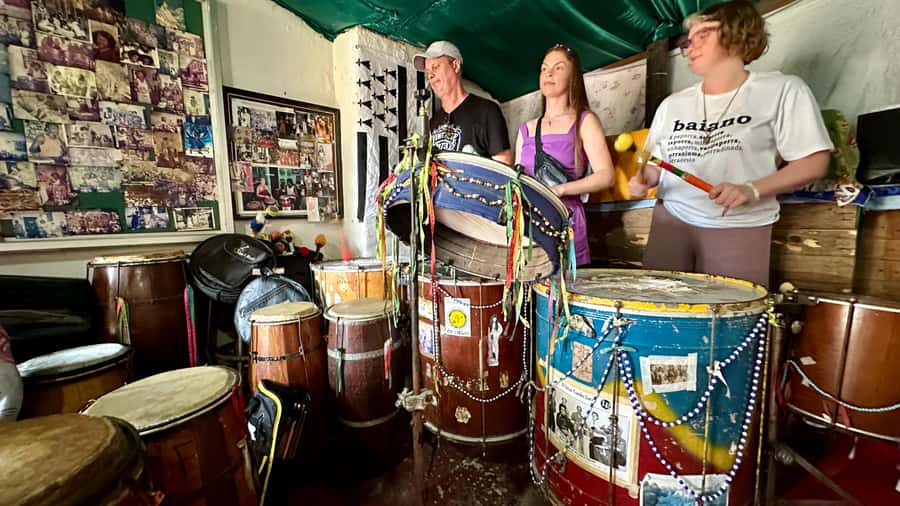
In Bahia, percussion carries more than a tune. It can set the pulse for a samba de roda, add force to a song, or support the ceremonial music of Candomblé. The instruments bring people together, and the beat often matters as much as the melody.
You do not need to arrive as a musician to appreciate this. The class is built around participation, not a test of skill. You’ll be shown how to hold and strike the instruments, then work through simple patterns before combining them with the group.
That approach makes the experience useful for two kinds of people. If you already play drums, you’ll get a direct look at Brazilian rhythms and instruments. If you are new to percussion, you’ll have a structured way to try something that can feel intimidating when you only watch from the sidelines.
The focus reaches beyond standard samba. You’ll hear about samba-reggae, a Bahia-born style shaped by Afro-Brazilian traditions and reggae influences. The activity also places Brazilian music alongside jazz and other forms, showing how broad the country’s musical life can be.
more Salvador days to choose between
- Cooking class in Salvador, an authentic dinning experience
★ 5.0 · 132 reviews - 4h Cooking Class in Salvador with 9 Recipes & Bottomless Drinks
★ 5.0 · 73 reviews - Salvador: Capoeira Class at Mestre Bimba’s 1st Ever School.
★ 4.9 · 34 reviews
Meeting Maestro Macambira and the local guide
The class is led by Maestro Macambira, a percussion teacher described as patient and welcoming with beginners and experienced players alike. That matters because group music classes can easily favor the fastest learner. Here, the instructor is expected to work with different levels rather than push everyone at the same speed.
A separate guide helps with translation and communication. English, Spanish, and Portuguese are offered, and the guide can explain what Macambira is demonstrating. You should still expect the music itself to do much of the talking, but the language support helps when you need to understand a hand position, rhythm change, or instruction.
The local guide also adds context about Salvador’s musical culture. You are not simply renting a drum for an hour. You are learning why percussion appears in social, artistic, and religious settings across Bahia.
I would pay attention to the demonstrations before worrying about playing perfectly. Brazilian rhythms can sound simple until you try to keep one pattern steady while another player adds something different. The teacher’s patience is one of the strongest reasons this class works for beginners.
What the three-hour schedule really means
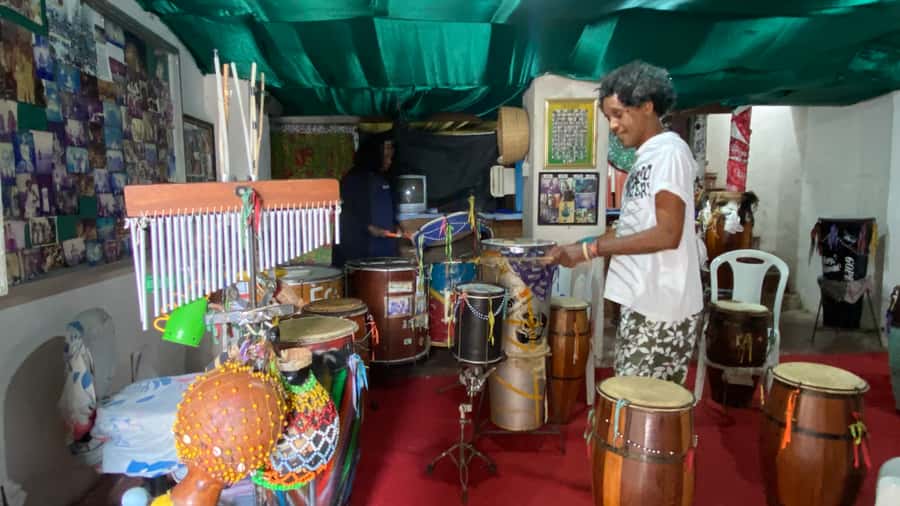
The listed duration is three hours, including hotel pickup and drop-off. That is important when you compare this activity with other things to do in Salvador.
The actual percussion lesson has been reported as roughly 90 minutes by some participants, while another experience lasted about 1 hour 45 minutes in total. The exact timing may vary, but you should not assume that all three hours are spent playing instruments.
This is not necessarily a flaw. Transport takes time, and a private or small-group cultural activity often includes meeting the instructor, settling into the space, translating instructions, and moving between parts of the lesson. Still, the distinction affects the price.
If you are mainly paying for a music lesson, $90 is a serious cost for 90 minutes to 1 hour 45 minutes of instruction. If you also value hotel transportation, local guidance, translation, and access to a personal workshop, the price becomes easier to justify.
I would keep the rest of your day flexible. Do not schedule another activity immediately after the advertised end time, especially if your hotel is outside the main area of Salvador. Pickup and drop-off are included from your hotel lobby, which makes the outing simple, but traffic and transport time can change the day’s rhythm.
Getting hands-on with Brazilian drums
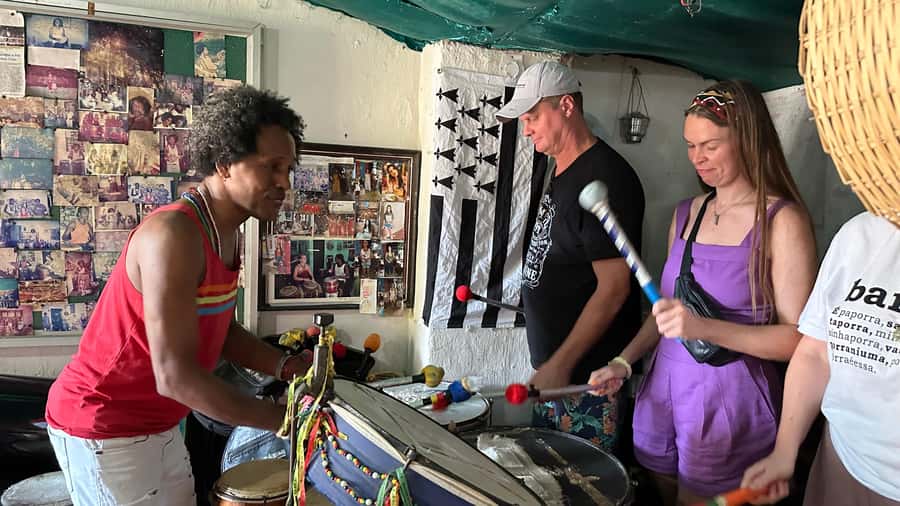
The best part of the class is the chance to play several instruments. You are not left watching a performer while someone explains the cultural background. You get to test different drums and feel how each one contributes to the overall sound.
The lesson should begin with basic patterns. You might first repeat a rhythm after the instructor, then work on keeping a steady pulse. From there, the group can add separate parts until the combined sound resembles a full percussion arrangement.
That process explains something you cannot learn from a concert alone: a large rhythm section depends on simple parts played well. One person may keep the base pulse, while another adds accents or responds to the leader. Once everyone locks into place, the music gains force without becoming complicated for its own sake.
The group format is useful here. With up to six people, the teacher can hear where the rhythm slips and make adjustments. You also learn by listening to the other players. If your pattern starts to wander, the group gives you a steady reference.
The class has been praised for letting people play multiple instruments, but it is worth keeping expectations realistic. The lesson may not offer a long, technical study of each drum. The aim is a lively introduction to Bahia’s percussion, not a full professional training course.
A different side of Salvador altogether:
- Tour to the Frades Islands and Itaparica, from Salvador – Ba
★ 4.0 · 130 reviews - From Salvador: Schooner Tour to Frades Islands and Itaparica
★ 3.9 · 98 reviews - Tour Praia do Forte and Guarajuba, Leaving Salvador-Bahia.
★ 4.5 · 97 reviews - Afro-Brazilian Roots Private City Tour in Salvador
★ 4.7 · 88 reviews
Samba, samba-reggae, and the sound of Bahia
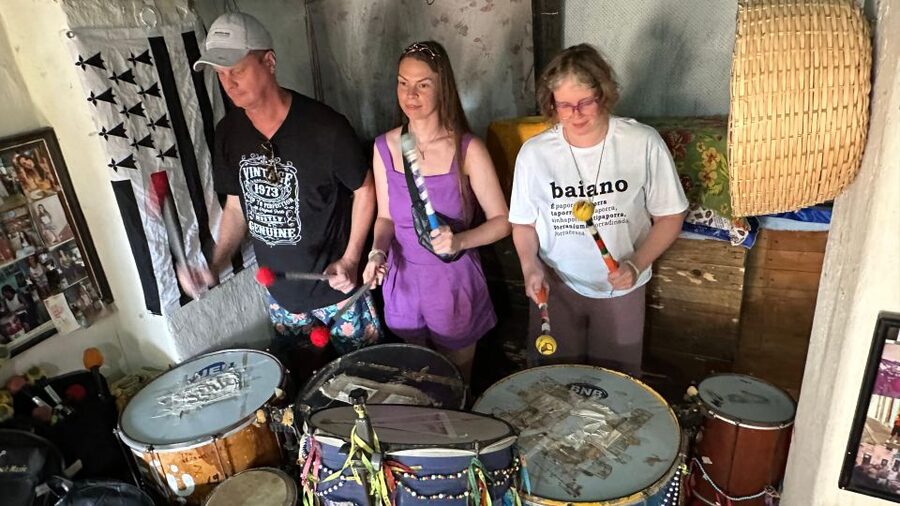
Samba is the most familiar name in the program, but Salvador’s connection to samba-reggae gives the experience a clear local identity. This rhythm became internationally known and even caught Michael Jackson’s attention, a detail that helps show its reach beyond Bahia.
You’ll hear how the class connects Brazilian music to African musical traditions. The point is not to reduce Bahia’s sound to one outside influence. It is to understand how rhythms, instruments, performance styles, and community traditions developed through long cultural exchange.
Samba de roda offers another useful reference. It is a circle-based musical tradition from Bahia, with singing, clapping, movement, and percussion working together. You may not take part in a samba de roda during this class, but the example helps explain why percussion in Bahia is social rather than only decorative.
Candomblé is also mentioned as a setting where percussion plays an important role. This deserves respect and care. The class is a music workshop, not a religious ceremony, and you should treat any explanation of Candomblé as cultural context rather than entertainment.
The mention of jazz points to the versatility of Brazilian musical production. You may not receive a full music lecture, but the class gives you a way to hear how rhythm can change character depending on the instrument, the tempo, and the players.
The group jam is the payoff
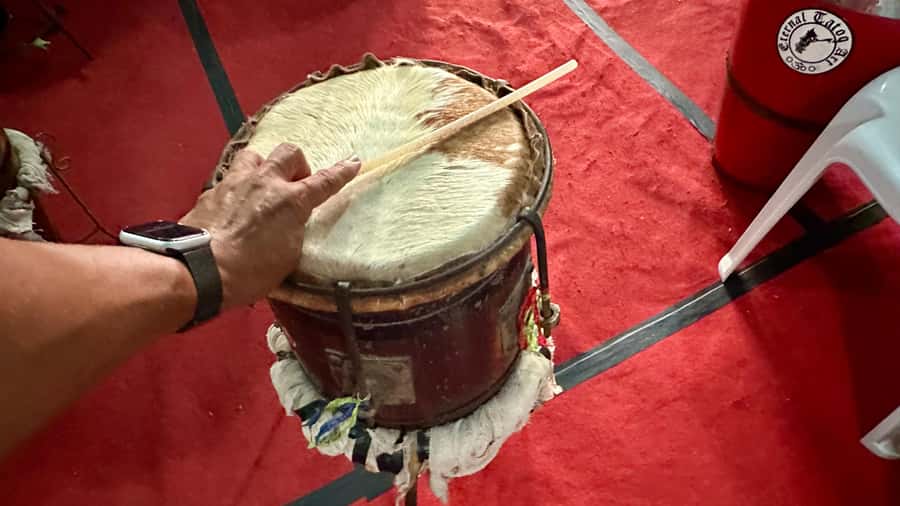
The lesson builds toward playing together, and that shared jam is likely to be the strongest memory you take home. You start with separate exercises, but the point is to hear how individual patterns fit into a larger beat.
This is where the class differs from watching a percussion show. You feel the timing in your hands, and you notice how quickly a simple rhythm can become powerful when several people hold their parts. Even a beginner can contribute if the pattern remains steady.
I also like the fact that the activity can work across generations. One participant described taking part with three generations, which suggests that the class does not depend on athletic ability or advanced musical training. The main requirement is a willingness to listen and try.
A one-on-one session has also been offered, giving a percussion enthusiast more direct playing time. In a group of six, you should expect a more social lesson. If you want concentrated technical coaching, ask about the group size and actual instruction time before you commit.
Is $90 a fair price?
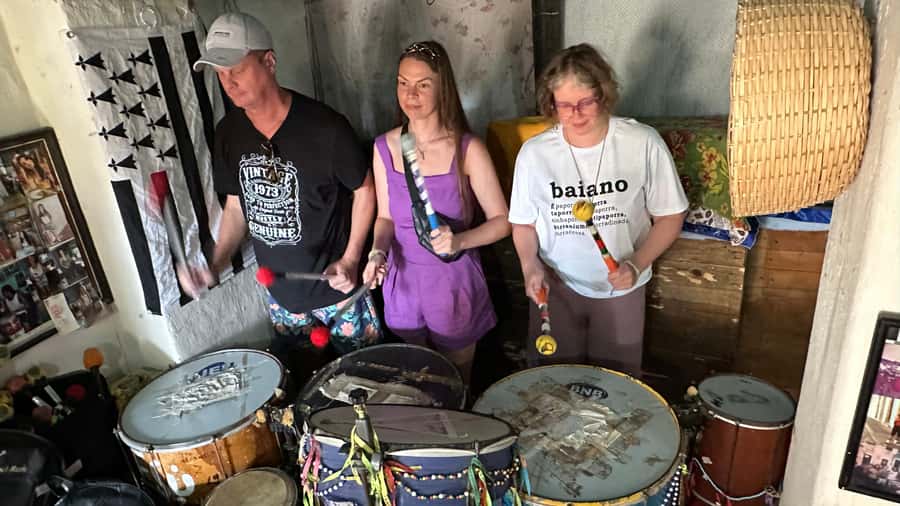
At $90 per person, this is not a cheap add-on activity. The value depends on what you count as part of the experience.
The cost includes hotel pickup and drop-off, entrance fees, a professional guide, translation support, and a small group capped at six people. Those extras save you the work of finding the location and help bridge the language gap. For a first visit to Salvador, that convenience has real value.
The price is harder to defend if your only goal is extended drumming time. Since transport is included in the three-hour duration, the lesson may last closer to 90 minutes than to a full three hours. Some participants felt the experience was too short for the price, and one also felt that the beats stayed basic and the instrument selection was limited.
That criticism is useful. You should book this as a cultural introduction with hands-on music, not as an intensive percussion course. If you are already an experienced drummer, you may want to ask in advance how much time you’ll have with each instrument and whether a private format is possible.
For a first encounter with Afro-Brazilian percussion, the cost may be worthwhile because you receive more than a performance ticket. You meet a local teacher, receive explanations in your language, and take part in the music yourself.
Who will enjoy this class most?
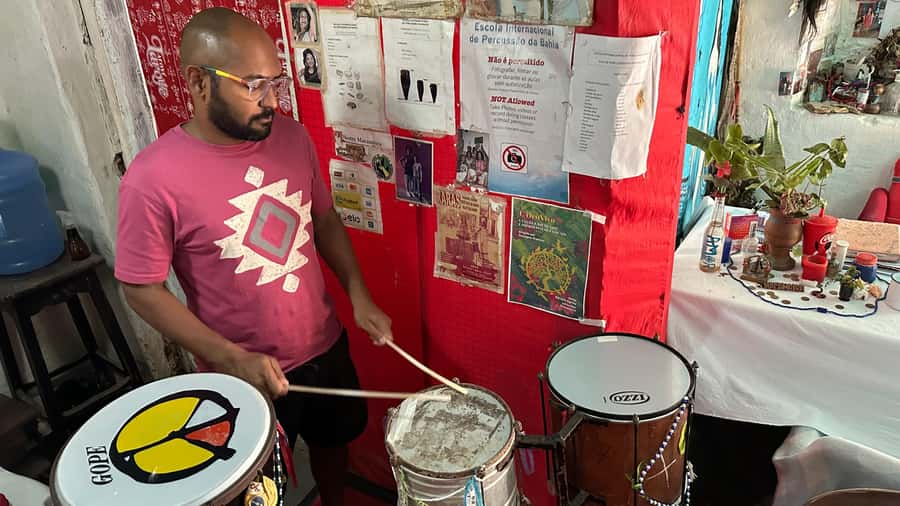
I would recommend it most strongly to curious first-time visitors who want a personal cultural activity in Salvador. You do not need to know how to read music, and the small group should make it easier to ask questions or repeat an exercise.
It is also a good fit if you already enjoy percussion and want to try Brazilian instruments and rhythms. The class can give you a taste of samba-reggae and other styles that you may not encounter in a standard sightseeing tour.
Families and mixed-age groups may find the format appealing because the activity is physical without being strenuous. The three-generation group shows that the class can bring different ages into the same musical task.
I would be more cautious if you want a long, advanced lesson. The instruction appears to focus on accessible rhythms and group playing, and the actual class may be considerably shorter than the full advertised duration.
You should also think about mobility needs. The activity cannot accommodate wheelchairs, so it is not suitable if you require wheelchair access.
Practical advice for a better session
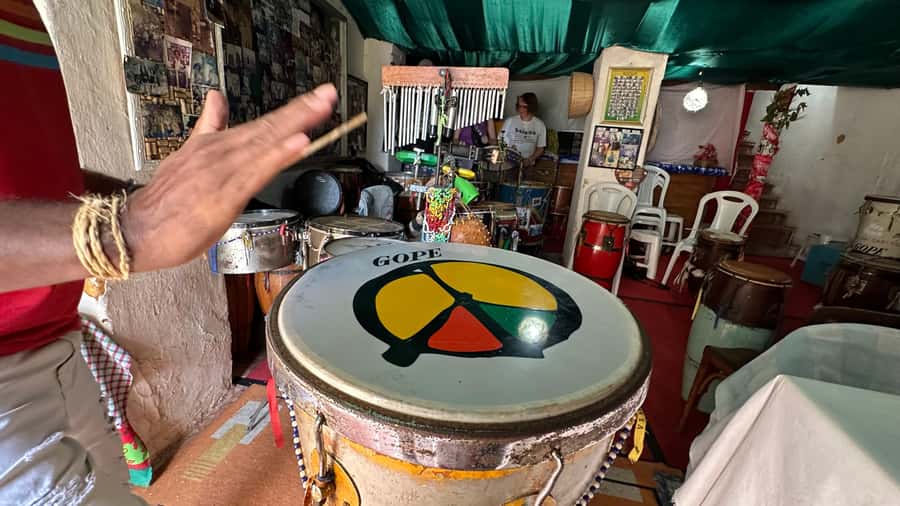
Before booking, check the available start time and ask how much of the three-hour window is expected to be spent in the workshop. That single question will help you judge the $90 price more fairly.
Choose clothing that lets you sit and move your arms comfortably. Food and drinks are not included, so plan around the time of day and do not expect refreshments to be part of the activity.
If you speak English or Spanish, request language support when you book. Portuguese is also available, and the guide can help translate the instructor’s demonstrations. Clear communication is especially useful when the lesson moves from a single rhythm to several parts played together.
Arrive ready to repeat a pattern many times. The class is more rewarding when you listen closely instead of trying to play as loudly as possible. A steady, simple beat will help the entire group more than a flashy but uneven one.
Finally, leave room for the lesson to run at a relaxed pace. The instructor’s patient approach is part of the appeal, but it also means the class may spend time helping each player find the rhythm.
Should you book the Salvador percussion class?
Book it if you want to do more than watch Salvador’s music from the outside. You’ll play several instruments, learn about samba and samba-reggae, receive help in English, Spanish, or Portuguese, and make music with a small group under Maestro Macambira’s guidance.
Think twice if you expect a full three hours of drumming or advanced technical instruction. At $90, the experience is best value for someone who also wants hotel transport, local cultural explanation, and a friendly introduction to Afro-Brazilian percussion.
My practical advice is simple: confirm the expected hands-on lesson length before paying. If roughly 90 minutes to 1 hour 45 minutes of instruction suits your plans, this can be a memorable and unusually direct way to hear Salvador. If you want an intensive workshop, look for a longer class or a private lesson instead.
FAQ
How long does the percussion class last?
The activity is listed as three hours, but that includes hotel pickup and drop-off. The hands-on instruction may last about 90 minutes to 1 hour 45 minutes.
What musical styles will I learn?
The class covers Brazilian percussion with a focus on samba and samba-reggae. It also introduces the wider range of Brazilian music, including connections to jazz and African musical traditions.
Who teaches the percussion class?
The class is led by Maestro Macambira. A guide can translate the instructor’s demonstrations and help with communication.
What languages are available?
The live guide is available in English, Spanish, and Portuguese.
Is hotel transportation included?
Yes. Pickup and drop-off from your hotel lobby are included, along with entrance fees and a professional guide.
Can wheelchair users join the activity?
No. The activity cannot accommodate wheelchairs.
New in Salvador this month
- From Salvador: Schooner Tour to Frades Island★ 3.9 · 3 reviews
- From Salvador: Quilombo Heritage Daytrip with Lunch★ 3.4 · 3 reviews
- Salvador: Caipirinha Masterclass with Unlimited Drinks★ 4.2 · 4 reviews
- Salvador: Schooner Cruise with Pickup and Itaparica Stop★ 3.8 · 5 reviews
- BOXE CLASS – EX BAHIAN CHAMPION (SALVADOR-BA)★ 5.0 · 7 reviews
- Salvador by Night: Pelourinho & Old Town Tour★ 4.3 · 8 reviews
- Salvador: Traditional Drumming and Percussion Workshop★ 4.4 · 10 reviews
- Salvador: CAPOEIRA CLASS – CULTURAL★ 4.6 · 13 reviews
Salvador Tours, compared.
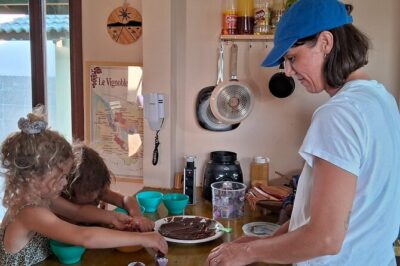
Cooking class in Salvador, an authentic dinning experience
Read our review →
Tour to the Frades Islands and Itaparica, from Salvador – Ba
Read our review →
From Salvador: Schooner Tour to Frades Islands and Itaparica
Read our review →
Tour Praia do Forte and Guarajuba, Leaving Salvador-Bahia.
Read our review →
Afro-Brazilian Roots Private City Tour in Salvador
Read our review →

Schooner Trip Only Ilha dos Frades, Leaving Salvador-Bahia.
Read our review →Browse the lists this tour appears in