
Our review · SALVADOR TOURS
Salvador: Cultural Night of Capoeira, Samba, and Drumming
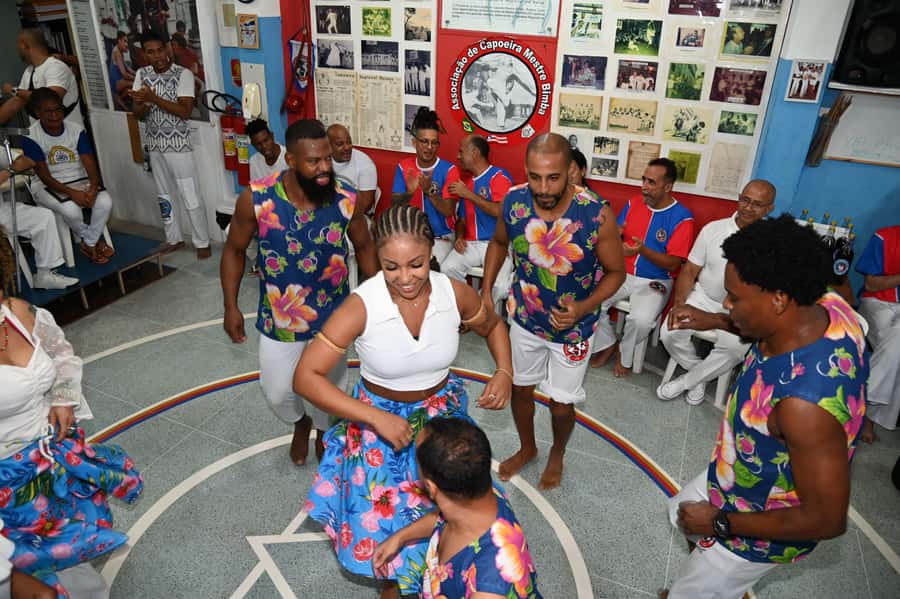
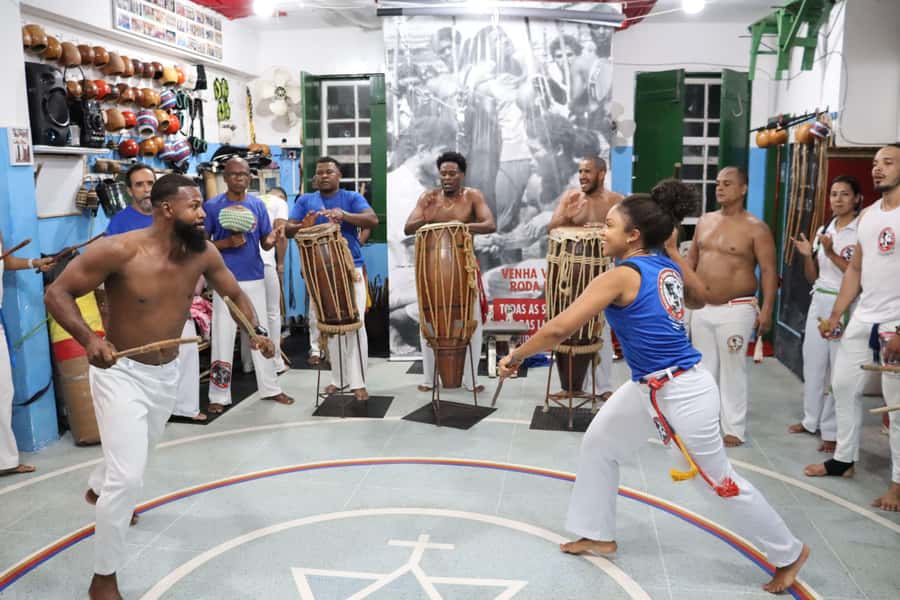
Salvador’s Capoeira, Samba, and Drumming Night takes place at the first Capoeira school in Brazil, founded in 1937 by Mestre Bimba. The setting gives the evening real weight: you are not simply watching a polished stage act, but seeing a living practice unfold through music, movement, and participation across generations.
I like the mix of Capoeira, Samba, and Maculelê, which keeps the hour moving and gives you more than one window into Bahian culture. I also like the live drums, singing, and acrobatics, since they make the room feel like an active community space rather than a passive theater.
The main drawback is comfort. The room can get very hot, and the action is physical and intense. You should wear light clothes and comfortable shoes, and this is not a good fit if you are pregnant or have back problems.
Key points to know before you book
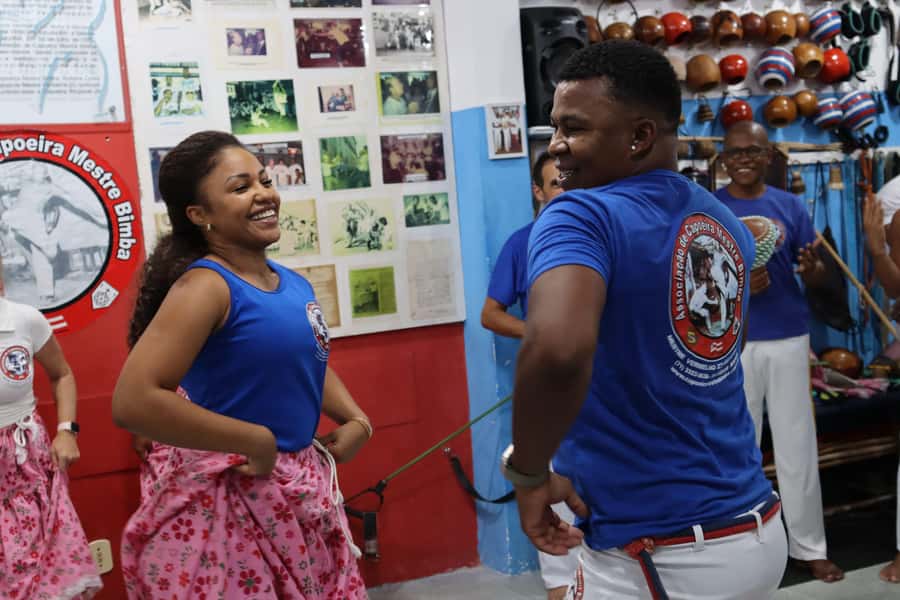
- Mestre Bimba’s 1937 school: The performance takes place at the historic Associação de Capoeira Mestre Bimba, linked to the founder of Capoeira Regional.
- Several traditions in one short show: You will see Capoeira, Samba, Maculelê, traditional drumming, live music, and acrobatics rather than a single dance performance.
- An organic presentation: The evening is built around genuine movement, singing, and roda energy, not a tightly rehearsed tourist routine.
- Expect heat: The room may become very warm, so choose breathable clothing and bring water if allowed by the venue.
- A central Salvador meeting point: Meet at the association near Largo do Terreiro de Jesus. Ó Pai Ó Restaurante and São Domingos Gusmão Church are useful nearby landmarks.
- Good value at $30: The price is reasonable if you want a short, culturally focused evening in a historic setting, though food, drinks, and transport cost extra.
Why this Salvador night feels different from a stage show
Many cultural evenings are built for easy viewing. Dancers hit their marks, musicians follow a set arrangement, and the whole event feels neatly packaged. This one aims for something less polished and more alive.
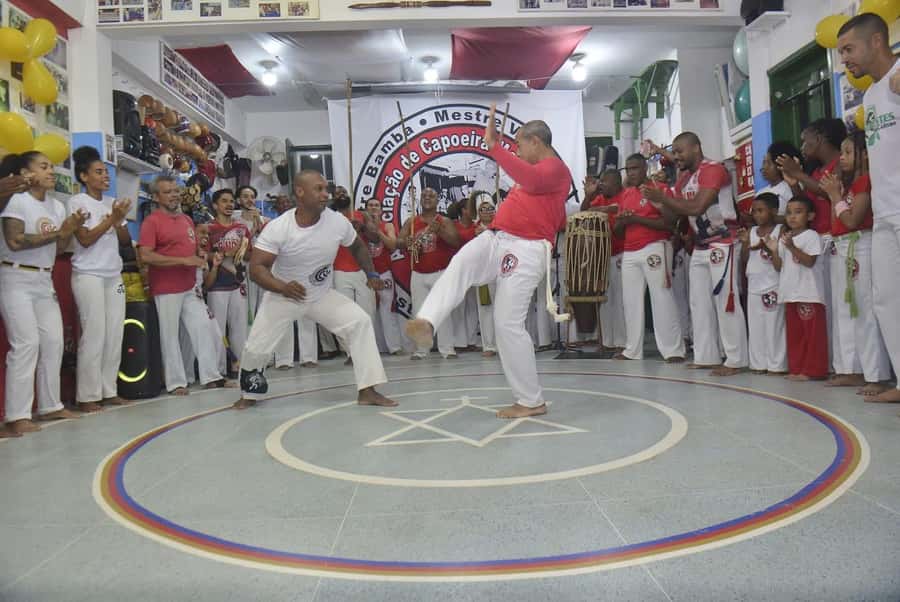
The Capoeira portion is based around rodas, the circle in which players face one another while music and clapping set the pace. You can expect quick, powerful movements, sudden changes of direction, and acrobatic flourishes. The action may feel spontaneous because it is not presented as one fixed dance sequence.
That is a strength if you want to see Capoeira as a practice rather than as a museum piece. It is also the reason the quality and pace may vary from moment to moment. One exchange may be especially fast and dramatic, while another may feel quieter or less even. I would choose this night for authenticity and atmosphere, not for a perfectly timed theater production.
The school itself matters. Mestre Bimba founded the institution in 1937 and created Capoeira Regional, an important branch of the art. The venue is described as a symbol of cultural resistance and resourcefulness, so the setting adds context that a generic entertainment hall could not provide.
more samba nights in Salvador
- Salvador: Cultural Treasure – Samba de Roda.
★ 4.9 · 51 reviews - Rio de Janeiro: Beginner Samba Lesson in Ipanema
★ 4.9 · 1,071 reviews - Rio: Pub Crawl in Lapa with Cachaça Tasting and Live Samba
★ 4.7 · 881 reviews
Entering Associação de Capoeira Mestre Bimba
You meet at Associação de Capoeira Mestre Bimba in Salvador. There is no pickup service, so you need to arrange your own way to the venue.
The meeting point is near Largo do Terreiro de Jesus, one of the useful reference areas in the historic center. If you need to orient yourself, Ó Pai Ó Restaurante and São Domingos Gusmão Church are listed as nearby landmarks. Have the venue name ready and allow enough time to find the entrance without rushing.
The location is part of the experience, but it also means you should think about your return journey before the performance begins. Transportation is not included, and the organizer does not provide transfers. If you are staying elsewhere in Salvador, check your route in advance and keep the meeting point details accessible on your phone.
The evening is short, so arriving late matters. The performance is listed as lasting one hour, while the detailed schedule describes a one-and-a-half-hour cultural presentation. Since the published times do not match, check the exact start time and expected length when you reserve. That small bit of planning can prevent a surprisingly awkward night.
The Capoeira roda brings the room to life
The evening begins with Capoeira, the art most closely tied to the venue. The movements combine martial technique, dance, balance, and acrobatics, with music guiding the pace. You may see players of different ages and genders take part, which helps show that this is not limited to one type of performer.
The roda gives Capoeira its social shape. Players enter the circle while others support the action through rhythm, singing, and attention. The result is not just a demonstration of athletic skill. You are watching a conversation carried out through movement.
The fast passages are the most thrilling, but do not expect nonstop flips. Capoeira changes pace. Some exchanges can be intense, while others leave more room for control, timing, and response. That variation is part of the form.
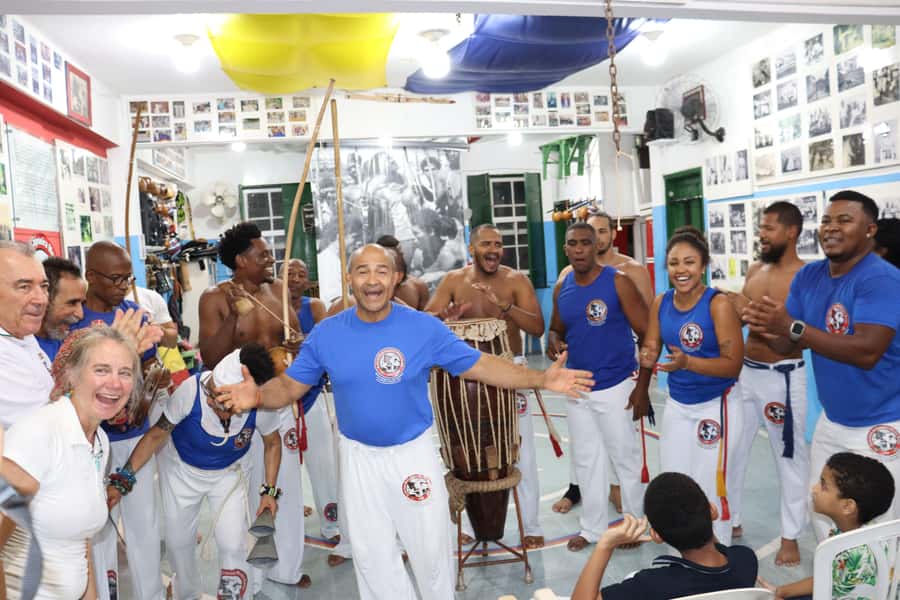
I especially like that you can see how the music affects the physical action. The drums and voices are not background decoration. They help create the mood and keep the roda connected. If you have only seen Capoeira in brief street demonstrations, this gives you a fuller view of how the art works within its own community.
Samba, Maculelê, and the force of the drums
After or alongside the Capoeira presentation, the evening brings in Samba, Maculelê, and traditional drumming. The order may vary because this is an organic performance rather than a rigid theater program.
Samba changes the feel of the room. The movements are social and expressive, and the men and women bring their own styles to the dance. You do not need to know the steps to enjoy it. Watch how the dancers respond to the beat and to one another instead of waiting for a story with a clear beginning and ending.
Maculelê adds a sharper visual edge. It is known for energetic movement and acrobatics, giving the program a strong change of pace after the more flowing Samba. The combination helps make the night feel varied even though the total performance is brief.
The drumming deserves close attention. Traditional percussion and singing hold the different parts together, and the sound can be powerful in the enclosed room. The music gives the performance its emotional charge, but it can also make the space feel even warmer. If you are sensitive to heat or close quarters, that is worth considering before booking.
A small refreshment may be offered afterward. It is not listed as an included meal or drink, so do not count on food being part of the ticket. Bring your own expectations accordingly.
more Salvador days to choose between
- Salvador by Night: Cultural Dinner and Show
★ 4.7 · 27 reviews - Salvador by Night: Cultural Show and Dinner.
★ 4.4 · 17 reviews - Salvador by Night: Pelourinho & Old Town Tour
★ 4.3 · 8 reviews - Rio de Janeiro: Sunset Sailing Tour
★ 4.8 · 994 reviews
What $30 gets you in Salvador
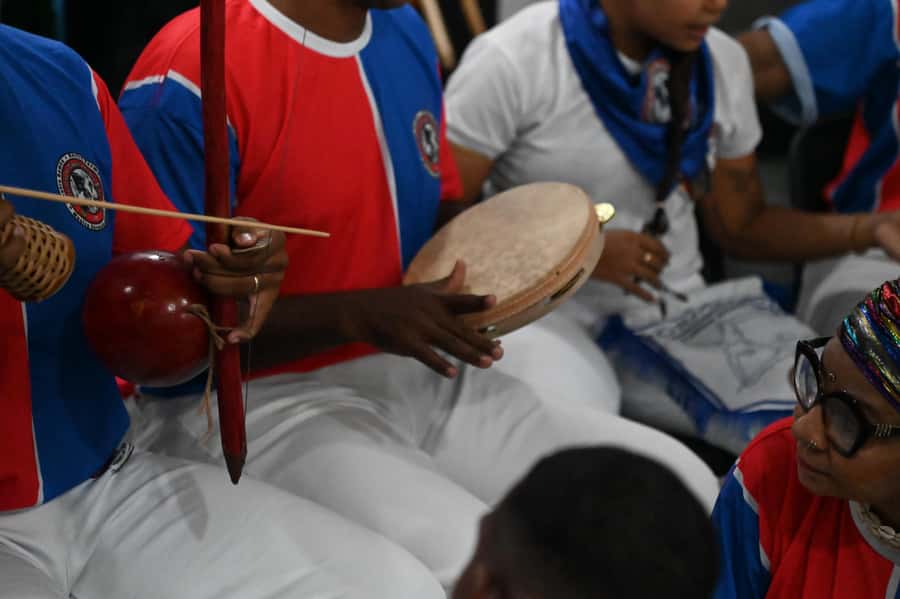
At $30 per person, this is a fair buy for a concentrated cultural experience. Your ticket includes entry and the complete presentation of Capoeira, Samba, Maculelê, traditional drumming, live music, and acrobatics.
The value comes from three things. First, you are visiting a historic Capoeira institution rather than attending an anonymous stage show. Second, the program brings several related forms together in one sitting. Third, the performance is short enough to fit neatly into an evening in Salvador.
The price is less attractive if you want a long formal concert, a meal, or transportation. None of those are included. You are paying for access to the cultural performance and its setting, not for a full evening package.
I would compare it with the cost of a standard entertainment show in Salvador, but I would also ask what kind of experience you want. If you prefer a polished production with fixed choreography, this may feel uneven. If you want to see music and movement in a working Capoeira environment, the historic venue gives the ticket added value.
Practical comfort: clothes, shoes, and heat
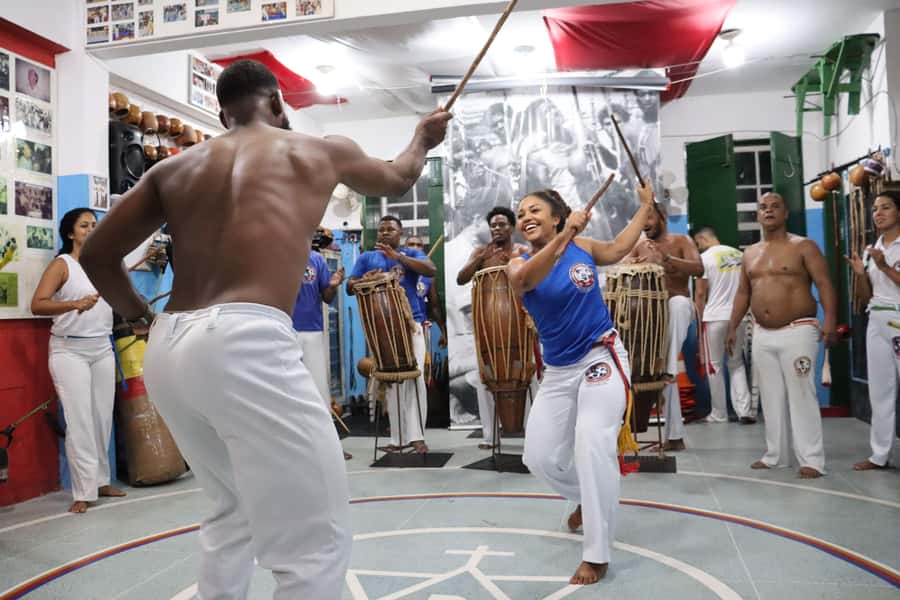
Wear comfortable shoes. You may not be performing, but the venue is centered on movement, and practical footwear is better than dress shoes or anything that pinches.
Choose loose, breathable clothes. One attendee found the room very hot, and the drumming and physical action can add to that feeling. A light outfit will make the experience more pleasant. You should also consider carrying water, subject to venue rules.
Smoking is not allowed. The experience is not suitable for pregnant women or people with back problems. The acrobatics and fast Capoeira movements are visually exciting, but the physical nature of the program means you should take those restrictions seriously.
The language support is English and Portuguese. That helps with basic guidance and orientation, though the performance itself communicates much of its meaning through rhythm, movement, and singing.
Who will enjoy this most
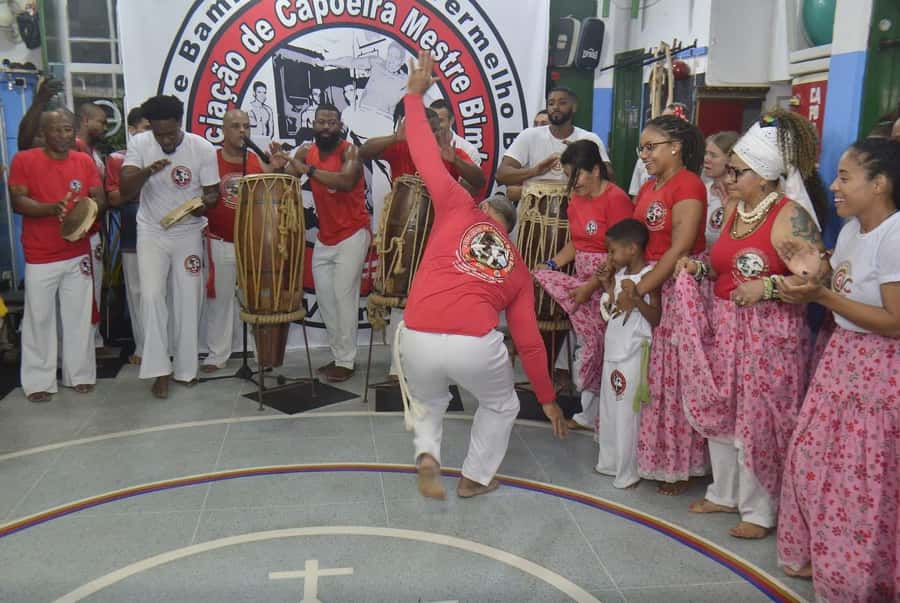
I would recommend this night to you if you want a compact introduction to Afro-Brazilian culture and prefer a real community setting over a formal tourist production. It works especially well for first-time visitors to Salvador who want one evening centered on local performance traditions.
It also suits music lovers. The drumming, singing, and live accompaniment are not side details. They are central to the atmosphere, and the best way to appreciate the performance is to pay attention to how sound and movement work together.
Families with older children may enjoy the color and physical skill, but the venue’s heat and the intensity of the action may not suit every child. The supplied information does not give a minimum age, so check before booking if that matters for your group.
I would be more cautious if you need air conditioning, guaranteed seating comfort, or a precise program. The show can feel uneven because it presents real performance energy rather than a fully fixed routine. That is either the charm or the weakness, depending on your expectations.
A smart plan for the rest of your evening
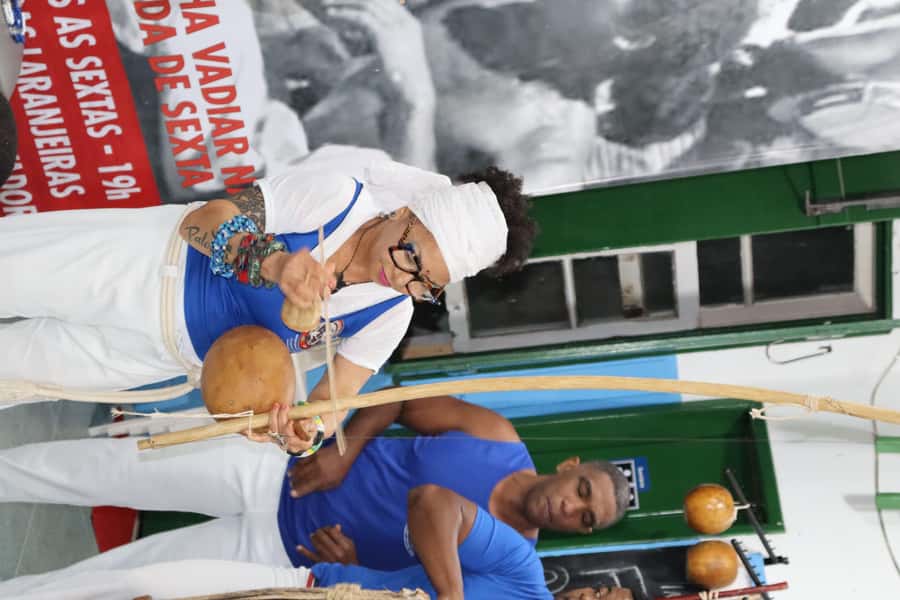
Because the performance lasts about an hour, it is easy to pair with other plans in Salvador. The meeting point near Largo do Terreiro de Jesus gives you a clear historic-center reference, but you still need to handle your own transportation.
Do not schedule a distant dinner with a tight reservation immediately afterward until you confirm the actual duration. The published information gives both one hour and one-and-a-half hours, so allow some flexibility.
Food and drinks are not included. You can plan a meal separately, but avoid assuming that the venue functions as a restaurant or bar. The possible refreshment afterward is a pleasant extra, not a substitute for dinner.
Should you book the Capoeira and Samba night?
Book it if you want energy, music, and cultural context in a historic Capoeira school. The strongest reasons are the 1937 connection to Mestre Bimba, the range of performances, and the chance to see Capoeira as a living practice rather than a staged stunt show.
Skip it if you want a polished production with exact choreography, cool indoor temperatures, or included transport and refreshments. The presentation may have uneven moments, and the room can become hot.
For most visitors who want a short and memorable evening in Salvador, I think the $30 price is justified. Go with an open mind, dress for heat, arrange your own route, and expect an honest cultural presentation rather than a perfectly packaged spectacle.
FAQ
Where does the cultural night take place?
It takes place at Associação de Capoeira Mestre Bimba in Salvador, Brazil.
Is transportation to the venue included?
No. You must make your own way to the venue because pickup service is not offered.
What landmarks are near the meeting point?
Ó Pai Ó Restaurante and São Domingos Gusmão Church, both in Largo do Terreiro de Jesus, are listed as nearby landmarks.
How long does the experience last?
The activity is advertised as one hour, while the detailed schedule describes a one-and-a-half-hour concert and dance presentation. Check the confirmed timing when you book.
What performances are included?
The program includes Capoeira, Samba, Maculelê, traditional drumming, live music, and acrobatics.
Is this a scripted tourist show?
No. It is presented as an organic cultural celebration rather than a tourist show built around fixed rehearsed routines.
Which languages are available?
Live guidance is available in English and Portuguese.
What should I wear?
Wear comfortable shoes and comfortable clothing. Light, breathable clothes are a practical choice because the room can become very hot.
Is the activity suitable for everyone?
It is not considered suitable for pregnant women or people with back problems. Smoking is also not allowed.
New in Salvador this month
- From Salvador: Schooner Tour to Frades Island★ 3.9 · 3 reviews
- From Salvador: Quilombo Heritage Daytrip with Lunch★ 3.4 · 3 reviews
- Salvador: Caipirinha Masterclass with Unlimited Drinks★ 4.2 · 4 reviews
- Salvador: Schooner Cruise with Pickup and Itaparica Stop★ 3.8 · 5 reviews
- BOXE CLASS – EX BAHIAN CHAMPION (SALVADOR-BA)★ 5.0 · 7 reviews
- Salvador by Night: Pelourinho & Old Town Tour★ 4.3 · 8 reviews
- Salvador: 3-Hour Percussion Class★ 4.9 · 10 reviews
- Salvador: Traditional Drumming and Percussion Workshop★ 4.4 · 10 reviews
Salvador Tours, compared.
Cooking class in Salvador, an authentic dinning experience
Read our review →
Tour to the Frades Islands and Itaparica, from Salvador – Ba
Read our review →
From Salvador: Schooner Tour to Frades Islands and Itaparica
Read our review →
Tour Praia do Forte and Guarajuba, Leaving Salvador-Bahia.
Read our review →
Afro-Brazilian Roots Private City Tour in Salvador
Read our review →


Schooner Trip Only Ilha dos Frades, Leaving Salvador-Bahia.
Read our review →Browse the lists this tour appears in