
Our review · RIO DE JANEIRO TOURS
Rio’s city walking tour: a glimpse of history and olympic legacy
Rio’s old center is where the city’s story comes into focus. This half-day tour links grand churches, imperial buildings, market streets, museums, and Olympic-era public spaces, giving you a useful first look at the Rio beyond its beaches. The ornate São Bento Monastery and the broad plazas around Praça XV are the historical heart of the outing.
I like the hotel pickup and drop-off, which saves you from sorting out downtown transport, and I like the way the route mixes famous sights with less obvious stops such as the old Portuguese library and Confeitaria Colombo. The main caution is that the balance between walking and driving can vary, especially in heavy traffic, and some stops may feel brief.
Key points at a glance
- São Bento Monastery: Expect gilt carving, painted decoration, and one of Rio’s most memorable church interiors.
- Olympic-era Mauá Square: See the port district reshaped around the Museum of Tomorrow, Rio Art Museum, and Cobra murals.
- Imperial Rio: Walk through Praça XV and past Paço Imperial, tied to Brazil’s governors, emperors, and Portuguese royalty.
- A flexible route: Guides such as JB, Melanie, André, and Jean-Baptiste have adapted the pace and stops when groups were small.
- A practical first-day tour: The route helps you understand downtown Rio before you explore the area on your own.
- Moderate physical demand: You need to walk for several hours, though the pace is generally described as manageable.
Why old Rio makes a smart first stop
Most first-time visits to Rio focus on Sugarloaf Mountain, Christ the Redeemer, Copacabana, and Ipanema. Those places are essential, but downtown tells a different story. Here, you see the city as a former colonial capital, imperial seat, working center, and modern cultural hub.
The route gives you a useful sense of how these layers sit beside one another. A church begun in 1630 can be a short walk from a modern museum. A Portuguese-style palace can sit near market streets and commuter routes. The result is not a polished historic quarter preserved for sightseeing. It is a working part of Rio, with old buildings woven into everyday city life.
I would book this for your first or second day. The tour helps you get your bearings, and a good guide can point out places worth returning to later. Several guides have also offered practical advice about eating, shopping, local transport, and nearby sights.
The advertised duration is about four hours, beginning at 1 p.m. Some outings have run longer, particularly when the group was small or the guide adjusted the route. Group size can reach 35 people, but small groups and even private outings have occurred when booking numbers were low.
More City Tours in Rio de Janeiro
- Rio: Carnival Backstage Tour at Samba City with Cocktail
★ 4.6 · 520 reviews - Rio de Janeiro: Private Guided City Tour
★ 4.6 · 207 reviews - Rio de Janeiro: Half-Day Christ the Redeemer and City Tour
★ 4.4 · 101 reviews
Candelária Church and São Bento Monastery
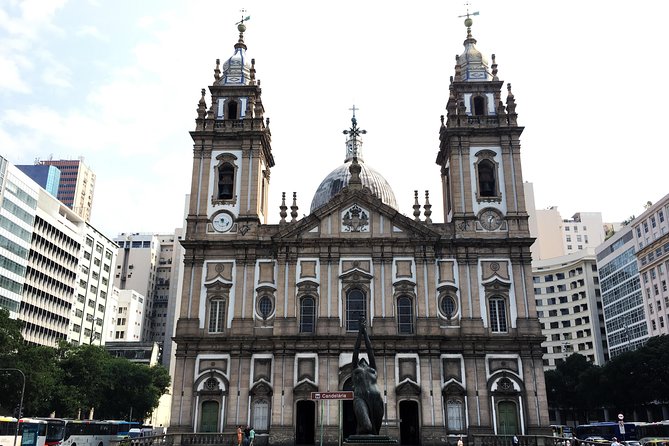
The first major church is Nossa Senhora da Candelária, usually called Candelária Church. Construction began in 1630 and was completed in 1775. Its neoclassical design gives you an immediate sense of the scale and ambition of old Rio’s religious buildings.
The visit is listed at about 10 minutes, so do not expect a long, quiet examination of every detail. Still, the stop gives your guide a chance to explain the church’s place in the city and to point out the architectural features that are easy to miss when you pass by alone.
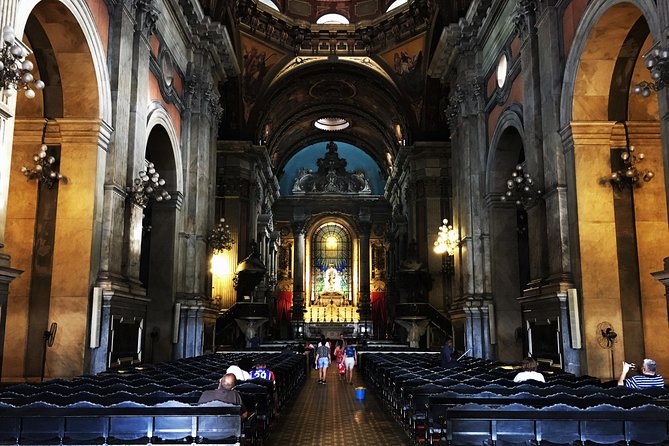
São Bento Monastery is the stronger interior visit for many people. Founded in 1590 by two monks from Bahia, it is regarded as one of Brazil’s important architectural treasures. Inside, the painted surfaces and gilded carvings create the kind of theatrical church interior that photographs rarely capture well.
The short listed visit is again about 10 minutes, but the value depends heavily on the guide and on how much access and time the group receives. Guides have also used the monastery as a high viewpoint for photographs of the Museum of Tomorrow, an unusual angle you may not get from the waterfront.
If churches are not your main interest, these first stops may feel a little church-heavy. One unhappy participant felt the tour offered too many churches and too little secular history. That is a fair warning. You are booking a downtown history walk with a strong religious and architectural thread, not a general tour of every side of Rio.
Mauá Square and the Olympic port renewal
The route then reaches the new Mauá Square, part of the public works associated with Rio’s Olympic legacy. The former port area was reshaped into a cultural and entertainment center, with the Rio Art Museum, the Museum of Tomorrow, and the famous Cobra murals.
This is one of the tour’s best contrasts. At São Bento, the focus is colonial religious art. At Mauá Square, you see a newer Rio using public art, museums, and open space to change how people use the waterfront.
The itinerary includes a view of the Museum of Tomorrow, but the experience is not presented as a full interior visit. If you want to explore the museum itself, plan separate time. The same applies to the Rio Art Museum. The walking tour gives you context and exterior views, while your own follow-up visit lets you set the pace.
One guide arranged a shuttle ride around the Museum of Tomorrow for the group. That is not something you should assume will be included every time, but it shows how a small group can allow a guide to make practical adjustments.
The Cobra murals are another reason to pay attention here. They add a bold modern note to a route otherwise filled with stone churches, imperial facades, and old squares. You get a quick lesson in how Rio’s port district moved from neglected working area toward a cultural zone.
Praça XV and Paço Imperial
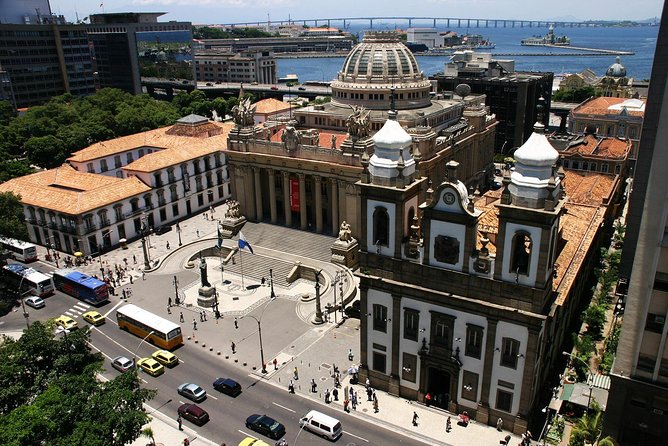
Praça XV do Novembro is one of the key historical spaces on the route. Brazil’s emperors were crowned here in the 1800s, and important political events took place around the square. This is a good place to ask your guide how Brazil moved from Portuguese rule to an independent empire and then to a republic.
Paço Imperial, or Imperial Palace, sits nearby. It was built in the 1700s as a residence and workplace for the governors of the captaincy. It later became the residence of the Portuguese royal family when it arrived in Brazil.
The building’s importance is not just its facade. It helps explain why Rio became the center of royal and imperial power. You can stand in a square used for ceremonies and government, then walk into the same downtown streets used for commerce and daily work.
The palace is generally treated as an exterior historical stop in this outing. If you want a more detailed palace visit, check how much indoor time is available on your date or return independently. The tour’s aim is to connect several places, not to spend an hour at one monument.
This part of the walk also shows why a local guide matters. Without context, Praça XV can look like another open plaza. With a clear explanation, it becomes one of the places where Rio’s political story happened in public.
More Historical Tours in Rio de Janeiro
- Rio de Janeiro: Historic Rio and Santa Teresa Half-Day Tour
★ 4.4 · 228 reviews - Rio de Janeiro: Little Africa Heritage Walking Tour
★ 4.9 · 177 reviews - Explore Little Africa : Unveiling Afro Heritage in Rio de Janeiro
★ 5.0 · 97 reviews - Learn the History of Rio with an Unforgettable City Center Walking Tour
★ 5.0 · 82 reviews
Market streets, Tiradentes Palace, and downtown texture
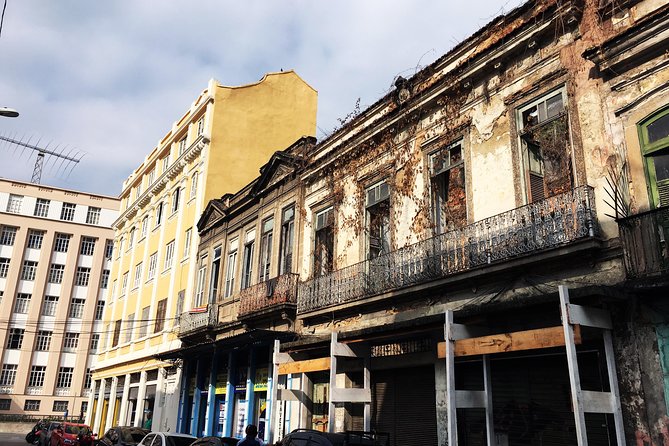
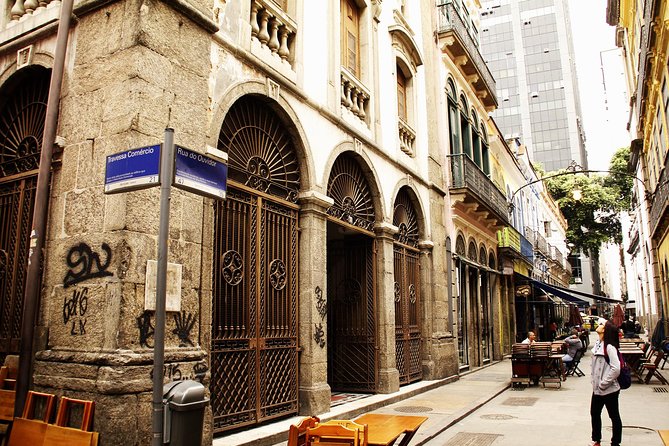
After the grand squares, the route passes through the famous market streets of central Rio. This is where the outing becomes less ceremonial and more local in feel. You see the city’s commercial side, with people using downtown as a place to shop, work, meet, and move through.
The walking portion can vary. One account described a relaxed meander through streets that would have been easy to miss alone. Another found there was too much driving because traffic slowed the day. The operator explained that heavy traffic caused that unusual balance, so you should allow for some road time if the vehicle is being used between districts or stops.
The tour also passes the Tiradentes Palace from outside. It is another useful political landmark, but the stop is brief. Think of it as part of a connected city lesson rather than a standalone museum visit.
This section is where you should stay aware of your surroundings and keep valuables secure. One guide was praised for helping the group feel protected from pickpockets. That does not remove the need for normal city awareness, but a guide who knows the streets can make downtown feel easier to navigate.
Confeitaria Colombo and the old Portuguese library
Confeitaria Colombo is one of the route’s most pleasant pauses. The famous bakery is listed for about 20 minutes, and it adds a social and decorative side to the tour. After churches and government buildings, you get a look at a historic meeting place tied to Rio’s café culture.
The stop may be more about seeing the interior and understanding its role than sitting down for a full meal. Food and drinks are not included, so bring money if you want something from the bakery. Because the scheduled time is short, you may want to return later if the setting catches your interest.
Several guides have also taken groups to an old Portuguese library. It is not clearly listed among the fixed stops, so you should not count on it as a guaranteed part of every departure. When available, it has been a memorable addition, especially for anyone who likes old books, literary spaces, or unusual city interiors.
This is a good example of how the tour can change with the guide. André, Melanie, JB, and Jean-Baptiste have all been praised for personal attention in small groups. One guide even added places to the route after learning what the group hoped to see. A full group is less likely to receive that same flexibility.
The Metropolitan Cathedral and the final stretch
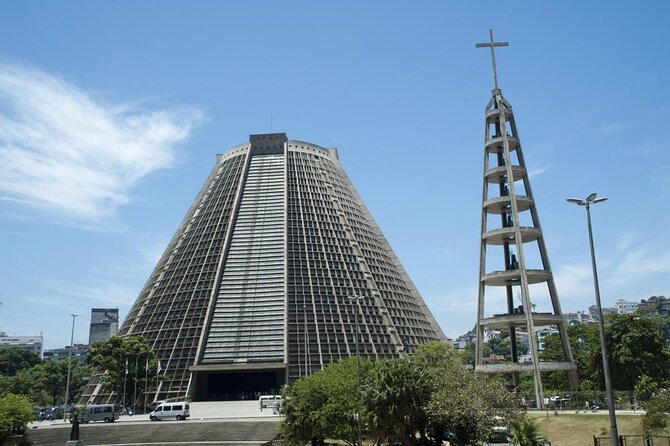
The route continues along Uruguaiana Street toward Carioca Square and the Metropolitan Cathedral of Saint Sebastian. The market streets make this transition feel natural: you move from old commercial lanes into one of Rio’s most striking modern religious buildings.
The cathedral has a conical form and an enormous interior, measuring about 96 meters across inside, 106 meters externally, and 75 meters high. It is a dramatic change from São Bento’s ornate decoration. The monastery draws your eye to gold, carving, and painted detail. The cathedral relies on height, geometry, and scale.
The stop is listed at about 10 minutes. That is enough for a look and a short explanation, but not enough for a slow study of the building. One outing ended a block short of the cathedral and the Teatro Municipal, so it is worth confirming the exact final walking point with your guide if those sights matter to you.
The tour concludes in the cathedral and Carioca Square area. You can continue exploring downtown independently, shop near the local market, find lunch, or take the included return transfer if your hotel is in the covered pickup area. The end point is useful because it leaves you in a central place rather than sending you straight back before you have a chance to keep exploring.
How much walking should you expect?
The name says walking tour, but the actual amount of walking depends on traffic, group size, and the guide’s route. Some outings have been described as an easy-paced walk. Others covered a great deal of ground, with one participant noting that the guide walked and talked quickly.
You should have a moderate fitness level. Comfortable shoes are sensible, and you should be ready to spend much of the afternoon on your feet. The route includes narrow streets, squares, church interiors, market areas, and transitions between districts.
If long periods of walking are difficult for you, this may not be the right choice. If you prefer a slow, highly detailed visit at each monument, the schedule may also feel brisk. On the other hand, if you want a broad introduction without stopping at every doorway, the pace can work well.
Ask at the start how much time will be spent walking and how much will be covered by vehicle. That one question can help set expectations, especially if downtown traffic is heavy.
Guides, language, and group size
The strongest part of the experience is the guide-led interpretation. JB, also called Juan Bautista or Jean-Baptiste, has been described as energetic, funny, passionate about Rio, and able to explain both the listed sights and the buildings passed during the drive. Melanie has been praised for her warm manner and for handling more than one language, including English and Spanish. André has also been singled out for punctuality and flexibility.
Do not assume every departure will have the same guide. The experience can change from a lively, personal history walk to a more rushed checklist if the guide is distracted or focused only on the clock. One poor outing involved repeated phone use and pressure to finish quickly. That appears to be an exception among the supplied experiences, but it is still useful to know what can go wrong.
The maximum group size is 35. Small groups are a major advantage because you can ask questions, linger at a favorite building, or request a minor change. Several departures became private or nearly private, allowing the guide to skip places already visited and add sights that matched personal interests.
Is the $60.77 price good value?
At $60.77 per person, this is not the cheapest way to see downtown Rio. You are paying for a guide, hotel pickup, and the convenience of connecting several areas without arranging the transport yourself. That can be worthwhile if you are staying in Copacabana, Ipanema, Leblon, or São Conrado and want an easy first afternoon.
The price is harder to justify if you only want to see the churches from outside or if you are comfortable using local transport and reading up before you go. Most admission tickets are listed as free, and food and drinks cost extra. You could visit some of these areas independently for less.
I see the value in the orientation and the explanations. A good guide can save you time, explain why a square matters, point out an unusual library, and offer advice for the rest of your stay. The value drops when traffic cuts into the walking time or when a long café stop replaces a planned sight.
The tour is booked, on average, about eight days ahead. That suggests you should not leave it until the last minute if it fits your schedule, especially if you want an afternoon early in your visit.
Practical details before you book
Hotel pickup and drop-off are included for most hotels in São Conrado, Leblon, Ipanema, and Copacabana. If you are meeting at a hotel where you are not staying, go inside to reception rather than waiting outside. One guide looked for the group in the lobby.
The start time is 1 p.m. Confirmation is provided when you book. The tour requires suitable weather and a minimum number of participants. If the minimum is not reached, you are offered another date or experience, or a full refund.
Free cancellation is available up to 24 hours before the start time. Cancellations or changes made inside that window are not refunded or accepted. Since the route is outdoors and weather can affect the outing, check the forecast before the deadline.
Who should choose this Rio walking tour?
Book it if you want a guided introduction to downtown, care about architecture and city history, and prefer hotel transport to planning the afternoon yourself. It is particularly useful for a first or second day in Rio, when you are still learning how the center connects to the beach neighborhoods.
It suits curious walkers who like variety: churches, imperial spaces, museums, street art, markets, and a historic bakery. It is also a good fit if you enjoy asking questions and want suggestions for places to visit after the tour.
Think twice if you want a slow church-by-church art study, a guaranteed museum interior visit, or a fully independent walk at a lower cost. You should also reconsider if you cannot walk for several hours or if a large group would bother you.
Should you book it?
I would book this as a city orientation, not as a complete survey of Rio. The best version gives you São Bento’s remarkable interior, the political setting of Praça XV, the changing port district around Mauá Square, and a useful route through downtown that you can repeat later on your own.
The key is to set expectations. Ask about the walking and driving balance, confirm the final stop, and tell the guide what interests you. If you get a flexible guide such as JB, Melanie, André, or Jean-Baptiste, the afternoon can become much more personal than the fixed route suggests. At $60.77, that local context and hotel transport are the real reason to book.
FAQ
How long does the Rio city walking tour last?
The tour lasts approximately four hours and begins at 1 p.m. Some outings may take longer when the guide adjusts the route or the group is small.
What sights are included?
The route includes Candelária Church, São Bento Monastery, Mauá Square, the Museum of Tomorrow from the outside, cultural centers, Praça XV, Paço Imperial, downtown market streets, Tiradentes Palace from the outside, Confeitaria Colombo, and the Metropolitan Cathedral.
Is hotel pickup included?
Yes. Pickup and drop-off are included for most hotels in São Conrado, Leblon, Ipanema, and Copacabana.
Are food and drinks included?
No. Food and drinks are not included. The tour visits Confeitaria Colombo, where you may choose to purchase something separately.
How much walking is involved?
You need a moderate level of fitness and should be prepared to walk through downtown streets and squares for several hours. The amount of driving can vary with traffic and the group’s route.
Can I cancel for a full refund?
Yes, if you cancel at least 24 hours before the experience’s start time. Cancellations made less than 24 hours in advance are not refunded.
More History Walks in Rio de Janeiro
- Olympic Boulevard, Museum of Tomorrow & Historical Rio
★ 4.5 · 66 reviews - Rio: Olympic Boulevard, Museum of Tomorrow & History Tour
★ 4.1 · 47 reviews - Petropolis Bohemia: Historic tour and visit to the Bohemian Brewery
★ 4.5 · 45 reviews - Imperial Petrópolis – Historic Tour + Teresa Street and Lunch
★ 4.5 · 44 reviews
More Walking Tours in Rio de Janeiro
- Rio de Janeiro: Rocinha Favela Walking Tour with Local Guide
★ 4.8 · 3,052 reviews - Rio De Janeiro: Half-Day Rocinha Favela Walking Tour
★ 4.7 · 2,272 reviews - Sunrise and Sunrise Walk Two Brothers with Local Guide
★ 5.0 · 193 reviews - Walking tour of the bohemian neighborhoods of Santa Teresa and Lapa
★ 5.0 · 59 reviews
New in Rio de Janeiro this month
- Discover Rocinha: Guided Tour of the Famous Favela★ 4.5 · 3 reviews
- Rio de Janeiro: Hang gliding adventure★ 3.7 · 3 reviews
- Rio de Janeiro: Pedra Bonita & Tijuca Forest Hike Tour★ 5.0 · 3 reviews
- Rio de Janeiro: Hang Gliding or Paragliding Flight★ 5.0 · 3 reviews
- Rio de Janeiro: Local Experience in Forró dance★ 5.0 · 3 reviews
- Rio de Janeiro: Doors-off 30-min helicopter tour★ 5.0 · 3 reviews
- Rio de Janeiro: Pedra do Telégrafo; Grumari/ Prainha Beaches★ 5.0 · 3 reviews
- Rio de Janeiro: Sugar Loaf with Lunch and Helicopter Flight★ 4.7 · 3 reviews
Rio de Janeiro Tours, compared.
Rio de Janeiro: 6-Stop Highlights of Rio with Lunch
Read our review →
Christ the Redeemer Entry Ticket by Corcovado Train
Read our review →
Rio de Janeiro: Rocinha Favela Walking Tour with Local Guide
Read our review →
Rio: Christ the Redeemer, Sugarloaf, Selaron & BBQ Lunch
Read our review →
Rio De Janeiro: Half-Day Rocinha Favela Walking Tour
Read our review →
Rio de Janeiro: Angra dos Reis and Ilha Grande Full-Day Tour
Read our review →
Rio de Janeiro: Beginner Samba Lesson in Ipanema
Read our review →
Browse the lists this tour appears in