
Our review · SALVADOR TOURS
Salvador, Bahia: A amazing Walking Tour!
Salvador’s old center is best understood on foot, and this private tour puts you among its painted mansions, steep streets, churches, music, and layered Afro-Brazilian culture. The route links the Lacerda Elevator, Pelourinho, and Cathedral Basilica in three focused hours, with a guide who can explain what you are seeing instead of leaving you to guess.
I like the private format because you can ask questions and set a comfortable pace. I also like the mix of major sights and small cultural touches, from Rua Chile and the Jorge Amado Foundation to a tasting at O Cravinho. The main consideration is the price: at $141 per person, it makes the most sense if you value personal guiding and are traveling in a small group.
Key points at a glance

- Private multilingual guiding: Tours are offered in English, Portuguese, Spanish, French, German, Italian, and Dutch.
- A clear route through old Salvador: Begin at the Lacerda Elevator, visit the Cathedral Basilica and Pelourinho, then continue toward Santo Antônio Além do Carmo.
- Afro-Brazilian culture takes center stage: The walk includes the Nossa Senhora do Rosário dos Pretos Church and the musical world linked with Olodum.
- Good inclusions for a short tour: Your guide, Lacerda Elevator tickets, Cathedral Basilica tickets, and local alcoholic and non-alcoholic drinks are covered.
- Strong guide-led experience: Gustavo and Wanderley received especially warm praise for language skills, historical detail, humor, and personal recommendations.
- Plan for sun and uneven walking: Bring sunglasses, a hat, and sunscreen, and confirm suitability if mobility is a concern.
Starting at the Lacerda Elevator
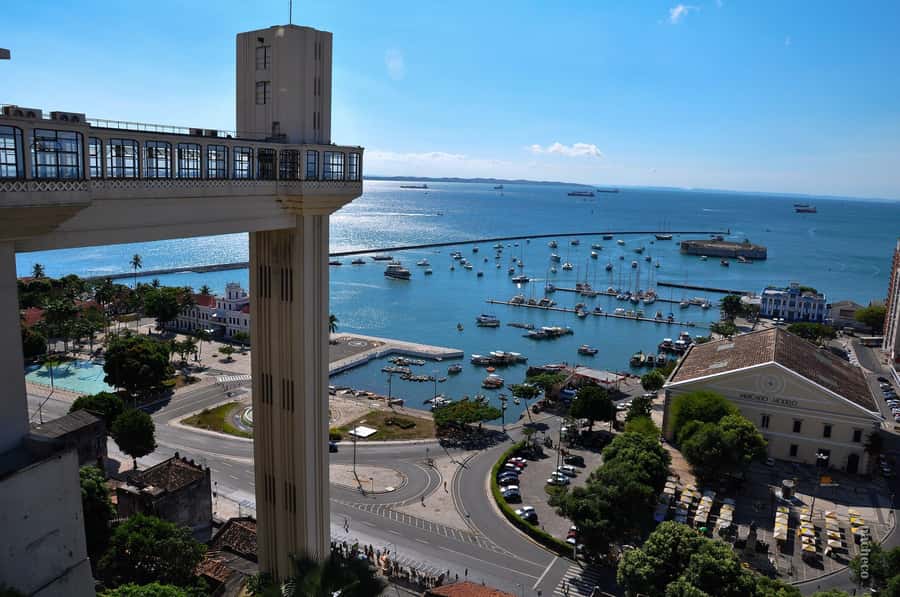
The tour begins at the Elevador Lacerda, one of Salvador’s most recognizable landmarks. The elevator connects the Lower City with the Upper City, and its location gives you an immediate sense of how Salvador is arranged. You are not simply meeting at an arbitrary street corner. You are starting at a piece of the city’s daily and historic structure.
The first guided portion lasts about 30 minutes. That is enough time to place Salvador in context before the walk gathers speed. Your guide can explain how the old center developed during the colonial period and why this part of the city mattered when Salvador served as Brazil’s capital.
The elevator ticket is included, which keeps the opening simple. It also matters because the ride is part of the experience rather than just a practical way to change levels. If you have just arrived in Salvador, this is a useful way to get your bearings before moving into the older streets.
Your guide may be Gustavo or Wanderley, depending on availability. Gustavo has been praised for bringing attention to ordinary city life, cafés, neighborhoods, and small corners, while Wanderley received special praise for speaking several languages and explaining Afro-Brazilian history clearly. The provider does not promise a particular guide in the information supplied, so treat those names as examples rather than a guarantee.
more walking tours in Salvador
- Salvador Historic Walking Tour – Pelourinho
★ 4.8 · 62 reviews - Salvador: Walking Tour Through Pelourinho
★ 5.0 · 49 reviews - Rio de Janeiro: Rocinha Favela Walking Tour with Local Guide
★ 4.8 · 3,052 reviews
Rua Chile and Salvador’s colonial center
From the Lacerda Elevator, the walk moves through the upper part of the historic center. One important stop is Rua Chile, described as Brazil’s first street. Its importance is not only the claim attached to its name. The street also holds old buildings tied to Salvador’s political and colonial past.
The Rio Branco Palace is one of the notable structures in this area. Your guide’s role is especially useful here because a grand façade can tell you only so much. A good explanation connects the building with government, power, and the period when Salvador was the country’s capital.
The route includes roughly ten minutes of walking before another visit, followed by a longer 30-minute stop. The supplied schedule does not identify every generic stop by name, so you should expect some flexibility in how the guide uses this section. That can be an advantage on a private tour. You can spend more time on a building or question that catches your attention, though you should not assume that every museum or cultural room is included.
Tickets to cultural spaces and museums are not part of the price. The guide can point out those places and explain their role, but you may pay separately if you choose to enter. This is worth remembering when comparing the tour’s $141 price with a self-guided walk.
The Cathedral Basilica and Salvador’s religious past
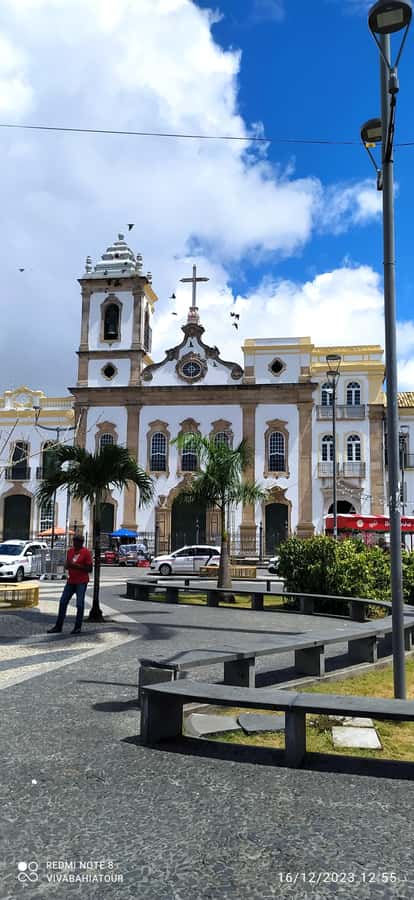
The Cathedral Basilica of Salvador receives about 30 minutes, including a guided visit. This is one of the strongest parts of the route for anyone interested in architecture, religion, or colonial Brazil.
The cathedral gives you a formal counterpoint to the street scenes outside. Narrow lanes and colorful façades can make the historic center feel lively and open, while the church asks you to pause and look closely at a more controlled interior. Your guide can help explain the building’s place in Salvador’s religious and political story.
Entry is included. That is a practical benefit because you can enter without stopping to sort out another ticket, and the visit has a set place in the three-hour schedule. Still, half an hour goes quickly. You will get an introduction rather than a detailed study of every chapel, object, or architectural feature.
This is where a private guide can add real value. The strongest comments about the guides focus on specific details about buildings, the cathedral, and Salvador’s time as the capital. If you care about those connections, ask direct questions. You are paying for interpretation, not just someone to lead you from one landmark to the next.
A taste of Bahian life at O Cravinho
The visit to O Cravinho lasts about 20 minutes and includes a tasting of local drinks. Alcoholic and non-alcoholic options are included, so you do not have to drink alcohol to take part.
O Cravinho is described as a traditional Bahian pub. This stop gives the tour a change of rhythm after the church and formal buildings. Rather than looking only at monuments, you get a small introduction to a local drinking tradition and the social side of Salvador.
I like this kind of stop because it gives the walk a human scale. A church explains one part of the city. A traditional pub helps you understand another. The timing is short, so think of it as a tasting and cultural pause, not a full meal or a long bar visit.
If you have dietary or personal concerns about the tasting, ask the guide what the non-alcoholic option is before you begin. The available information confirms that both types are offered, but it does not list the ingredients or specific drinks.
A different side of Salvador altogether:
- Cooking class in Salvador, an authentic dinning experience
★ 5.0 · 132 reviews - Tour to the Frades Islands and Itaparica, from Salvador – Ba
★ 4.0 · 130 reviews - From Salvador: Schooner Tour to Frades Islands and Itaparica
★ 3.9 · 98 reviews - Tour Praia do Forte and Guarajuba, Leaving Salvador-Bahia.
★ 4.5 · 97 reviews
Pelourinho, music, and Afro-Brazilian culture
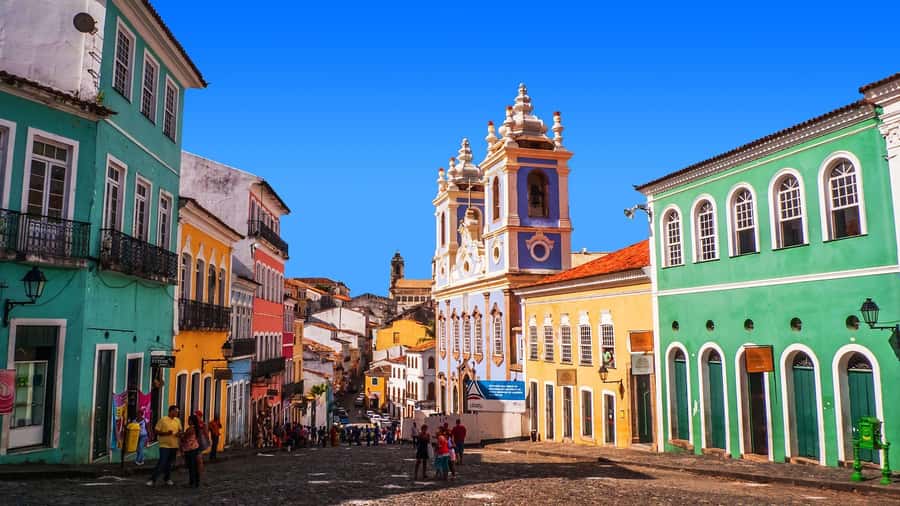
The tour then spends about 40 minutes in Pelourinho, the best-known part of Salvador’s historic center. This is where the colors, music, old houses, churches, and public life come together most clearly.
Pelourinho is associated with major figures and musical groups. Michael Jackson filmed in Salvador, Paul Simon helped draw international attention to Brazilian music, and Olodum is closely tied to the city’s percussion culture. The tour description connects Pelourinho with these names, but the value of the stop goes beyond celebrity references. Your guide can help you understand why music is such a central part of Salvador’s public identity.
The Nossa Senhora do Rosário dos Pretos Church is another important cultural point. Its name and history connect directly with Afro-Brazilian life and faith. This is an area where a guide who can discuss Afro-Brazilian history is especially helpful. Wanderley was singled out for doing exactly that, while Gustavo was praised for explaining culture and daily life with warmth and humor.
You may also pass or choose to visit places such as the Jorge Amado Foundation and Casa do Carnaval. These add depth for readers who want literature, music, and carnival culture, but cultural-space and museum tickets are not included. Ask which sites fit the day’s route and budget before paying for an additional entry.
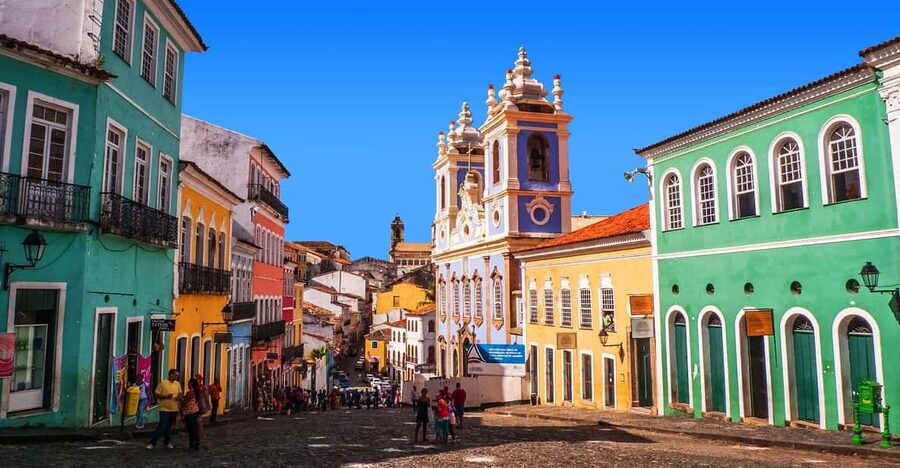
Pelourinho can be visually striking, but it is not a quiet open-air museum. Music, pedestrians, street activity, and uneven paving are part of the setting. I would keep your phone and valuables secure, stay with the guide, and wear shoes that can handle three hours of walking.
Continuing to Santo Antônio Além do Carmo
After Pelourinho, the route continues toward Santo Antônio Além do Carmo, with about 30 minutes of walking. This keeps the experience from stopping at the most famous square and gives you a broader look at Salvador’s old neighborhoods.
The schedule places this walk near the end, before returning to the Lacerda Elevator. You should expect the final section to feel less like a list of indoor admissions and more like a guided neighborhood walk. The guide can point out buildings, streets, cultural details, and places that are easy to miss when you move through the center alone.
Because this is a private group, you have some room to ask for clarification or adjust the pace. The total duration remains three hours, so the guide cannot linger indefinitely at every stop. If you want longer museum visits, this tour may work better as a first orientation walk, followed by a separate visit on your own.
The return to the Lacerda Elevator gives the outing a tidy finish. You end where you began, which is helpful if you are planning another activity in the historic center afterward.
What the three-hour schedule really gives you
Three hours is enough for a broad introduction, not a complete survey of Salvador. The supplied timing adds up to a busy route: guided time at the starting point, sightseeing at the elevator, short walks and visits, the cathedral, O Cravinho, Pelourinho, and Santo Antônio Além do Carmo.
That pace suits you if you want to see the main framework of the historic center and understand how the pieces connect. It is less suitable if you want to sit for long periods, browse every museum, or take extensive photographs at each stop.
I appreciate that the itinerary includes both fixed sights and walking time. A tour made only of churches can feel narrow. A tour made only of streets can leave you without context. Here, the elevator, Rua Chile, palace, cathedral, pub, music culture, and old neighborhoods create a more varied picture.
The private format also changes the experience. A large group often forces a guide to give the same explanation and move on. With a private group, you can ask about architecture, Afro-Brazilian traditions, music, or colonial politics as those subjects come up. That flexibility is the main reason to consider the price.
Is $141 per person a fair price?
At $141 per person, this is not a budget walking tour. The value depends heavily on how many people are in your private group and how much you want a guide who speaks your language and adapts the walk to your interests.
The price includes the guide, Lacerda Elevator tickets, Cathedral Basilica tickets, and local drink tastings. It does not include museum or cultural-space entry. If you would otherwise hire a private guide and buy the main tickets separately, the package may be reasonable. If you are comfortable reading about Salvador and exploring independently, a self-guided visit will cost less.
I would especially consider it for a first day in Salvador, a short stay, or a visit when you want historical background without planning every street and admission yourself. It can also be useful if language is a concern, since guides are available in seven languages.
The value is less convincing for someone who only wants a quick photo stop at Pelourinho. You would be paying for explanation, local context, and personal attention. Those are the parts that justify the rate.
Practical comfort and access
Bring sunglasses, a sun hat, and sunscreen. Salvador’s historic center is an outdoor setting, and the schedule includes substantial walking. Comfortable footwear is a sensible choice, even though it is not specifically listed among the required items.
The activity information says the tour is wheelchair accessible, but it also says it is not suitable for people with mobility impairments. Those statements do not fully match. If you use a wheelchair, walk slowly, or need a route without steep or uneven sections, contact VivaBahiaTour before booking and ask exactly how the route can be adapted.
The tour is also marked as unsuitable for people with motion sickness. That may relate to the elevator or the movement involved in reaching the upper and lower parts of the city. If this is a concern, ask the provider whether the route can be adjusted.
You can cancel up to 24 hours ahead for a full refund, and you can reserve now while paying later. Those terms help if your Salvador plans are still changing, but they do not remove the need to confirm guide language, accessibility, and any museum choices in advance.
Who will get the most from this walk?
I would choose this tour if you want a private introduction to Salvador that balances architecture, religion, music, and everyday culture. It is a good match for first-time visitors who prefer conversation over a fixed large-group script.
It also suits couples, families, and small groups who want to move at their own pace. The multilingual guide option is valuable if you would rather discuss complex subjects such as colonial Brazil and Afro-Brazilian history in a language you speak comfortably.
You may want something else if your main goal is an extended museum tour, a food-focused outing, or a slow photography walk. The schedule covers many places in three hours, and extra museum admissions cost more.
Should you book Salvador’s private historic-center walk?
Book it if you want a well-rounded first look at Salvador and place a high value on a private guide. The cathedral entry, elevator ticket, drink tasting, and multilingual service make the experience more than a basic stroll, while the praise directed at Gustavo and Wanderley points to the quality you can hope for in the guiding.
Before paying, confirm who will guide your group, which language is available, and how the route handles mobility needs. Also ask which cultural spaces are planned and what extra admissions might cost.
For a history-minded visitor, a small group, or anyone with only a short time in Salvador, I think the tour offers a useful and personal introduction. For a budget-conscious visitor who enjoys planning independently, the price may be hard to justify.
FAQ
Where does the tour start and finish?
The tour starts at the Elevador Lacerda and returns there at the end.
How long does the walking tour last?
The experience lasts three hours.
Is the tour private?
Yes. The activity is operated for a private group.
Which languages are available?
Live guiding is available in Dutch, French, English, Portuguese, Spanish, German, and Italian.
Are the Elevador Lacerda and Cathedral Basilica tickets included?
Yes. Tickets to the Lacerda Elevator and the Cathedral Basilica are included.
Are museum and cultural-space tickets included?
No. Entry to cultural spaces and museums is not included.
Is a local drink tasting part of the experience?
Yes. The tour includes a tasting of local alcoholic and non-alcoholic drinks.
Can I cancel for a full refund?
Yes. You can cancel up to 24 hours in advance for a full refund. You can also reserve now and pay later.
New in Salvador this month
- From Salvador: Schooner Tour to Frades Island★ 3.9 · 3 reviews
- From Salvador: Quilombo Heritage Daytrip with Lunch★ 3.4 · 3 reviews
- Salvador: Caipirinha Masterclass with Unlimited Drinks★ 4.2 · 4 reviews
- Salvador: Schooner Cruise with Pickup and Itaparica Stop★ 3.8 · 5 reviews
- BOXE CLASS – EX BAHIAN CHAMPION (SALVADOR-BA)★ 5.0 · 7 reviews
- Salvador by Night: Pelourinho & Old Town Tour★ 4.3 · 8 reviews
- Salvador: 3-Hour Percussion Class★ 4.9 · 10 reviews
- Salvador: Traditional Drumming and Percussion Workshop★ 4.4 · 10 reviews
Salvador Tours, compared.
Cooking class in Salvador, an authentic dinning experience
Read our review →
Tour to the Frades Islands and Itaparica, from Salvador – Ba
Read our review →
From Salvador: Schooner Tour to Frades Islands and Itaparica
Read our review →
Tour Praia do Forte and Guarajuba, Leaving Salvador-Bahia.
Read our review →
Afro-Brazilian Roots Private City Tour in Salvador
Read our review →


Schooner Trip Only Ilha dos Frades, Leaving Salvador-Bahia.
Read our review →Browse the lists this tour appears in