
Our review · SALVADOR TOURS
Historic City Tour in Salvador
Salvador’s story comes into focus on this four-hour route from Barra Lighthouse to Pelourinho, linking the modern city with its colonial upper town. You’ll ride through central districts, walk around Municipal Square, see the Bay of All Saints from the Lacerda Elevator, and visit two important churches.
I like the efficient route and the hotel pickup and drop-off, especially if you are new to Salvador. I also like the contrast between glass towers, old painted houses, grand civic buildings, and ornate Portuguese Baroque interiors. The main caution is that the tour can feel rushed, and one Spanish-speaking booking had a poor language match, so confirm your guide language before paying.
Key points to know
- Barra Lighthouse begins the story: You start at one of Salvador’s best-known coastal landmarks before heading toward the upper city.
- The Lacerda Elevator provides the big view: Its balustrades look across the Bay of All Saints, the lower city, the upper city, and Pelourinho’s streets.
- St. Francis Church is the visual high point: Its Portuguese Baroque decoration is among the tour’s strongest cultural stops.
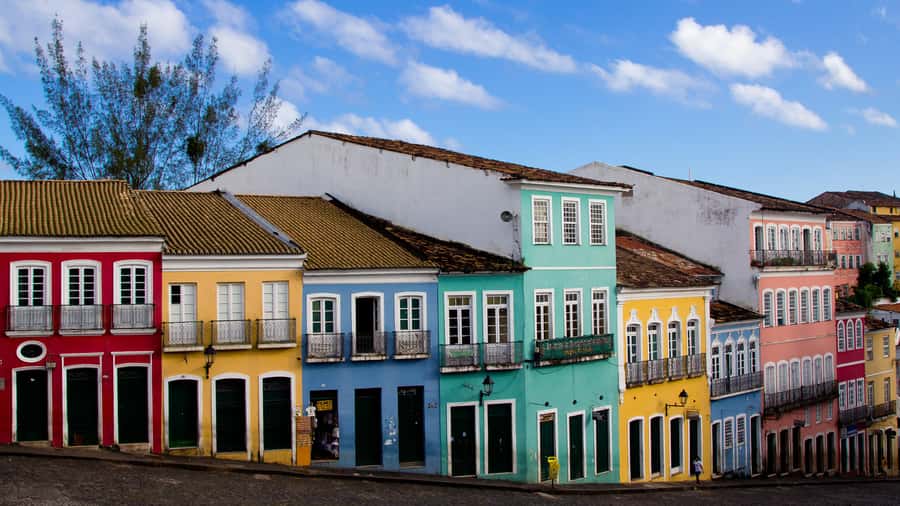
- Pelourinho gives the tour its sense of place: The UNESCO-listed square brings together Salvador’s architecture, music, color, and cultural identity.
- The four-hour schedule favors coverage: Several sites are seen from the vehicle or during short walks rather than through long interior visits.
- Language needs attention: Spanish and Portuguese are listed, but one booking received most explanations in Portuguese with only brief Spanish comments.
What the four-hour route reveals about Salvador
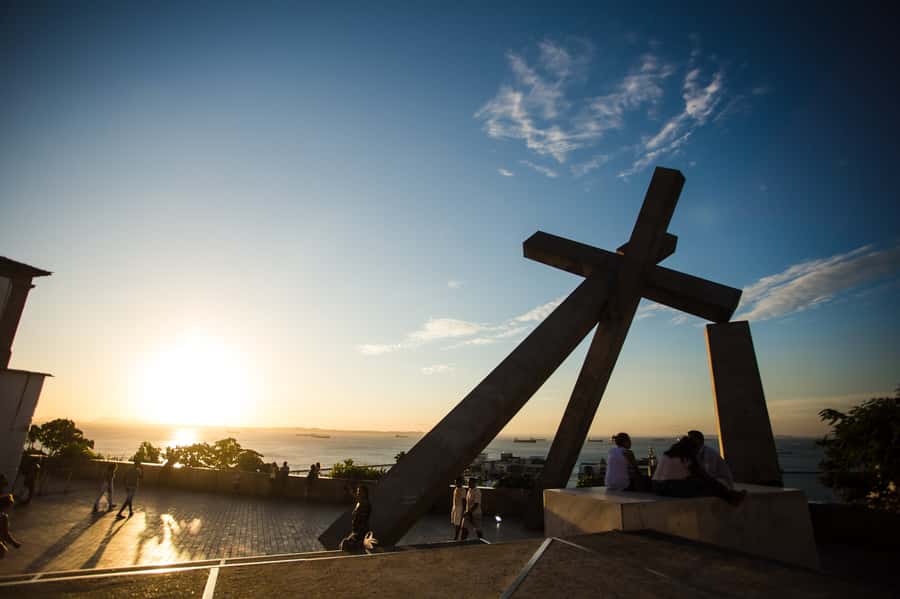
This is a compact introduction to Salvador rather than a slow, museum-style visit. You move through several parts of the city in one morning or afternoon, with transport between the main areas and walking in the historic center.
That format works well if you have limited time or want a first look before exploring on your own. You get the broad shape of Salvador: the coast at Barra, the newer commercial center, the upper city’s civic buildings, and the old streets of Pelourinho.
The tradeoff is time. A four-hour tour cannot give every church, square, and viewpoint the attention it deserves. You may see some landmarks from the bus or pass them during a short walk instead of entering and examining them at length.
Pickup is included from centrally located hotels. The exact pickup time is supplied after booking, so you should keep your schedule open until that detail arrives. The tour returns you to your hotel at the end, which makes it a simple choice for a first day in Salvador.
More City Tours in Salvador
- Afro-Brazilian Roots Private City Tour in Salvador
★ 4.7 · 88 reviews - City Tour in Salvador discover the first capital of Brazil
★ 5.0 · 69 reviews - Historical African oriented City Tour
★ 5.0 · 52 reviews
Starting at Barra Lighthouse by the Atlantic
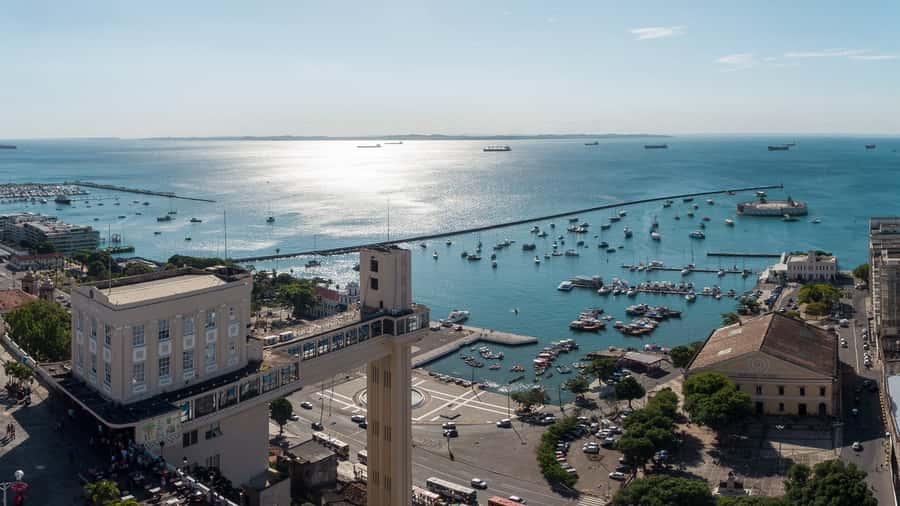
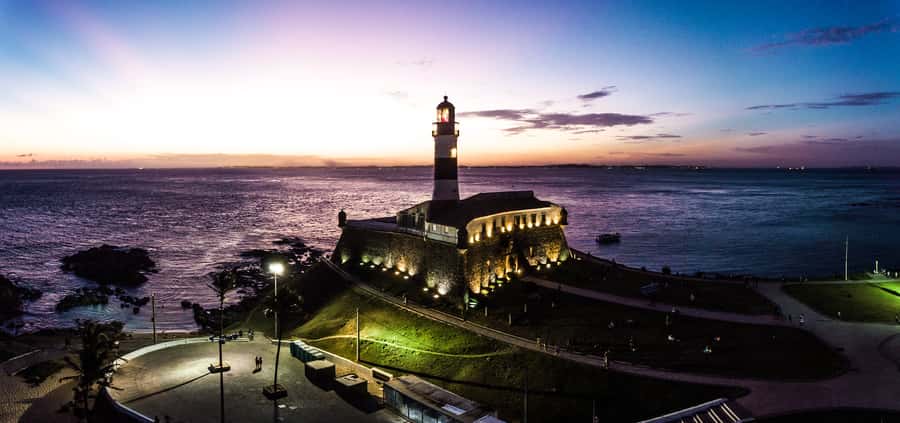
The route begins at Barra Lighthouse, a familiar symbol of Salvador’s coast. Even with limited time, this is a useful opening point because it places you at the edge of the city before the route turns inland toward the historic center.
You can expect the lighthouse to be treated as part of the city tour rather than as a long, separate attraction visit. The available details do not promise an interior visit or extended time at the site, so think of it as a landmark stop and orientation point.
From Barra, the route heads toward Cidade Alta, or the upper city. The road passes through the Corredor da Vitória, Campo Grande, and Piedade. These areas help show how Salvador grew beyond its colonial core.
The change in setting is part of the lesson. Instead of seeing only old buildings, you pass through districts with tall buildings and shopping centers. This is the working, commercial side of Salvador, where the city’s present-day economy is more visible.
I like this section because it gives you a more honest picture of the city. A tour that only visits Pelourinho can leave you with a postcard view. The drive through central Salvador adds scale and contrast, although the quality of the experience depends on how much explanation your guide provides while you are on the road.
Municipal Square and Salvador’s civic heart
The next main area is Municipal Square, where two important public buildings face the city’s central historic zone: Rio Branco Palace and City Hall.
This is a strong place to pause and understand how Salvador’s upper city was organized. The buildings here represent government and civic power, while the nearby streets lead toward religious sites and Pelourinho.
The tour does not promise a full interior visit to Rio Branco Palace or City Hall. You should expect to see the exteriors and hear about their role in Salvador’s development. If you enjoy architecture, this is a good point to look upward and compare the formal public buildings with the older houses nearby.
Municipal Square also prepares you for the Lacerda Elevator, which is directly adjacent. The route is easy to follow on paper, since the main sights are close together, but the pace can become confusing if a group spreads out.
One important practical lesson comes from a reported problem on this part of the route. After the group went up by the Lacerda Elevator, several families were left behind while waiting for the guide to regroup. If you are walking with children or anyone who moves slowly, keep the guide in sight and agree on the meeting point before crossing into the next section.
Lacerda Elevator and the Bay of All Saints
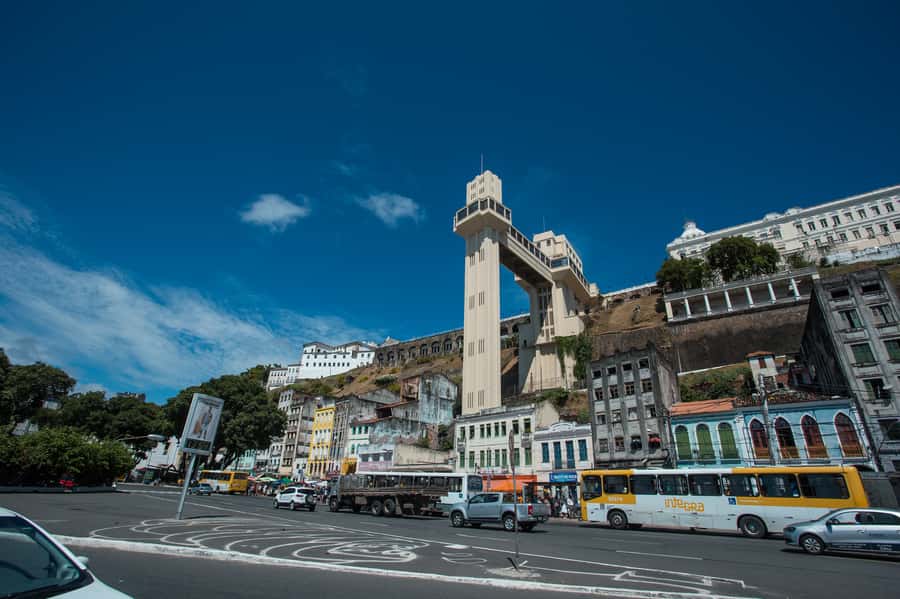
The Lacerda Elevator is the tour’s clearest visual reward. From its balustrades, you look across the Bay of All Saints and down toward the lower city. You can also see the upper city above you and the streets and houses of Pelourinho nearby.
This view explains Salvador better than a string of facts can. The city is divided by its steep geography, with the upper and lower sections connected by routes such as the elevator. In a few minutes, you can see how the historic center sits within a much larger urban setting.
I would treat this as a photo and orientation stop, not as a long scenic break. The listed tour length is four hours, and several historic locations are covered quickly. You will likely have time to appreciate the view, but not unlimited time to linger.
The elevator itself is important because it is both a transport link and a landmark. That practical role gives the visit more meaning than a viewpoint alone. You are seeing a piece of Salvador’s daily structure as well as a sweeping view.
Stay close to your group here. The elevator area can be the point where a compact tour becomes scattered, especially when people stop for photographs. This is also the place to confirm which language the guide will use for the next explanation if your booking is in Spanish.
more history walks in Salvador
- Salvador Historic Walking Tour – Pelourinho
★ 4.8 · 62 reviews - Full-Day Historic Private City Tour of Salvador with Lunch
★ 5.0 · 50 reviews - From Salvador: Quilombo Heritage Daytrip with Lunch
★ 3.4 · 3 reviews - Rio de Janeiro: Historic Rio and Santa Teresa Half-Day Tour
★ 4.4 · 228 reviews
Terreiro de Jesus and the Cathedral Basilica
From the elevator area, the walking route continues to Terreiro de Jesus. This square is home to the Cathedral Basilica of the Savior and gives you another angle on Salvador’s religious and civic past.
The cathedral is one of the major landmarks on the route, but the information provided does not guarantee a long interior visit or a detailed architectural tour. Ask the guide how much time is available before you enter, particularly if the schedule is moving quickly.
Terreiro de Jesus is valuable because it gathers several layers of Salvador into one setting. Religious buildings, old streets, and public open space come together here. You can use the square to notice the scale of the surrounding architecture and how the historic center differs from the modern districts visited earlier.
This section may be less satisfying if you want a detailed history of every building. One Spanish-speaking customer found that the tour included too little history and too many brief drive-by or walk-by views. That is a fair warning: this experience is designed to show the main framework of Salvador, not to replace a dedicated walking tour of the upper city.
St. Francis Church and Portuguese Baroque detail
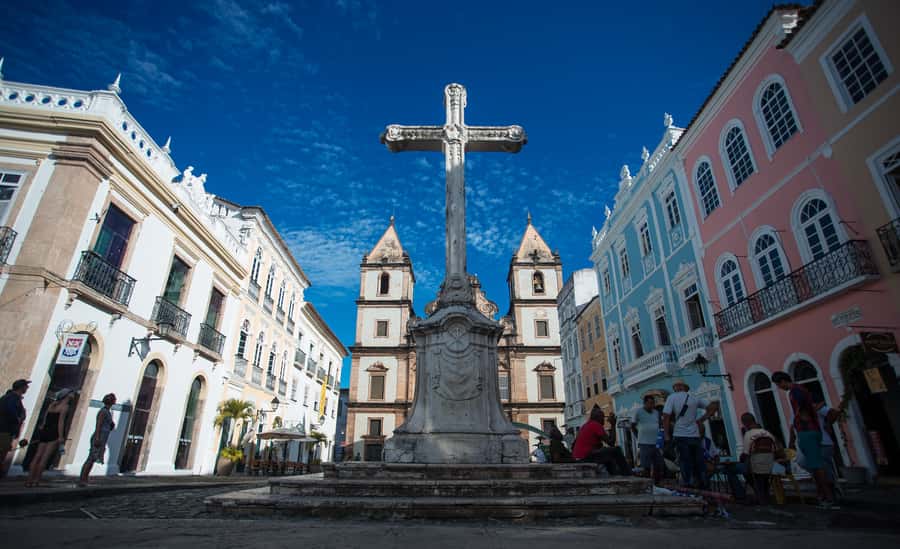
St. Francis Church is likely to be the artistic high point. It is known for its lavish decoration and is described as one of Brazil’s wealthiest churches, with Portuguese Baroque design at its center.
You do not need to be an architecture specialist to appreciate the contrast between the plainness of some exterior streets and the intense decoration associated with the church. Look for the overall effect first, then notice the smaller details if the schedule allows.
The church matters for more than beauty. It reflects the wealth, religious influence, and Portuguese cultural connections that shaped Salvador. A good guide can help you read those details instead of leaving you with only a quick photograph.
The tour information does not say how long you will spend inside. That uncertainty is important. If St. Francis Church is your main reason for booking, ask whether entrance and interior viewing are included in the planned route. The tour names the church as a stop, but the reported experience of short visits suggests you should not assume a long guided examination.
Pelourinho and the final walk
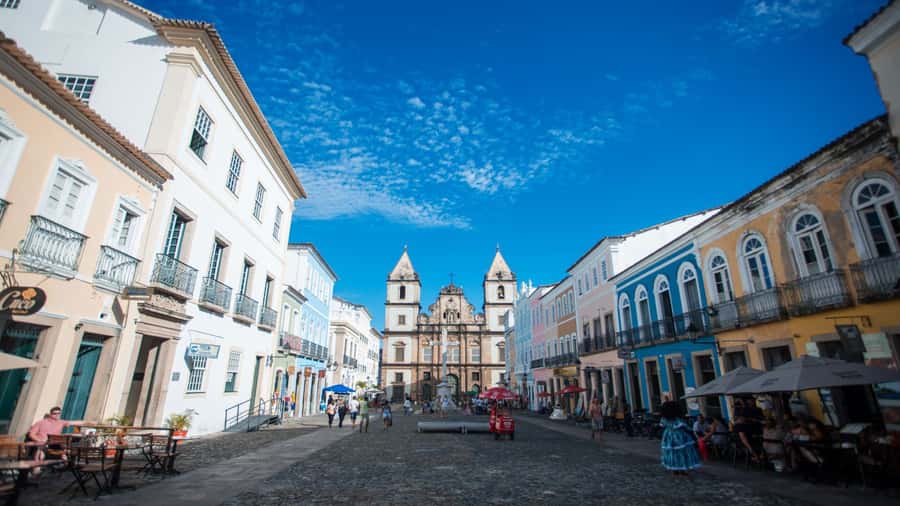
The route ends at Largo do Pelourinho, one of Salvador’s most recognizable squares. Its painted façades, narrow streets, and layered cultural identity give the tour its strongest sense of arrival.
Pelourinho is also linked with UNESCO recognition and with the work of Brazilian writer Jorge Amado. Those connections help explain why this is more than a pretty old quarter. It is a place tied to Salvador’s public image, literature, music, religion, and Afro-Brazilian cultural life.
The word pelourinho refers to a pillory, a reminder of the area’s connection with colonial punishment and slavery. The tour description does not spell out how much of that difficult history is covered, so listen for the guide’s explanation and ask questions if the subject matters to you.
This is where the short format can frustrate history-minded visitors. You may have enough time to walk through the square and absorb the colors, but not enough time to explore every side street or church. If you want shopping time, plan for that separately rather than assuming the tour includes a relaxed browsing period.
The final square is still a good ending because it leaves you in the part of Salvador most visitors want to see. Afterward, the group returns to the centrally located hotels.
Guides, languages, and the pace of the explanation
The experience is advertised with English, Spanish, and Portuguese guide support in the general description, while the activity details specifically list Spanish and Portuguese. That difference deserves attention before you book.
One booking made for a Spanish-language tour found that the rest of the group spoke Portuguese. The guide delivered the tour mainly in Portuguese, with only short sections in Spanish. That person felt they learned little about Salvador, especially because the stops were already brief.
You should contact the provider and confirm that a Spanish guide will be available for your date. Do not assume that selecting Spanish guarantees a fully Spanish-speaking group or a guide who will repeat the full commentary in both languages.
A guide named Painho received a mixed account. The initial transfer was punctual and his introduction was friendly, but the same group later described a serious problem when families were separated. Other feedback praised the guide’s care, answers, and information about Brazil, Bahia, and Salvador, so the quality may depend on the assigned guide and the day’s group.
The best way to protect your time is simple: remain near the guide, ask where the next meeting point is, and make sure the guide sees your group before you enter the elevator or begin a walk.
What the $24 price buys you
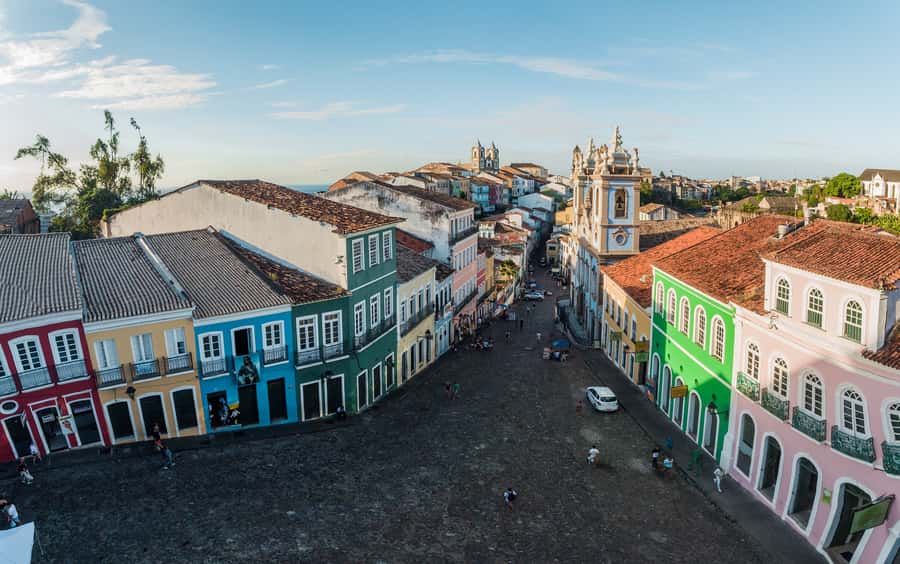
At $24 per person, this is a low-cost way to cover a large part of Salvador in four hours. Hotel pickup, return transport, and a live guide add practical value, especially if you would otherwise need to arrange transport between Barra, the upper city, and Pelourinho.
The price is strongest for first-time visitors who want an overview. You can see the city’s coastal edge, modern center, civic square, elevator, cathedral area, Baroque church, and Pelourinho without organizing the route yourself.
The value drops if your priority is detailed interpretation or long interior visits. Lunch and beverages are not included, and the tour does not promise extended time at each attraction. You may pay a little more later for a self-guided visit or a separate walking tour, but that could provide more depth.
I would see this as an orientation tour, not the complete Salvador experience. Use it to learn the city’s layout and identify the places where you want to return. At this price, that can be a sensible trade.
Who will get the most from this Salvador tour
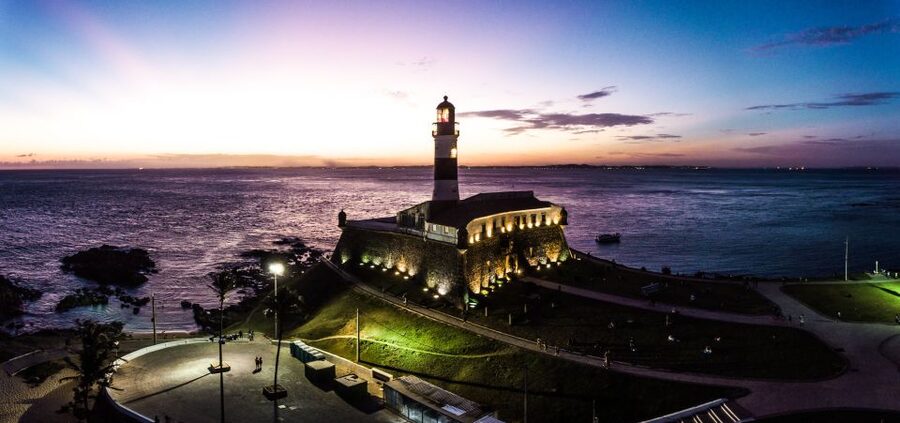
This tour suits you if you have only part of a day, are staying at a centrally located hotel, or want transport handled for you. It is also useful for families and older people who prefer not to arrange separate rides between the upper and lower parts of the city, though everyone should stay together during the walking sections.
It works well for visitors who value a broad introduction over long stops. You will see the major landmarks and gain a basic sense of how Salvador’s modern districts connect with the historic center.
You may want a different plan if you need:
- A guaranteed full English-language tour
- A slow study of church interiors
- Extended time for photography or shopping
- Detailed coverage of slavery, Afro-Brazilian traditions, or colonial politics
- A small-group walking experience with no drive-by stops
Wear comfortable shoes and comfortable clothes. Bring a passport or identity card as requested. Since food and drinks are not included, arrange your own meal before or after the tour.
Should you book the Historic City Tour in Salvador?
Book it if you want an affordable, practical first look at Salvador with hotel transport and the main historic sights in one half-day. The Lacerda Elevator view, St. Francis Church, and Pelourinho give the route real appeal, while the drive through modern Salvador keeps the city from becoming a one-quarter postcard.
Before booking, confirm the guide language and ask how much time is planned inside the cathedral and St. Francis Church. If you are comfortable with a quick overview, $24 is fair value. If you want careful history and unhurried walking, use this as a starting point and plan a longer independent visit afterward.
Free cancellation is available up to two days before the tour for a full refund. Starting times depend on availability, and the exact pickup time comes after booking.
FAQ
How long is the Historic City Tour in Salvador?
The tour lasts four hours.
What sights are included?
The route includes Barra Lighthouse, the Corredor da Victoria, Campo Grande, Piedade, Cidade Alta, Municipal Square, Rio Branco Palace, City Hall, the Lacerda Elevator, Terreiro de Jesus, the Cathedral Basilica of the Savior, St. Francis Church, and Largo do Pelourinho.
Is hotel pickup included?
Yes. Pickup and drop-off are included for centrally located hotels in Salvador.
When will I learn my pickup time?
The exact pickup time is provided after booking.
What languages are available?
Spanish and Portuguese are listed for the live guide. The general activity information also refers to English, Spanish, and Portuguese support, so confirm the language available for your date if this is important.
Is lunch included?
No. Lunch is not included.
Are beverages included?
No. Beverages are not included.
What should I bring?
Bring a passport or identity card, comfortable shoes, and comfortable clothes.
Can I cancel for a full refund?
Yes. You can cancel up to two days in advance for a full refund.
Is the tour mainly walking?
It combines vehicle transport with walking. Some landmarks are viewed during the drive or on short walks, while the historic center includes stops around Municipal Square, Terreiro de Jesus, St. Francis Church, and Pelourinho.
New in Salvador this month
- From Salvador: Schooner Tour to Frades Island★ 3.9 · 3 reviews
- From Salvador: Quilombo Heritage Daytrip with Lunch★ 3.4 · 3 reviews
- Salvador: Caipirinha Masterclass with Unlimited Drinks★ 4.2 · 4 reviews
- Salvador: Schooner Cruise with Pickup and Itaparica Stop★ 3.8 · 5 reviews
- BOXE CLASS – EX BAHIAN CHAMPION (SALVADOR-BA)★ 5.0 · 7 reviews
- Salvador by Night: Pelourinho & Old Town Tour★ 4.3 · 8 reviews
- Salvador: 3-Hour Percussion Class★ 4.9 · 10 reviews
- Salvador: Traditional Drumming and Percussion Workshop★ 4.4 · 10 reviews
Salvador Tours, compared.
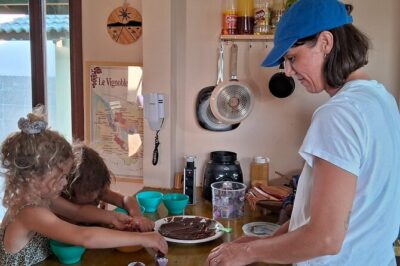
Cooking class in Salvador, an authentic dinning experience
Read our review →
Tour to the Frades Islands and Itaparica, from Salvador – Ba
Read our review →
From Salvador: Schooner Tour to Frades Islands and Itaparica
Read our review →
Tour Praia do Forte and Guarajuba, Leaving Salvador-Bahia.
Read our review →
Afro-Brazilian Roots Private City Tour in Salvador
Read our review →


Schooner Trip Only Ilha dos Frades, Leaving Salvador-Bahia.
Read our review →Browse the lists this tour appears in