
Our review · SALVADOR TOURS
Historical African oriented City Tour
Salvador’s African identity is not a small footnote to its history. It is present in the city’s churches, religions, public art, food, and daily life. This private tour gives you a useful introduction, beginning with a church built by enslaved people and ending with a long walk through Pelourinho, the city’s famous colonial center.
I like the clear focus on Afro-Brazilian culture and the way the tour connects several parts of Salvador rather than leaving you in one historic square. I also like the private format, since guides such as Josuel, Vagner, Joshua, and Andres can adjust the pace and answer questions as they come up.
The main consideration is the Afro-Brazilian Museum. Its opening is controlled by the Federal University of Bahia, so it may be closed on some dates, especially around holidays. Ask about current opening arrangements before booking, and remember that the tour lasts five to six hours, with about two hours on foot in Pelourinho.
Key points to know before booking
- A focused look at African heritage: The route centers on Black history, Afro-Brazilian religion, and the Orixá tradition.
- Five major stops in one morning: You visit a historic church, museum, sculpture site, elevator, and colonial district.
- Private transportation: An air-conditioned vehicle links the spread-out sights, saving you time and effort.
- Two hours in Pelourinho: The walking portion is the heart of the tour and requires comfortable shoes.
- Lunch is included: Food is part of the price, but alcoholic drinks cost extra.
- A flexible guide makes a difference: Josuel, Vagner, Joshua, and Andres are named guides associated with strong praise for their history lessons, energy, and personal service.
Why Salvador’s African story deserves a full morning
Salvador is one of the best places in Brazil to study the meeting of African, Portuguese, and Brazilian cultures. The city’s African influence is not limited to a museum display. It appears in religious practice, sculpture, music, architecture, language, cooking, and the layout of the old city.
That makes this route more useful than a quick photo tour. You are not simply being driven from one postcard view to another. The stops give you a sequence: Black religious life, Afro-Brazilian beliefs, public art based on Orixás, the physical divide between upper and lower Salvador, and the colonial district where much of the city’s history comes together.
I would choose this experience early in a Salvador visit. A good guide can give you context that helps the rest of your stay make more sense. You may notice churches differently, understand references to Candomblé more clearly, and have a better sense of why African culture remains central to Bahia.
More City Tours in Salvador
- Afro-Brazilian Roots Private City Tour in Salvador
★ 4.7 · 88 reviews - City Tour in Salvador discover the first capital of Brazil
★ 5.0 · 69 reviews - Full-Day Historic Private City Tour of Salvador with Lunch
★ 5.0 · 50 reviews
The Church of Our Lady of the Rosary of the Black People
The first stop is the Church of Our Lady of the Rosary of the Black People, with about 30 minutes inside. This church was built by enslaved people and for enslaved people, giving the visit a direct connection to Salvador’s Black Catholic history.
That detail matters. Colonial churches can look beautiful while hiding the unequal society that created them. Here, the building gives your guide a place to explain how enslaved and formerly enslaved people formed religious brotherhoods, maintained community ties, and created institutions within a harsh colonial system.
Thirty minutes is enough for an introduction, but not an exhaustive architectural study. Pay attention to the setting and listen for the connections between Catholic practice and African traditions. The point is not simply to admire the church. It is to understand why this particular church mattered to the people who built and used it.
This is a strong opening because it establishes the tour’s subject in human terms. You begin with community, faith, and survival rather than a list of dates.
Afro-Brazilian Museum and the limits of a scheduled stop
The Afro-Brazilian Museum receives about 30 minutes and focuses on the history of Afro-Brazilian religion. It is a short visit, so think of it as a primer rather than a complete museum experience.
The museum is especially helpful if you are new to Candomblé and related Afro-Brazilian traditions. Religious symbols and figures can be confusing when seen without explanation. A guide can help you understand what you are looking at and place those objects within the wider history of African religious traditions in Brazil.
There is one practical wrinkle. The museum is controlled by the Federal University of Bahia, and its opening days can be hard to predict. It has been closed around holiday periods, and the tour provider may not know about a closure until shortly before the booking date. I would contact the operator before your tour if this stop is important to you.
If the museum is closed, the rest of the route still has value, but the experience loses one of its more direct lessons on Afro-Brazilian religion. Ask how the itinerary will be adjusted rather than assuming the museum will always be open.
Orixá sculptures at Dique de Tororó
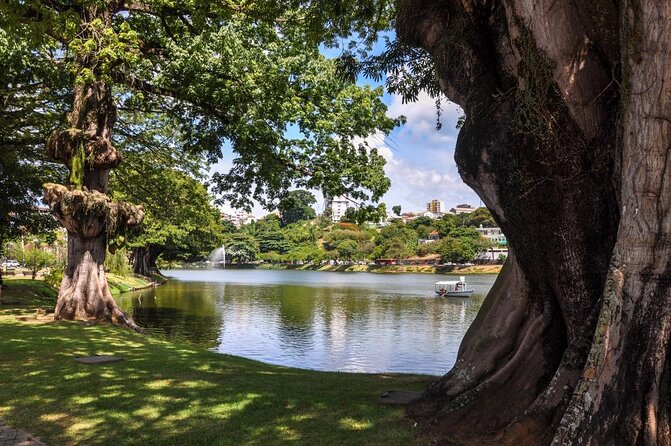
At Dique de Tororó, you get about 20 minutes for photographs and an explanation of the Orixá sculptures created by Bahian artist Tati Moreno. This is a quick outdoor stop, but it can be one of the most memorable visual moments of the morning.
The sculptures give physical form to figures connected with Afro-Brazilian religious traditions. Their placement on the water makes the site especially easy to appreciate from a distance. You will have time for photographs, but the guide’s explanation is the important part. Without context, the statues can look like striking public art. With context, they become part of a larger conversation about religion, identity, and the survival of African traditions in Bahia.
Do not expect a long visit here. Twenty minutes passes quickly, and the stop is designed as a compact introduction. Still, it breaks up the indoor history lesson and gives you a visual reference you may remember when the guide discusses Orixás elsewhere in Salvador.
more history walks in Salvador
- Salvador Historic Walking Tour – Pelourinho
★ 4.8 · 62 reviews - Historic City Tour in Salvador
★ 3.6 · 17 reviews - From Salvador: Quilombo Heritage Daytrip with Lunch
★ 3.4 · 3 reviews - Rio de Janeiro: Historic Rio and Santa Teresa Half-Day Tour
★ 4.4 · 228 reviews
Lacerda Elevator and the split between two cities
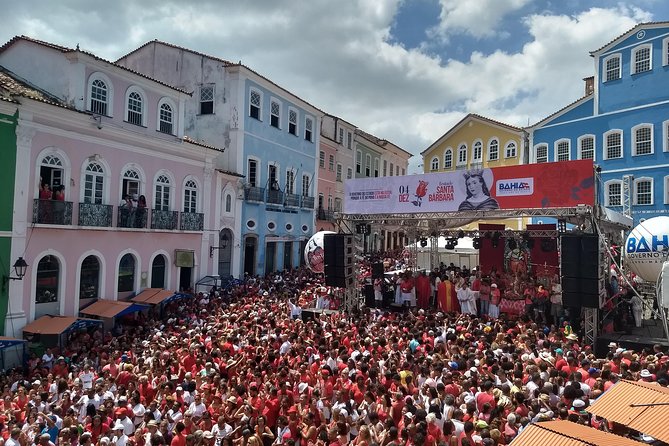
The Lacerda Elevator is listed as a 15-minute stop and serves as the starting point for the walking portion. It links Salvador’s lower and upper sections, a basic piece of city geography that becomes important as the day unfolds.
Your guide can explain how Salvador’s upper and lower areas developed and why the elevator is more than a transport device. It is a useful place to get your bearings before entering the old center on foot.
The elevator stop itself is brief. Do not book this tour expecting a long engineering presentation or an extended visit inside the structure. Its main value is practical and geographic: it places you at the threshold of the walking route and helps explain the shape of Salvador.
The transition from vehicle to walking is worth noting. The first part of the tour moves between sites in an air-conditioned car. From the Lacerda Elevator onward, you should be ready to walk through historic streets for around two hours.
Two hours through Pelourinho
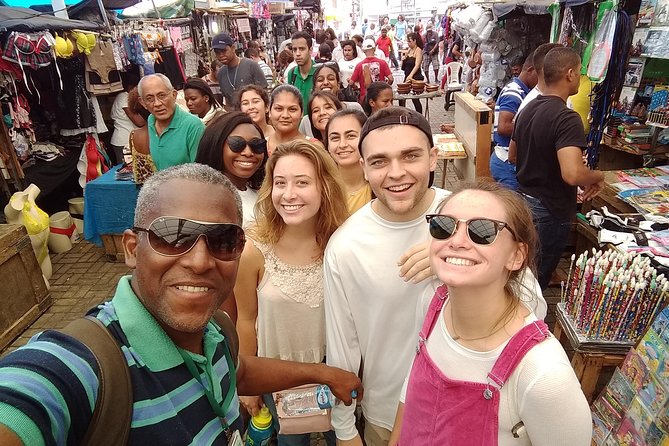
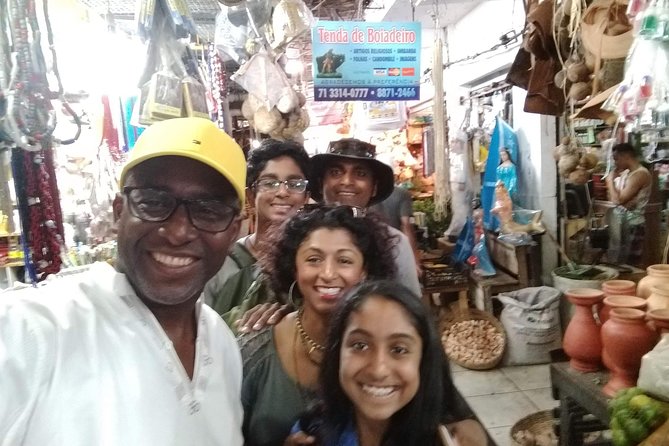
Pelourinho is the longest stop, with about two hours on foot. This is where the separate themes of the tour come together: colonial history, African heritage, religious life, architecture, and modern Salvador.
A guide can give the streets meaning that you might miss on your own. The colorful facades are attractive, but the district also carries the weight of colonial rule and slavery. That contrast is part of the experience. You are seeing a popular historic area while learning about the people whose labor and culture helped create it.
The walking time also gives you room to ask questions. Several guides connected with this experience are praised for keeping children engaged, explaining the city in an energetic way, and linking the past with Salvador’s present reality. That is important in Pelourinho, where a short explanation can turn a pretty street into a place with human meaning.
Wear comfortable shoes and expect the pace to depend on your group. The tour is private, so you can ask for a slower rhythm if needed, but two hours in a colonial district still means standing and walking. If you have mobility concerns, discuss them before booking. The information says most people can participate, and baby seats are available only when requested ahead of time.
Lunch adds value, but ask what is planned
Lunch is included in the $190 per-person price, which improves the value of a private half-day tour. Bahia is known for distinctive food, and one account of the experience describes a stop at a local restaurant where the group tried regional dishes.
The exact restaurant and menu are not specified, so I would ask when booking what lunch includes and whether the meal can suit dietary needs. Alcoholic beverages are not included, so budget separately if you want a beer, cocktail, or other drink.
Lunch also gives the tour a welcome change of pace. After several history-focused stops and a long walk, sitting down to eat can help you process what you have seen. Do not treat the meal as a guaranteed food tour, though. The main purpose is cultural history, with lunch included as part of the day rather than as a separate culinary program.
Guides who bring the history to life
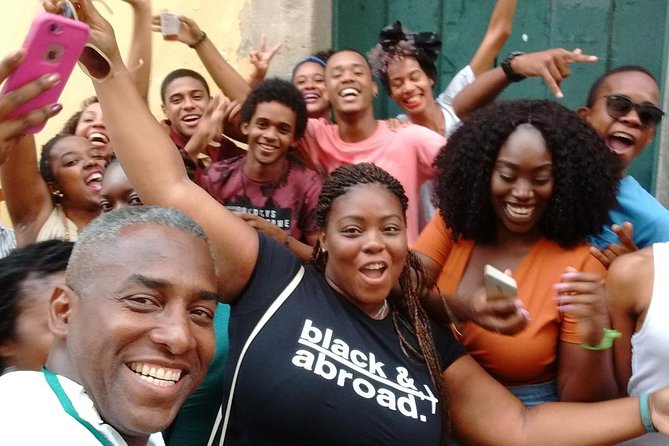
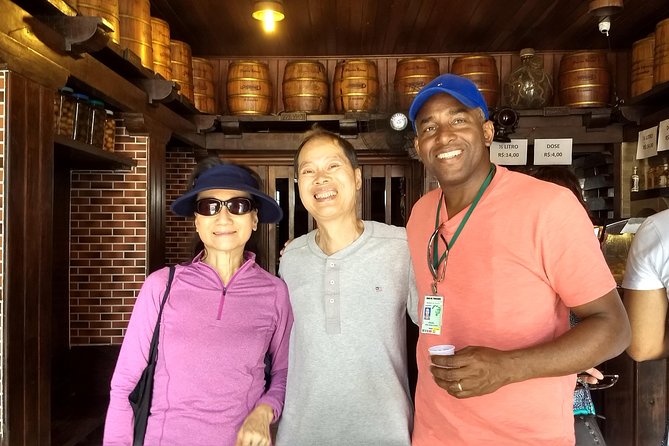
The operator is Olafemi Tours, and several guides are named in the supplied information. Josuel is repeatedly associated with strong history lessons, enthusiasm, useful local advice, and warm personal service. Vagner is described as especially strong on Afro-Brazilian history and religion, while Joshua and Andres are also praised for clear explanations and engaging city tours.
You may not be able to guarantee a particular guide, but it is reasonable to request one when booking. Josuel is specifically suggested as a preferred choice by one booking party, and Vagner is noted for his work with the cultural and religious themes at the center of this route.
The guide matters here more than it would on a simple sightseeing transfer. The churches, sculptures, and colonial streets do not explain themselves. You are paying for interpretation, not just transport. A guide who can connect past events with Salvador today will make the five to six hours feel purposeful.
Families may find the private format useful. One guide kept children engaged during the history lessons, and private touring lets you pause or ask questions without worrying about a large group. The route still contains serious material, including slavery and religious history, so parents should decide how much context is right for their children.
Is $190 per person fair?
At $190 per person, this is not a budget city walk. The price covers a private experience, an air-conditioned vehicle, admission to the listed sites, lunch, and five to six hours of guiding. For a small group that wants personal attention and a focused cultural theme, the cost can be fair.
The value is strongest when you use the guide well. Ask questions. Request explanations of the Orixá figures. Ask how the upper and lower parts of Salvador developed. Ask about the relationship between Catholic institutions and African religious traditions. The more curious you are, the more the private format earns its keep.
The value is weaker if you only want quick views and photographs. Several stops are short, and the museum may be closed. If your main goal is general sightseeing, a less expensive city tour may cover more landmarks. This experience earns its price through depth, private service, and the specific African focus.
The tour is usually booked about 15 days ahead, so plan early if your Salvador dates are fixed. Confirmation is provided at booking, and the stated start time is 9:00 a.m.
Practical details for a smoother day
The tour lasts approximately five to six hours. Since the route includes both vehicle transfers and a two-hour walk, wear practical shoes and bring what you need for a full morning and early afternoon.
The meeting details list a 9:00 a.m. start, but the exact pickup arrangement should be confirmed directly. The guides have provided pickup and drop-off service for booking parties, yet your precise location and transfer plan are not specified in the supplied details.
Service animals are allowed, and most people can take part. Baby seats are available only if requested in advance, so families should make that request at the time of booking, not the day before.
Cancellation is free up to 24 hours before the local start time for a full refund. Cancellations or changes made less than 24 hours before the start are not refunded or accepted.
Who should book this Salvador tour?
I would choose this tour if you want Salvador’s African heritage to be the main subject of your day. It suits first-time visitors who want historical context, families who prefer a private pace, and anyone interested in Afro-Brazilian religion, Black Catholic history, and the meaning behind public art.
It is also a smart choice if you want a guide who can help with the rest of your stay. Josuel and the other guides have provided suggestions for food and local events, which can be useful after the tour ends.
I would hesitate if you dislike walking, want a large number of attractions, or need the museum visit to be guaranteed. The route is thoughtful rather than rushed, and its success depends partly on the guide’s explanations. Ask about the museum’s schedule and guide availability before paying.
Should you book it?
Book it if you want to understand Salvador rather than simply photograph it. The Church of the Rosary of the Black People, the Orixá sculptures at Dique de Tororó, and the two-hour walk through Pelourinho give you a strong framework for the city’s African and colonial past.
The private vehicle, lunch, and guide attention add practical value, though the price is best justified for a small group that will ask questions and take its time. Confirm the museum’s opening status, request a baby seat if needed, and wear good walking shoes. For a focused introduction to Salvador’s African identity, this is a well-chosen half-day.
FAQ
How long does the Historical African Oriented City Tour last?
The tour lasts approximately five to six hours, beginning at 9:00 a.m.
What locations are included?
The route includes the Church of Our Lady of the Rosary of the Black People, the Afro-Brazilian Museum, Dique de Tororó, Lacerda Elevator, and Pelourinho.
Is lunch included?
Yes. Lunch is included in the tour price. Alcoholic beverages are not included.
Is the tour private?
Yes. Only your group participates in this private tour or activity.
Can I request a specific guide?
You can ask about guide availability when booking. Guides associated with the experience include Josuel, Vagner, Joshua, and Andres.
Is the Afro-Brazilian Museum always open?
No opening guarantee is provided. The museum is controlled by the Federal University of Bahia, and its schedule can change, including around holidays. Confirm its status before your tour.
What is the cancellation policy?
You can cancel up to 24 hours before the local start time for a full refund. Cancellations or changes made less than 24 hours before the start are not accepted for a refund.
New in Salvador this month
- From Salvador: Schooner Tour to Frades Island★ 3.9 · 3 reviews
- From Salvador: Quilombo Heritage Daytrip with Lunch★ 3.4 · 3 reviews
- Salvador: Caipirinha Masterclass with Unlimited Drinks★ 4.2 · 4 reviews
- Salvador: Schooner Cruise with Pickup and Itaparica Stop★ 3.8 · 5 reviews
- BOXE CLASS – EX BAHIAN CHAMPION (SALVADOR-BA)★ 5.0 · 7 reviews
- Salvador by Night: Pelourinho & Old Town Tour★ 4.3 · 8 reviews
- Salvador: 3-Hour Percussion Class★ 4.9 · 10 reviews
- Salvador: Traditional Drumming and Percussion Workshop★ 4.4 · 10 reviews
Salvador Tours, compared.
Cooking class in Salvador, an authentic dinning experience
Read our review →
Tour to the Frades Islands and Itaparica, from Salvador – Ba
Read our review →
From Salvador: Schooner Tour to Frades Islands and Itaparica
Read our review →
Tour Praia do Forte and Guarajuba, Leaving Salvador-Bahia.
Read our review →
Afro-Brazilian Roots Private City Tour in Salvador
Read our review →


Schooner Trip Only Ilha dos Frades, Leaving Salvador-Bahia.
Read our review →Browse the lists this tour appears in