
Our review · SALVADOR TOURS
Private Full-Day Tour – Salvador’s Lower & Upper City
Salvador’s great trick is that it is really two cities at once. This private tour lets you see both, from the Atlantic lookout at Farol da Barra to the steep old quarters of Pelourinho, while a local guide explains how African, Portuguese, Catholic, and Brazilian traditions meet here.
I like the easy private transport and the strong mix of sights. You get wide bay views, colorful Orixá sculptures, a traditional ice cream stop, major churches, and time for local food without sorting out Salvador’s hills and distances alone. I also like that guides such as Carlos Eduardo Barbosa have adjusted the day for interests, weather, mobility, and cruise-ship schedules.
The main consideration is pace. Seven hours covers a lot of ground, but several stops last only 20 minutes, and church entrances are not all included. If you want long museum visits or a slow wander through Pelourinho, you will need to ask for fewer stops.
Key points at a glance
- Two cities in one day: Move from Salvador’s oceanfront and Lower City to the Upper City and Pelourinho.
- Private, flexible guiding: Only your group takes part, so the route can be adjusted to your interests and energy.
- A useful local food stop: Sorveteria da Ribeira offers more than 70 flavors, including ice creams made with regional fruit.
- Strong cultural context: Bonfim Church and the Orixá sculptures help explain Bahia’s African and Catholic influences.
- Comfortable transportation: An air-conditioned vehicle, bottled water, hotel pickup examples, and clean cars make the long day easier.
- Good for first-time visits: The tour gives you a broad orientation and ideas for places to revisit later.
Starting with the Atlantic at Farol da Barra
The day begins at Farol da Barra, one of Salvador’s best places for a quick sense of the city’s setting. From here, you look across the Atlantic and toward the entrance of the great bay. The lighthouse gives the opening stop a clear visual punch, and the admission cost is free.
You get about 20 minutes here. That is enough for photographs and a first explanation of Salvador’s coastal position, but not enough for a lingering visit. Think of this as a viewpoint and orientation stop rather than a full museum visit.
The private vehicle matters from the start. Salvador is spread out, and this route connects areas that are not practical to combine on foot. Your guide can focus on the view and the story instead of leaving you to work out local transport between districts.
More City Tours in Salvador
- Afro-Brazilian Roots Private City Tour in Salvador
★ 4.7 · 88 reviews - City Tour in Salvador discover the first capital of Brazil
★ 5.0 · 69 reviews - Historical African oriented City Tour
★ 5.0 · 52 reviews
Orixás, football, and Salvador’s modern side
At Dique do Tororó, the focus shifts from the sea to a set of large Orixá sculptures by artist Tati Moreno. These figures represent African deities and reflect the African influence woven into everyday life in Bahia.
The stop also gives you a look at Arena Fonte Nova, Salvador’s football stadium. That pairing is useful: you see an artistic expression of religious tradition alongside a major symbol of modern local life. Football is not just a passing subject here. One guide even helped a visitor find the official box office for a Bahia match after the tour, avoiding sellers charging inflated prices.
You have about 20 minutes at the lagoon. A guide who explains the Orixás well can add much more than a photograph alone, so this is one place where private guiding earns its keep.
Crossing toward Ribeira and the Lower City
The vehicle then heads down toward the Lower City, passing the old financial center and the Port of Salvador on the way to Ribeira. This portion is less about getting out at a named attraction and more about seeing how Salvador’s districts connect.
That transition helps you understand the city’s shape. The Upper City contains the old colonial core, while the Lower City runs along the bay and includes working, residential, and waterfront areas. The route gives you a broad look instead of confining the day to the postcard streets of Pelourinho.
The drive also saves your legs. Salvador’s hills and uneven streets can make a full day tiring, especially if you have a knee problem, a leg brace, or an older family member in your group. One past guest specifically appreciated a guide who built in rests and offered help with stairs.
Sorveteria da Ribeira and the taste of Bahia
Sorveteria da Ribeira is a small but memorable stop. The shop offers more than 70 flavors, with many made from fruits associated with the region. You have about 20 minutes to choose and sample.
This is more than a snack break. Regional fruit gives you a direct, easy way to connect food with place, and the stop adds a relaxed note between churches and viewpoints. If you like trying local flavors, this may be one of the day’s highlights.
Ice cream is not included in the tour price, so bring a little spending money. The short stop also means you should not expect a long tasting session. Your guide can help you choose, but the exact flavors available can vary.
more Salvador days to choose between
- Full-Day Historic Private City Tour of Salvador with Lunch
★ 5.0 · 50 reviews - Rio de Janeiro: Angra dos Reis and Ilha Grande Full-Day Tour
★ 4.6 · 1,673 reviews - Iguazu Falls: Full-Day Tour of Brazil & Argentina Sides
★ 4.9 · 1,542 reviews - Full Day Tour to Angra dos Reis and Grand Island
★ 4.0 · 469 reviews
Bonfim Church and Bahia’s shared faith
At Basílica do Senhor do Bonfim, you reach one of Brazil’s best-known churches. The visit shows the religious blending that shapes Bahian life, with Catholic devotion existing alongside strong African cultural influence.
You can tie one of the traditional colored ribbons and make a request for protection. It is a simple act, but it gives the stop a personal connection. The church is also linked to the annual Bonfim celebration, when people walk about eight kilometers in a major expression of faith.
You get about 30 minutes here. That provides time to see the church and take part in the ribbon tradition, though it is not a long religious or architectural study. If you want detailed attention inside the church, tell your guide early so the timing can be handled carefully.
Ponta de Humaitá and the bay views
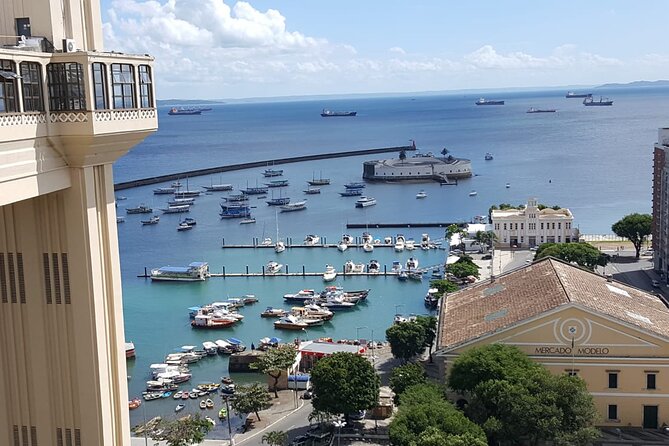
Ponta de Humaitá brings the route back to open views. At Mont Serrat Fort, you look across Salvador and the bay from another angle. The stop lasts about 20 minutes, but the setting makes it worthwhile.
This is a good place to compare the city’s two levels. From the shoreline, you can see why Salvador developed as an upper colonial city above a lower port district. The bay, islands, waterfront, and old quarters come together in one broad view.
The visit is also a reminder that Salvador is not only about churches and colonial façades. Its water, port, fortifications, and changing districts are central to the city’s story. A clear day will make this stop especially rewarding, while rain can reduce the payoff.
Municipal Square and the Lacerda Elevator
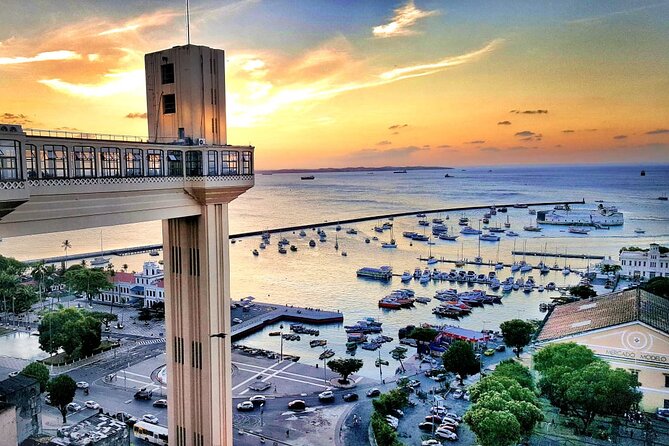
The route climbs to the Upper City and Praça Thomé de Souza, also called Municipal Square. This is where the Portuguese established the first capital of Brazil in a defensive position above the bay.
From the square, you see Rio Branco Palace, City Hall, and the Lacerda Elevator. The elevator connects the Upper and Lower cities and is one of Salvador’s best-known landmarks. From this height, the view takes in the bay, its islands, the old financial district, and Mercado Modelo, a market known for handicrafts.
The stop lasts roughly 20 minutes. That is enough to take in the view and understand the layout, but the tour does not promise a separate ride on the elevator. Ask your guide if you want to include that experience, since private tours can sometimes adjust the plan.
Sé Square and Terreiro de Jesus
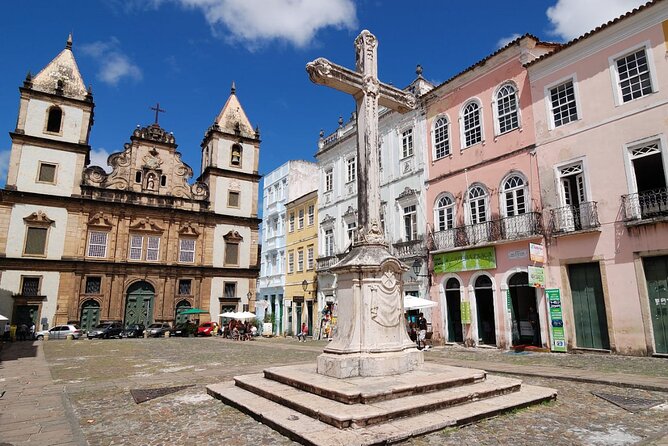
At Praça da Sé, you pass the site where Brazil’s first cathedral was built. Ruins remain, giving the square a visible link to the city’s earliest colonial period.
From there, the route continues to Terreiro de Jesus, one of the Upper City’s key squares. The former Jesuit school and church were built here, and the church is now the Basilica Cathedral. This area is a natural pause point because it brings together religious buildings, open space, and the old city’s pedestrian streets.
The scheduled free time for lunch is about one hour. Lunch is not included, but guides have been praised for choosing good local restaurants and helping visitors try Bahian food. Since the exact restaurant is not fixed in the information provided, ask about the menu and price before ordering.
Inside Salvador’s Cathedral
After lunch, you visit the Cathedral Basilica of Salvador. It is described as the mother church of Brazilian Catholic churches and contains an important collection of Brazilian sacred art.
The visit is planned for about 30 minutes. That is enough for a focused look at the interior and an introduction to the art, but anyone with a strong interest in church decoration may want more time. This is another point where the private format helps: you can tell the guide if you would rather study the cathedral than rush to the next square.
Admission is not included. Factor that extra cost into your budget, and ask your guide about the current ticket amount when you book or before entering. The tour includes the guide’s service and transportation, but not church admission, lunch, alcoholic drinks, or ice cream.
São Francisco and the heart of the old city
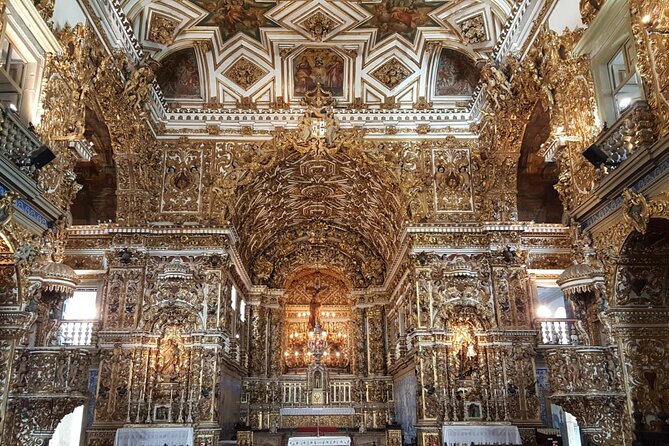
Largo do Cruzeiro de São Francisco sits in the center of the old city. Bars, restaurants, and handicraft shops surround the square, but the main reason to stop is the Church of Saint Francis of Assisi.
The church is presented as a major Baroque work, and it is one of the most visually important religious buildings on the route. You get about 10 minutes at the square, so this is a quick visit unless the guide changes the timing.
The church visit has a ticket that is not included. Keep some flexibility in your budget for this and the cathedral. If you care more about interiors than city views, tell your guide at the beginning. Otherwise, the schedule may favor seeing more locations from the outside.
Pelourinho’s final streets
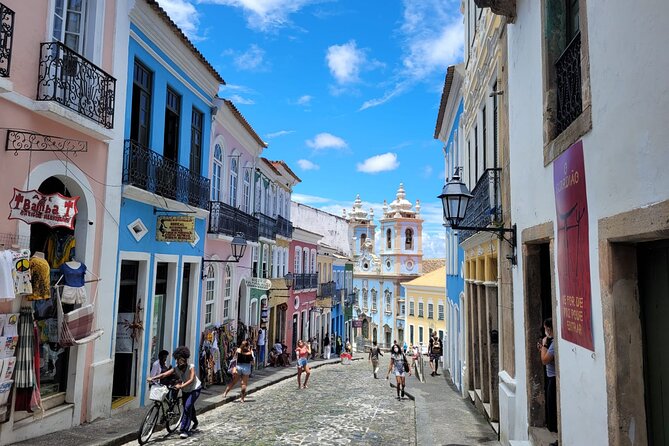
The final stop is Largo do Pelourinho, one of Salvador’s most recognizable squares. The Jorge Amado Foundation and the Church of Our Lady of the Rosary of the Black Men are located here.
The square offers a strong closing image: colorful buildings, steep streets, and an area tied to Salvador’s African and Portuguese past. The Church of the Rosary of the Black Men is especially relevant to understanding the role of Black Catholic brotherhoods in Bahia.
You have about 20 minutes here. That is enough for photographs and a guided introduction, but not a full neighborhood walk. If you plan to return to Pelourinho later, use the guide’s advice about where to go and how to move around independently. One solo guest found that practical guidance about places to visit and avoid was one of the useful parts of the day.
What the private format adds
The $125 per-person price is easiest to justify when you are sharing it with a small private group. You are paying for a guide, air-conditioned transportation, bottled water, and the ability to make the route fit your group rather than joining a fixed coach schedule.
The value is also in the connections between stops. A guide can explain why the Orixás matter, how the Upper and Lower cities work, what the Bonfim ribbons represent, and how the churches fit into Bahia’s religious life. Without that context, the day could become a string of attractive façades and viewpoints.
Past outings have included couples, solo visitors, families with children, and a group with an 86-year-old grandparent. Carlos has been praised for clear English, patience, punctual pickup, and a clean vehicle. Ana and Eduardo are also named as guides on other outings, so the exact guide may depend on availability.
The tour is not a bargain if you are happy using public transport and exploring only one district. It becomes stronger value if you want Salvador’s main areas in one day, prefer door-to-door transport, or are visiting from a cruise ship and need a dependable return with time to spare.
Weather, walking, and practical planning
This is a seven-hour day, although past outings have sometimes lasted six to eight hours depending on the group and adjustments. You will make short walks at viewpoints, squares, churches, and old streets, with stairs and uneven surfaces possible in the Upper City.
Most people can participate, but comfort depends on your mobility and stamina. Wear shoes suited to cobbled streets and bring sun protection. Bottled water is provided, but lunch, ice cream, church tickets, and drinks are extra.
Rain can change the feel of the day. Guides have provided umbrellas and continued safely during wet weather, but the experience requires good weather and may be canceled if conditions are poor. In that case, you are offered another date or a full refund.
The tour can be canceled without penalty up to 24 hours before the start time. Changes made inside that window are not accepted, and a late cancellation is not refunded. Confirmation is provided at booking, and the activity is near public transportation even though your main movement is by private vehicle.
Who should book this Salvador tour?
I would choose this tour for a first visit, a short stay, a cruise stop, or a family group that wants to see the city without handling its hills and transfers. It also suits anyone who wants history, architecture, food, religion, and city views in one organized day.
It is a good match for English speakers because Carlos is described as fluent in English, and one outing also included Portuguese practice. French-speaking service has been provided as well, though you should confirm the language available for your date.
I would look elsewhere if your main goal is a slow day inside museums, a long beach visit, or extended shopping time. The route is broad by design. You see many important places, but the stops are often brief.
Should you book it?
Book it if you want a well-rounded first look at Salvador with private transport and a guide who can explain the city in plain terms. The best reason to choose it is not simply the number of stops. It is the chance to connect Barra’s ocean views, Ribeira’s food, Bonfim’s faith, the bay’s port, and Pelourinho’s colonial core in one day.
Before booking, ask which guide will lead your group, confirm the pickup point, and decide which churches matter most to you. If you make those priorities clear, the private format should help turn a packed day into a useful introduction rather than a rushed checklist.
FAQ
How long does the tour last?
The tour lasts approximately seven hours. Individual outings may vary, with past experiences taking about six to eight hours.
What is included in the price?
The price includes guide service, an air-conditioned vehicle, and bottled water.
Is lunch included?
No. Lunch is not included, and about one hour is set aside for lunch at Terreiro de Jesus.
Are church admission tickets included?
No. Admission to the Cathedral Basilica is not included. The visit to the Saint Francis church also has a ticket that is not included.
Is this a private tour?
Yes. Only your group participates in the activity.
Who provides the tour?
The experience provider is Carlos Eduardo Barbosa. Carlos, Ana, and Eduardo are named as guides on past outings.
Can most people participate?
Most people can participate. The route includes walking, stairs, squares, and historic areas, so you should consider your own mobility and stamina.
What happens if the weather is poor?
The experience requires good weather. If it is canceled because of poor weather, you are offered a different date or a full refund.
New in Salvador this month
- From Salvador: Schooner Tour to Frades Island★ 3.9 · 3 reviews
- From Salvador: Quilombo Heritage Daytrip with Lunch★ 3.4 · 3 reviews
- Salvador: Caipirinha Masterclass with Unlimited Drinks★ 4.2 · 4 reviews
- Salvador: Schooner Cruise with Pickup and Itaparica Stop★ 3.8 · 5 reviews
- BOXE CLASS – EX BAHIAN CHAMPION (SALVADOR-BA)★ 5.0 · 7 reviews
- Salvador by Night: Pelourinho & Old Town Tour★ 4.3 · 8 reviews
- Salvador: 3-Hour Percussion Class★ 4.9 · 10 reviews
- Salvador: Traditional Drumming and Percussion Workshop★ 4.4 · 10 reviews
Salvador Tours, compared.
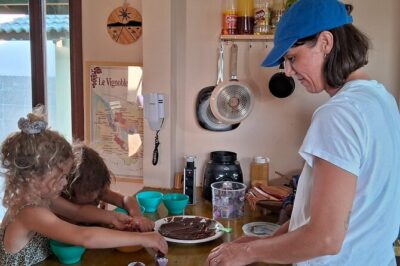
Cooking class in Salvador, an authentic dinning experience
Read our review →
Tour to the Frades Islands and Itaparica, from Salvador – Ba
Read our review →
From Salvador: Schooner Tour to Frades Islands and Itaparica
Read our review →
Tour Praia do Forte and Guarajuba, Leaving Salvador-Bahia.
Read our review →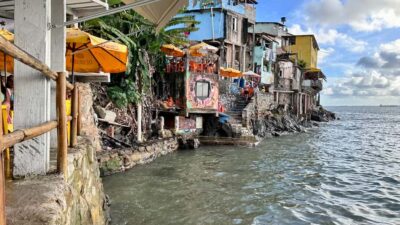
Afro-Brazilian Roots Private City Tour in Salvador
Read our review →

Schooner Trip Only Ilha dos Frades, Leaving Salvador-Bahia.
Read our review →Browse the lists this tour appears in