
Our review · SALVADOR TOURS
Afro-Brazilian Roots Private City Tour in Salvador
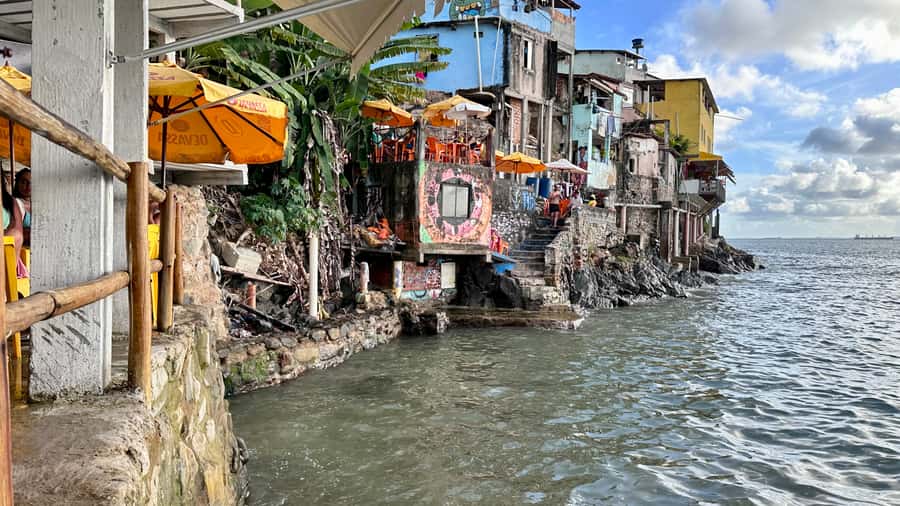
Salvador’s African heritage is not tucked away in a museum. It is present in food, faith, music, street life, and neighborhoods far beyond the usual tourist center. This six-hour private tour takes you to a Yemayá altar, the São Joaquim Fair, an Ewe Fon Candomblé temple, and a seaside favela community.
I especially like the small private format, which lets you ask serious questions and gives the guide room to explain complex subjects at your pace. I also like the combination of food and culture: you taste acarajé at the point when the market’s sights and smells have already sharpened your appetite. The main consideration is that this is an educational tour with visits to communities where photography is not allowed, not a carefree sightseeing loop.
Key points at a glance
- Yemayá altar in Rio Vermelho: Visit a sacred place maintained by local fishermen near Salvador’s waterfront.
- Tororó Dike monuments: Stop for photographs beside striking African figures linked to Bahia’s spiritual traditions.
- São Joaquim Fair: Taste and see ingredients, produce, and foods tied to African and Bahian cooking.
- Candomblé encounter: Learn about Ewe Fon beliefs in a sacred setting, with access dependent on local welcome.
- Seaside community lunch: Spend about two hours at the final stop, with lunch, sea views, and free time.
- Private six-hour outing: Hotel pickup, private car, guide, lunch, acarajé tasting, and a donation are included.
Why this Salvador tour feels different
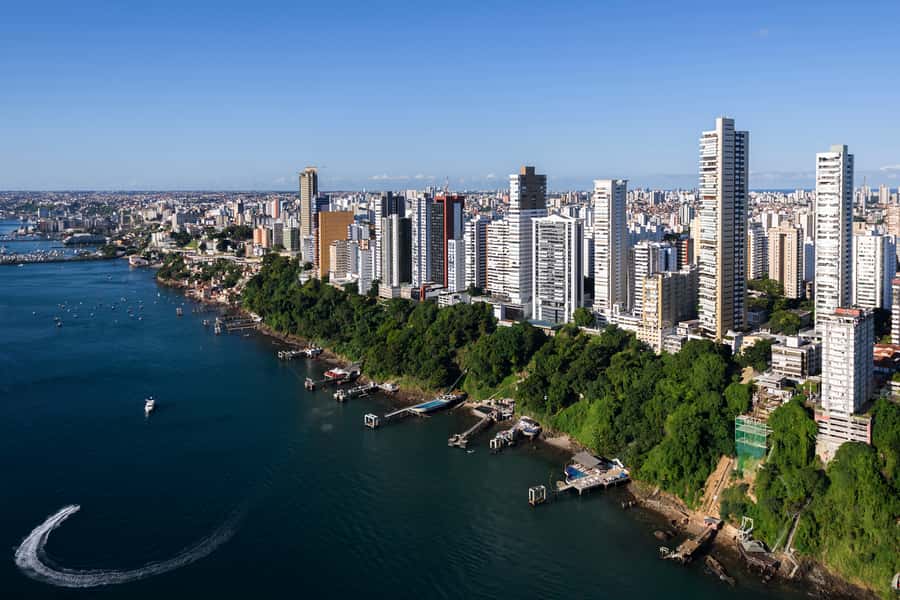
Many first visits to Salvador focus on Pelourinho, colorful colonial buildings, churches, and music performances. Those sights matter, but they only tell part of the city’s story. This tour shifts the center of attention to African-descended communities and the ways their beliefs and customs have continued through centuries of pressure and change.
You are not simply moving from one photo stop to another. At each place, the guide connects an object, food, or neighborhood to larger questions about identity and faith. Guides such as Wilson, Mônia, Vagner, Ronaldo, Fernando, and Leandro have been praised for explaining both the past and present, including social life, religious practice, and the African roots of Bahian culture.
The private setup matters here. Candomblé and Afro-Brazilian history can be reduced to clichés when presented quickly. With your own guide, you can ask about Yoruba and Ewe Fon traditions, the role of African deities, or how people adapted older customs within Brazil. Several guides speak excellent English, while Portuguese, Spanish, and French are also available.
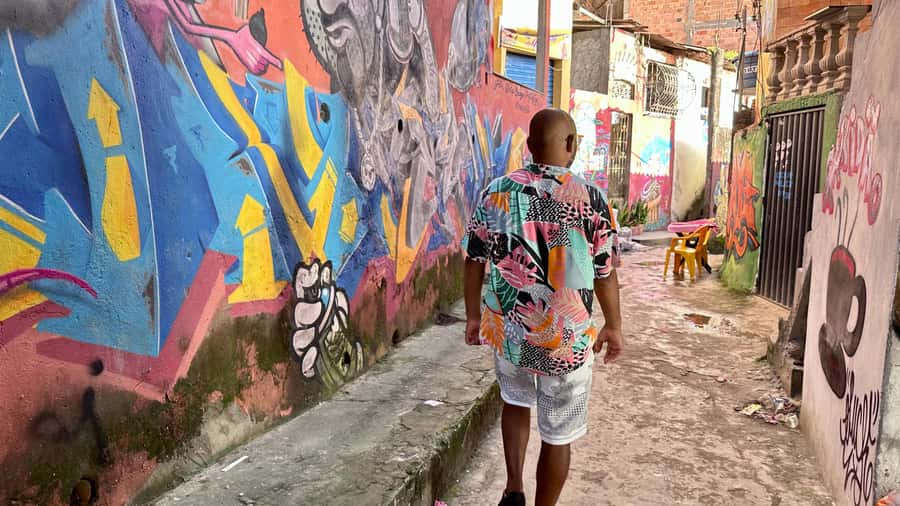
This is best approached with respect and curiosity. You will visit regular neighborhoods and a favela community, and one important rule is clear: photography is not authorized in the communities visited. That restriction is not a minor footnote. It helps keep the focus on people and place rather than turning daily life into a backdrop.
More City Tours in Salvador
- City Tour in Salvador discover the first capital of Brazil
★ 5.0 · 69 reviews - Historical African oriented City Tour
★ 5.0 · 52 reviews - Full-Day Historic Private City Tour of Salvador with Lunch
★ 5.0 · 50 reviews
Rio Vermelho and the altar of Yemayá
The tour begins with pickup in Salvador, usually at your accommodation. You are asked to wait in the hotel lobby 10 minutes before the scheduled time, a useful detail in a city where traffic can slow the start of any outing.
The first major stop is Rio Vermelho, a lively waterfront district with strong links to music, food, fishing, and Afro-Brazilian faith. Here you visit an altar dedicated to Yemayá, an African deity associated with the sea. Local fishermen maintain the site, which gives it a living purpose rather than the feel of a display prepared for tourists.
Your guide can help you understand why the altar matters and how religious traditions remain part of everyday life. This is a short visit, listed at about 30 minutes, so expect an explanation and a chance to take photographs in permitted areas rather than a long ceremony.
The setting also gives you an early sense of the tour’s approach. Salvador’s culture is presented through working communities and active places of worship, not only through grand monuments. If you want a conventional city tour, this stop may feel less immediately visual than a historic church. If you want context for the city’s African connections, it is a strong opening.
Tororó Dike and its African figures
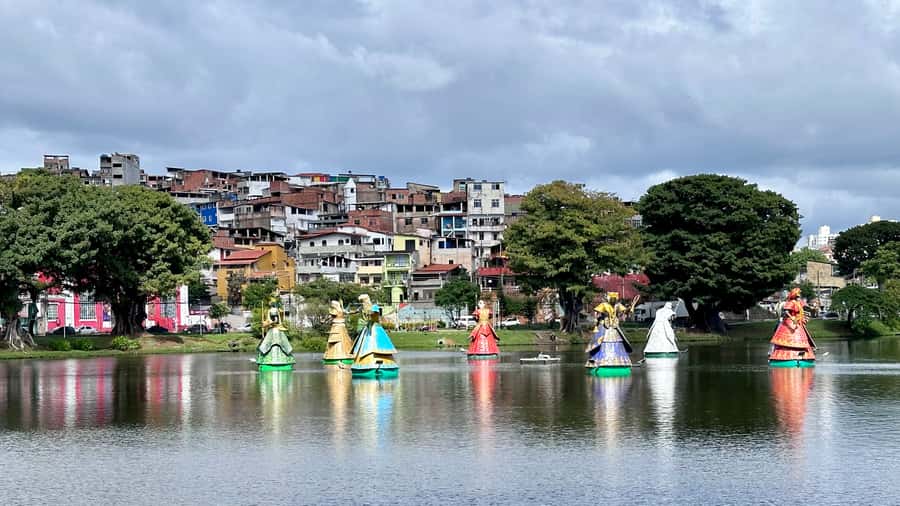
The next stop is Dique do Tororó, also known as Tororó Dike. You have about 30 minutes here for a guided visit and photographs of large African figures set in the water.
These monuments offer a more visual way to consider the spiritual traditions discussed at Rio Vermelho. The figures are striking, and the water creates a memorable setting for photographs. Your guide adds the meaning behind them, helping you see the site as more than an attractive stop beside a lake.
The pace is sensible. You get time to look, hear the explanation, and take pictures without spending half the morning at one location. Wear comfortable shoes, since the day involves getting in and out of the car and walking through public areas.
One practical point: the tour description does not promise a specific figure or monument explanation in advance. The value depends heavily on the guide’s storytelling. That is why guides such as Wilson and Mônia, praised for linking places to Bahian customs, can make a real difference.
São Joaquim Fair, where food tells the story
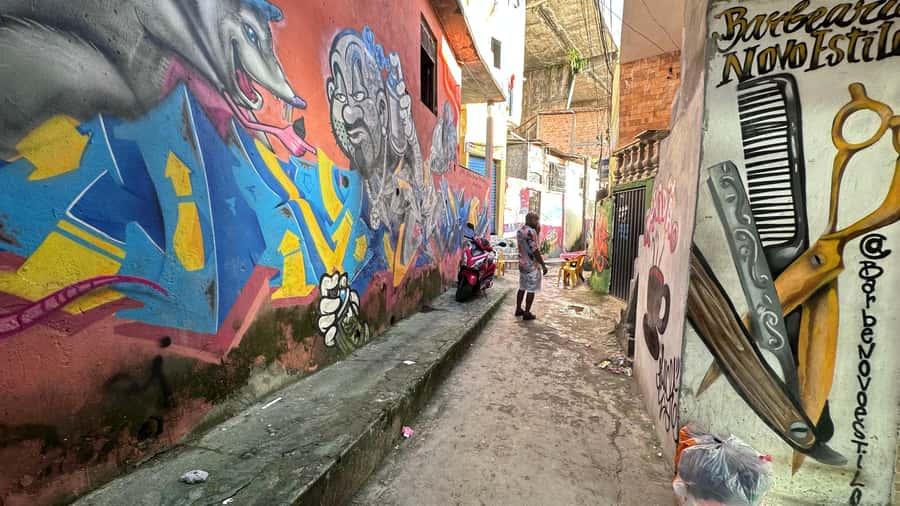
São Joaquim Fair is one of the most rewarding stops because it brings culture down to the level of shopping, cooking, and daily life. You spend roughly 30 minutes looking through stalls and shops filled with fruits, vegetables, ingredients, and local dishes.
The fair is recognized as part of Salvador’s intangible heritage. That means its importance is not just in the goods sold there, but in the knowledge and customs carried through the market. You can expect strong aromas, unfamiliar produce, and foods tied to African and Bahian cooking.
This is a good place to ask questions. Why is a certain ingredient important? How does it appear in local dishes? Which foods have links to religious practice? A private guide can adjust the conversation to your interests instead of delivering the same short speech to a large group.
The stop is also a reminder that food is one of the easiest ways to understand Salvador. African influence is not confined to religious sites or historic accounts. It appears in what people buy, prepare, share, and recognize as home cooking.
The market can be busy and sensory. If you prefer quiet galleries and polished attractions, it may feel rough around the edges. That is part of its value, but it also means you should keep your belongings secure and stay close to your guide.
more Salvador days to choose between
- Quadricycle Private Tour Sapiranga – Praia do Forte by Emytour
★ 5.0 · 72 reviews - Private Photographic Tour in Salvador da Bahia
★ 5.0 · 51 reviews - Private Full-Day Tour – Salvador’s Lower & Upper City
★ 5.0 · 48 reviews - Private Airport Transfer to Salvador
★ 5.0 · 30 reviews
Acarajé, the essential Bahian taste
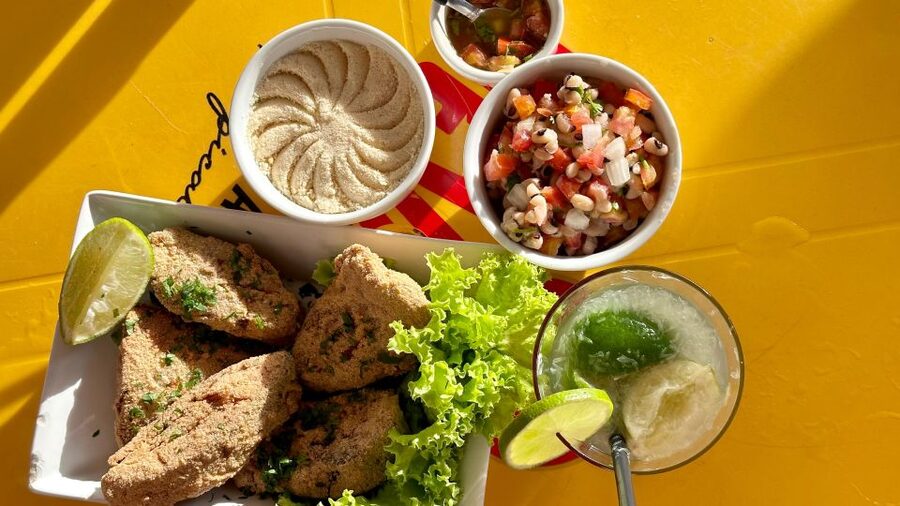
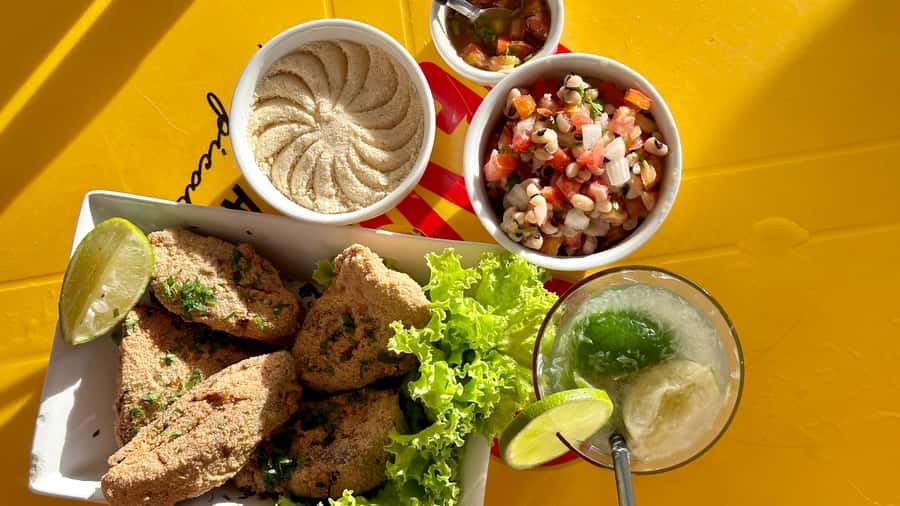
After the market, you taste acarajé. This fried bean-based food is one of Bahia’s best-known culinary specialties and an important part of Afro-Brazilian food culture.
The tasting is included, so you do not need to budget separately for this part. It also breaks up the sightseeing in a useful way. Instead of hearing about local culture only in abstract terms, you get a direct taste of one of its most recognizable foods.
Acarajé may be served with fillings or sauces, but the supplied details do not specify the exact preparation or portion. If you have allergies or strong food restrictions, ask the provider before booking. Drinks are not included, so carry money for beverages during the day.
I like this part because it is simple and grounded. You are not being asked to attend a staged cooking lesson. You are tasting a local staple within a day built around the people, places, and beliefs that give it meaning.
A Candomblé temple in the Ewe Fon tradition
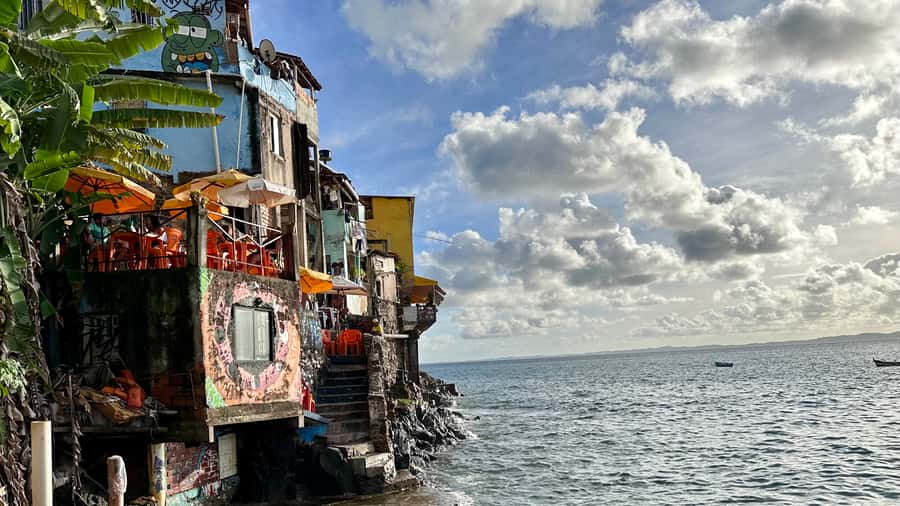
The Candomblé visit is the intellectual and spiritual center of the tour. You travel to a sacred temple connected with the Ewe Fon tradition and learn how its beliefs and practices fit into Afro-Brazilian life.
The precise form of the visit can vary. Some groups have had a conversation with a temple leader or a member of the worship house’s family. That kind of welcome is a privilege, but it should never be treated as guaranteed entertainment. This is a religious space, and your guide will help you understand how to behave.
Candomblé is often described too simply as a blend of other religions. A good guide offers more care. You can learn about African deities, rituals, faith, adaptation, and the ways Black communities preserved identity under difficult conditions. Several guides, including Wilson and Vagner, have been praised for explaining Yoruba culture and Candomblé in clear English.
This stop may be especially meaningful if you have African heritage or a personal interest in the African diaspora. One visitor with Yoruba family connections found the discussion particularly useful, while another described the experience as a rare welcome into a sacred space.
You should also know that this is not mainly a playful or performance-based tour. One clear description of the experience called it more intellectual than lighthearted. If you want dance, music, and constant activity, this may feel serious. If you want careful background and room for questions, it is likely to be the strongest part of the day.
Lunch beside the sea in a community setting
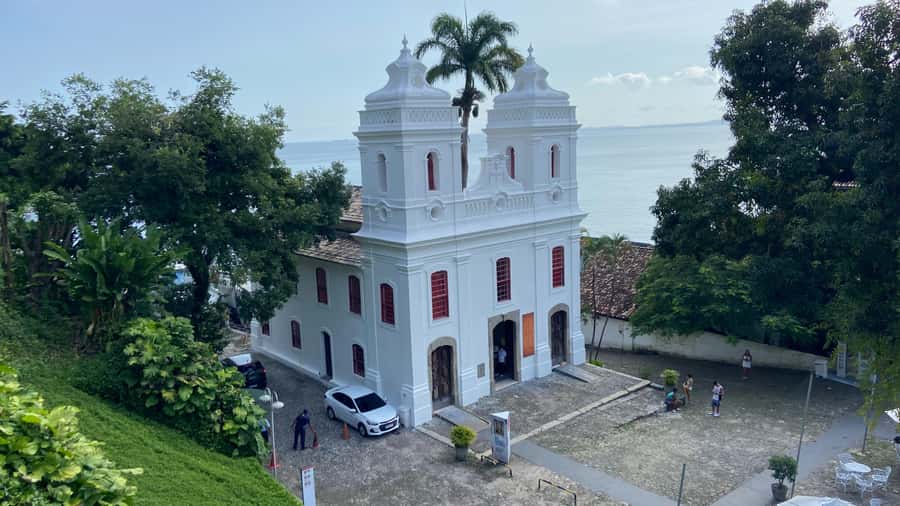
The final stop takes about two hours and includes lunch, guided time, and a period to relax. It is described as a picturesque seaside favela community with broad views over the water.
The setting gives the day a calmer finish. After the market and the temple, you can sit down, eat, and let the information settle. Lunch is included, but drinks are not, so plan to pay separately for beverages.
The meal has earned repeated praise for its flavor and setting. A small seaside restaurant called Zanzibar has been used for lunch, although restaurant arrangements can change. Expect Bahian food rather than a generic tourist menu, with the sea providing much of the atmosphere.
This is also where the tour asks you to be most aware of local etiquette. Photography is not authorized in the favela communities visited. You can enjoy the views and the meal, but do not assume that every street, person, or home is available for pictures.
The two-hour block is longer than the earlier stops, which makes the ending feel less rushed. It also means the tour is not packed with attractions from start to finish. I see that as a benefit if you like time to talk, eat, and observe. If you want a nonstop schedule, the leisurely finish may seem too long.
What the private car adds
A private car is included, along with hotel pickup and return to Salvador. This is important because the route links several districts and a variety of settings. You are not spending the day figuring out bus connections or arranging separate rides between stops.
The car also offers shelter from the heat. One guide adjusted the order and pace to help keep the group cool, and drivers such as Adriano, Victor, Fabio, and others have been praised for careful driving and calm handling of Salvador traffic.
Your driver is not the main cultural interpreter, but a good driver affects the whole day. You can focus on the guide instead of watching the road, finding parking, or checking directions.
The group is private, not shared. That gives you more control over questions, pace, and conversation. It also makes the $150 per person price easier to assess for couples, families, or small groups. For a solo visitor, it is a bigger spend, but the included car, lunch, food tasting, guide, and donation add real value.
Price, pace, and practical limits
At $150 per person for six hours, this is not the cheapest way to see Salvador. It is priced as a private cultural outing, not as a basic transfer with a few photo stops.
I think the value is strongest when you care about interpretation. You are paying for access to places you might not find on your own, a guide who can explain religious and social context, private transport, lunch, acarajé, and a donation connected with the experience. The day is also efficient: pickup and return are included, and you do not lose time arranging transport.
The price is harder to justify if you mainly want Salvador’s famous architecture or a broad first look at the city. In that case, a standard sightseeing tour may cover more familiar landmarks for less money.
Plan on comfortable shoes and clothes suited to a warm six-hour outing. The tour is not suitable for wheelchair users. Guide languages are Portuguese, Spanish, English, and French, but confirm your preferred language when booking.
Cancellation is flexible up to 24 hours before the start for a full refund, and you can reserve now and pay later. Starting times depend on availability, so check the schedule before you build the rest of your Salvador plans.
Who should book this experience
I would choose this tour if you want Afro-Brazilian culture treated as the main subject rather than a short add-on. It suits history-minded visitors, people interested in the African diaspora, food-focused explorers, and anyone who wants to see ordinary neighborhoods alongside major cultural sites.
It is also a strong choice for a solo visitor who wants private transport and a guide nearby. The personal format can make Salvador feel easier to understand, while the return to your accommodation keeps the day simple.
Families with older children may enjoy the food and monuments, but the Candomblé section requires attention and respect. People looking for nightlife, dancing, or a light sightseeing day may prefer another option.
Guide quality is clearly central. Names associated with especially strong experiences include Wilson, Mônia, Vagner, Ronaldo, Fernando, and Leandro. You may not receive a specific guide, so treat those names as examples of the provider’s guiding team, not a promise.
Should you book the Afro-Brazilian Roots tour?
Book it if you want to understand how African traditions shape Salvador’s food, faith, neighborhoods, and identity today. The best parts are not the quick photo stops alone. They are the links your guide makes between the Yemayá altar, Tororó Dike, the market, acarajé, Candomblé, and the seaside community.
Skip it if you want a low-cost overview, major colonial sights, or a photo-heavy schedule. The no-photography rule in community areas and the serious discussion of Candomblé require a respectful attitude.
For the right person, this is a thoughtful and unusually focused six hours. You leave with more than pictures. You gain a clearer sense of why Salvador feels distinct within Brazil and why its African roots remain central to the city’s life.
FAQ
How long does the tour last?
The experience lasts six hours, including pickup in Salvador, sightseeing, the Candomblé visit, lunch, and return to Salvador.
Is hotel pickup included?
Yes. Pickup from your accommodation in Salvador is included. You should wait in the hotel lobby 10 minutes before the scheduled pickup time.
Is the tour private?
Yes. It is operated as a private group experience with a private car.
Which languages are available?
Guides are available in Portuguese, Spanish, English, and French.
Is lunch included?
Yes. Lunch is included during the final seaside community stop. Drinks are not included.
Is acarajé included?
Yes. An acarajé tasting is included in the tour.
Can I take photographs everywhere?
No. Photography is not authorized in the favela communities visited. You can take photographs at designated photo stops such as Tororó Dike, while following local guidance elsewhere.
Is the tour suitable for wheelchair users?
No. The experience is listed as unsuitable for wheelchair users. Comfortable shoes are recommended.
New in Salvador this month
- From Salvador: Schooner Tour to Frades Island★ 3.9 · 3 reviews
- From Salvador: Quilombo Heritage Daytrip with Lunch★ 3.4 · 3 reviews
- Salvador: Caipirinha Masterclass with Unlimited Drinks★ 4.2 · 4 reviews
- Salvador: Schooner Cruise with Pickup and Itaparica Stop★ 3.8 · 5 reviews
- BOXE CLASS – EX BAHIAN CHAMPION (SALVADOR-BA)★ 5.0 · 7 reviews
- Salvador by Night: Pelourinho & Old Town Tour★ 4.3 · 8 reviews
- Salvador: 3-Hour Percussion Class★ 4.9 · 10 reviews
- Salvador: Traditional Drumming and Percussion Workshop★ 4.4 · 10 reviews
Salvador Tours, compared.
Cooking class in Salvador, an authentic dinning experience
Read our review →
Tour to the Frades Islands and Itaparica, from Salvador – Ba
Read our review →
From Salvador: Schooner Tour to Frades Islands and Itaparica
Read our review →
Tour Praia do Forte and Guarajuba, Leaving Salvador-Bahia.
Read our review →

Schooner Trip Only Ilha dos Frades, Leaving Salvador-Bahia.
Read our review →
4h Cooking Class in Salvador with 9 Recipes & Bottomless Drinks
Read our review →Browse the lists this tour appears in